


Every commercial contractor in the Carolinas collects data. Daily logs, photos, app entries, and text threads pile up across projects from Charlotte to the Upstate. Yet when an owner, insurer, or OSHA compliance officer asks for proof that your team identified a hazard and fixed it, most firms scramble. The problem is not a lack of data. The problem is a lack of usable inspection history, and it is the single most overlooked foundation of construction risk management.
Construction risk management involves identifying, assessing, and controlling risks across every phase of a project. For Carolinas commercial contractors, a disciplined inspection history is the mechanism that makes that process work on active job sites. Construction risks include financial, safety, and scheduling issues, and inspection records touch all three.
For today’s construction professionals working on commercial construction projects, construction risk management is not an academic exercise. It is about keeping workers safe, meeting schedules, controlling project costs, and protecting the reputation your firm has built over years. OSHA classifies construction as a high-hazard industry, and projects face about 107 construction risks, ranging from environmental risks and natural disasters to supply chain disruptions and labor shortages.
Many construction managers in Charlotte, the Triangle, and Upstate South Carolina already track enormous amounts of jobsite data. Yet they still struggle to manage risk on complex projects because that data is scattered, inconsistent, and disconnected from any follow-up system.
Risk management should begin during the preconstruction phase. Risk identification should occur during feasibility design and preconstruction stages, not after the first incident. But even with early planning, the construction process demands ongoing verification that controls are working. That verification lives in inspection history: a time-sequenced record showing what was inspected, when it was inspected, who inspected it, what construction risks were identified, and how quickly issues were corrected.
In a modern construction risk management plan, reliable inspection history is the foundation for managing risk, not an afterthought buried in a compliance folder.
A critical difference exists between raw construction process data and curated inspection records. Raw data includes photos, text messages, app entries, and spreadsheets. It is often unstructured, inconsistent, and impossible to aggregate. Remarkably, 40% of construction companies still use paper plans on job sites, which means findings may never make it into a searchable system at all.
Consider a tilt-wall warehouse project along the I-85 corridor. If three separate foremen each note a fall hazard on different days using different formats, no one sees the pattern. On a healthcare build in the Triangle, recurring electrical hazards from a specific trade partner go unnoticed because each observation sits in a separate daily report. Without structure, construction teams cannot identify risks and patterns.
Safety programs should include ongoing hazard identification and management, and that requires more than data collection. It requires curation. A disciplined inspection history lets project teams spot repeated scaffold issues on the same elevation, recurring trench deficiencies, or PPE gaps with a particular crew. Data visualizations help stakeholders understand project risks clearly, but only when the underlying records use consistent terminology and categories.
Continuous monitoring of risks is necessary as project conditions change over time. Standardize your inspection categories so similar findings look the same in logs across multiple construction projects. That is how pattern detection becomes possible.
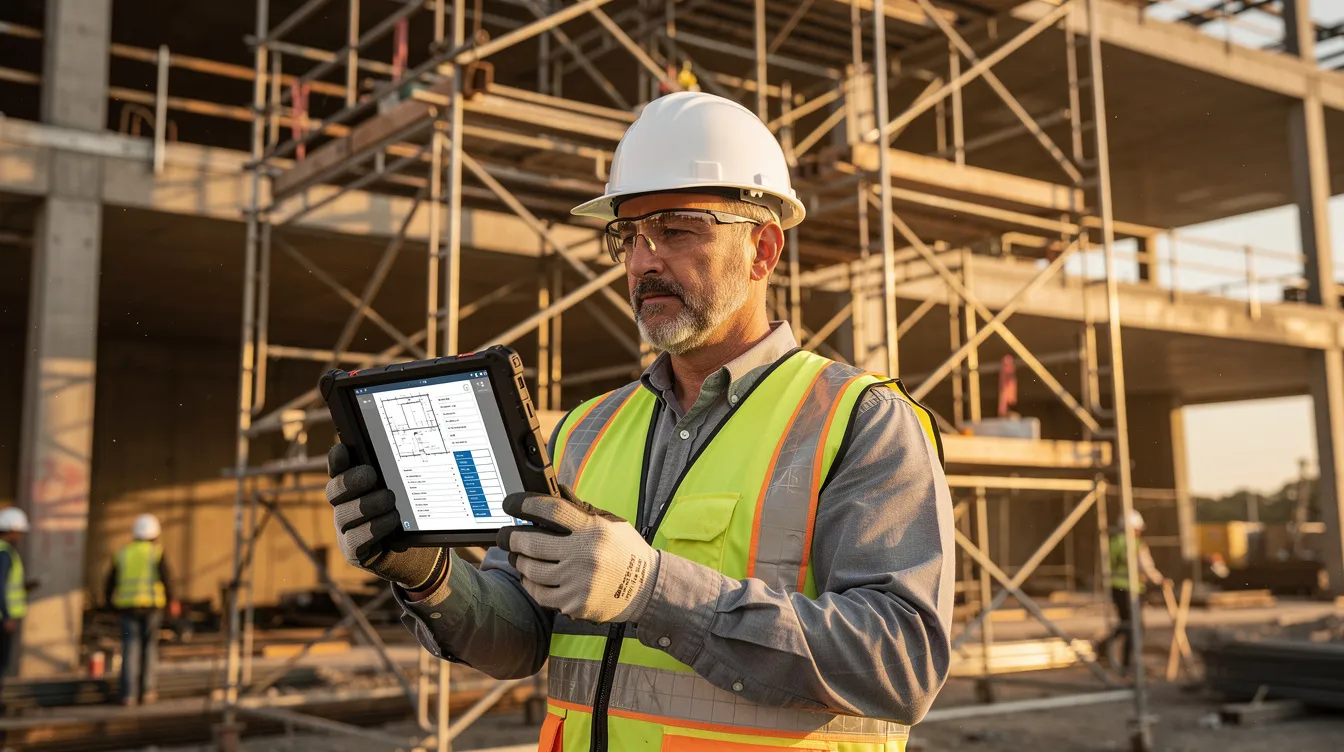
OSHA enforcement in North Carolina and South Carolina remains active. In fiscal year 2019, North Carolina’s OSH division conducted 2,929 inspections, with 58% targeting the construction industry. Among programmed construction inspections, approximately 84.6% resulted in serious, repeat, or willful violations. OSHA sets strict safety requirements for construction sites, and inspectors, after incidents, will almost always request supporting documentation.
A meaningful difference exists between basic OSHA recordkeeping requirements (injury logs and incident reports) and a richer inspection history that documents proactive efforts to identify potential risks before they become recordable events. When a compliance officer visits a construction site, they look for evidence that construction risks were being identified early and corrected quickly, not just whether forms were filed on time.
Safety programs reduce workplace incidents on construction sites, and regular safety training significantly lowers accident risk. But these efforts need documentation to count during an enforcement review. Clean inspection logs can reduce citation exposure, demonstrate good faith, and support negotiations over classification and abatement. Transparent reporting fosters trust among project stakeholders, including regulators.
In North Carolina’s most recent reporting period, over 300 serious violations were issued for fall protection standards alone. Contractors who can show consistent inspection records targeting those exact hazards reduce their risk of violations occurring during programmed inspections.
The ABC STEP (Safety Training Evaluation Process) safety system is a proven, merit shop-aligned framework that transforms one-off inspections into a measurable safety management process. Rather than relying on informal foreman memory or isolated daily logs, STEP links documented inspections, corrective actions, follow-up verification, and annual performance benchmarking into a repeatable system.
STEP logic supports the full construction risk management process. It covers construction risk identification, tracking common risks, analyzing trends, and prioritizing controls. The STEP scoring worksheet addresses 25 key components, including jobsite inspections, incident investigation, near-miss reporting, and corrective action documentation. Construction firms that develop risk response strategies, including avoidance, reduction, transfer, and acceptance, find that STEP provides a natural framework for each.
Mitigating risks involves reducing their likelihood or impact, and a strong STEP score demonstrates exactly that to owners, insurers, and sureties evaluating your firm for large commercial construction projects in the Carolinas. Effective risk management can increase profit margins and client relationships because it proves operational discipline, not just good intentions.
ABC Carolinas members pursuing Gold, Platinum, or Diamond STEP status know that a safety-first culture in construction depends on documented inspections with verified follow-through.
Picture a superintendent on a data center build near the North Carolina data corridor arriving at 6:30 a.m. Before the first trade crew arrives, the superintendent opens a standardized inspection checklist on a mobile device, walks the active zones, and logs three findings: a missing guardrail on the second level, an unsecured temporary power panel, and debris in a pedestrian pathway. Each finding gets a severity tag, a responsible trade partner, a due date, and a photo.
The core elements of strong inspection history include:
Assign ownership of risks to ensure accountability during the project. Every finding needs a named owner and a deadline. Communication and coordination across contractors and subcontractors are essential because many hazards involve overlapping trades. Environmental assessments are important to manage site risks such as contamination, especially on brownfield or industrial conversion sites common across the Carolinas.
Regular meetings keep stakeholders informed about project risks. A weekly review of inspection logs helps construction teams identify recurring construction risks by location, trade, or project type, and then adjust safety training or supervision accordingly.
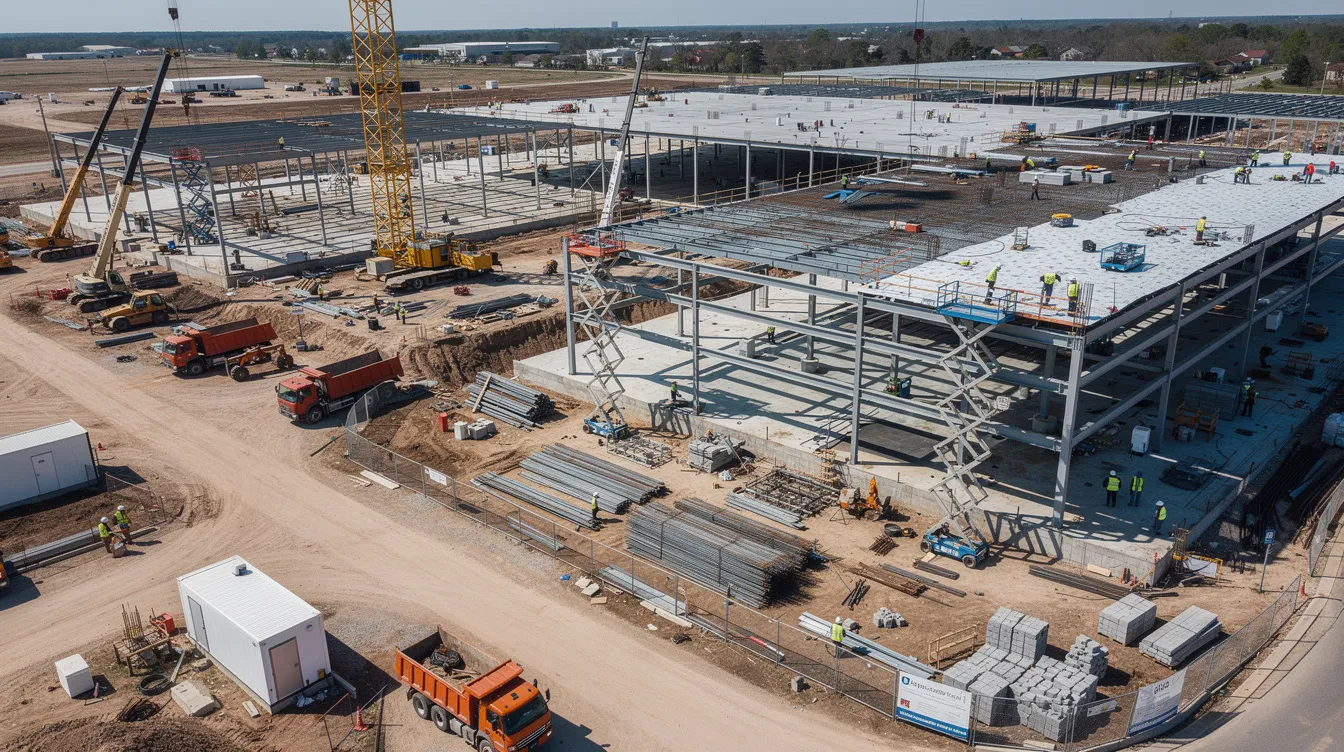
A construction risk management plan is a working document that guides how the project team identifies risks, evaluates likelihood and impact, assigns owners, and tracks mitigation strategies across the project lifecycle. Risk assessment prioritization involves evaluating the likelihood and impact of risks, and inspection history provides the raw inputs for that evaluation.
A risk register is a living document guiding risk management decisions. Treat inspection findings like entries in that register. When missing guardrails appear on the same floor three weeks running, that is not just a deficiency; it is a significant risk that belongs in the risk register with an assigned owner, an escalation path, and a timeline for resolution.
Construction project managers can use monthly summaries of inspection results to update the register, revise probabilities, and reallocate resources on high-risk activities before they affect the project schedule or project costs. Conduct regular risk reviews with stakeholders to evaluate ongoing risks, and implement a structured change management process to control project alterations that might introduce new safety hazards or weather risks.
Every construction risk management process review, whether at the project or company level, should include inspection history as a standing agenda item for leadership and safety teams.
Consider a contractor bidding a hospital project in Raleigh. The owner’s prequalification packet asks for multi-year safety performance data, evidence of a structured inspection follow-up process, and proof that the firm uses a documented construction risk management process. The contractor who can pull organized inspection records showing identified hazards, correction timelines, and verified closures answers those questions with credibility.
Implementing rigorous subcontractor prequalification protects project integrity, and owners increasingly apply that same standard to general contractors. Effective communication strategies enhance stakeholder engagement in risk management, and organized inspection records are one of the strongest communication tools a contractor can present.
Construction bonds verify compliance with project agreements, and underwriters evaluating your bonding capacity want to see operational discipline. Transferring risk can involve using insurance policies or contracts, but insurers reward firms that demonstrate lower risk profiles through documented controls. For Carolinas contractors competing on corridor work along I-77, I-85, and I-95, this documentation differentiates merit shop firms that invest in safety systems from low-bid competitors who treat inspections as paperwork.
Summarize your inspection program results in bid narratives and prequalification packets. Show project stakeholders not just your EMR or incident counts, but the system behind them.
Regional contractors managing risk across several concurrent construction projects in North and South Carolina face a practical challenge: each project has different owners, schedules, subcontractor teams, and external factors. Without a consistent structure, comparing safety performance across a Charlotte high-rise and a Greenville manufacturing facility becomes guesswork.
Adopt a consistent inspection structure across all jobs so leadership can roll up data by project type, geography, or major client and still see comparable trends. Simple organizational rules matter:
Cloud-based platforms enable real-time collaboration among stakeholders, and centralized platforms improve access to risk information across offices and job sites. Mobile technology enables real-time data access on job sites, so superintendents can log and review findings without returning to a trailer.
AI and machine learning can predict jobsite risks by analyzing patterns in historical data, and automation tools reduce human error in data entry processes. BIM models improve documentation and reduce disputes by tying inspection findings to specific locations in the digital model. Align any digital tools with internal policies and established AI guardrails for safety leadership so that technology supports accountability instead of replacing it.
Schedule quarterly reviews where safety leaders and construction managers examine inspection trends across the portfolio, identify systemic construction risks, and adjust company standards or training plans.

Even mature construction firms can quickly improve construction risk management by tightening how they capture and use inspection history. You do not need a new software rollout or a major reorganization to start.
One immediate clean-up action: Select a single standard inspection form for a high-impact area, such as fall protection or equipment checks, and deploy it on every active job in Charlotte, Raleigh, Columbia, and Greenville. This alone eliminates the inconsistency that makes pattern detection impossible.
One weekly review habit: Superintendents and safety professionals spend 30 minutes each Friday reviewing inspection findings, assigning owners, and logging closure dates for open items. This process involves minimal time but creates the discipline that separates effective risk management from a filing exercise.
One leadership step: Executives clearly state that inspection records are management tools, not just compliance files. Tie those expectations to performance reviews or STEP participation. When leadership treats inspections as strategic, the field follows.
With 85% of contractors struggling to hire skilled workers due to labor shortages, every worker on your site matters more. Poor scheduling can lead to significant budget overruns in construction, and construction design risks often arise from incomplete design details. Disciplined inspections catch these issues before they cascade into significant delays or legal disputes.
Enroll supervisors in ABC Carolinas safety training and certification offerings to support consistent inspection practices and build a solid risk management strategy across your organization.
ABC Carolinas provides education, peer groups, and advocacy to help members build construction risk management systems grounded in a strong inspection history. Key resources include safety training and certification courses, Safety Peer Groups in Charlotte and the Triangle, and guidance on aligning field inspections with ABC STEP requirements.
Networking with other commercial contractors through ABC Carolinas allows members to benchmark inspection practices, share checklists, and learn what owners and insurers are asking for in current prequalification packages. For construction companies competing on commercial work across the Carolinas, these connections translate directly into stronger bids, better worker safety, and a more resilient operation.
Whether you are a member refining your approach or a nonmember exploring how to strengthen your construction risk management process, the next step is the same: contact ABC Carolinas to discuss aligning your current inspection processes with STEP-style systems, or register your key construction managers for the next regional safety workshop.
These questions address practical concerns construction executives and safety leaders in the Carolinas may have about integrating inspection history into their broader construction risk management efforts.
An inspection history is a chronological, field-level record of what was inspected and corrected on each construction project. A risk register summarizes higher-level project risks, probabilities, and risk mitigation strategies for the overall construction process. Strong construction risk management links the two: inspection findings update the risk register, and the register focuses inspections on the most critical construction risks. Issues like poorly defined scope or subcontractor and supplier risk may appear in the register, while specific deficiencies appear in the inspection log.
Even small firms working on a handful of construction projects in North or South Carolina benefit from consistent inspection documentation. It supports occupational safety compliance, improves crew safety, and provides proof of control for owners and insurers. Smaller construction teams can start with simple, repeatable checklists before investing in sophisticated software, as long as they consistently identify risks and track corrections. The key benefits are the same regardless of firm size: fewer safety risks, better project outcomes, and a stronger position during any audit.
Contractors should retain core inspection records, including checklists, deficiency logs, corrective action notes, and verification photos, for at least the life of the project and any applicable warranty or contractual obligations period. Specific retention policies should be shaped by legal and insurance counsel. For construction risk management, past project data across multiple projects can reveal patterns that a single project’s success or failure alone might not expose. Historical data becomes more valuable over time.
Inspection records help trainers and foremen see where new craft professionals and construction workers struggle with certain tasks or safety protocols. This informs targeted coaching and adjustments to apprenticeship curricula. Aggregated inspection findings can drive focused safety training modules that address the real-world safety hazards construction teams encounter. For a successful project culture, continuous improvement in workforce capability starts with knowing where the gaps are.
Choose one high-impact area, such as fall protection or equipment inspections, and create a single standardized checklist with clear closure expectations. Use it on every construction project in the company. Pair this with a standing weekly review meeting where construction managers scan the resulting inspection history, identify recurring risk factors and common risks, and assign follow-up actions. This makes construction risk identification a living habit rather than a one-time event, and moves you from identifying potential risks to mitigating them before they affect project timelines, multiple stakeholders, or the project’s success.


