


Construction attendance verification technology has evolved from paper sign-in sheets to digital systems, and the pace of change is accelerating. For contractors across North Carolina and South Carolina, the question is no longer whether these tools exist. It is whether they solve a problem worth solving on your jobsite, at your scale, under your conditions.
The construction industry in Charlotte, the Triangle, and Upstate South Carolina operates with multi-employer sites, tight schedules, and strict compliance requirements. Labor shortages amplify the stakes: when crews are short-staffed, every hour matters for payroll accuracy, safety documentation, and certified payroll reporting. Construction attendance verification technology goes beyond basic time clocks. It confirms who is actually on the construction site and when, linking that identity to project data, training records, and compliance status.
AI and facial recognition have emerged as one method of jobsite attendance tracking. They are not an automatic default. This article helps construction companies in the Carolinas decide when facial recognition and other biometric attendance tools are worth adopting, and what privacy, trust, and field conditions need to be addressed first. ABC Carolinas is focused on helping construction firms choose practical tools that support safety, workforce management, and fair, merit-based opportunities.
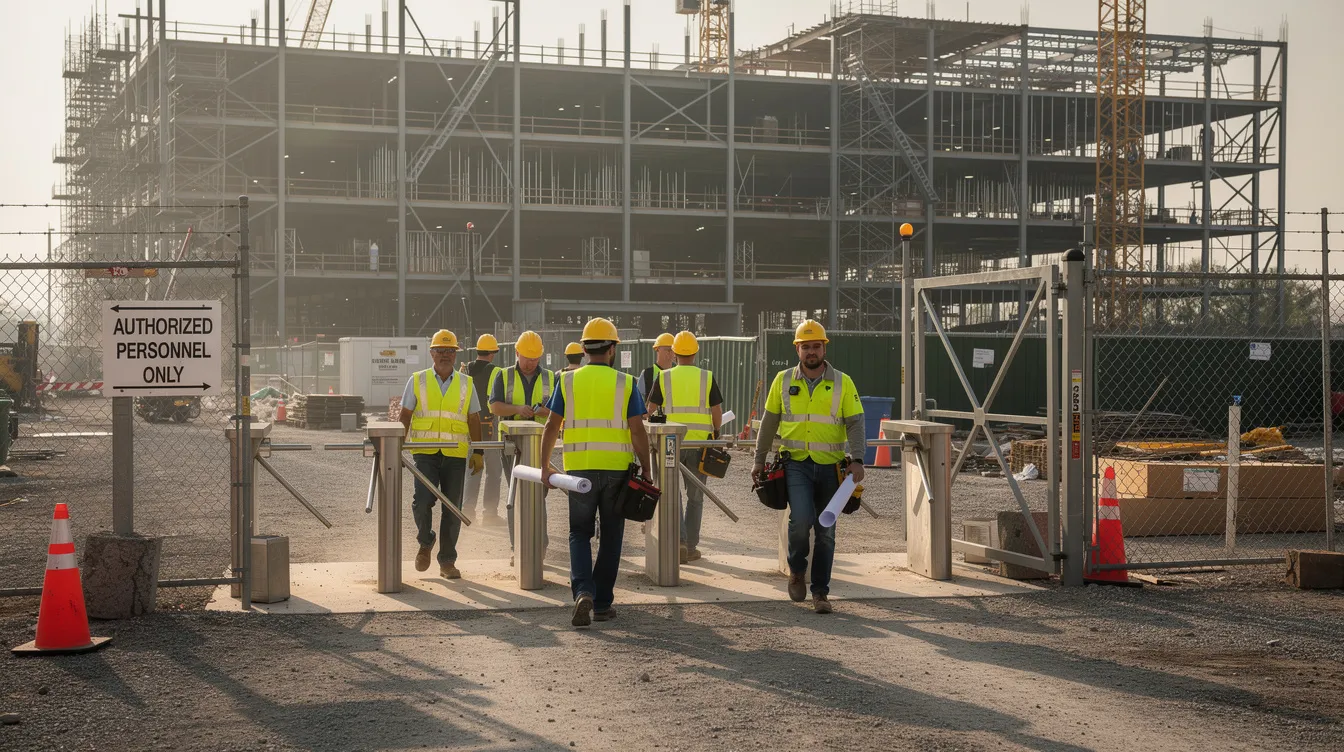
Before examining any specific technology, it helps to clarify the business problem. Traditional methods of attendance tracking on a construction site create familiar headaches:
These gaps create concrete risks for construction companies. Inaccurate job costing means labor hours are allocated to the wrong project phase. Disputes arise over change orders when subcontractor hours cannot be verified. After a safety incident, proving who was on site becomes difficult. Contractual documentation expectations and building codes inspections can fail when attendance data is unreliable.
Modern attendance tracking systems seek to create an accurate, time-stamped record of who is on each construction site, help track attendance more reliably, and link that record to project, company, and compliance data. The distinction matters: simple “time and attendance” logs a badge swipe or GPS ping, while full “attendance verification” supports tracking employee time accurately by confirming identity. Contactless attendance logging eliminates buddy punching, and GPS-based attendance systems prevent fraudulent time entries by confirming location before accepting a clock-in.
Construction sites increasingly utilize mobile apps, GPS geofencing, and biometric scanners for attendance management to capture employee time and work hours more accurately than paper-based methods. Attendance verification technology often includes RFID and NFC smart badges for user identification. AI and face recognition represent one approach. Others include card-based systems, PIN pads, QR codes, and supervised sign-in supported by attendance software. Each has trade-offs in cost, ease of use, and accuracy.
Here is how facial recognition works in this context. During onboarding, each worker’s face image is enrolled. When they arrive at the job site, a camera or reader captures a live image and an AI model matches it against the enrolled profile. When properly calibrated, the process takes seconds.
As Construction Executive has reported, facial recognition can help verify worker identity, improve attendance accuracy, reduce attendance fraud, and create a reliable record of who was actually on site. The technology helps reduce unauthorized access to construction sites by verifying worker identities, a concern that grows with project scale.
These systems typically run on mounted terminals at gates, ruggedized tablets in access-control turnstiles, or mobile devices used by gate guards and field supervisors. Biometric systems utilize facial recognition or fingerprint scanning for attendance verification, though face-based systems are contactless and can move construction workers through entry points faster when tuned correctly.
GPS-enabled mobile apps use geofencing to restrict clocking in and out to job-site boundaries, adding another layer of verification. GPS tracking ensures workers are on-site before clocking in. In this context, AI is not generic “robots on the jobsite.” It is a specific pattern-recognition tool used to match faces accurately in challenging construction site environments. In many deployments, attendance data flows into broader construction management software or HR and payroll platforms, turning real-time workforce insights into actionable compliance and workforce management information.
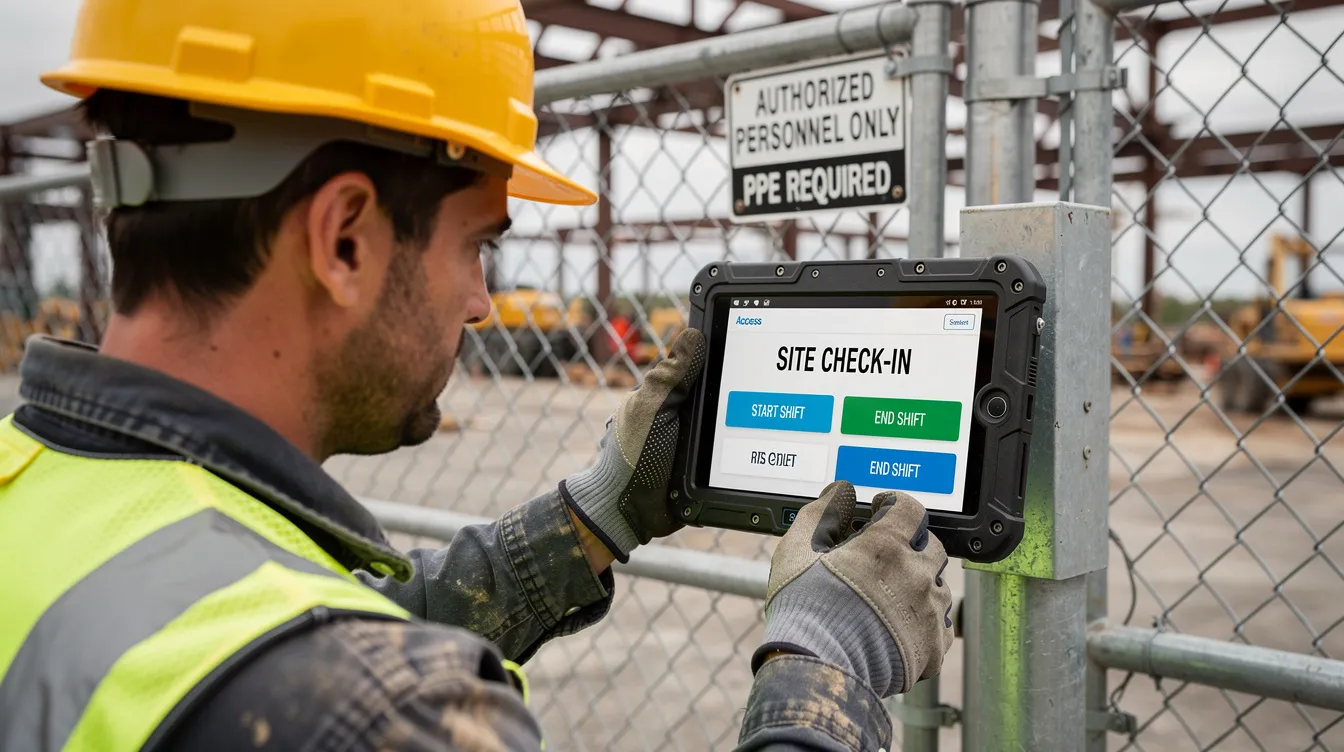
Facial recognition does not pay off everywhere. It delivers the most value in particular construction environments and project types.
High-value scenarios for construction companies include:
Real-time labor visibility allows project managers to see who is on-site at any time. For worker safety and emergency response, accurate headcounts are critical during emergencies and evacuations. Emergency muster reports generated by digital systems provide accurate headcounts during emergencies, which is far more reliable than a scribbled paper sheet during severe weather or an evacuation.
The operational value for payroll and job costing is substantial. Mobile attendance tracking speeds up payroll processing by 70%, and digital attendance systems improve payroll accuracy by integrating with accounting platforms. When attendance data is captured at the right construction site and phase instead of being reconstructed from paper timesheets days later, construction teams avoid costly delays in billing and reconciliation.
Safety compliance improves when attendance data integrates with worker training records. As Construction Executive has framed it, connecting attendance, orientation, and training information in a single worker profile lets contractors answer a more useful question: is this worker cleared and trained for this project? Integrated systems block entry based on worker qualifications and expiration of safety credentials. Construction attendance technology supports streamlined reporting and reduces administrative burdens. Cloud systems enable real-time data syncing and immediate visibility into labor allocation.
For some contractors, biometric attendance can also reduce reliance on gate staffing, lower time theft, and simplify audits of subcontractor labor hours on complex construction projects. Mobile attendance tracking reduces time theft and unauthorized overtime, and biometric systems verify employee identity to prevent time theft across both workers and subcontractor crews.
Construction sites are not controlled offices. Before any contractor treats facial recognition as a game changer, the real-world constraints deserve honest attention.
Environmental factors that reduce recognition accuracy:
Construction Executive noted that devices must perform in real, dirty, variable environments. If devices are slow or have a high false-reject rate, they create bottlenecks at the entrance, frustrate subcontractors, and may lead crews to bypass the system. Operational friction kills adoption.
Network reliability is another constraint, especially on remote sites or in the early phases of greenfield construction projects, where connectivity for attendance software and biometric devices may be intermittent. Edge computing (processing matches locally on the device) helps, but not every vendor offers it.
The National Institute of Standards and Technology (NIST) has published evaluations that found demographic differences in algorithm accuracy across many tested algorithms. Testing, vendor transparency, and field trials are important before large-scale rollout to ensure fair treatment of all construction workers.
Connected wearables can monitor workers’ safety conditions on construction sites and may complement attendance verification, but no single new technology replaces the need for field testing under actual conditions. If a system cannot perform reliably under real jobsite conditions, any theoretical AI advantage disappears, and simpler attendance tracking methods or traditional methods may be better for that specific project.
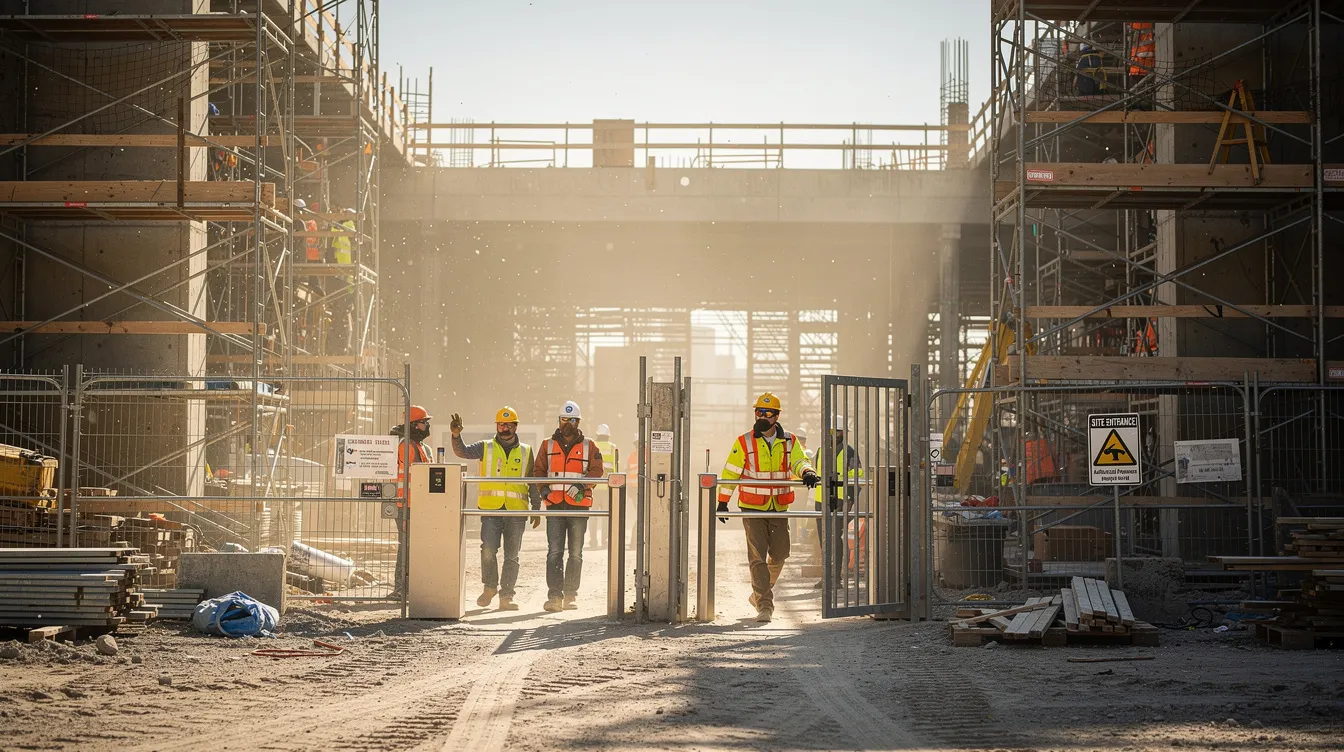
Accurate, time-stamped attendance records support OSHA investigations, workers’ compensation claims, and internal safety reviews by confirming which crews were on site for specific tasks at specific times. Automated attendance systems help improve compliance with labor laws and safety regulations. Regulatory compliance includes health and safety standards, and broader obligations can also include environmental compliance on construction projects. Construction management software helps track compliance across projects.
Construction compliance prevents costly fines and project delays. Non-compliance can damage a construction company’s reputation. Ignoring compliance can lead to financial penalties and legal disputes. Automated attendance tracking reduces paperwork and compliance issues, freeing project managers and construction managers to focus on higher-value work.
Connecting attendance to orientation, safety training, and equipment-authorization records helps contractors document that workers were qualified for the tasks they performed that day. This strengthens compliance processes and makes ensuring compliance easier to demonstrate during audits.
Consider a practical example: an owner’s audit on a data center build in the Triangle may demand proof that all workers completed site-specific orientation and related documentation where relevant. Or a highway project in South Carolina subject to state DOT review needs verified subcontractor hours or supporting records for environmental documentation. Clean attendance data simplifies those responses. Attendance verification technology does not replace broader compliance systems or a documented safety program, but it can make those programs easier to manage and defend.
Biometric attendance, including facial recognition, involves sensitive personal information. Contractors need a higher standard of care than with simple swipe cards or punch cards.
North Carolina’s privacy and data protection guidance incorporates state and federal privacy law, IT security practices, and records retention requirements. North Carolina General Statutes include biometric data in the definition of personal information. However, the state does not currently require written consent before collecting biometric identifiers for workforce purposes. That legal landscape may shift: pending legislation (HB 462) would define biometric data more explicitly within a broader privacy framework.
ABC Carolinas cannot provide legal advice. Contractors should consult counsel about how state statutes, data-breach notification rules, and contract terms apply to biometric attendance data in both North Carolina and South Carolina. The fine print matters, and environmental regulations and labor laws vary between the two states.
Practical governance questions to answer before deployment:
Building trust and respecting privacy is not only a regulatory concern. It also helps maintain strong relationships with merit shop employees and subcontractors across the Carolinas construction industry. Transparent communication, written notices, and clear explanations of how data will and will not be used go a long way.
Attendance verification technology must integrate with existing construction management software and site routines to deliver real value. Without seamless integration, attendance data sits in a silo and creates more manual errors, not fewer.
The typical data flow works like this: biometric devices or mobile apps capture attendance, backend services validate identity, then information is pushed into HR, payroll, project-costing, or field-management systems. Companies using payroll automation are half as likely to commit errors. Automated time tracking improves wage-calculation accuracy and supports union, prevailing-wage, or certified payroll reporting when applicable.
For many Carolina construction firms, the goal is a single, accurate record of construction attendance across multiple construction sites, not separate data silos for each project. Integration capabilities matter: can the system push data to your existing payroll platform, track employee time by cost code, and flag workers with expired credentials?
Technology should match actual field workflows. Consider whether gate guards or foremen will manage enrollment, how visitors are handled, and what manual backup process is used when devices or connectivity fail. The construction process does not stop when a tablet freezes.
Start by identifying your primary driver. Is the key goal tighter security, better payroll accuracy, safety documentation, or owner-mandated access control on specific construction projects?
Facial recognition tends to make the most sense when several conditions apply:
By contrast, simpler attendance tracking systems may be more appropriate for small crews, low-complexity residential or light commercial jobs, or remote sites with minimal connectivity where mobile GPS or supervised paper logs already work well. Not every construction business needs face recognition at every entry point.
Weigh total cost of ownership: hardware, management software subscriptions, enrollment and training time, IT support, and privacy program development. Compare that against measurable benefits like reduced payroll leakage, faster compliance reporting, and fewer security risks. Include labor management representatives and subcontractors early so workforce concerns about surveillance, fairness, or error handling surface before final decisions about the new technology are made.
Before any large-scale rollout, a structured pilot lets you test assumptions under real conditions. Here is a concrete checklist:
ABC Carolinas can serve as a forum where members share lessons learned on construction attendance verification technology through peer groups, safety roundtables, or technology-focused events.
Facial recognition and other biometric attendance tracking systems can improve construction attendance accuracy and compliance when aligned with real jobsite conditions, privacy governance, and integrated workflows. The value is real, but so are the limits: environmental challenges, workforce trust, regulatory requirements, and integration complexity all shape whether the investment pays off.
Start by reviewing your current construction attendance tracking practices across active construction sites. Identify pain points: manual reconciliation, unreliable headcounts, difficulty showing compliance during audits, or project delays caused by payroll disputes. These gaps will tell you whether advanced attendance verification belongs in your next project plan.
Task a small internal team to map current attendance workflows, outline requirements for any new system, and compare approaches with other merit shop contractors through ABC Carolinas events or peer groups. As AI and biometric devices evolve, staying informed through industry associations helps contractors avoid both premature adoption and missed opportunities. The right construction attendance verification technology works under your conditions, protects your workforce, and produces records you can stand behind.


