Why a Steel Fabrication Checklist Belongs in Your Jobsite Playbook
This article delivers a practical steel fabrication checklist focused on site readiness before structural steel arrives. It is not a general overview of steel erection or a primer on shop procedures.
Missed pre-planning around access roads, site layout, and site readiness is one of the most common causes of lost days once erection crews and cranes arrive. Site readiness prevents costly delays during steel erection, yet it remains the step most often treated as someone else’s problem. Successful steel fabrication requires skilled workmanship and adherence to engineering specifications, but that workmanship is wasted if the construction site cannot receive what the shop produces.
On constrained sites across Charlotte, the Triangle, and Upstate South Carolina, poor coordination around deliveries, laydown space, and staging can ripple through the entire construction schedule. This checklist is written for general contractors, construction managers, and steel fabricators working across North Carolina and South Carolina who want structural steel to go from truck to hook without a single avoidable delay.
Think of this steel fabrication checklist as the bridge between shop activities (detailing, quality assurance, packaging, sequencing) and field realities (site preparation, logistics, safety plans, and coordination with other trades).
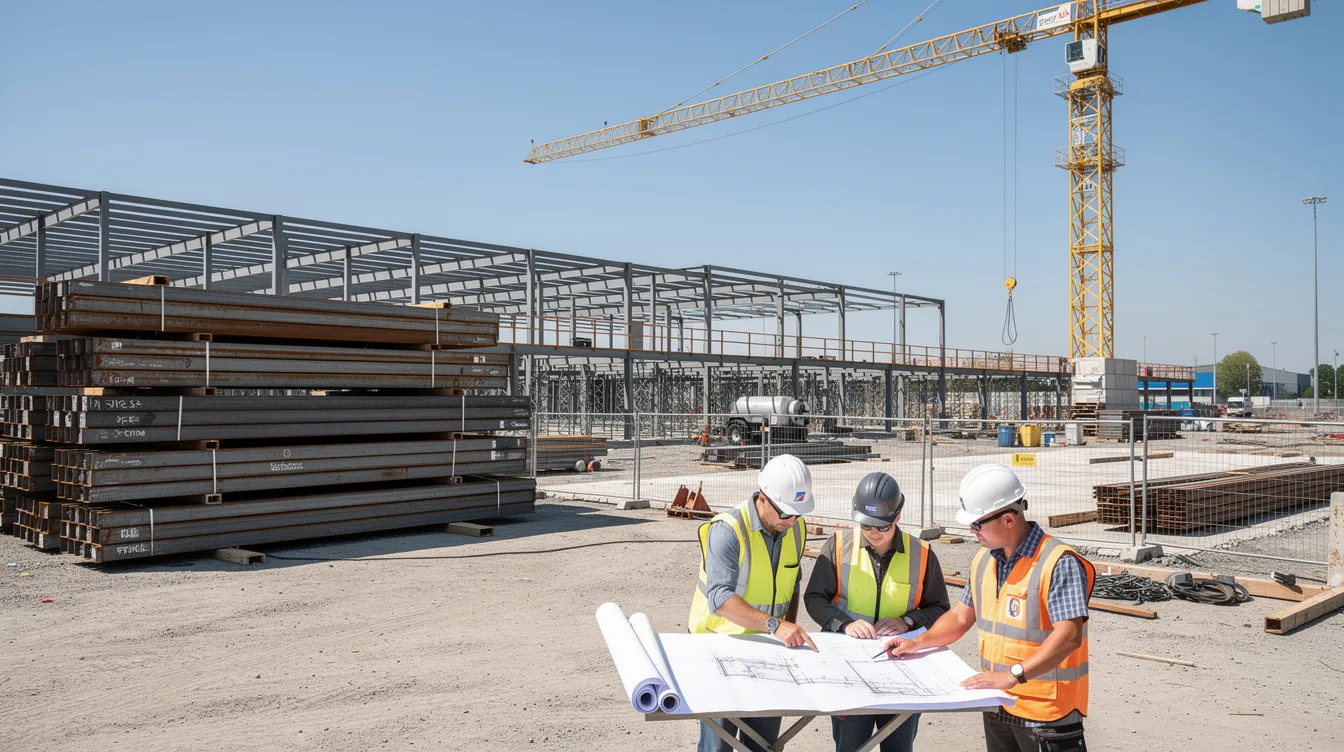
What Has To Be Ready Before the First Structural Steel Truck Rolls In
What has to be in place before structural steel trucks arrive on site? At minimum: access roads that can support heavy loads, a designated laydown area, verified foundations with anchor bolts in the right locations, and written notifications confirming concrete strength. A pre-erection checklist ensures site readiness before steel erection, so treat these items as non-negotiable preconditions, not aspirational targets.
Site preparation typically starts weeks before erection begins, and ground stabilization often requires weeks of preparation before erection as well. Here is an at-a-glance readiness snapshot for superintendents:
- Confirm foundations are complete, with concrete cured to at least 75% of design compressive strength or sufficient to support erection loads. OSHA requires written notification of foundation readiness before steel erection.
- Verify anchor rods and anchor bolts match engineered plans. Any repair, replacement, or modification must have approval from the structural engineer of record. Columns require a minimum of four anchor rods each for column anchorage integrity.
- Stable ground is essential for safe crane operation. Confirm that access and storage areas can support truck weights and crane outrigger loads, not just personal vehicles.
- All necessary permits must be confirmed before erection begins. Confirm all necessary permits are in place before erection starts; this includes crane permits, street closures, and any local jurisdiction requirements.
- Identify incomplete utilities, open excavations, or missing perimeter controls at the construction site. Any of these can halt the steel erection process before the first beam is set.
Clarify Roles: Who Owns Site Readiness and Coordination With the Steel Erector
The “controlling contractor” on a steel erection project is the responsible party for overall site conditions. Their decisions about access, grading, and scheduling set the tone for safe, efficient work. Understanding who owns what prevents finger-pointing when the first truck is circling the block.
What the general contractor or CM typically handles:
- Overall site preparation, including grading, drainage, and level ground for crane pads
- Permits, traffic plans, and written notifications required before steel erection
- Define the steel scope by clarifying project-specific structural steel requirements before final pricing and purchasing are set, so fabrication can proceed without ambiguity
- Inspection planning should begin early in the steel project, and it is standard practice to establish inspection requirements before fabrication begins
AISC’s Code of Standard Practice guides steel project coordination, helps teams stay aligned with industry standards, and outlines the expectations between the owner, general contractor, fabricator, and erector.
What the steel erector expects to see:
- Level, stable crane pads and clear laydown zones
- Verified anchor bolt locations matching erection drawings
- A site-specific erection plan or equivalent coordination document developed by a qualified person
What the steel fabricator contributes:
- Organizing the steel package with clearly documented piece marks
- Aligning shipping sequences with the agreed erection plan
- Quality control on shop output so material arrives ready for installation
A short, formal pre-planning conversation between the superintendent, steel fabricator, and erector should happen before mobilization is approved. This meeting is where access, laydown, crane placement, and the erection sequence get settled, not on the morning the first truck arrives.
Steel Fabrication Checklist for Site Access, Site Layout, and Staging
This is the core steel fabrication checklist section for site access, site layout, and staging. Format it as a field reference your team can scan quickly on a phone or clipboard.
- Access roads: Design delivery routes that handle turning radii for long trailers carrying structural steel members, beams, and open web steel joists. Confirm all-weather access surfaces and control pedestrian and vehicle crossings near crane paths and hoisting operations.
- Laydown areas: Site layout drawings should show dedicated laydown areas for structural steel, steel joists, metal decking, and miscellaneous metals, with enough room for sorting by erection sequence and piece marks.
- Crane and equipment clearance: Walk the site to verify safe working room for cranes, telehandlers, and rigging crews. Check swing radius, overhead clearance, and ground conditions beneath planned outrigger positions. Watch for uneven terrain that could affect stability.
- Overhead hazards: Identify and control overhead power lines at the construction site perimeter and near access roads before the first truck arrives.
- BIM coordination: BIM coordination combines 3D models from all trades, and clash detection identifies conflicts between model elements before they become field problems. LOD 350 is required for effective BIM coordination, and a BIM coordinator manages clash detection and resolution meetings. Clash detection produces a list of conflicts to resolve, so run it before finalizing laydown and crane locations.
A detailed jobsite logistics plan is a natural companion to this checklist. It covers access, materials flow, and crew movement across the full project, not just the steel phase.
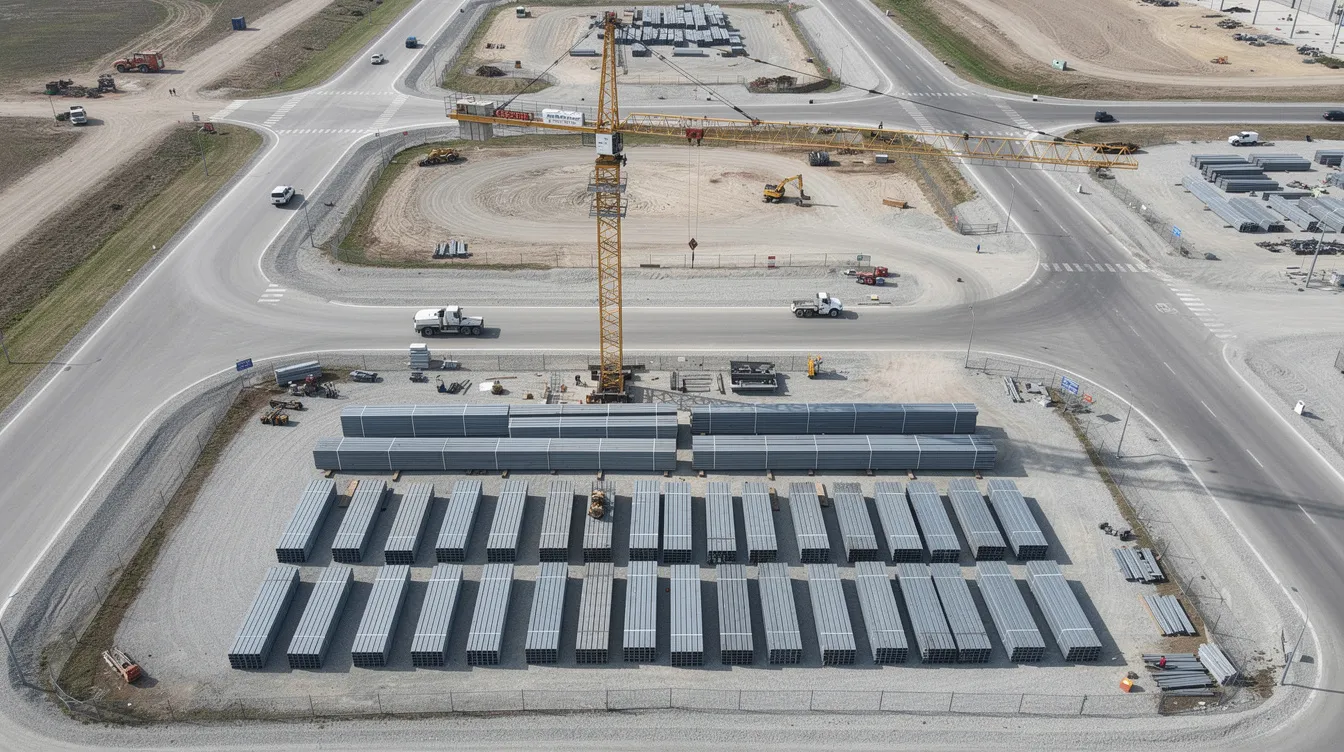
Pre-Planning the Steel Package: Sequencing, Bundling, and Delivery Windows
Effective pre-planning of the steel package reduces double-handling and keeps cranes productive once crews are on site. When fabrication output, trucking, and erection dates are treated as separate tracks instead of one coordinated process, construction time and money disappear.
- Coordinate the steel package with the site-specific erection plan. Divide structural steel by zones, levels, or gridlines that match the erection sequence so each load can move from truck to hook with minimal re-sorting.
- Bundle open web steel joists, beams, bracing, and embed plates in “erection-friendly” loads. When site readiness allows, these bundles should go directly to the crane to reduce laydown congestion.
- Monitor fabrication progress against the erection sequence to catch any production delays before they cascade into idle crane days.
- Use a Bill of Materials (BOM) to verify dimensions, specifications, and material quantities. Confirm the BOM aligns with erection drawings before shipping.
- Cutting methods should minimize waste and ensure dimensional accuracy as per project specifications. Dimensional inspection verifies that fabricated components meet design specifications and tolerances, so shop quality checks prevent rework in the field.
- A comprehensive quality control checklist for steel fabrication covers every stage of production, from material receipt through shipping.
- Agree on delivery windows that avoid local rush-hour congestion on I-85, I-77, or I-95 corridors when hauling heavy loads into urban cores. Long load permits and escorts may add lead time.
Coordinate Steel Erection Logistics With Other Trades Before Mobilization
Steel erection does not happen in isolation. MEP, concrete, envelope trades, and sitework all rely on the same access and laydown space. OSHA recognizes steel erection as a hazardous occupation, and written notification is required before starting steel erection activities, so coordination is not optional.
- Verify that crane locations and hoisting paths are coordinated with other trades so that no employees exposed to moving heavy loads are working or staging material under suspended structural steel members.
- Confirm that temporary utilities, trailers, and stockpiles are located outside crane swing paths and away from planned laydown areas for the steel package.
- Review whether other building systems (MEP risers, curtain wall embeds, concrete finishing) create scheduling conflicts that affect hoisting equipment or access roads during the erection window.
- Hold a pre-mobilization meeting where the steel erector, fabricator, general contractor, and key subcontractors align on the steel erection process, daily work areas, restricted zones, and multiple-lift rigging operations, if applicable.
Keep these as talking points for a field huddle, not legal boilerplate.
Safety and Compliance: Foundations, Notifications, and Overhead Hazards
OSHA’s steel erection regulations are in 29 CFR 1926 Subpart R, and they impose specific requirements that must be met before any steel is erected. Here is how to translate those requirements into your steel erection safety checklist.
- Verify foundation readiness: concrete strength must meet the 75% threshold, anchor rod locations must match plans, and any corrections must be documented and resolved before mobilizing the erection crew. Base plates and column anchorage assemblies should resist a minimum of 300 lbs applied 18 inches from the column face.
- Provide the required written notification to the steel erector confirming concrete or masonry strength and any limitations that affect steel erection activities.
- Under OSHA expectations, restrict other construction work directly below active steel erection unless adequate overhead protection is provided. This protects employees exposed to fall hazards and falling objects.
- Fall protection systems must be used during steel erection activities. North Carolina’s state standard 13 NCAC 07F .0205 extends fall protection requirements for leading-edge work and adds explicit tripping hazard controls beyond the federal standard. South Carolina contractors follow the federal OSHA standards.
- Cranes must be visually inspected before each shift during steel erection. This is not a suggestion; it is standard practice under Subpart R.
- Standards like AISC and AWS guide the quality and compliance in structural steel fabrication. Welding Procedure Specifications (WPS) govern the welding processes used in fabrication, and welding inspections assess weld quality to prevent structural failures in fabricated steel components.
- Non-Destructive Testing (NDT) evaluates welds for internal and surface defects without damaging materials. Mill Test Reports (MTRs) verify steel grades and compliance with project specifications.
- Quality Control (QC) ensures that each fabrication activity meets specified requirements. Inspect materials for defects before fabrication begins to ensure quality. Quality planning checklists identify inspection methods and frequencies across the project.
- Employee training must cover fall protection, rigging, hoisting, and falling-object controls. Special training for connectors and workers in controlled decking zones is a top priority.
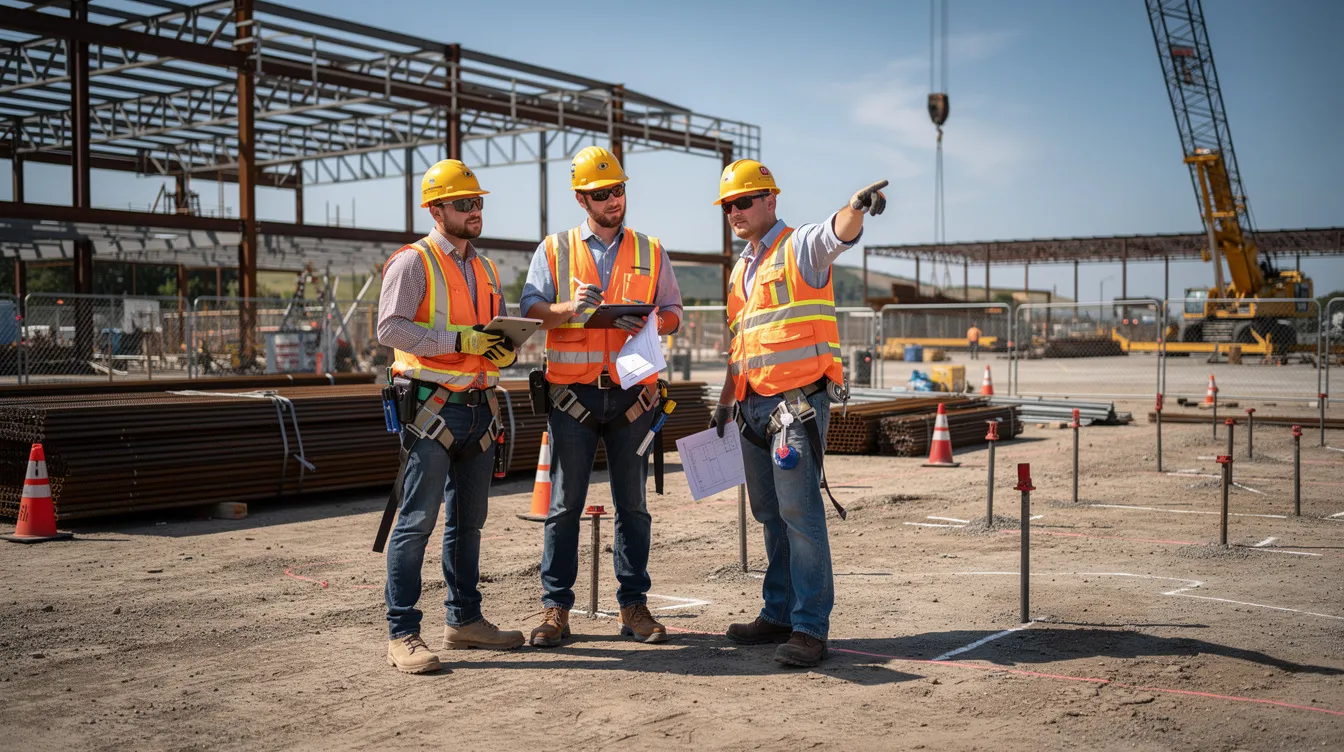
End-of-Shift Stability, Decking, and Material Storage
Structural stability is not just a design issue. Daily decisions about what gets erected, braced, and decked drive safety hazards at the end of each shift. Plan for these before steel arrives, not after the structure is partially up.
- Include temporary bracing, guying, or diaphragms in the erection plan to keep partially erected steel structures stable overnight or during weather events. The structure must be stable at all times during the steel erection process.
- Secure metal decking and loose materials against displacement at the end of the shift. This is especially critical on exposed frames or in windy coastal areas of the Carolinas. Do not place decking bundles on steel joists until bridging and bearing ends are set.
- Surface preparation is essential to prevent premature coating failures in steel fabrication, and environmental conditions must be monitored during coating application to ensure effectiveness.
- Verify cleat and gusset plate positioning for proper connection and strength during assembly. Proper fit-up and alignment during assembly are critical to ensure structural integrity of steel buildings.
- Store steel joists, deck bundles, connection hardware, and miscellaneous metals so they are protected from damage yet positioned close to their final erection area to reduce handling and the need for regular laydown maintenance.
- Documenting inspections and maintenance of quality records is vital for traceability in fabrication and erection alike.
Sample Day-Before-Delivery Review: Putting the Checklist to Work
Use this as a “walk the site with this list” exercise the day or week before the first structural steel delivery. It turns the complete checklist into a quick field review.
- Walk the access roads and confirm the delivery route, turning clearance, and ground conditions can handle the next milestone: the first loaded trailer.
- Review the site-specific erection plan with the erector’s foreman. Confirm the erection sequence, crane placement, and laydown assignments match current field conditions.
- Verify the delivery schedule and confirm that hoisting equipment is on site, inspected, and positioned.
- Walk the crane pad and laydown areas. Confirm level ground, stable surface, and no obstructions from other trades or material stockpiles.
- Final inspections ensure that fabricated components match approved drawings and requirements. Confirm that the final shop inspection confirms completion of all applicable work before material ships.
- Contractors in Charlotte, Raleigh, or Greenville should use this review to check city-specific constraints such as noise windows, street-closure permits, or after-hours delivery requirements that affect crane setup and construction time.
Who signs off: superintendent, steel erector’s foreman, safety manager, and (when applicable) the steel fabricator’s representative.
How ABC Carolinas Can Support Better Steel Arrival Planning
This steel fabrication checklist connects directly to ABC Carolinas’ broader focus on jobsite safety, workforce development, and operational excellence. Each item traces back to a real field problem that costs contractors days, dollars, or safety incidents.
Members can use ABC Carolinas safety training and peer roundtables to refine their own steel erection site preparation practices. Sharing what works (and what does not) across the Carolinas contractor community strengthens the entire project delivery chain.
ABC Carolinas’ existing guidance on building a jobsite logistics plan is a natural companion to this checklist, helping contractors organize access, materials flow, and crew movement for every phase of a project, not just steel.
Take this checklist back to your project managers, field supervisors, and safety professionals. Use it as a conversation tool to ensure safety and review your current steel erection process against what the site actually needs before the first beam arrives.
Before locking the first delivery date, the controlling contractor, steel erector, and fabricator should sit down together to review the site-specific erection plan and logistics map. That single meeting is the next milestone that separates steel jobs that run smoothly from those that start behind and never catch up.


