


Construction risk is shifting in 2026, and Carolinas contractors are feeling that shift most clearly in contracts, subcontractor stability, insurance verification, payment controls, and recordkeeping. For commercial firms in North Carolina and South Carolina, the issue is not whether risk exists. It is whether teams are tightening the controllable points on each project before a dispute, default, or coverage gap turns into a margin problem.
Construction leaders are entering 2026 with a different mix of concerns than they had a few years ago. The conversation is no longer limited to routine safety compliance or broad market uncertainty. It now centers on how cost volatility, subcontractor fragility, contract language, and emerging technology-related issues can combine to create legal and financial exposure on otherwise promising projects.
That matters in the Carolinas because commercial contractors across Charlotte, the Triangle, Upstate South Carolina, and the major I-85, I-77, and I-95 corridors are often delivering complex work through layered subcontracting, compressed schedules, and tightly negotiated owner agreements. In that environment, small control failures can quickly become expensive. A missed notice deadline, a weak indemnity clause, an unverified additional insured endorsement, or a financially unstable specialty subcontractor can create avoidable downstream pressure.
This is not a generic primer on construction risk. It is a narrower briefing on what Carolinas contractors should tighten now at the project level. ABC Carolinas’ existing construction risk management playbook covers the broader framework. This article focuses more specifically on contract, insurance, subcontractor, payment, and documentation controls that deserve immediate executive attention.
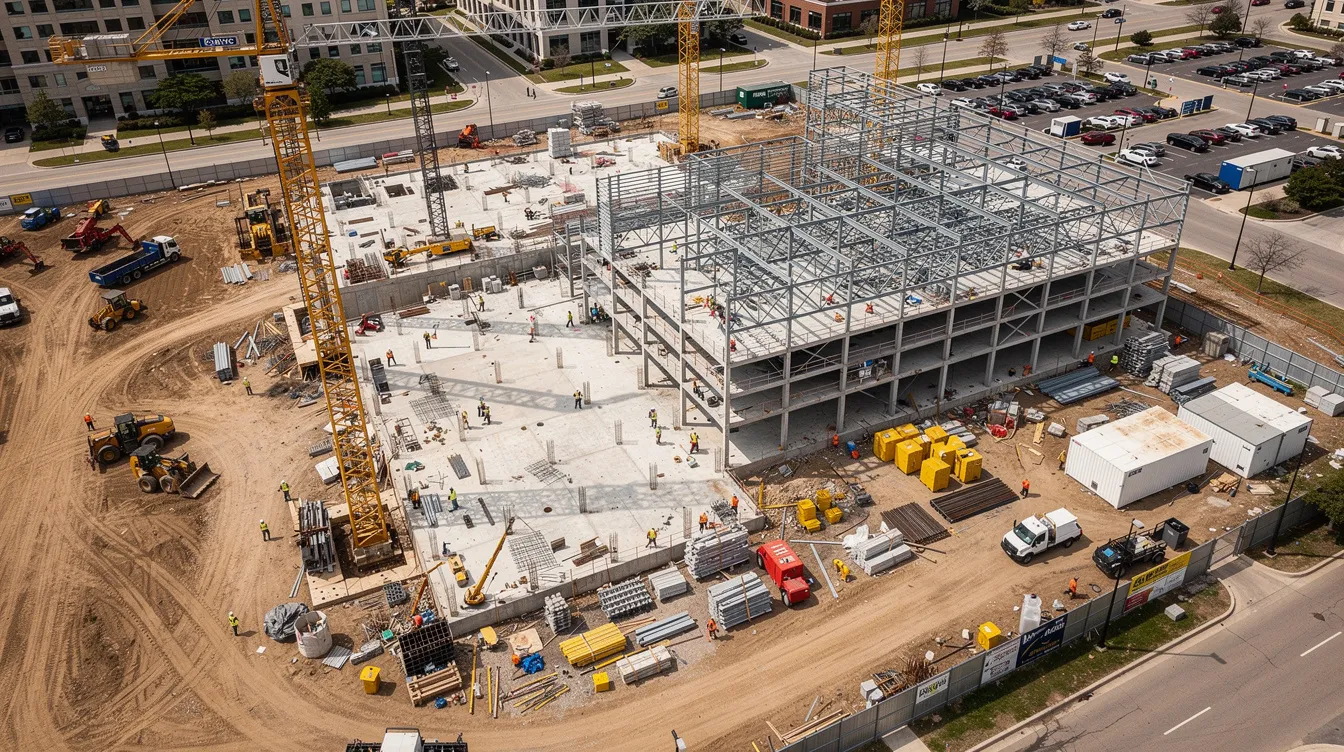
Five pressure points show up repeatedly on commercial jobs in North Carolina and South Carolina. These are the areas where a changing risk environment tends to surface first.
1. Contractual risk transfer. Indemnity, defense, and flow-down language often looks strong on paper but fails when state law limits enforcement or downstream obligations don’t align with upstream promises.
2. Insurance verification. Certificates of insurance are useful administrative documents, but they are not the same as the endorsements and policy terms that determine whether coverage actually applies.
3. Subcontractor financial and operational stability. Prequalification at award is not enough if a trade partner’s staffing, cash flow, or safety performance starts slipping mid-project.
4. Payment and change-order discipline. Good projects still lose money when teams handle notice procedures, billing support, and lien-right preservation casually.
5. Documentation and long-tail claim readiness. Many construction disputes are won or lost on what the project file shows months or years later, not what the team remembers.
Exposure checklist for Carolinas project teams:
These issues matter because they sit at the intersection of legal enforceability, insurance response, and project execution. In other words, they are where risk management and construction become the same operational discipline.
Carolinas contractors should be careful not to assume one contract approach works equally well in both states.
In North Carolina, Chapter 22B-1 generally makes construction indemnity provisions unenforceable to the extent they require a promisor to indemnify or hold harmless another party for that other party’s own negligence. In South Carolina, Section 32-2-10 similarly restricts construction indemnity language by rendering unenforceable provisions that purport to indemnify a promisee against liability for damages arising out of bodily injury or property damage caused by or resulting from the sole negligence of the promisee, its agents, or employees. Those statutory differences matter, and so does the exact wording used in the contract. Contractors should review indemnity and defense language with counsel rather than relying on a one-size-fits-all regional template.
Record retention and latent-defect exposure also deserve attention. South Carolina generally allows certain claims involving improvements to real property to be brought within a longer repose period than North Carolina. North Carolina’s construction-related repose period is commonly discussed as six years, while South Carolina’s is commonly discussed as eight years for this purpose. Those timelines are an important baseline for document retention planning, though contractors should confirm with counsel whether other claim types, warranties, or contractual obligations justify longer retention.
Payment rights also differ. Lien notice requirements, bond-claim procedures, and contract-enforcement details vary between the two states. For that reason, project teams should not assume that a notice practice that worked on one Carolina job will automatically protect rights on another.
ABC Carolinas tracks policy and regulatory developments affecting merit shop contractors in Raleigh and Columbia. Members should treat legal risk as an active management issue and use association updates, brokers, and counsel to keep templates and procedures current.
Most contractors already have some form of risk review. The gap is usually consistency. Risk identification may happen during preconstruction, but if the process doesn’t continue through buyout, mobilization, billing, and closeout, the project team can lose visibility just as exposures become more concrete.
A practical project-level construction risk management process should do four things:
Process checkpoints for every major construction project:
This narrower process helps differentiate immediate project controls from the broader enterprise-wide framework in ABC Carolinas’ risk-management hub.
Contract structure is one of the biggest controllable drivers of construction risk. It is also where many avoidable gaps begin.
Owner contracts and downstream subcontracts should work together. If the prime contract imposes broad defense obligations, tight notice requirements, aggressive schedule remedies, or expanded insurance expectations, review the subcontract package to confirm those risks are being passed through in an enforceable and insurable way.
Clauses to review this quarter:
That last point deserves more attention in 2026 than it did a few years ago. As contractors adopt AI and cloud-based tools for estimating, document review, scheduling, and reporting, contract and policy questions can arise around data ownership, confidentiality, reliance, and error responsibility. Not every project needs elaborate custom language, but leadership should at least confirm which tools are being used and how the resulting information is handled.
Coordinate contract review with counsel and insurance advisors. A clause that appears commercially reasonable can still create uninsured exposure if it is broader than the policy support behind it.
Insurance does not replace operational discipline, but it remains a core part of construction risk management. The key is alignment between contract promises, project realities, and actual policy terms.
For many commercial contractors in the Carolinas, the most relevant coverages include general liability, workers’ compensation, umbrella or excess liability, builders risk, commercial auto, and professional liability where design responsibility exists. The public-facing lesson is simple: verify, do not assume.
Common gaps on NC and SC jobs:
Finance controls belong in this same conversation. Tight billing support, disciplined change tracking, and early visibility into payment drift often matter just as much as the policy itself. When teams lose control of receivables, unsigned change work, or disputed backup, the project can become financially vulnerable long before a formal claim is filed.
A useful executive question is: if a dispute arose today on our largest active job, could we quickly produce the contract, endorsements, change log, notice trail, and payment status in one organized file? If not, the issue is not just administration. It is a risk position.

Subcontractor risk is one of the clearest places where the 2026 risk reset becomes practical. A trade partner can look acceptable at award and still become a problem later because of overextension, staffing loss, poor documentation, safety decline, or simple cash stress.
That is why prequalification should start governance, not end it.
Before award, review:
After award, monitor:
This article intentionally stays narrower than ABC Carolinas’ broader subcontractor risk controls coverage. The focus here is on what executives should tighten now when subcontractor concerns intersect with legal and financial risk.
Many construction losses begin as paperwork failures. A team may perform the work correctly and still weaken its position by missing a notice deadline, failing to preserve lien rights, or letting field directives proceed without written backup.
For Carolinas contractors, payment protection should include both contract compliance and disciplined project administration.
Payment and documentation checklist for project executives:
Documentation discipline is also one of the best defenses against later quality or defect claims. Years after completion, the file often becomes the clearest evidence of what was built, what was directed, and what was accepted at the time.
For related exposure, contractors may also want to review ABC Carolinas’ coverage of construction defects and claims exposure.
Risk management fails when it stays in the office. Superintendents, project managers, and foremen turn contractual protection into usable evidence.
That means operational controls should be simple enough to repeat consistently:
Technology can help, but only when it supports a disciplined process. Mobile reporting, cloud document platforms, BIM coordination, and AI-enabled review tools can improve visibility. They do not replace clear accountability. In fact, as noted earlier, they can add their own risk questions if access, data handling, and reliance are not carefully considered.
ABC Carolinas members should build these habits into leadership development, safety training, and field education so that risk awareness becomes part of everyday execution rather than an occasional legal review.
If your team cannot fix everything at once, use this quick prioritization tool on each active project. Start with the first question you answer “no” to. That is usually where your most urgent tightening effort belongs.
This tool supports the article’s narrower legal-insurance-payment focus rather than repeating a full enterprise risk framework.
The practical next step is straightforward: choose one active project and run it through the decision tool above this week. Then identify the top two or three controls your team needs to tighten in the next 60 to 90 days.
For some firms, that will mean revising subcontract templates. For others, it will mean cleaning up insurance verification, retraining project managers on notice procedures, or improving document retention and change-order workflows.
ABC Carolinas supports merit shop commercial contractors, specialty trades, and suppliers across North and South Carolina with training, peer groups, advocacy, and practical operating resources. Members looking to strengthen their risk position should start with the association’s risk-management resources, then connect with staff about education, roundtables, and peer discussions on contract risk, subcontractor controls, and project administration.
The firms that respond best to a changing risk environment are not necessarily the firms avoiding all risk. They tighten controllable exposures before issues become claims, coverage fights, or lost margin.
These short answers address common follow-up questions from construction leaders in the Carolinas.
Review companywide procedures at least annually, and revisit project-specific risk items at major milestones such as award, kickoff, major scope change, and closeout. Faster-moving or more complex jobs may justify a tighter review cadence.
Start with indemnity, defense, and additional insured requirements. Those provisions heavily influence how liability is allocated and whether insurance is expected to support that allocation. They also require state-specific review in both North Carolina and South Carolina.
Yes. It may be simpler than a large general contractor’s process, but smaller firms still need consistent controls for contracts, insurance, documentation, change work, and payment rights. Informal habits often lead to avoidable disputes.
Used well, mobile reporting and cloud systems make it easier to capture photos, daily reports, RFIs, and communication in real time. That improves visibility and preserves evidence. But contractors should also think about data access, retention, and reliance when using AI-enabled or cloud-based tools.
Members can start with ABC Carolinas’ risk-management playbook and related resources on subcontractor controls, training, and peer learning. Those programs help firms turn one-off fixes into repeatable business practices across projects in North and South Carolina.


