


In September 2026, construction quits across the United States jumped to 198,000, up 46,000 from August. For anyone managing projects, crews, or workforce plans in the Carolinas, that number is not a distant headline. It is a direct signal that the North Carolina and South Carolina construction workforce is heading into 2027 under renewed pressure: tighter retention, rising wage competition, and more experienced workers willing to walk.
Quits are voluntary departures. Workers who quit are not being laid off or let go. They are choosing to leave because they see something better, feel confident in their options, or are dissatisfied enough to take the risk. When quits spike in an industry that already cannot fill its open positions, the result is not just a recruiting problem. It is a project continuity problem. Construction job openings held near 298,000 nationally in September, confirming that construction workforce shortages continue even as turnover accelerates.
This article connects the September labor data to practical decisions for Carolinas contractors: what to watch, which roles are most exposed, how to adjust bids and schedules, and what to do in the next 60 days before 2027 planning locks in.

The Bureau of Labor Statistics defines quits as voluntary separations initiated by the employee. In practical terms, the quits rate measures workers’ willingness or ability to leave jobs. When that rate rises in construction, it tells employers that their people have options and are acting on them, which is especially damaging when firms already cannot find enough qualified workers.
Here are the key September 2026 figures for the construction sector nationally. Total quits reached about 198,000, with the quits rate at about 2.4 percent of construction employment. At the same time, job openings in construction stood at roughly 298,000, putting the openings rate near 3.4 percent. Total nonfarm quits across all industries rose to 3.4 million for the month.
Quits vs. Openings vs. Unemployment: These three indicators tell different stories. Unemployment measures people without jobs who are looking. Openings measure unfilled demand from employers. Quits measure how freely workers are moving between opportunities. A market with low unemployment, high openings, and rising quits is not cooling down. It is tightening. For contractors, quits are the most dangerous of the three because they remove experienced people from active projects, not just from the available labor pool. That is what drives project delays, overtime, and rework.
Both North Carolina and South Carolina entered fall 2026 with labor conditions that make a quits surge especially painful. North Carolina’s unemployment rate stood at 3.4 percent in September 2026, among the lowest in its recent history. South Carolina’s rate had fallen below its recent average. Both states report strong construction employment growth supported by population increases and infrastructure development, which means demand for workers is climbing, not leveling off.
Construction employment in North Carolina reached approximately 296,400 workers as of late 2026. South Carolina’s construction employment reached 130,200 workers in September 2026. Construction unemployment rates in North Carolina and South Carolina are notably low at 1.8 percent and 2.2 percent, respectively. Both North Carolina and South Carolina maintain low union participation rates, below 3 percent, meaning most firms compete for their own workers through wages, culture, and opportunity rather than through hiring halls. Both states face tighter labor availability, especially with an aging workforce.
The corridors where competition is most acute include:
General contractors in these markets will feel quits first through longer vacancy times, higher offers, and more counteroffers needed to keep key people.
When a foreman or superintendent quits mid-project, the damage extends well beyond the cost of a job posting. The institutional knowledge that person carried (site conditions, subcontractor relationships, schedule dependencies, safety protocols) walks out with them. Remaining crew members absorb extra responsibility, overtime hours climb, and the learning curve for a replacement creates a productivity gap that can last weeks.
Both North Carolina and South Carolina face significant challenges filling hourly craft and salaried positions because of a lack of qualified applicants. According to industry survey data, 42 percent of firms experience project delays due to staffing deficits. Commercial projects in North Carolina face 20 to 30 percent delays due to crew shortages. Those delays are not just scheduling inconveniences. They translate directly into margin erosion through extended general conditions, equipment rental overruns, and liquidated damages on time-sensitive contracts.
Safety risks also increase when less experienced construction professionals are moved into supervisory or safety-critical roles before they are ready. A data center project in the Charlotte area, for example, requires tight coordination across high-voltage electrical, cooling systems, and fire protection. Losing a mechanical or electrical lead on that type of project can cascade into change orders, inspection failures, and rework that no bid margin can absorb.
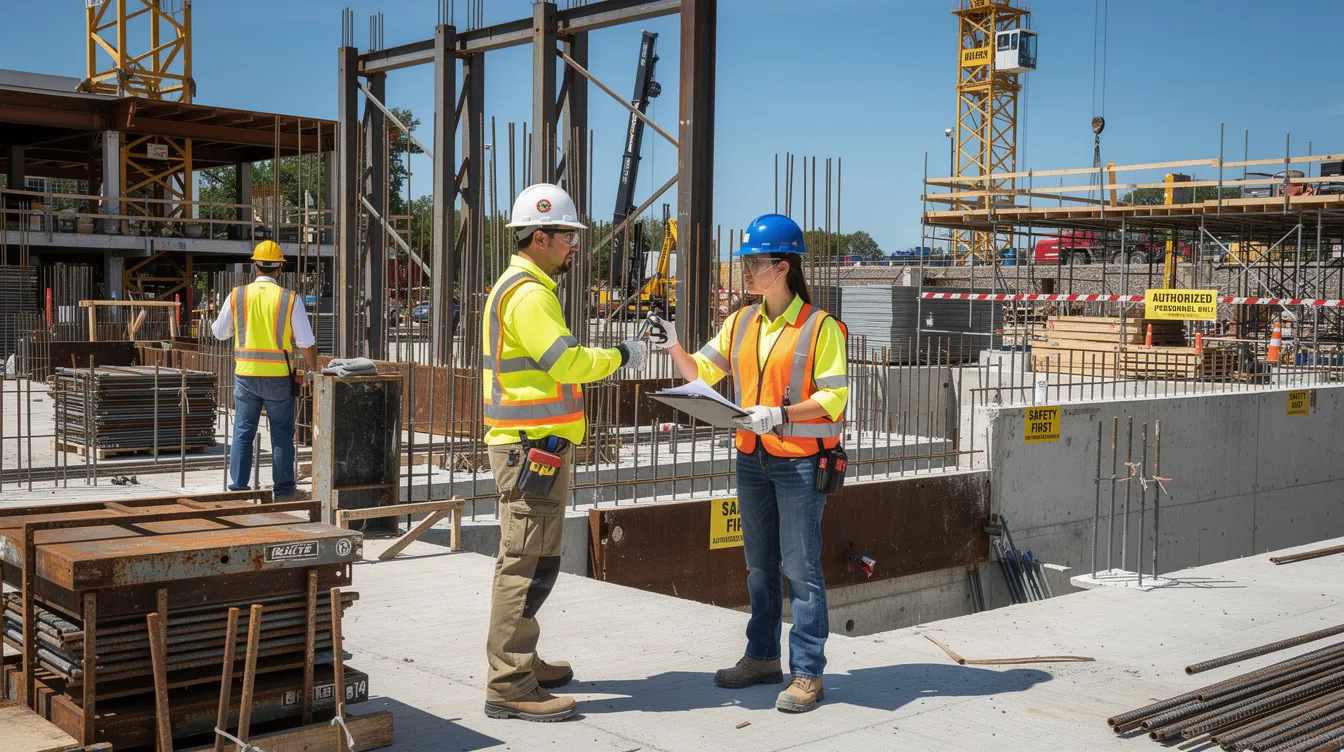
Not all quits carry equal weight. The positions that cause the most damage when vacated combine technical expertise, coordination authority, and safety accountability. Over 80 percent of firms report difficulty hiring skilled trades in North Carolina, and 72 percent of firms in the Triangle struggle to fill salaried positions. North Carolina has an estimated 10,000 unfilled construction jobs as of 2025, and demand for construction workers varies by project type, with specialized skills in high demand in both states.
Specialty trade contractors are the largest workforce segment in North Carolina construction, while they account for roughly 76,300 positions in South Carolina. These firms are most exposed to quits in supervisory and lead roles because their projects depend on a smaller number of highly skilled workers.
Sectors like data center construction, healthcare, industrial, and large commercial in both states all chase the same limited pool of senior leaders. Executives should map which employees sit in single-point-of-failure positions right now:
If any of those roles are filled by a single person with no backup, the firm has a retention vulnerability that the September quits data says competitors are actively testing.
The September 2026 quits surge should trigger a hard look at 2027 bid assumptions. Low unemployment increases competition for skilled construction roles, and that competition flows directly into labor costs, mobilization timelines, and crew productivity. Firms that bid 2027 work using 2025 labor assumptions will likely underestimate both cost and duration.
For large commercial and data center projects in Charlotte, the Triangle, and Upstate South Carolina, schedule conservatism is not pessimism. It is risk management. When superintendents and lead trades are scarce, even a well-planned critical path can slip if a key departure forces restructuring. Involving trusted trade partners early in planning can help protect the schedule when staffing is thin.
Retention risk should also factor into go/no-go decisions. Pursuing too many projects simultaneously when leadership and critical trades are near capacity increases the odds of a quit-driven disruption across multiple jobs at once. Disciplined project selection in a tight labor market protects margins better than chasing volume as workforce shortages accelerate.
Bid and Schedule Assumptions to Revisit After a Quits Spike:
Construction employers across the Carolinas have a narrow window before finalizing 2027 budgets and project commitments. The next 30 to 60 days should include a focused retention review that goes beyond general satisfaction surveys.
Start by identifying the top 10 to 20 percent of employees by project impact, then review their current compensation, benefits, and career trajectory. Weekly mean earnings for construction workers in North Carolina average about $1,511.55, while weekly mean earnings for construction workers in South Carolina average $1,381.29. Wage competition for construction workers is intensifying in both states due to high demand, especially for roles that data center and industrial projects are pulling at premium rates. North Carolina’s reliance on immigrant labor in construction is approximately 37 percent, which means federal immigration policy shifts add another layer of supply risk that firms should monitor.
Non-wage retention tools matter as much as pay in keeping construction professionals on your team. Safety culture, predictable schedules, foreman and superintendent development paths, and clear advancement opportunities consistently rank among the reasons experienced workers stay rather than chase the next offer.
Retention steps for Q4 2026:
Investing in training can reduce hiring costs by 50 percent compared to external recruiting, making retention and development a financial strategy, not just an HR initiative.

Higher quits reinforce a lesson that Carolinas contractors cannot afford to ignore: firms that rely solely on the external labor market to fill skilled positions will always be one resignation away from a crisis. Educational programs struggle to provide enough skilled graduates for construction jobs, so building internal pipelines is not optional. It is a competitive necessity.
Apprenticeship programs improve skilled labor availability in construction and produce measurable returns. Over 80 percent of apprentices remain in construction after training, and apprenticeship programs can reduce hiring costs by 50 percent. Investing in apprenticeship programs is a measurable business strategy that converts entry-level workers into journey-level trades and eventually into the foremen and superintendents that firms cannot find on the open market. Expanding career and technical education partnerships with community colleges and technical colleges strengthens the front end of that pipeline, while leadership development builds depth at the supervisory level.
Pipeline strategies to fund in 2027 budgets:
Quits and construction workforce shortages will not hit every market the same way. Major investments in data centers and industrial manufacturing drive significant construction demands across the Carolinas, but the pressure concentrates in specific corridors and sectors.
Charlotte and the I-77 corridor face combined pressure from commercial, industrial, and growing data center construction. Firms compete for MEP trades, superintendents, and project managers against projects offering substantial compensation premiums. Strong demand in this corridor means even well-compensated workers receive regular recruiting calls.
The Triangle’s mix of life sciences, healthcare, and institutional projects creates intense competition for project managers, QA/QC leads, and specialized trades. Available candidates are thin, and firms that lose a senior project manager to a competitor often wait months for a comparable replacement.
Manufacturing expansion and infrastructure projects shape Upstate South Carolina and the I-85 corridor. Construction labor demand in South Carolina is heavily driven by industrial manufacturing and infrastructure projects, pressuring civil and industrial trades and limiting availability for smaller South Carolina contractors and rural markets. Along the I-95 corridor, firms may find labor by the number, but often lack the specialized skills needed for technically complex work, so even a few quits among trained workers can delay local projects.
The common thread across all these sub-regions is that the economy continues to generate construction demand faster than the sector can develop qualified workers. Firms that treat workforce planning as a seasonal task rather than a continuous strategy will feel the September quits signal most acutely.
September’s 198,000 construction quits and elevated openings confirm what Carolinas contractors are already feeling: construction workforce shortages continue into 2027, and the firms that act first on retention and internal pipeline development will carry a meaningful advantage. The data is not ambiguous. Workers are leaving voluntarily, openings remain unfilled, and both North Carolina and South Carolina face hiring difficulties for skilled positions, affecting project timelines across every major corridor.
The single most productive step an executive team can take right now is a year-end critical roles and retention review tied directly to 2027 bid and staffing plans. Map your exposure, benchmark your compensation, and build the training and development budgets that turn homegrown talent into your competitive edge. Labor-market indicators like quits and openings should feed directly into strategic planning in the Carolinas, not be treated as background noise.
ABC Carolinas offers workforce development efforts, apprenticeship programs, safety training, and leadership development resources that help construction firms move from reactive hiring to deliberate capacity building. If September’s quits surge is the signal, the response is not to wait for conditions to ease. It is to build the workforce that keeps your projects on schedule and your margins intact.


