


On busy commercial construction sites across the Carolinas, safety communication is only as good as the last person who actually saw the message. As projects grow larger, schedules compress, and crews rotate, getting every worker on the same page with current hazards and expectations becomes a daily operational challenge. Digital jobsite displays offer a practical, field-first approach to closing that gap without replacing the foreman leadership and hands-on safety culture that define merit shop construction.
As construction projects in the Carolinas scale up in size and pace, keeping every person on site aligned on safety expectations gets harder by the day. The communication challenge is not theoretical. It shows up in rework, delays, incidents, and conflict.
Common breakdowns on commercial construction projects include rotating subcontractors who arrive without full orientation, compressed schedules along the I-85, I-77, and I-95 corridors that force rapid sequencing changes, and multiple prime trades working side by side with different safety norms. When dozens of firms occupy the same site, coordination gaps emerge fast.
Traditional construction communication methods struggle to keep up. Paper safety boards require manual updates and often sit unchanged for days. Scattered emails rarely reach craft workers on scaffolding or in trenches. Radio chatter gets lost in jobsite noise, which can impede effective communication even under ideal conditions. Complex jargon can confuse new workers arriving mid-project.
This matters directly to merit shop construction safety because contracts in merit shop construction are awarded based on value and cost-efficiency. Performance, productivity, and competitive positioning all depend on consistent, repeatable safety communication that reaches every crew. Merit shop contractors have the same obligations to ensure workplace safety as unionized counterparts, and their reputation rides on delivering it through internal leadership and company-specific programs.
The problem is especially acute in specific Carolinas contexts: high-rise work in Charlotte where vertical logistics limit information flow, data center construction near the North Carolina tech corridor where campus scale creates multiple isolated work zones, and industrial projects in Upstate South Carolina where heavy mechanical trades overlap with civil and structural crews. Industry data underscores the stakes: 80% of jobsite conflicts arise from communication breakdowns, effective communication reduces jobsite conflict costs by $10,948 on average, and 48% of rework results from miscommunication on construction sites. Those numbers hit the bottom line hard.
A digital jobsite display is a weather-resistant electronic screen or board-typically LED or LCD-mounted on or near the construction site to share real-time safety, project, and operational information. These systems range from simple slide loops to dashboards integrated with project management software or live data feeds, depending on a contractor’s technology maturity and budget.
Typical locations include:
Compared with static construction safety boards and paper postings, digital displays offer several practical advantages: higher visibility (screens rated at 1,000+ nits for outdoor legibility), instant update capability from a central office or mobile device, and the ability to integrate with other jobsite communication tools like weather APIs or scheduling platforms.
These systems are not a substitute for competent person oversight, hazard controls, or OSHA-compliant training. They are a communication support tool-one that makes safety messages harder to miss on a live construction site.
Merit shop contractors can use digital construction safety boards to keep core messages front and center at the exact locations where crews start and finish their shifts. The goal is simple: make the most important safety information unavoidable.
Priority safety messages to feature daily include:
In humid Carolinas summers, digital boards can display real-time weather alerts for heat index, approaching storms, and lightning risk. When a thunderstorm appears on radar, a safety coordinator can push an immediate safety update to every screen on site, giving foremen a visible reference point to communicate shelter-in-place decisions.
Large-format, bright displays cut through jobsite noise and clutter far better than paper signs, especially on large tilt-wall, healthcare, or campus projects with multiple access points. Clear safety signage significantly reduces workplace accidents, and digital formats amplify that advantage by keeping content current. Clear communication fosters a culture of safety on construction sites, and visibility is the first step.
For readability in direct Carolina sunlight, content should use clear fonts, simple icons, and limited text per slide-no more than three to four key points per screen, readable at 20 feet or more.
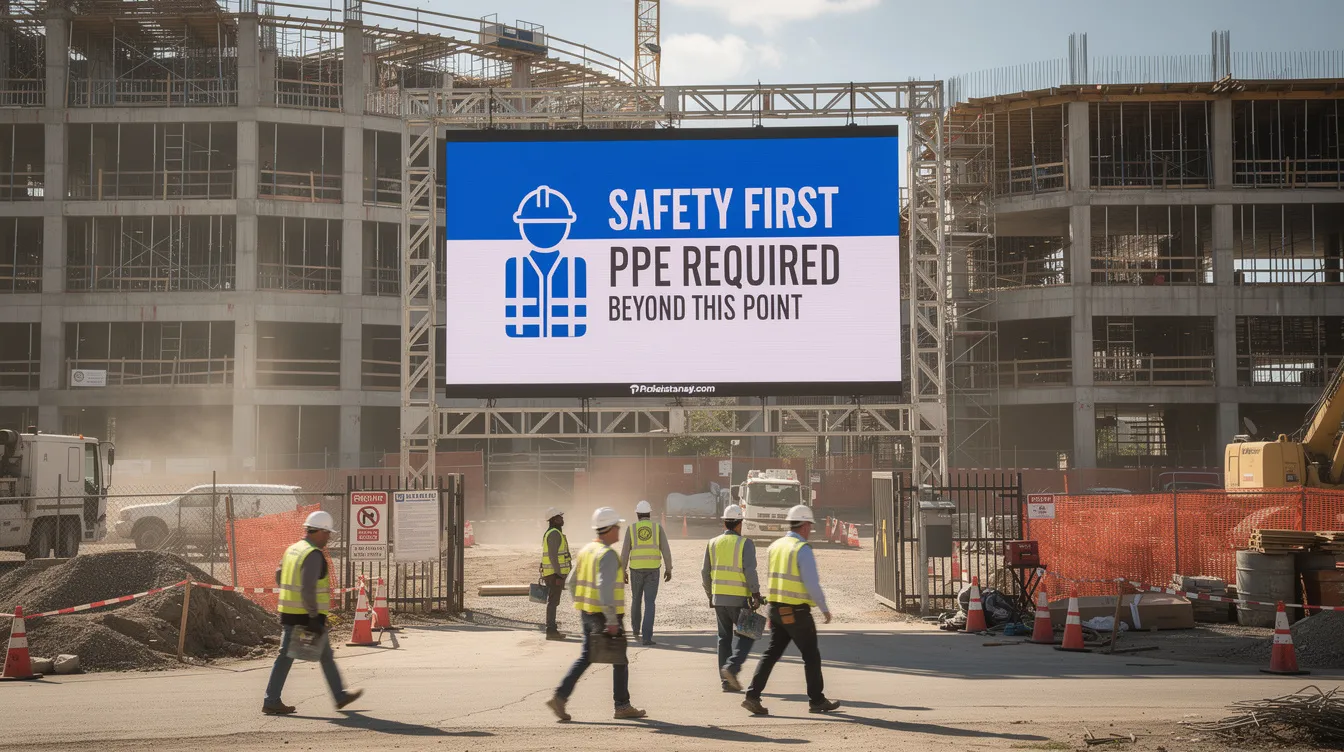
Multi-employer commercial construction projects in the Carolinas often involve dozens of subcontractors and suppliers over the life of a construction project. Multiple contractors on a merit shop project must coordinate to prevent hazards, and consistent messaging is the foundation of that coordination.
Digital jobsite displays support consistent onboarding messages for new crews by posting mandatory orientation reminders, site logistics maps, parking rules, and sign-in procedures at every entry point. When a new electrical crew shows up on a Tuesday morning for a two-week scope, they see the same baseline expectations that every other trade has been working under since day one.
Construction companies can standardize daily or weekly safety themes on displays so that every shift sees the same focus, regardless of when they arrive on the construction site. One week might highlight fall protection; the next, trenching and excavation safety. Regular safety meetings enhance communication and safety culture, and a visible, rotating theme board reinforces those meetings in between.
In typical regional work-interior build-outs in Charlotte towers, road-widening projects along I-95, or mechanical installations in Upstate SC manufacturing facilities-crews change frequently. Better communication reduces confusion, cuts rework, and keeps projects on schedule.
Standardized digital messaging aligns with merit shop principles by giving every contractor on site equal, easy access to the same safety expectations and performance standards. No crew gets left out because they arrived after the morning huddle.
Static safety signs can become outdated within hours when sequencing, weather, or equipment conditions shift on a live job site. A paper board posted at 6 a.m. may not reflect a crane relocation at 10 a.m. or a sudden restricted-access zone at noon.
Specific scenarios where rapid digital updates matter:
Office communication teams or safety managers can push updates from the trailer or main office to multiple jobsite displays simultaneously, improving field and office communication speed. Real-time communication software enhances safety protocol implementation by ensuring the current plan-not yesterday’s plan-is what workers see.
This enhances accountability: every foreman can point to the same on-screen message when reinforcing new instructions with their crews. There is no ambiguity about what the current rules are. Organizing daily toolbox talks can significantly reduce incident rates on job sites, and digital displays give those talks a visible, persistent companion.
A recommended workflow: assign a single competent person or safety coordinator to own display updates each day. That person reviews the day’s work plan, weather conditions, and any incident reports, then publishes the day’s content before the first crew arrives.
Many Carolinas construction teams are multilingual, and language barriers can hinder communication on multicultural job sites. If a critical hazard alert is posted only in English, a significant portion of the workforce may not fully understand the message.
Digital jobsite displays can alternate screens between English and Spanish-and other relevant languages-to ensure critical safety instructions are broadly understood. Multilingual safety resources improve understanding on diverse sites, and digital formats make language rotation automatic rather than requiring duplicate printed signage.
Beyond text, displays should feature:
Inclusive, multilingual visuals support merit shop principles by giving every craft professional the same clear understanding of expectations and the same path to safe, high-quality performance on construction projects. An open communication culture encourages workers to voice safety concerns, and workers should be able to report unsafe conditions without retaliation as part of that safety culture. Displays that invite near-miss reporting or highlight anonymous concern channels reinforce that message visually.
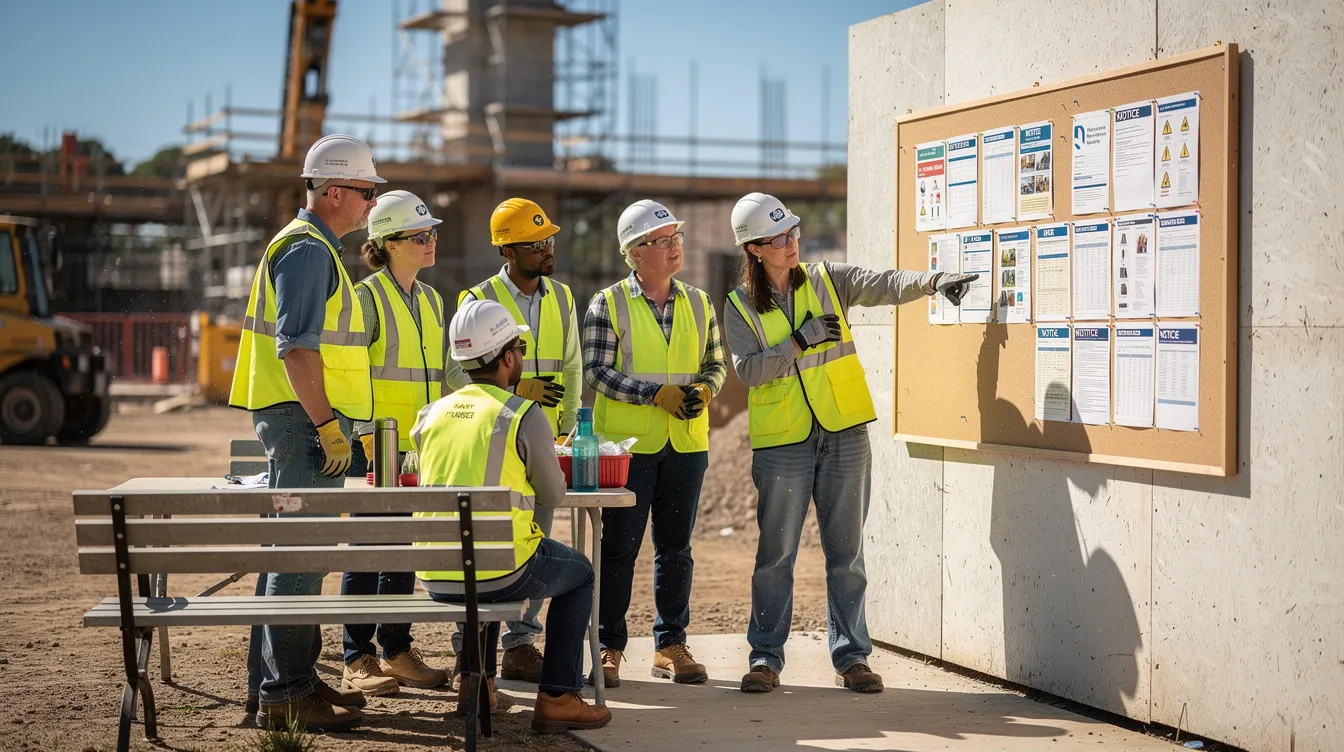
Digital jobsite displays deliver the best solution for field communication when they are integrated into a broader, structured safety program rather than treated as standalone gadgets. Merit shop contractors manage safety through internal leadership and company-specific programs, and displays should amplify those systems rather than operate in parallel.
Contractors can sync board content with their Job Hazard Analyses, pre-task plans, and internal safety calendars so that digital messages reinforce existing processes. Merit shops must maintain a written safety program and conduct regular jobsite inspections-displays provide a visible channel to communicate inspection schedules, findings, and corrective actions to the field.
ABC Carolinas plays a direct role in safety leadership for construction professionals across both states. The association’s Construction Safety Training offers a structured framework that pairs well with digital communication tools. Merit shop construction emphasizes continuous safety training for all craft workers, and displays can promote upcoming training sessions, toolbox talk topics, and certification deadlines.
The effectiveness of safety management increases with executive engagement in safety KPIs. Displays that show leading indicators-near-miss counts, observation trends, days without a recordable-give project managers and executives a visible connection to field performance. Strong documentation practices prevent misunderstandings on construction projects, and digital reporting tools facilitate systematic documentation of incidents when paired with display-based awareness campaigns.
Merit shops must follow OSHA regulations concerning hazard communication and recordkeeping. Safety protocols include drug-free workplace policies and enforcement of personal protective equipment. Displays can serve as a persistent reminder of these requirements without relying solely on orientation packets that sit in a trailer. Integration with technologies like heat stress wearables, as outlined in ABC Carolinas’ Heat Stress Wearables, and structured safety planning from the ITP Safety Management, shows how displays fit within a larger safety ecosystem.
Digital jobsite displays are powerful communication tools, but they do not replace human supervision or regulatory compliance obligations. Understanding their limits is essential to deploying them effectively.
Displays cannot:
All merit shop job sites must adhere to federal OSHA standards under 29 CFR 1926. Contractors must comply with federal OSHA regulations for construction safety, and OSHA specifically requires construction employers to provide training for recognizing hazards. A screen cannot deliver that training or verify comprehension.
Field leadership, daily huddles, and in-person safety coaching remain essential, especially on high-risk work such as steel erection, excavation, or confined-space operations. Properly implementing fall protection systems is critical on merit shop construction sites, and no display can physically install a guardrail or inspect a harness.
Overloading displays with too much text or too many rotating messages can cause workers to tune them out, reducing their value for effective communication. Keep content focused: if everything is highlighted, nothing stands out. ABC Carolinas’ Construction Technology offers broader guidance on keeping technology expectations realistic and strategic.
Before investing in digital signage for construction sites, safety leaders and project executives should evaluate options against a concise set of criteria.
Hardware considerations:
| Criterion | What to Look For |
|---|---|
| Screen durability | IP65 or higher weather rating for outdoor use |
| Brightness | 1,000+ nits for Carolina sunlight readability |
| Power | Hard-wired preferred; solar or generator backup for remote sites |
| Connectivity | WiFi with cellular failover |
| Security | Locking, tamper-proof housing to reduce theft risk |
Communication-focused criteria:
Construction communication software can reduce project manager site visits by 2.5 hours per week when integrated properly. That time savings compounds across multiple projects.
Start with a pilot on one high-visibility job in Charlotte, the Triangle, or Upstate South Carolina. Measure impact on near-miss reporting, orientation compliance, PPE observations, or whether foremen reference display content in daily huddles. ABC Carolinas’ Construction Document Control reinforces the importance of version control and consistent messaging in any digital communication process.
Technology only improves merit shop construction safety when paired with disciplined field and office communication habits. A display gathering dust at a gate entrance creates zero value. A display referenced in every toolbox talk and site walk creates a well-oiled machine of repeatable safety messaging.
Three-step action plan:
Pair the pilot with foreman and superintendent training to ensure daily huddles, toolbox talks, and site walks reference what is on the display. Merit shop construction relies on individual merit and performance for hiring and promotions-and that same performance focus should extend to how teams communicate safety expectations.
Explore ABC Carolinas safety courses and resources through the Construction Safety Training For Carolinas Merit Shop Contractors Complete Program Guide to strengthen safety execution alongside any technology investment. Contractors interested in how mental health and field communication intersect should also review Mental Health in Construction.
Better communication, clearer expectations, and safer jobsites are competitive advantages for Carolinas contractors committed to free enterprise. The best technology in construction is the tool your field teams actually use every day.
These FAQs address practical questions Carolinas contractors may have beyond the main article content.
Costs range from a few thousand dollars for a single rugged outdoor screen with basic software to significantly more for integrated multi-screen systems with cloud-based content management and live data feeds. Total investment depends on screen size, quantity, mounting requirements, power infrastructure, and software licensing. Many construction companies start with one or two displays at key access points to control cost and learn what content is most effective before expanding across multiple construction projects. Displays used for both safety and schedule communication can offset cost by consolidating what previously required separate boards, printed documents, and manual updates. Hardware can also be relocated across jobs over several years, spreading the investment.
Even when a general contractor owns the display system, trade partners benefit by aligning their daily huddles and pre-task plans with the safety themes and alerts shown on the boards. Smaller firms can collaborate with GCs to request specific orientation reminders or hazard highlights be added to the display when relevant to their scope of work. For their own yard or fabrication areas, subcontractors may consider low-cost, smaller-format digital signage to reinforce internal safety communication. The key valuable insights come from treating the display as a shared resource that supports enhancing communication across every company on site.
Designate a single owner-often the site safety professional or project engineer-to manage daily updates aligned with the project’s safety plan and upcoming work. A simple content schedule works well: core rules and emergency contacts stay constant, while daily hazard focus, weather alerts, and schedule-specific messages rotate. Encourage feedback from foremen and crews about which messages are most useful, and adjust content based on incident trends and field observations. Treating this as a user-friendly process rather than a burden keeps content fresh and relevant.
Displays do not guarantee compliance, but they can demonstrate a contractor’s proactive communication efforts during OSHA or state inspections in North and South Carolina. Insurers and brokers may view strong, documented safety communication practices-including use of digital boards-as one positive factor in overall risk management discussions. The real value comes when digital messaging is backed by documented training, Job Hazard Analyses, and enforcement-not just the presence of hardware on site. Sending messages through a visible, trackable system strengthens a contractor’s documentation trail.
Digital displays serve as the front-of-house visual layer that can surface insights from other technologies-heat stress alerts from wearables, access control data, leading indicator dashboards, or push notifications from mobile safety apps. Contractors already exploring wearables or mobile field apps should review ABC Carolinas resources like Construction Safety Technology A Carolinas Playbook For Heat Stress Wearables to design coordinated solutions. The goal is an ecosystem where data from various tools turns into clear, field-ready messages that workers can act on quickly and safely, creating a system where field and office teams operate from the same information at the same time.


