


August 2026 delivered another round of input cost increases that Carolinas contractors cannot afford to ignore. If your estimating team is still working off pre-August supplier quotes, your margins are already at risk. Here is what merit shop construction firms across North Carolina and South Carolina need to adjust right now.
August 2026 materials prices moved sharply for several core construction inputs, and merit shop construction contractors across the Carolinas must immediately tighten estimating, procurement, and contract language to protect margins on active and upcoming bids.
BLS Producer Price Index data through mid-2026 showed year-over-year construction input costs running approximately 7% higher, with specific categories moving far more aggressively. Steel mill products climbed roughly 22.5% year over year, aluminum mill shapes surged around 40.5%, and diesel fuel jumped approximately 44%. For Carolinas contractors preparing Q4 2026 and early 2027 bids, these numbers are not abstract. They represent buyout gaps, margin compression, and potential losses on work already in the pipeline.
For merit shop construction contractors and commercial construction firms in North Carolina and South Carolina, this pressure hits directly at competitiveness. Merit shop construction is a free-enterprise, open-competition approach in which contractors are not bound by mandatory union agreements and make hiring and advancement decisions based on individual merit, qualifications, and performance. That model gives firms more flexibility to respond to market shifts, but recent materials volatility still demands tighter estimating, procurement, and contract controls to protect profit.
The immediate concern is not general inflation. It is the specific trades and materials where a 3 to 10% swing can wipe out project margin: reinforcing steel, structural steel shapes, electrical switchgear, roofing membranes, and diesel-dependent freight. Firms operating under the merit shop model can adjust faster, but faster does not mean automatic. Internal bid protocols need updating within weeks, not months.
This section focuses on the practical moves that matter most right now: adjusting bid strategy, tightening contract language, rechecking procurement assumptions, and responding to regional demand conditions while using the operational advantages, workforce development, safety training, and advocacy support available through ABC Carolinas.
Three actions to take right now:
Material pricing isn’t uniform across every scope. Knowing where the sharpest moves are happening lets estimators focus their risk management on the categories that matter most.
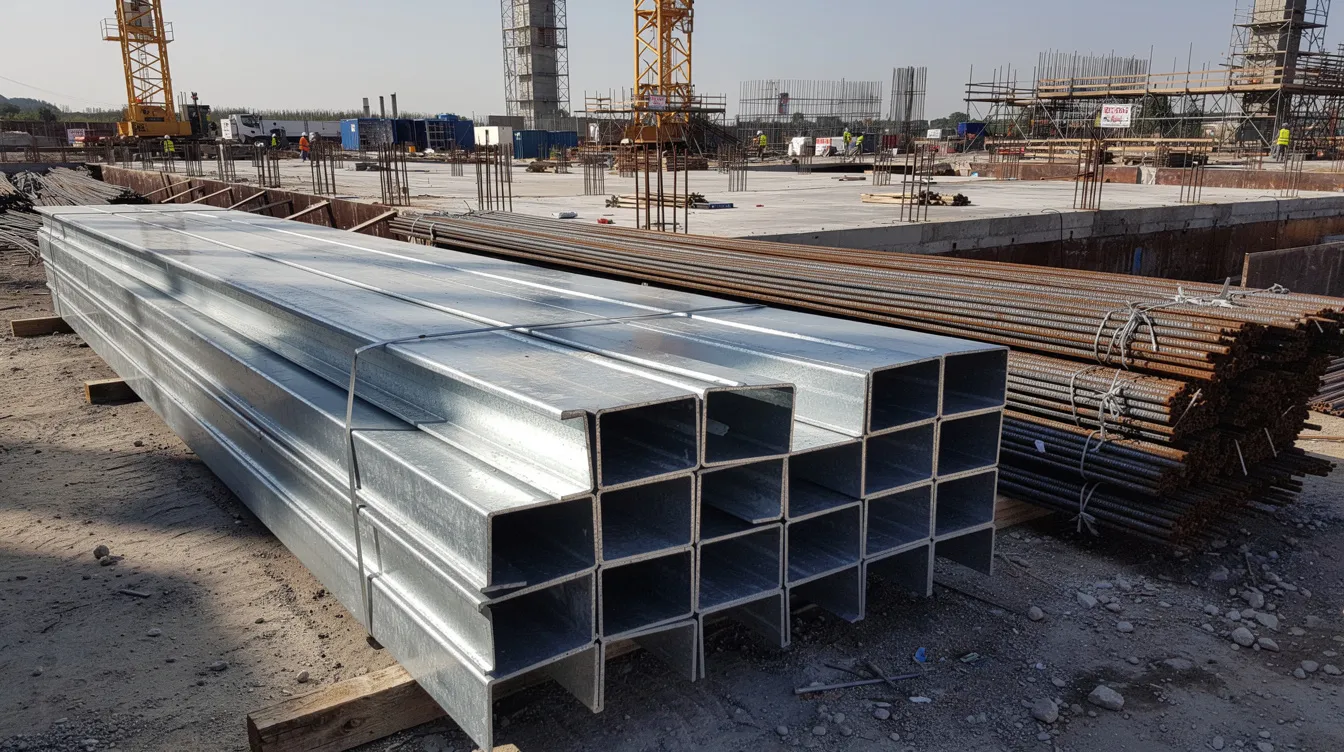
Steel and metals. Structural steel, bar joists, and rebar are particularly sensitive on industrial, healthcare, and school construction projects along the I-85 and I-77 corridors from Charlotte through the Triad to the Triangle. High demand from data centers and advanced manufacturing compounds freight costs and supplier allocation pressure. Buyout gaps of 5 to 10% have been reported on steel-intensive packages when quotes expire or negotiations stretch.
Concrete and aggregates. Cement costs ran approximately 7.7% above prior-year levels in spring 2026. Large tilt-wall warehouses around Charlotte and Upstate South Carolina (Greenville and Spartanburg) can see total concrete packages shift quickly as cement, admixtures, and trucking rates all move at once.
Electrical and low-voltage materials. Long-lead switchgear, UPS systems, and cable trays are experiencing both price and availability shocks. The North Carolina data center corridor is a primary driver. Nonferrous wire and cable has climbed significantly year over year. Many electrical contractors prefer the merit shop model precisely because it allows faster procurement pivots, and over 80% of electrical contractors prefer that model nationally.
Roofing and building envelope. TPO membranes, insulation foams, and sheet metal track petrochemical and freight changes. These items can jump between conceptual budgeting and GMP negotiation, creating surprises if you don’t reprice them close to submission.
Fuel and freight. Even small diesel or logistics changes quickly ripple into delivered prices, especially for jobs outside major metros like coastal work in Wilmington or Myrtle Beach and rural projects off I-95.
Before locking in any major bid in late 2026, request updated quotes on each of these categories.
The merit shop philosophy emphasizes free enterprise, open competition, and performance-based advancement. Merit shop contractors do not rely on mandatory union hiring halls, rigid collective bargaining agreements, or project labor agreements to staff jobs; this differs from union construction because staffing is employer-directed and competition is open to both union and non-union firms. Workers in merit shop environments negotiate compensation directly with employers, and hiring and advancement are based on individual qualifications and performance. This creates a competitive environment where individual merit and individual talent recognition drive results.
Merit shop construction promotes contracts based on performance, not union affiliation. That principle translates directly into bid strategy during volatile markets:
The merit shop approach fosters a culture of excellence and innovation that is especially valuable when the job market for skilled workers is tight and every bid dollar counts. Merit shops contribute to a fair and competitive environment where the best value wins.
Estimators in Charlotte, Raleigh-Durham, Columbia, and Greenville-Spartanburg must immediately adjust how they set bid-validity periods, contingencies, and supplier quote timing.
Most commercial bids should move from 60- to 90-day price holds to shorter windows of 15 to 30 days, with explicit language stating when materials pricing expires and what triggers a requote. For projects with heavy steel or electrical content, consider even tighter holds.
Stage supplier quote refreshes deliberately. Obtain initial conceptual numbers early in design, then lock in firm quotes within 7 to 10 days of bid due dates for volatile items. Merit shop contractors can maintain more competitive pricing by sharpening takeoffs, reducing unneeded allowances, and setting realistic contingencies that reflect actual volatility rather than blanket percentages.
Practical tactics for chief estimators:
These steps apply whether you are bidding an office, healthcare facility, K-12 school, distribution center, or industrial project in the Carolinas.
Definitions first. An escalation clause ties pricing adjustments to objective indices (such as PPI or manufacturer price schedules) when input costs change beyond a set threshold. A material allowance is a placeholder for a specific item with an uncertain final price. A contingency is a broader risk buffer for unexpected costs.
Escalation clauses make the most sense in the Carolinas on multi-year data center campuses, hospital expansions, and DOT-adjacent infrastructure where material buyout will stretch into 2027 and 2028. For these construction projects, tying adjustments to recognized indices gives both parties a fair framework.
Contractors can use targeted allowances for especially volatile items, like electrical switchgear or roofing insulation, while keeping the rest of the bid as a firm lump sum. This balances owner comfort with contractor protection. For steel-intensive work, a slightly higher contingency is justified compared with interior fit-outs, but contingencies must be tied to documented risk, not arbitrary padding.
In a merit shop setting, transparent communication of escalation triggers and allowance assumptions builds trust with owners who value open-book collaboration and free enterprise principles. Sample proposal language might read: “Materials pricing is based on supplier quotes dated [date] and is valid for [X] days. Beyond that window, pricing for [steel/electrical/roofing] will be adjusted per [index] with written notice.” Coordinate with internal counsel for final wording.
Winning the job at the right price is only half the battle. Carolinas contractors must use disciplined procurement and early buyout to keep August’s volatility from eroding margin during execution.
For high-risk items, pursue early procurement as soon as contracts are signed. Where feasible, negotiate stored-materials arrangements that protect both contractor and owner. Sequence your buyout: prioritize steel, concrete, roofing, major mechanical and electrical equipment, and long-lead specialty items for immediate sourcing. Move to interiors and finishes later once market conditions stabilize.
Close collaboration with key trade partners is essential. Schedule regular preconstruction check-ins to flag impending manufacturer price changes before they hit formal quotes. Merit shop contractors can leverage their freedom from rigid collective bargaining structures to align procurement timing with workforce plans, ensuring material delivery, crew availability, and cash flow are synchronized.
Leveraging technology, such as digital procurement platforms and shared dashboards, helps track quote dates, lead times, and escalation risks. This supports data-driven project management and reduces the human error that volatile markets exploit.

This section is practical guidance for conversations with counsel, not legal advice.
Key contract elements that matter most in a volatile market include escalation provisions tied to objective indices, material-price reopener clauses, notice requirements for price increases, and clear documentation standards for change requests. Twenty-four states do not have prevailing wage requirements on public projects, and thirty-seven states authorize public-private partnerships by statute, so contract structures vary widely across the Carolinas depending on the project delivery method.
Bid assumptions must match contract language. If a proposal states pricing is based on August 2026 supplier quotes with a 30-day validity, the final contract should not silently extend that risk window without compensation.
Merit shop contractors can negotiate flexible terms that reflect free enterprise principles: sharing upside savings when prices drop while protecting against extreme upward spikes, instead of accepting one-sided risk allocation. Align prime contracts and subcontracts so that risk passed down the chain is communicated clearly. Damaging long-term relationships with key merit shop subcontractors in electrical, mechanical, and concrete trades is a cost that compounds far beyond any single project.
ABC Carolinas members can draw on ABC Carolinas risk management guidance for deeper dives into contract risk, subcontractor terms, and price-volatility strategies.
Strong demand in specific Carolinas markets amplifies August’s price signal, making disciplined estimating and procurement particularly critical in these regions.
Charlotte and the I-77 corridor remain a hub for corporate offices, multifamily, and logistics facilities, driving demand for concrete, steel, and electrical work and intensifying competition among merit shop contractors and suppliers.
The Triangle (Raleigh-Durham-Chapel Hill) continues as a major life sciences and tech center. Clean rooms, labs, and office-to-lab conversions require specialized mechanical, electrical, and process systems that are sensitive to both materials and skilled labor pricing, and sustained demand can worsen labor shortages for specialized trades.
Upstate South Carolina (Greenville-Spartanburg-Anderson) is an industrial and manufacturing cluster with significant warehouse, automotive, and advanced manufacturing construction, increasing pressure on site work, structural packages, and mechanical systems.
The North Carolina data center corridor along I-85 and I-95 is expanding rapidly. Hyperscale and co-location facilities drive heavy demand for electrical contractors, low-voltage integrators, and specialty equipment. Data centers are concentrating backlog: firms engaged in data center work report approximately 11.4 months of backlog versus roughly 7.5 months for firms outside that sector.
Open competition for work and workforce flexibility help ABC Carolinas members pivot between markets and project types as pricing and backlog shift. Merit shops award contracts based on performance, not labor affiliations, which is a key advantage in a competitive environment where every margin point matters.

Material costs are only one side of the margin equation. Workforce productivity, safety training, and training programs are equally important levers for Carolinas merit shop contractors facing tighter pricing.
Investing in workforce development and craft education through ABC Carolinas programs helps contractors build high-productivity crews who deliver more value per labor hour, with key benefits for productivity, safety, and retention during volatile pricing that can offset some of the impact of material price increases. The construction industry needs 349,000 new workers by 2026, and it typically takes three to five years to develop a mid-level craft professional. Merit shop contractors face challenges in workforce recruitment and training, but they can also tailor their internal training and advancement programs to match the demands of each specific project. Merit shops offer tailored safety training methods, and safety training adapts to project needs. Merit shop safety training promotes individual talent recognition, and merit shop contractors can adjust the workforce based on safety training needs.
Merit shop contractors that align bid strategy, workforce development efforts, and safety culture are better positioned to win work and secure repeat engagements with owners who value career advancement, worker growth, and long-term relationships over low first cost alone.
No contractor needs to navigate August’s price jump alone. ABC Carolinas offers tools, peer connections, and advocacy that help merit shop contractors respond strategically.
ABC Carolinas risk management guidance provides deeper insights on contract terms, contingencies, and subcontractor risk. The association’s government affairs and national efforts, including advocacy on issues like ensuring project labor agreements remain optional, open competition, and regulatory reform, help preserve a market environment where merit shop principles drive fair competition even during cost spikes. ABC Carolinas advocates for policies that keep project labor agreements optional, protect the opportunity economy for all contractors regardless of union membership or affiliation, and help protect worker rights, preserve open competition, and defend merit-based hiring.
Member networking through ABC events, estimator and preconstruction roundtables, and peer groups allows firms from Charlotte, the Triangle, Columbia, and Upstate South Carolina to compare real-time pricing trends and share bid-strategy tactics. These are success stories built through collaboration, not isolation.
Your next step: Register for an upcoming bid-strategy forum, join a peer group, or schedule a conversation with ABC Carolinas staff about apprenticeship programs and workforce development options.
Here is the action list for chief estimators and preconstruction leaders working under the merit shop system:
Merit shop construction principles, including open competition and performance-based selection, support faster and more disciplined responses to changing input costs than more rigid union models. Industry leaders who combine disciplined bid strategy with association resources are best positioned to grow profitably in the Carolinas market despite materials price volatility. Shop construction firms that implement an internal review of estimating practices within the next 30 days, focusing on volatile trades and contract-assumption consistency, will protect their competitive bidding advantage heading into 2027.
Track wins and margins on bids submitted after August 2026 to refine contingency levels and pricing strategies. That data becomes your competitive edge. Associated builders and contractors who combine disciplined preconstruction with ABC Carolinas membership will be the firms that win work and deliver profitably through this cycle.
These FAQs address practical bid-strategy questions Carolinas merit shop contractors are asking after August’s materials price jump, with detail beyond the main article.
In a volatile environment, estimators should refresh quotes for high-risk categories such as steel, roofing, and electrical gear within 7 to 14 days of bid submission, and again before final contract award if negotiations run long. For long-duration projects or those in hot markets like Charlotte and the Triangle, weekly check-ins with key suppliers may be justified during final pricing. Less volatile interior finishes may only need monthly updates. Clear documentation of quote dates and suppliers in the estimate file is essential for later negotiation and change-order support. Many merit shop contractors already maintain this discipline; the current market demands that every firm adopt it.
Escalation clauses are most valuable on multi-phase or multi-year projects where buyout will occur over 12 to 36 months and where specific indices or manufacturer price schedules can be referenced objectively. While contingency covers modest short-term fluctuations, it is less effective for structural, systemic price shifts over several years. Escalation language shared openly with owners provides a fairer framework. Consider escalation provisions for large data centers, hospital expansions, higher education complexes, and infrastructure work rather than for shorter interior fit-outs. The merit shop approach to transparent cost communication supports this kind of collaboration with owners. Merit shop construction promotes a fair and competitive environment where risk is allocated honestly.
Smaller firms should focus on scopes with more predictable materials, partner with larger primes on complex projects, and negotiate early procurement or owner-furnished materials where appropriate. Use tight takeoffs, minimal waste factors based on historical data, and clearly defined allowances rather than broad contingencies that may price you out. Participating in ABC Carolinas peer groups and networking events also helps you build relationships with suppliers who may offer better terms or early warnings about price changes. A smaller electrical or mechanical contractor, for example, can use the merit shop environment to maintain direct supplier relationships and avoid the overhead of rigid labor management structures. Skill level and individual skills matter more than scale when your estimating is sharp.
Estimating and procurement software can track quote dates, flag expiring prices, centralize historical cost data, and support scenario analysis for different buyout timings. These tools reduce human error in volatile markets. Mobile tools and cloud-based platforms improve coordination between estimators, project managers, and purchasing teams across offices in Charlotte, Raleigh, Columbia, and Greenville. Technology enhances, rather than replaces, sound judgment and merit-based decision-making. Other factors like safety protocols, supplier relationships, and accurate field data remain critical. Successful firms use technology to support the disciplined practices discussed throughout this article.
ABC Carolinas provides market briefings, risk management guidance, contract-terms education, and access to peers facing the same volatility across North and South Carolina. The association’s workforce development and craft education programs help members boost productivity through apprenticeship programs and tailored training, which is a critical offset to higher material costs. ABC Carolinas also protects the competitive landscape by advocating for fair competition, free enterprise, and policies that keep the construction industry open to all qualified contractors, regardless of union shops or union contractors. Contact ABC Carolinas staff or visit the website to explore upcoming events, resources, and advocacy updates tailored to merit shop construction firms in the Carolinas, including guidance on issues affecting union construction and merit shop competition.


