


Mental health in construction is no longer something company leaders can treat as separate from safety, supervision, and workforce stability. The core message behind recent industry discussion, including Construction Executive’s article on why mental health is a leadership imperative in construction, is straightforward: this is not only a personal issue or an HR benefit topic. It is a leadership responsibility that affects how people work, communicate, and stay safe.
That framing matters because construction has a documented suicide problem. CDC analysis of 2021 mortality data found a suicide rate of 56.0 per 100,000 for males in the construction industry and 65.6 per 100,000 for males in construction and extraction occupations. Those figures do not explain every cause of distress on a jobsite, but they do show why executives, safety directors, project leaders, and foremen should treat mental health as a serious part of workforce risk.
OSHA’s 2024 workplace mental health guidance supports that shift. The agency says employers can help reduce stigma by making mental health part of workplace culture, talking about it, and knowing how to support workers who ask for help. That is a leadership expectation, not just a benefits discussion.
For contractors across Charlotte, the Triangle, Upstate South Carolina, and the I-85, I-77, and I-95 corridors, the issue is practical. Crews may be spread across multiple projects, working long days, traveling, dealing with physical strain, or trying to solve personal problems while meeting demanding production expectations. Leaders cannot control every factor in a worker’s life. They can control whether the company creates a culture where speaking up is safer, supervisors know what to do, and support information is visible and usable.
This article stays focused on that same subject: why mental health in construction belongs inside leadership decisions, what that means for Carolinas contractors, and what companies can change in the next 90 days.
The most important idea for contractors is not that mental health matters in the abstract. It is that construction leaders should stop treating it as a side conversation and start treating it as part of how the company leads.
That means moving beyond a narrow model where mental health lives only in HR, only in an employee assistance program, or only in private off-the-clock conversations. The better model is operational. Leadership decisions about schedules, supervision, communication, and jobsite culture can either make it easier for workers to raise concerns or make it harder.
Construction Executive’s leadership-imperative framing is useful because it puts the burden where it belongs. The question is not whether every supervisor should become a counselor. They should not. The question is whether company leadership has made mental health visible enough, normal enough, and supported enough that workers are more likely to get help before a situation turns into a safety problem or a crisis.
This also aligns with OSHA’s guidance. Employers are not expected to diagnose mental health conditions. They are expected to reduce stigma, support respectful conversations, and know how to direct workers to help when needed.
Mental health should not be treated as separate from construction safety culture. A worker who is exhausted, distracted, overwhelmed, withdrawn, or visibly struggling may not be facing a traditional physical hazard, but the safety implications can still be real.
Leaders do not need unsupported productivity statistics to understand the connection. On any commercial jobsite, reduced focus and poorer communication can affect hazard recognition, decision-making, and crew coordination. That matters during equipment movement, work at height, traffic control, confined-space work, excavation, steel erection, and every other task where attention and judgment matter.
This does not mean every stressed worker is unsafe, and it does not mean supervisors should make amateur medical judgments. It means a mature safety culture recognizes that people bring their full condition to the jobsite. If physical fatigue belongs in a safety conversation, mental strain can belong there too.
That is one reason this topic fits naturally with ABC Carolinas’ existing safety leadership resources, including frontline leadership in construction safety. Strong leaders already shape whether crews speak up, stop unsafe work, and watch out for each other. Mental health awareness is part of that same leadership function.
Because this topic often attracts broad claims, it helps to stick to what is clearly supported.
CDC reporting confirms that construction is among the groups with the highest suicide rates in the country. The 2021 analysis cited above found:
Those distinctions matter. Industry and occupation are not the same measure, and careful wording matters when construction leaders communicate risk internally.
The takeaway is still clear: the suicide burden associated with construction is too high to treat as a marginal issue. Leaders do not need to wait for perfect internal data or a crisis event before acting on that reality.
Just as important, these figures should be used responsibly. They do not prove that any single project condition causes suicide, and they should not be turned into simplistic cause-and-effect claims. What they do justify is stronger leadership attention, clearer support pathways, and more deliberate supervisor preparation.
If mental health in construction is a leadership issue, then the response has to show up in daily operations. For Carolinas contractors, that usually starts in four places.
Executives and senior operations leaders should say clearly that mental health is part of the company’s safety culture and worker well-being expectations. That does not require dramatic messaging. It does require visible consistency.
A short statement in a leadership meeting, a safety stand-down, or a supervisor meeting can matter: workers should know that speaking up about severe stress, fatigue, or personal crisis will be taken seriously and handled respectfully.
Foremen and superintendents are not therapists. Their role is narrower and more practical: notice changes, check in privately, and escalate through company channels when needed. ABC Carolinas already has a more tactical field resource for that purpose in this field guide to suicide-prevention conversations.
This executive article should complement that guide, not replace it. Leaders should make sure supervisors know what is expected of them, what is not expected of them, and who they contact when a concern moves beyond a routine conversation.
Workers should not have to search for help while in distress. If a company offers an EAP or other support resources, it should post the information where workers already look for safety information, including break areas, restrooms, trailers, and orientation materials. Companies should also make sure supervisors know when to direct someone to internal resources, when to elevate internally, and when an urgent situation calls for 988 or emergency services.
On some job sites, the biggest barrier is not lack of resources. It is silence. If the culture teaches workers to hide problems, mock vulnerability, or assume that asking for help could cost them work, then a resource list alone will not solve the problem. Leadership has to address that culture directly through expectations, language, and supervisor example.
The central subject remains mental health in construction as a leadership imperative. Regional context matters only because it shapes how that leadership responsibility shows up for ABC Carolinas members.
Across North and South Carolina, many contractors are managing work across broad geographies rather than one fixed site. A superintendent may cover projects in Charlotte one month and along another corridor the next. Crews may travel, move between sites, or spend long stretches working in demanding outdoor conditions. Schedule pressure on fast-moving commercial and industrial work can add to fatigue and strain, especially when supervision is stretched thin.
Those realities do not automatically create a mental health crisis, but they do support a practical leadership conclusion: Carolinas contractors should not assume support systems work on their own. The more mobile and distributed the workforce, the more important it becomes to make expectations, escalation paths, and support information consistent from site to site.
This is also where the merit shop context matters. In many merit shop firms, the relationship between company leadership and the workforce is direct and visible. That can be a real advantage when leaders want to set expectations quickly, train supervisors consistently, and reinforce that workforce well-being is part of operational excellence.
Companies don’t need a perfect mental health program to get started. They do need clear next steps. The following changes are practical and supportable for many Carolinas contractors.
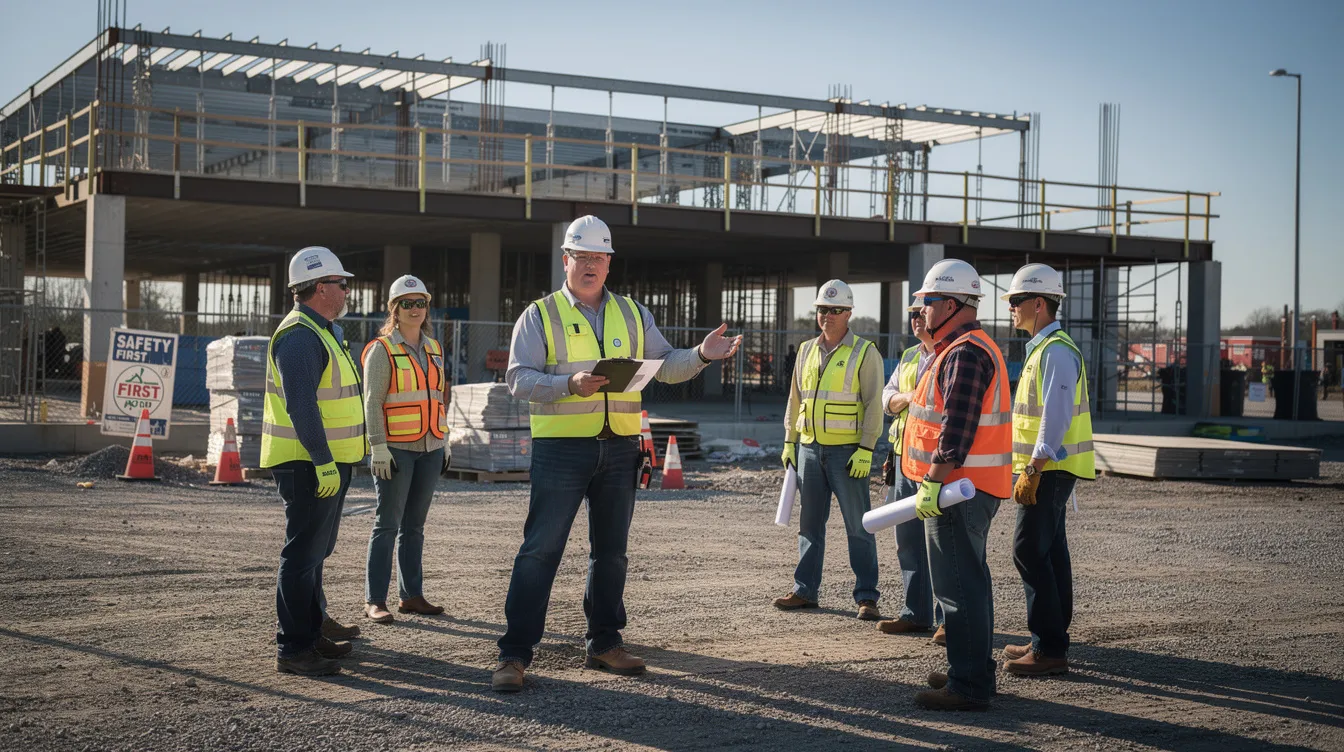
This article is aimed at executives and company leaders, but leadership decisions only matter if supervisors can act on them.
The simplest field model is:
That model is intentionally simple because it is usable on active jobsites. It also helps leaders set the right boundary. A foreman does not need clinical expertise. A foreman does need a clear expectation not to ignore warning signs.
For a deeper field-ready discussion, ABC Carolinas members can use the separate internal resource on construction safety leadership and suicide-prevention conversations, which stays focused on what a supervisor says and does in the moment.
If a worker appears to be in immediate danger or talks about self-harm, the response should move beyond an ordinary check-in. Stay with the person, follow company escalation procedures, and contact 988 or emergency services when immediate safety is at issue.
This checklist supports the article’s central question: whether your company treats mental health in construction as a genuine leadership responsibility.
ABC Carolinas does not need to position this issue as a stand-alone campaign to make it useful. Members can connect it to resources they already use for safety and leadership development.
Start with ABC National’s Total Human Health materials, which explicitly connect workforce resilience and suicide-risk reduction in construction. Then connect those ideas to ABC Carolinas’ regional content on frontline leadership, mental health integration in safety systems, and field response conversations.
For many companies, the best next step is not launching a new department initiative. It is choosing one immediate implementation path:
That approach keeps the article distinct from prior ABC Carolinas coverage. Earlier content addressed tactical field response and benefit-oriented support questions. This piece is the executive-level briefing: why leaders should own the issue and how to start acting on it.
The main lesson from the source topic is not complicated. In construction, mental health does not stay neatly separated from safety, supervision, retention, or culture. Leaders may not control every cause of distress, but they do control whether the company responds with silence, stigma, and confusion or with clarity, respect, and support.
For Carolinas contractors, that makes mental health in construction a practical leadership issue. The next step is simple: pick one action from the 90-day checklist, assign ownership, and connect it to the safety and leadership systems your company already runs. Then build from there.
Below are answers to common questions about this topic.
Construction work is demanding, so some stress is normal. Mental health concerns become a leadership issue when distress appears persistent, overwhelming, or serious enough to affect well-being, communication, or safe work. Leaders do not need to diagnose a condition. They need to recognize when support or escalation may be needed.
Small firms can still act. Post 988 and company support contacts, define one clear escalation path, train supervisors on basic notice-check-in-escalate expectations, and use ABC Carolinas resources rather than building everything from scratch.
General contractors still shape site culture. They can include support information and expectations in orientations, preconstruction communication, and supervisor conversations without overstepping each employer’s responsibilities. The goal is a safer, more respectful site culture for everyone working there.
Stay with the person, move the situation away from immediate hazards if possible, follow company escalation procedures, and contact 988 or emergency services when immediate safety is a concern. Supervisors should not try to manage a crisis alone.
Use the 90-day checklist. For most contractors, the best first move is to review whether supervisors know the escalation path and whether support information is consistently posted across job sites. That turns a general concern into a practical leadership action.


