


The construction industry faces a worker shortage of more than half a million, and Carolinas contractors competing for talent in Charlotte, the Triangle, and the Upstate cannot afford to overlook their fastest-growing labor segment. Construction safety culture-the shared values and daily practices that determine whether a jobsite protects and respects every worker-is now the deciding factor in whether women stay, advance, and help your firm win more work.

Tight labor markets along the I-85 and I-77 corridors are forcing commercial contractors to rethink how they attract and keep skilled workers. With data center, industrial, and mixed-use projects stacking up in Charlotte, Raleigh-Durham, and Greenville-Spartanburg, retention is no longer a back-office concern-it is a strategic priority for every firm in the construction industry.
Construction safety culture represents shared values and practices regarding safety among all team members. It goes beyond OSHA compliance into daily decision-making: how crews plan tasks, how foremen respond to concerns, how companies equip every worker properly. A strong safety culture shifts responsibility from solely management to everyone.
Women in construction have increased by over 50% in the last decade, yet they still represent a fraction of the workforce. That gap is an opportunity. Safe construction sites boost productivity by streamlining workflow and reducing chaos. Cost reduction in construction comes from fewer injuries, lower insurance premiums, and avoiding citations-benefits that compound on long-duration projects across both Carolinas.
This article shows Carolinas contractors how a stronger construction safety culture can become a core part of recruiting, onboarding, and retaining women in both field and office roles.
A recent Construction Executive article on BELL Construction’s women-focused initiatives illustrates what deliberate workforce development looks like in practice. BELL uses early outreach in schools and technical programs, promotes visible female role models into field leadership, offers structured mentoring for new hires, and makes safety culture a through-line from executive offices to the jobsite trailer.
Several tactics translate well to the Carolinas market:
Merit shops select the best person for the job, and the merit shop philosophy promotes career advancement based on merit. Unlike union construction practices, this approach lets contractors build crews based on skill, hard work, and commitment. Treating women’s recruitment as workforce development-not a side diversity project-aligns with ABC Carolinas’ merit shop philosophy and open competition for talent.
Construction safety culture directly affects whether employees-especially women and newer entrants-stay long enough to build a career. Providing career advancement opportunities increases employee retention, and high morale and retention in construction are linked to workers feeling cared for and supported. When people feel physically safe, listened to, and included in how work gets done, they stay.
A mature safety culture supports career advancement through consistent training, documented task planning, and coaching that help workers move from apprentice to foreman or project manager roles. Training and development are often overlooked in talent retention strategies, yet continuous training is essential to building a strong safety culture in construction. Core components of a safety culture include leadership commitment, open communication, and continuous learning.
On Carolinas ‘ job sites, these behaviors matter:
Open communication improves hazard identification in construction by allowing workers to report issues safely. For many women in the construction industry, a poor safety climate and dismissive attitudes toward concerns drive turnover more than the physical demands of the work itself. Promoting a strong safety culture requires embedding safety into daily behaviors of workers-not just posting rules on a trailer wall.
National research paints a stark picture: 88% of women in construction reported experiencing sexual harassment, and 41% of female construction workers faced gender harassment in a single year. These numbers represent real people walking off jobsites-and real talent that contractors cannot afford to lose.
Concrete jobsite factors that influence retention include:
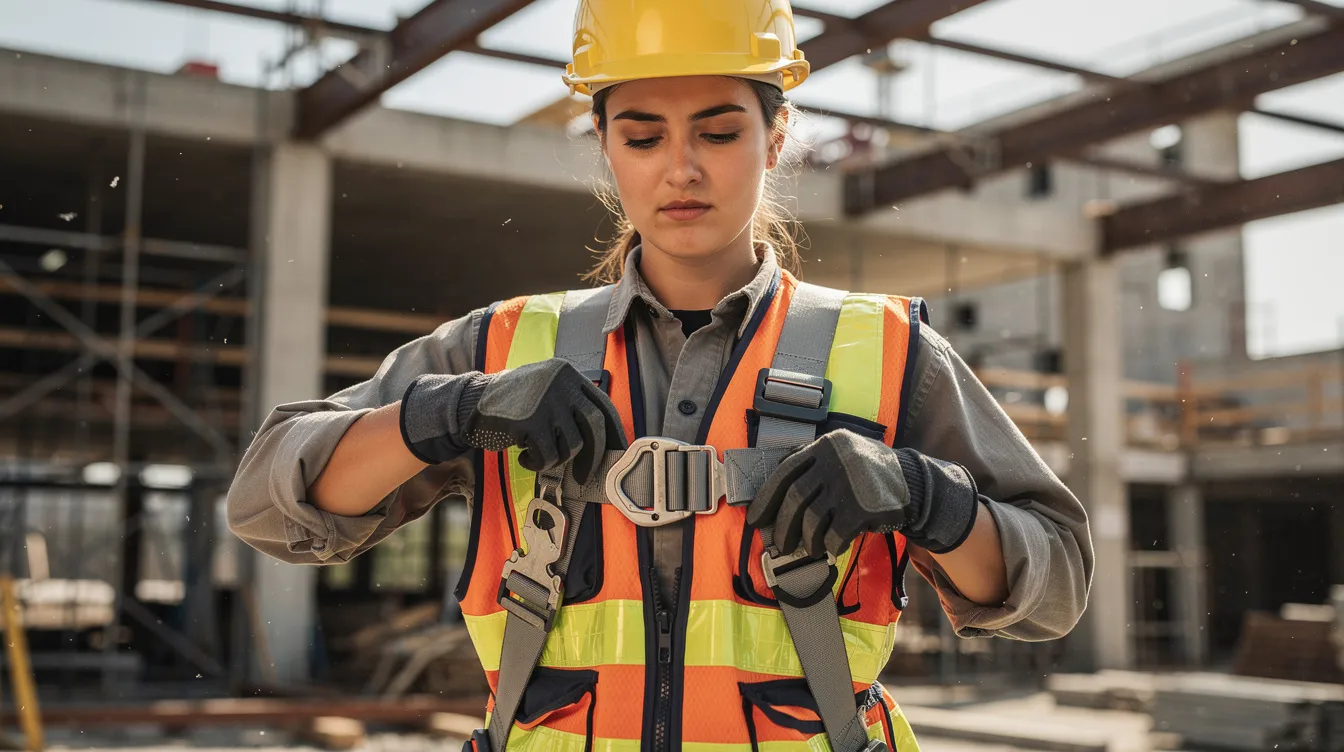
Strong safety culture can lead to lower injury rates and support the psychological well-being of workers. Psychological safety reduces stress and anxiety in high-hazard work environments like construction. Quality control in construction is enhanced by minimizing rushed or hazardous work practices-meaning a safer site is also a better-built site.
Carolinas contractors should review purchasing standards and vendor relationships to ensure women-specific PPE sizes are stocked at yards and on jobs along major corridors. Even remote or smaller sites need an inventory that includes small to extra-small sizes and short-torso harnesses.
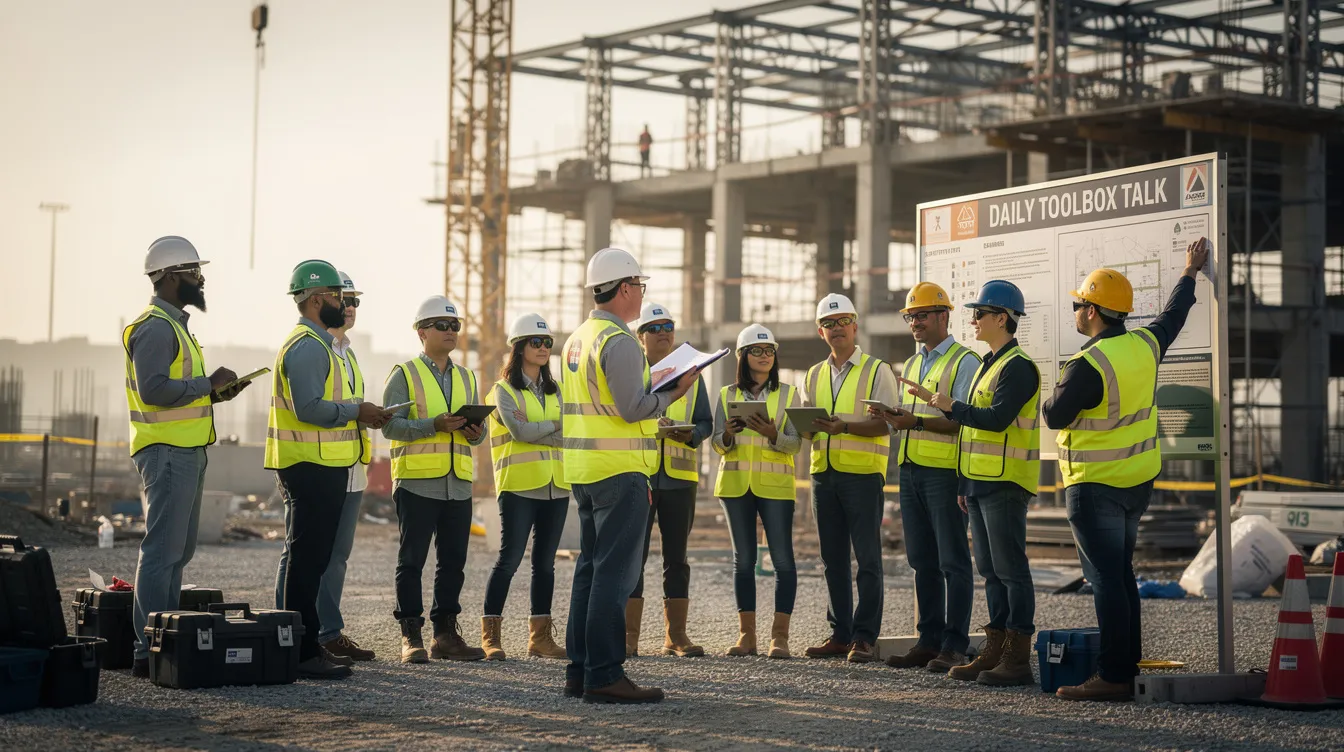
Foremen and superintendents are the day-to-day guardians of construction safety culture. Their behavior often determines whether women stay or leave. Leadership commitment is foundational to a strong safety culture in construction-and that commitment is tested every morning at the toolbox talk, not in a conference room.
Specific leadership behaviors that support retention:
Recognizing and rewarding safe behaviors positively influences construction safety culture. Workers must have genuine stop-work authority to ensure safety without fear of retaliation. Empowering workers with stop-work authority enhances safety culture by enabling immediate action on unsafe conditions. Involving crews in safety planning increases worker engagement and enhances safety outcomes.
Integrating safety into daily routines enhances awareness and adherence to safety protocols on construction sites. ABC Carolinas offers leadership workshops and safety training programs that help field leaders develop coaching skills, conflict resolution techniques, and the ability to run inclusive toolbox talks-turning supervisors into leaders who live the company’s core values.
Structured apprenticeship programs are among the most effective workforce development tools for retaining women, because they provide clear skill milestones and predictable career advancement. Apprenticeships and certifications are key for career advancement in construction, and apprenticeships support economic advancement for workers at every level.
Transparent progression keeps people engaged:
| Apprenticeship Year | Key Milestones | Retention Driver |
|---|---|---|
| Year 1 | Safety certifications, basic skills | Clear expectations, mentor assignment |
| Year 2 | Specialty skill development, wage step | Visible progress, growing responsibility |
| Year 3 | Advanced training, leadership exposure | Career path clarity |
| Year 4 | Certification completion, journeyperson status | Long-term commitment, recognition |
Apprenticeships can significantly improve talent retention in construction and enhance career advancement opportunities for workers. JFF aims to prepare 1,000 young people for apprenticeships by 2026, and JFF connects over 1,400 youth to apprenticeship programs annually. The Department of Labor’s WANTO program awarded $6 million in 2024 to increase women’s apprenticeship participation-funding that Carolinas contractors can leverage.
ABC Carolinas’ apprenticeship and craft education programs help contractors across North Carolina and South Carolina formalize these pathways. The chapter’s dedicated women-in-construction apprenticeship resources position firms to build targeted pipelines in markets like Charlotte, the Triangle, and the Upstate.
Consider a hypothetical: a Greenville-area contractor partners with a local technical college, enrolls a cohort of women apprentices, provides safety-focused onboarding with properly fitting PPE, assigns female field mentors, and runs monthly check-ins on comfort and safety perceptions. Over the project year, apprentice completion rates climb compared to prior cohorts without these supports-and the contractor builds a reputation that attracts the next wave of talent.
Reframing women-focused recruiting as a solution to the Carolinas labor shortage-not just an inclusion initiative-aligns with how merit shop contractors think about attracting talent. The Million Women in Construction initiative aims to double women’s numbers in construction by 2034, and companies with over 30% women executives outperform others. These are not abstract goals; they are business performance indicators.
Best practices for Carolinas recruiters:
A proactive safety culture reduces the frequency of life-altering injuries and fatalities on job sites-and that record belongs in every recruiting conversation.
Outreach tactics that fit regional realities:
Questions women commonly ask recruiters-and how to answer them:
| Question | Transparent Answer |
|---|---|
| “Will PPE fit me properly?” | “We stock XXS through XL, including short-torso harnesses. We schedule fit checks.” |
| “What’s the harassment policy?” | “Zero tolerance, clear reporting, supervisor training, protected reporting.” |
| “How will I advance?” | “Structured apprenticeship with wage steps, documented supervision, field leadership track.” |
| “Will I feel included?” | “Female mentors available, inclusive toolbox talks, daily culture of respect.” |
The first 90 days are the highest-risk window for turnover, especially for new entrants to the construction industry. Safety training reduces workplace accidents by 30%, and companies with strong safety training programs see 50% fewer injuries. Effective safety training includes risk assessment and safety gear provision, and construction safety training should be ongoing and updated regularly. Regular safety training can significantly improve employee retention rates.
Training and competence in safety practices are crucial for effective hazard management in construction. An effective safety-focused onboarding process includes:
Flexible work schedules can enhance employee loyalty in construction, particularly for workers balancing family responsibilities. ABC Carolinas’ workforce management strategies provide additional guidance on how scheduling, crew makeup, and foreman assignments influence whether women feel they belong. Peer mentors who can help new hires hear real answers to real questions-how to raise concerns, how to navigate crew dynamics-are essential for building the kind of community that retains people.
What gets measured gets managed. Carolinas contractors investing in construction safety culture and inclusion need to track whether those investments move the needle.
A practical retention and safety dashboard:
Leveraging technology like mobile safety apps improves accessibility and engagement in safety protocols, making data collection easier even on remote sites. Conducting blameless post-mortems helps identify root causes of incidents in construction safety management-and the same approach works for understanding why someone left.
Disaggregate data by region-Charlotte versus coastal versus Upstate-and by project type to spot where the culture is weakest. Schedule periodic “culture walks” where senior leaders visit job sites, talk informally with women and apprentices about safety, harassment, and support, then visibly act on what they hear.
Measuring safety culture and retention is an ongoing leadership discipline, not a one-time HR project. Track it with the same focus you bring to schedule performance and profitability.
ABC Carolinas supports members through advocacy and safety programs designed for the realities of commercial construction in North Carolina and South Carolina. The chapter offers safety training and certifications, apprenticeship and craft education programs, women in construction apprenticeship resources, and peer groups for field supervisors-all focused on practical solutions.
Merit shop contractors can participate in ABC events for networking, and networking events help construction professionals connect with industry leaders. Networking opportunities are essential for business growth in construction, and networking events can showcase contractor achievements and capabilities. Construction networking events foster collaboration among professionals who face the same workforce challenges.
ABC Carolinas’ complete guide to construction apprenticeship is the logical next step for any firm ready to build a safer, more inclusive pipeline. Merit shop construction practices improve project efficiency, and the chapter’s advocacy work in Raleigh and Columbia helps sustain the regulatory and funding support that makes safety investments viable over the long term.
The contractors who build safer, more inclusive crews today will staff the region’s next wave of commercial and industrial projects. Start with one conversation, one PPE audit, one mentor match-and build from there. Engage with ABC Carolinas events and member roundtables to connect with peers, share what is working on your own job sites, and access the resources that turn good intentions into measurable success.
These questions address common concerns Carolinas contractors raise about building a safety-oriented culture that supports women’s retention.
OSHA compliance is the legal minimum-meeting standards for PPE, fall protection, and hazard communication. Construction safety culture is about daily behaviors, peer expectations, and leadership decisions that consistently prioritize safety and respect even when no inspector is present. It means every worker feels ownership over safety outcomes, not just management.
Stock a small inventory of women’s PPE sizes, improve restroom privacy and cleanliness, update harassment reporting posters, and add a short safety-and-respect reminder to daily huddles. These changes cost little but signal that every crew member matters.
Even small firms benefit from simple, structured approaches: pair each new hire with an experienced craft professional, document basic skill milestones, and tap into ABC Carolinas apprenticeship and craft education resources rather than building everything from scratch. Formal does not have to mean complex.
Integrate safety checks into existing workflows-pre-task planning, deliveries, and inspections. Empower foremen to pause unsafe work without penalty. Recognize and reward crews that hit schedule milestones without recordable incidents. A proactive approach prevents the rework and disruption that actually cost schedule time.
Conduct a brief “safety and respect” conversation with current women employees and apprentices. Ask what is working and what is not. Commit to fix at least one specific issue-whether it is ill-fitting PPE, restroom access, or a communication gap-within the next 30 days, and communicate the change to your entire crew.


