


The U.S. construction industry added 22,000 net jobs in July, with nonresidential construction accounting for 20,000 of those gains. For contractors across North Carolina and South Carolina, that headline number means more bodies on payroll-but not necessarily more productive crews. Field communication is the operational system that bridges the gap between hiring momentum and actual field capacity. Here is what Carolinas contractors need to know and do now.
According to an ABC analysis of Bureau of Labor Statistics data released August 7, nonresidential specialty trade contractors added roughly 15,400 jobs in July, nonresidential building gained about 4,200, and heavy and civil engineering added approximately 400. Over the past 12 months, nonresidential construction employment is up about 82,000 jobs-a 1.0% year-over-year increase that signals a modest but meaningful rebound across the labor market.
Regional demand is concentrated. Data center spending is projected to grow by roughly 33% in 2026, and healthcare facilities, logistics buildings, and manufacturing expansions continue to drive construction activity in Charlotte, Raleigh, and Upstate South Carolina. The U.S. construction industry needs 349,000 new workers by 2026, and projected demand for workers rises to 456,000 in 2027. Yet 86% of contractors struggle to fill positions due to labor shortages. Meanwhile, 70% of construction companies experienced project delays due to labor shortages in recent years.
The distinction matters: job openings measure open requisitions. Field capacity measures whether you can staff crews, onboard new hires, and absorb them into production without dragging schedules or quality. North Carolina held approximately 286,100 construction jobs as of mid-2026, while South Carolina’s construction employment reached 127,500-growing at roughly 2.7% to 4.0% year-over-year. Even with those gains, construction employers across both states report that crews still feel tight because hiring alone does not equal productivity.
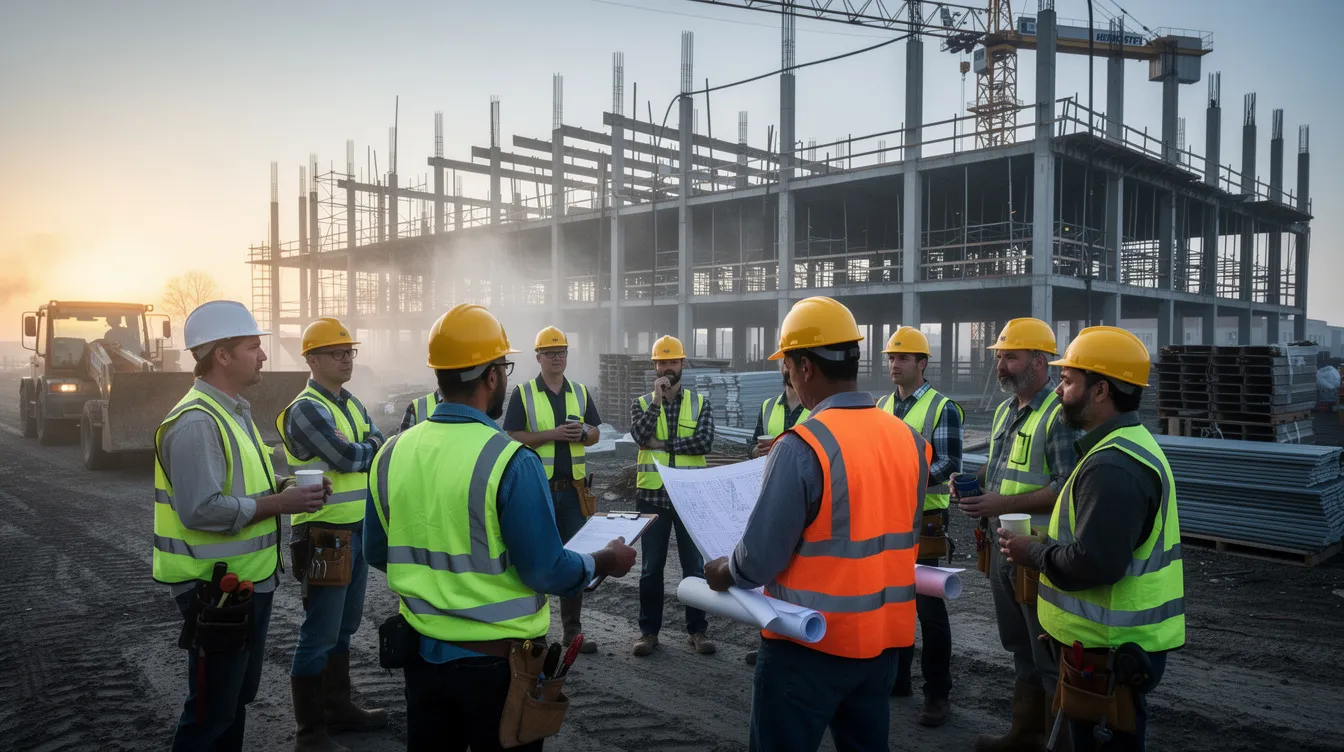
Field communication is not a soft skill. It is a standardized field-to-office system for exchanging project-critical information-daily reports, RFIs, schedule updates, safety alerts, material procurement, change orders, and quality feedback-between crews, foremen, project managers, and the office. When these exchanges are ad hoc, fragmented, or verbal-only, miscommunication drives avoidable costs.
The data is clear: 48% of all rework is due to miscommunication. The average cost of a jobsite conflict is $10,948. Rework typically consumes 5–15% of total project cost. Conflicts and miscommunications create a negative work environment that accelerates turnover among newer employees, and construction companies lose both wages paid and time invested. Real-time communication reduces costly errors in construction projects, and effective communication improves project schedules and reduces budgets. Effective communication ensures information is understood and acted upon-not just transmitted.
For construction firms competing in the Carolinas labor market, the construction labor shortage makes every new hire more expensive to replace. Over the last two decades, the industry has lost experienced workers to retirement and other industries without replacing them at scale. When a new hire leaves because expectations were unclear or a foreman couldn’t communicate schedule changes, the cost compounds. That is why field communication belongs in the workforce development conversation alongside apprenticeship, pay, and benefits.
The supervisor training pipeline is where this becomes operational. Foremen and superintendents are the communication hubs on every project. Without structured communication training, even the best-intentioned leaders create ambiguity that slows apprentices, frustrates experienced construction laborers, and erodes quality.
Turning communication into a system requires three practices on every active project:
Daily huddles. Pre-task briefings focus workers on hazards they may encounter during the day. Keep these to 10 minutes, structured around safety, schedule, and materials. Two-way communication encourages workers to provide feedback on safety concerns, and practice active listening to confirm understanding of instructions.
One-line shift priorities. Post a single statement at the trailer each shift: “Pour foundations Areas A and B; steel delivery at noon; safety walk at 2 PM.” Job-specific communication is preferred over generic safety messages. Keep messages concise and structured to avoid ambiguity.
Escalation paths. Establish clear communication channels for updates and emergency protocols. Define who to call for safety issues, material shortages, or schedule blockers. Encourage feedback loops to empower field workers to report hazards. Documenting briefings and incidents helps maintain clear communication across shifts.
These practices create accountability without bureaucracy. They bridge the information gap between office and field, and they give new construction workers a framework from day one.
Effective field communication relies on mobile-first, real-time tools. The right technology depends on project size, crew composition, and site conditions. Common field communication tools include two-way radios and cellular smartphones. Here is how they compare:
| Tool Category | Best For | Key Advantage |
|---|---|---|
| VHF/UHF two-way radios | Instant crew coordination | Operate independently of cellular networks for instant communication; VHF/UHF radios are common for field communication due to their instant relay capabilities |
| Cellular-enabled smartphones | Plans, RFIs, photo logs | Use 4G/5G networks for advanced applications; cellular communication provides high bandwidth compared to traditional radio |
| Push-to-talk over cellular | Hybrid crews | Combine radio functionality with cellular coverage |
| Satellite messengers | Remote corridor sites | Transmit signals directly to satellites for remote communication; satellite communication is essential for operations in remote areas without signal |
| Field collaboration software | Multi-trade coordination | Enables file sharing and status reporting on smart devices |
| Mesh networks | Large or obstructed sites | Extend connectivity by allowing devices to communicate with one another |
Two-way radios are vital for instant team communication without cell towers. GPS and satellite messengers are vital for location tracking and emergency messaging. IoT and telemetry systems facilitate automatic communication between remote equipment-useful on large data center or manufacturing sites where construction activity spans acres. Satellite communication is crucial when cellular networks are unavailable, particularly on rural corridor projects along I-85 or I-95.
Cellular networks support voice, text, and data applications for field workers. Use mobile apps and SMS for instant updates to field workers. Mobile access to project data improves field and office connectivity, and cloud computing enables real-time updates for construction teams. Standardized technology improves information accuracy in construction projects of every size.
For smaller contractors or crews without mobile devices, low-tech tactics still deliver value: laminated checklists posted in trailers, whiteboards with shift priorities, and photo logs taken with basic phones or other devices. Equip teams with reliable communication gear and conduct regular equipment checks. Keep messages short and direct to prevent miscommunication in noisy locations.
Combining multiple communication technologies improves reliability in field operations. The goal is not the most expensive system-it is consistent, real-time information flow. Field communication tools keep mobile and remote teams connected and safe.
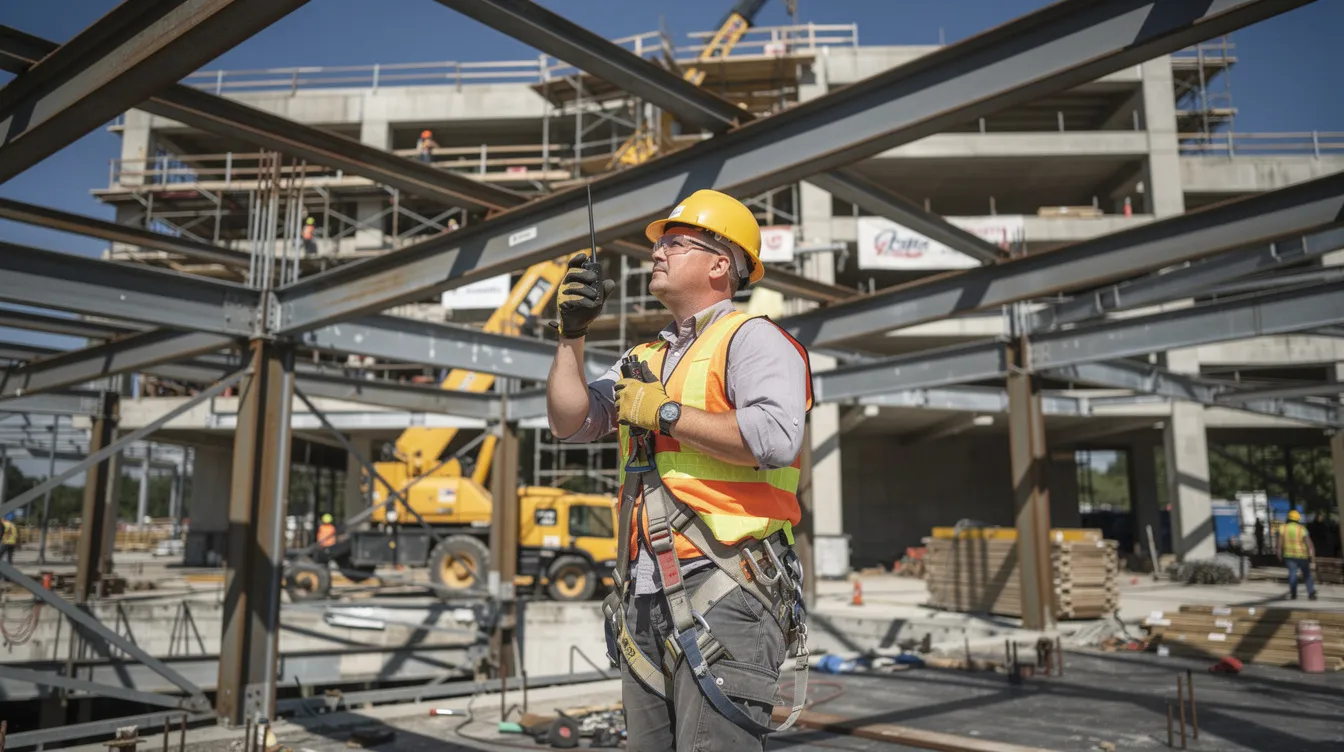
Hiring is step one. Productivity is the return on that investment. Here is how Carolinas contractors can close the gap:
Students coming out of trade programs and younger generations entering the workforce through registered apprenticeship expect clear direction. Construction firms that deliver it retain talent longer and ramp faster.
Project delays cascade. A missing material unreported for half a shift can push foundation work, delay framing, and cause missed inspections. Structured communication prevents this through three mechanisms:
Real-time communication reduces jobsite conflict costs by $10,948 on average. For owners and project managers watching margins, that is not a soft benefit-it is direct margin protection. Construction projects operating under tight demand and rising materials costs cannot afford rework; 48% of rework in construction results from miscommunication that could be prevented.
The average U.S. construction worker is 42.5 years old, and the median age continues to climb. Contractors report that 92% struggle to find qualified workers. The aging workforce is not a future problem-it is a current one. Every retirement that takes undocumented knowledge off the jobsite weakens the next crew.
Practical steps to bridge the generational gap:
Apprenticeships are crucial for filling skilled labor gaps in construction. Expanding apprenticeship programs can increase new worker supply in 3–5 years. Apprenticeship expansion creates new opportunities for construction employers to attract workers who see a career path, not just short-term employment. The merit shop model benefits directly: companies that communicate clearly move talent faster from entry-level roles into productive trade work, competing on capability rather than restriction.
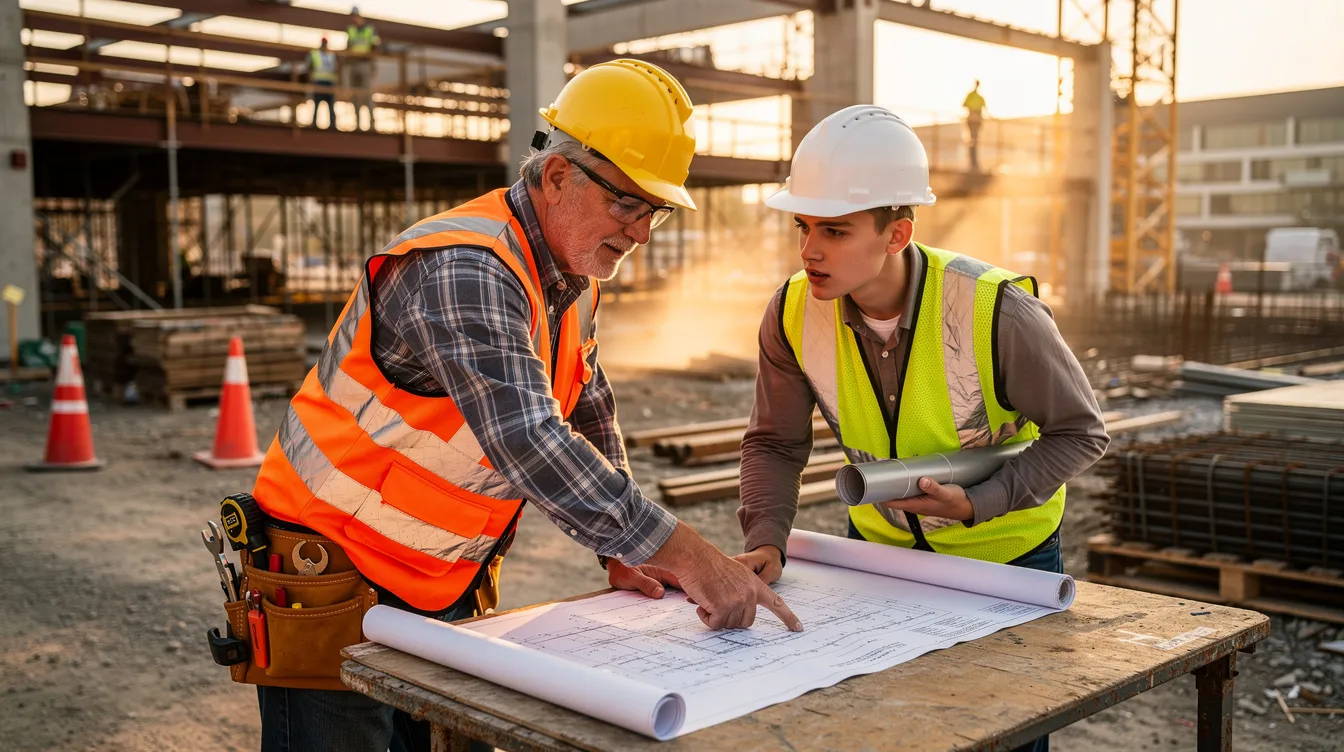
Not every construction company has a technology budget or a dedicated training department. Smaller contractors can still build effective systems:
These steps require investment of discipline, not capital. They create the communication infrastructure that helps smaller firms compete for the same electricians, concrete finishers, and operators that larger companies pursue across the Carolinas.
What gets measured gets managed. Track these indicators to know whether communication improvements are working:
| KPI | Frequency | What It Reveals |
|---|---|---|
| Time-to-productivity for new hires | Weekly | Days from hire to full productive rate |
| First-90-day retention per crew | Monthly | Whether onboarding and communication are holding workers |
| Rework hours per trade | Daily | Where communication breakdowns produce defects |
| Foreman communication survey | Quarterly | Barriers blocking field teams-materials, plan revisions, RFIs |
These metrics give owners and project managers the data to make targeted improvements rather than guessing where the breakdown is.
When hiring pressure is high, executives should tighten oversight on four factors:
Charlotte and the I-85 / I-77 corridors. Data center and logistics projects are driving demand for electricians, structural steel workers, and site utility crews. Coordinate with Charlotte-area community colleges for apprentices. Target geo-fenced recruitment ads around transportation hubs and manufacturing facilities along the corridors.
The Triangle (Raleigh-Durham). Leverage Wake Tech, Durham Tech, and other workforce development boards to feed apprenticeship pipelines in HVAC, electrical, and concrete finishing. Engage Triangle construction employers for pooled training cohorts that reduce per-company cost.
Upstate South Carolina. EV battery plants, logistics facilities, and industrial expansions demand consistent shift-handoff communication-especially with bilingual crews new to nonresidential industrial standards. Recruit through Upstate SC manufacturing partner networks and Spartanburg Community College services.
These corridor markets share one requirement: consistency of safety, schedule, and quality expectations across sites, regardless of whether the project sits in North Carolina or South Carolina.
This documentation supports compliance, protects against claims, and creates the institutional memory that helps construction firms maintain quality across programs and projects for decades to come.
ABC Carolinas, as a trade association serving merit shop commercial construction across the Carolinas, offers direct resources to help contractors act on every recommendation in this article:
The Jobs Act and related federal investment programs continue to fuel demand. Contractors who build communication systems now will be the ones who keep crews intact, protect margins, and win repeat work. Hiring momentum is a signal. Field communication is the system that turns it into competitive advantage.
July nonresidential hiring data cited from Construction Executive’s ABC analysis of U.S. Bureau of Labor Statistics data, released August 7, 2026. Regional employment figures from BLS Economy at a Glance reports for North Carolina and South Carolina. Spending forecasts from the AIA Consensus Construction Forecast, July 2026. Supported cluster: Workforce and Apprenticeship.


