


Extreme weather construction safety is the discipline of knowing when to monitor, modify, pause, and restart work on active construction sites during heat, lightning, severe storms, and flooding. For Carolinas contractors, that has become a daily operating issue rather than a seasonal exception.
Construction Executive recently highlighted a shift many contractors already feel in the field: managing extreme weather risks on construction sites can no longer be treated as a side issue or a simple forecast check. The real challenge is operational. Leaders need to know when changing conditions require them to adjust work, shelter crews, secure equipment, or stop operations entirely.
That point lands hard in North and South Carolina. Heat and humidity build quickly, afternoon thunderstorms can develop fast, and tropical systems affect both coastal and inland work. Crews working on open decks, roofs, scaffolds, crane picks, excavations, and partially enclosed structures are exposed in ways office-based weather plans rarely capture.
OSHA identifies outdoor construction as one of the operations most likely to cause heat stress, and its lightning guidance treats storms as a recognized outdoor hazard. That means extreme weather construction safety is not only about watching the forecast. It is about turning recognized hazards into field decisions that superintendents, foremen, and safety leaders can make consistently on active job sites.
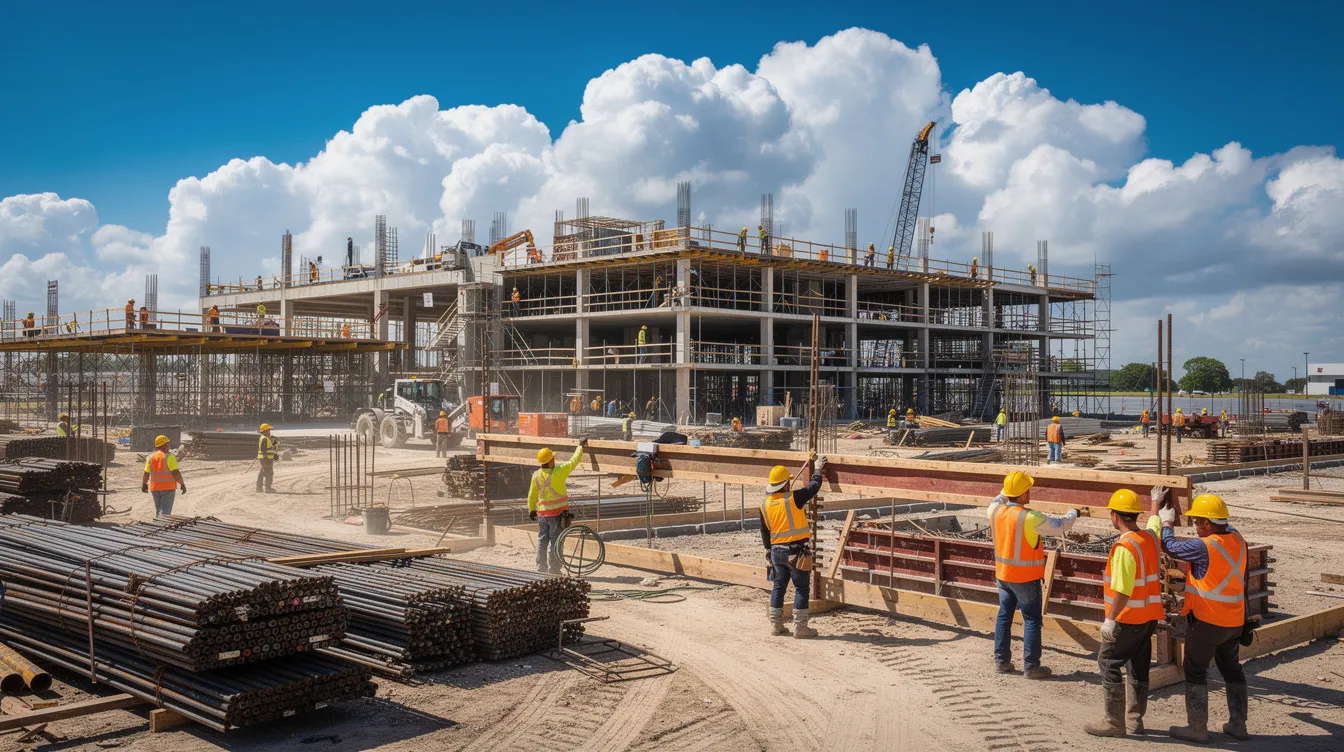
The core message in public guidance is consistent: employers should not wait for a close call to decide how they will handle weather risk.
OSHA’s heat-stress guidance says hot outdoor operations such as construction are likely to create heat-stress hazards and reminds employers of their obligation to provide a workplace free from recognized hazards. In North Carolina, the NC Department of Labor heat-stress page says its heat illness prevention program can be used in construction and notes that OSHA and North Carolina have no occupational safety and health standards specific to heat. That makes written planning, training, and enforcement of site rules even more important.
The NC Department of Labor’s Beat the Heat guidance recommends creating a heat illness prevention plan, acclimating new workers, using a buddy system, and monitoring workers closely during the first few days in hot conditions. In South Carolina, the Department of Public Health warned of prolonged extreme heat and reported 2,014 emergency department visits and 246 hospitalizations for heat-related illness from May through September 2024, along with 15 known deaths attributed to excessive natural heat in 2023.
For lightning, OSHA’s guidance for outdoor work says an emergency action plan should include a written lightning safety protocol covering when to suspend work, where workers should seek shelter, and when outdoor work can resume. NOAA’s lightning safety guidance adds the practical rule many field leaders already use: if you hear thunder, lightning is close enough to be dangerous; there is no safe place outside, and workers should remain in safe shelter for at least 30 minutes after the last sound of thunder.
That is the operational center of the issue. The job is not merely to know bad weather exists. The job is to translate that guidance into triggers, communications, shutdown steps, and restart checks for a live construction site.
On Carolinas projects, heat risk is not limited to especially dramatic days. A normal summer week in Charlotte, the Triangle, Columbia, Charleston, or along the I-95 corridor can create sustained exposure through temperature, humidity, direct sun, radiant heat from materials, and physical exertion.
Daily heat-risk factors to review before and during the shift:
A practical heat protocol for supervisors can include:
Workers should know that heat illness can escalate quickly and that reporting symptoms early is part of safe work, not a sign of weakness.
Field decision framework for supervisors:
A written heat illness prevention plan does not need to be complicated to be effective. It must specify who monitors conditions, what controls are required, how new workers are acclimated, how symptoms are reported, and when supervisors must step in to slow or stop work.
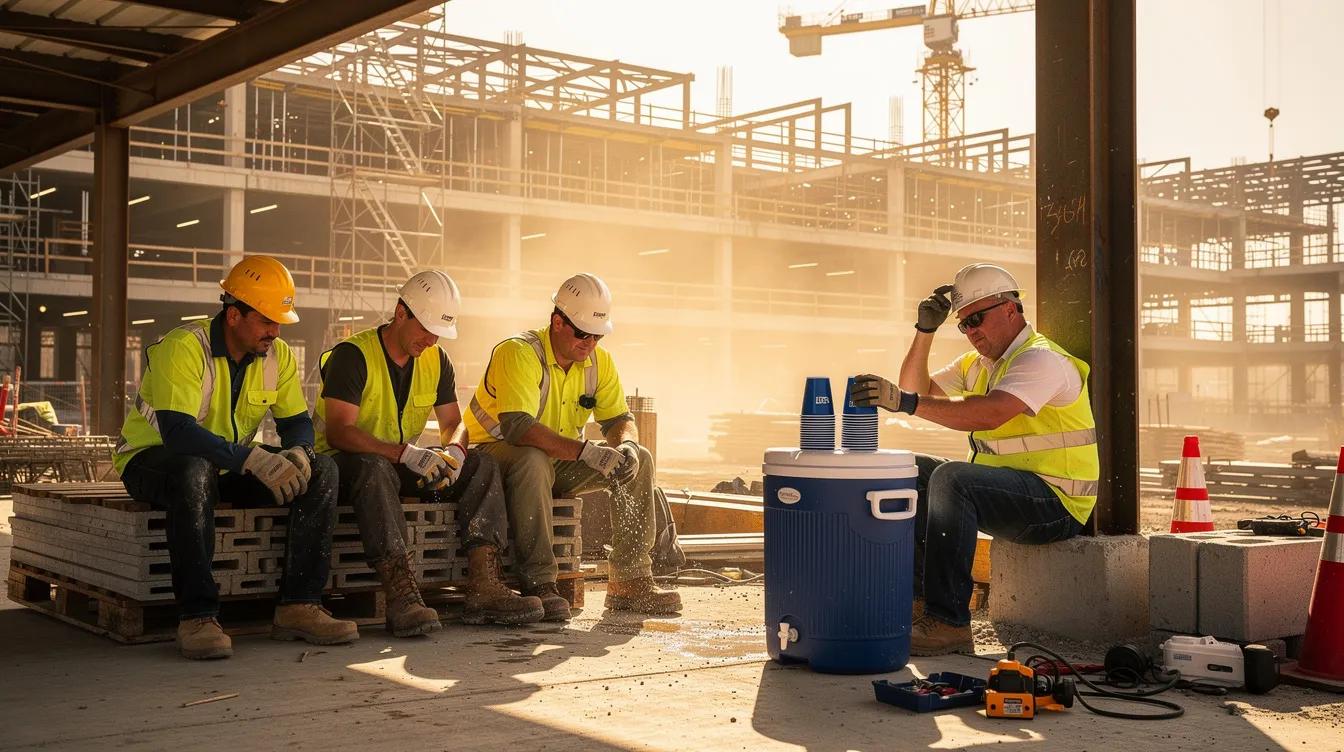
North Carolina’s Beat the Heat guidance specifically calls for acclimating new workers and closely monitoring them during their first few days in hot environments. That is especially relevant for crews mobilizing onto summer projects, workers returning after time away, and employees transferring from less demanding indoor or cooler assignments.
NC DOL-aligned acclimatization practices include:
On a Carolinas commercial project, that may mean a superintendent or foreman tracks which workers are in their first several hot shifts and builds extra observation into the daily crew plan. The paperwork can be simple. The supervision cannot.
For outdoor construction, lightning is one of the clearest weather-related stop-work issues because the trigger is simple and the consequences can be severe. On sites with cranes, structural steel, open areas, roof work, scaffolds, utility work, or concrete decks, the question is not whether a storm seems manageable. It is whether the site still offers safe exposure once thunder or lightning is in range.
The practical trigger: if workers hear thunder, see lightning, or receive a site-approved alert indicating a dangerous storm approach, stop exposed outdoor work and elevated activity, and move crews to designated shelter.
A written lightning safety protocol should identify:
OSHA and NOAA guidance support a strict shelter standard. Fully enclosed buildings with wiring and plumbing or hard-topped vehicles with windows closed are generally the accepted options. Open structures, canopies, and partially sheltered work areas are not enough.
Approaching-storm equipment actions may include:
Crews should not return just because the rain lightens. NOAA’s guidance is to remain in shelter for at least 30 minutes after the last thunder.
The same Construction Executive topic also points to a broader operational issue: weather risk is not limited to single heat or lightning events. Contractors need a management plan for multi-day disruptions, high winds, heavy rain, flooding, and tropical systems that can affect schedule, access, materials, and site stability.
That is especially relevant across the Carolinas during Atlantic hurricane season, which runs from June 1 through November 30. Coastal exposure gets the most attention, but inland jobs along the I-85 and I-95 corridors can also be affected by storm remnants, saturated ground, power loss, and access problems.
Common severe-weather vulnerabilities on commercial jobsites:
For larger storm threats, project teams should decide in advance:
The value isn’t predicting the exact storm path. It is avoiding last-minute decisions when the site is already under pressure.
Managing extreme weather on construction sites works best when decisions are made before the event and practiced enough that the field can execute them quickly.
Core sections of a jobsite emergency action plan for weather should cover:
| Section | What It Covers |
|---|---|
| Hazard assessment | Heat, lightning, severe storms, flooding, wind exposure, and any site-specific weather risks |
| Roles and responsibilities | Who monitors weather, who issues stop-work orders, who leads accountability checks, and who clears restart |
| Communication protocols | How warnings, stop-work orders, and all-clear messages are issued and confirmed |
| Shelter and evacuation | Safe shelter locations, access routes, muster points, and contingencies if parts of the site become unsafe |
| Post-event recovery | Inspection steps, documentation, and restart approval requirements |
Integrate subcontractors and temporary workers so everyone on the construction site understands weather alarms, shelter locations, and the specific evacuation procedures. A short drill or tabletop exercise before peak heat or storm periods can reveal weak points in communication, sheltering, or accountability long before a real event exposes them.
For companies already building broader safety systems, this weather plan can fit naturally beside existing resources such as ABC Carolinas’ guidance on construction safety management.
Stopping work is only half the decision. Restarting too casually can expose crews to hazards created by the weather event itself.
Before authorizing restart, the site team should confirm:
This restart review is especially important after thunderstorms that bring wind, heavy rain, or lightning-related shutdowns but don’t look dramatic once the skies clear. The site may still be different in ways that matter.
This checklist is designed for superintendents, foremen, and safety leaders to use before hot days or storm-prone shifts.
Pre-shift planning
Heat readiness
Lightning and storm readiness
Flooding and heavy rain
Ownership and review
ABC Carolinas can help members move from general awareness to repeatable field practice. The chapter’s Safety Resources Center offers tools and forms that can support emergency planning, pre-task reviews, and site-specific weather procedures.
Members can also use Safety & Management Education to strengthen supervisor execution and the STEP safety benchmarking program to place weather controls inside a broader safety-management system. For contractors reviewing how field communication holds up when conditions change quickly, ABC Carolinas has also published practical guidance on digital jobsite displays as a field-first communication tool.
A strong next step is simple: pick one active project this month, review its heat and storm procedures, and test whether the stop-work, shelter, and restart expectations are clear enough for the whole team to execute without confusion.
Extreme weather construction safety is not a side topic for Carolinas contractors. It is an operational discipline. The central lesson behind Construction Executive’s recent focus on extreme-weather risk is that construction leaders need more than awareness; they need a system for action.
That system should define when crews monitor conditions more closely, when tasks are modified, when work stops, where people go, how equipment is secured, and what must happen before re-entry. Firms that handle weather well aren’t guessing. They are deciding earlier and more consistently.
If your company has not reviewed those procedures recently, start with one jobsite. Confirm the heat plan, lightning protocol, shelter locations, communication method, and restart checklist. Then use ABC Carolinas resources and training to tighten the parts of the system that still rely too heavily on improvisation.
Below are answers to common questions about this topic.
Hearing thunder is the clearest field trigger. NOAA says if you hear thunder, lightning is close enough to be dangerous, and there is no safe place outside. Stop exposed outdoor and elevated work while crews move to safe shelter.
Fully enclosed buildings with wiring and plumbing are the preferred option. Hard-topped vehicles with windows closed are also commonly recognized as safer shelter. Open-sided structures, sheds, tents, and partially enclosed work areas do not provide the same protection.
Keep it simple and written. Assign one person to monitor conditions, define stop-work triggers for heat and lightning, identify shelter locations, and create a short restart checklist. A smaller plan that the crew actually uses is more valuable than a long document no one can execute.
Because hazards can change even when the weather appears to improve. Rain, wind, and lightning can leave behind unstable surfaces, damaged temporary power, flooded excavations, shifted materials, or compromised access routes. Restart procedures force the site to check conditions before resuming work.
Weather planning works best when it is tied to the same management habits that support other safety controls: clear roles, pre-task planning, strong communication, documentation, and supervisor accountability. That is one reason many contractors fold weather procedures into their overall safety management system instead of treating them as a seasonal add-on.


