


Effective decision-making in construction management is the operating system that determines how fast your Charlotte, Triangle, or Upstate South Carolina projects actually move. It is not a soft skill or a leadership buzzword. It is the daily mechanics of authority, escalation, and documentation that either keep your crews producing or leave them standing idle waiting for answers.
Consider a commercial project in Charlotte where a 48-hour delay on a single RFI response pushed back a mechanical inspection by three days. Trades stacked up, overtime premiums hit, and the project manager spent the rest of the week resetting the sequence. Early problem identification helps prevent minor setbacks from escalating into major delays, but on that job, nobody was empowered to act. Industry data shows the average cost per RFI runs approximately $1,080, and on a project with hundreds of them, the aggregate impact is staggering.
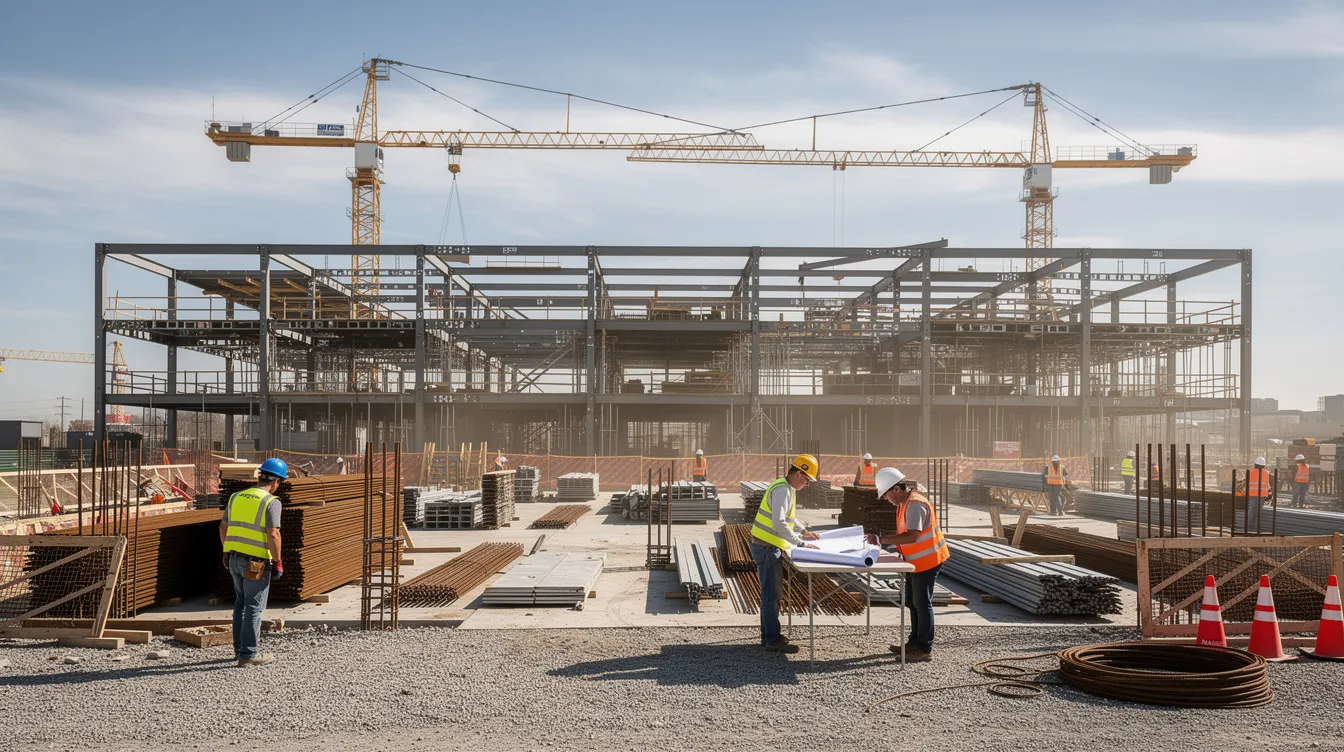
This scenario plays out constantly along the I-85 and I-77 corridors, where compressed schedules for data centers, healthcare facilities, and industrial projects demand rapid responses to on-site design clashes to minimize downtime. Decision-making in construction management directly affects daily production rates, subcontractor coordination, and cash flow. This is not about “good leadership” in the abstract; it is about leaders who lead teams to faster on-site answers. It is about building a repeatable decision system that every superintendent, foreman, and project manager can follow. Merit shop contractors who move information and decisions quickly often outperform competitors on schedule reliability and client satisfaction, turning operational discipline into a competitive advantage in the construction industry.
At its core, decision-making in construction management ties together three concrete elements: who has authority, how information flows, and how risk is evaluated before acting amid the complexity of day-to-day decisions on modern jobs. Construction managers plan and supervise projects from start to finish, and they are responsible for the dozens of daily calls they make and the outcomes those choices create.
Typical decision categories on construction projects include:
Structured methodologies are essential for effective decision-making in construction, and clear objectives enhance stakeholder alignment. Risk management involves evaluating choices for safety hazards and financial exposure, which means construction managers must constantly weigh speed against consequence. Approving a minor material substitution on a Greenville tenant improvement is a different call than altering fire-rated assemblies on a hospital project. The work environment of modern construction managers in North and South Carolina demands judgment, communication, and accountability, turning scattered individual choices into a consistent decision culture across the construction company.
Every commercial contractor should create a written authority chart or decision matrix before the first crew steps on site. This document should be project-specific, not just a generic corporate policy. Decisions made during the planning phase dramatically influence cost, schedule, and risk, so defining authority early prevents confusion later.
An organizational chart shows a construction company’s hierarchy, and construction companies often organize teams by operational, financial, and technical functions. A project-based structure organizes teams around individual construction projects, and general contractors have project-focused organizational structures for coordination. Organizational structure affects decision-making and project management efficiency, so the authority chart must reflect the actual team, not an idealized org chart.
Core roles on the matrix should include:
Use simple dollar thresholds, schedule-impact thresholds, and safety-risk categories to clarify what a foreman can handle alone and what must escalate. One Raleigh general contractor reduced email bottlenecks by 40% simply by publishing a one-page authority chart in the job trailer so that subcontractors knew exactly whose direction to follow.
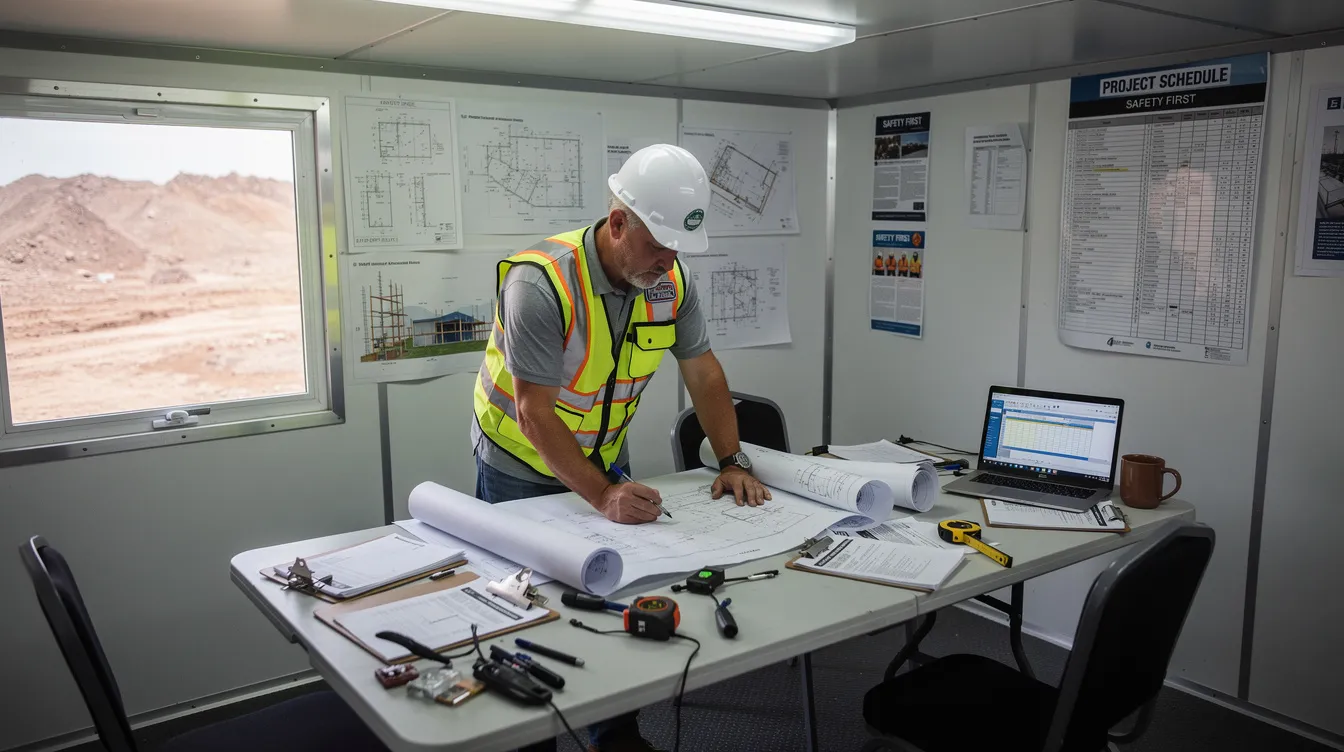
Escalation in construction projects is not a sign of weak supervisors. It is a control process that protects schedule, safety, and margin when certain triggers appear. The goal is to keep routine decisions moving fast while routing high-impact issues to the right level before they become disputes.
Common escalation triggers include:
Construction managers can predefine thresholds by cost, time, or risk based on the factors most likely to trigger escalation. Evaluating alternatives requires assessing financial impacts and contractual obligations before committing resources. Proactive risk mitigation reduces surprises and cost overruns in construction projects when these thresholds are set before mobilization, not invented on the fly.
Document escalation paths in preconstruction meetings and pre-task planning so field leaders know exactly whom to call and what data to provide. Timely, well-documented escalations reduce disputes with owners and trade partners over who approved what and when, supporting stronger construction risk management documentation overall.
Escalation clauses in contracts adjust contract prices for fluctuating material costs and protect contractors from unexpected price increases. These clauses can lower initial bids by reducing risk and allow adjustments based on significant cost increases. Common trigger events include tariffs and natural disasters. Labor rate clauses similarly adjust prices for changes in labor costs. Understanding these contractual tools helps project managers and construction leaders set internal escalation thresholds that align with the contract’s own risk allocation.
Strong delegation is essential on large construction projects because executives cannot and should not make every field decision themselves. Delegation involves assigning tasks to team members who are closest to the work and best positioned to act quickly.
Clear decision authority supports a healthy work environment by reducing frustration among construction workers who otherwise wait for answers from distant office managers. A construction company’s organizational structure, whether project-based or functional, shapes where decision rights sit and how information moves between the field and the office. ABC Carolinas’ focus on construction leadership training gives members a direct path to build foreman and superintendent capacity for handling more complex project demands.
A practical decision matrix for contractors is not an abstract corporate tool. It is a living reference document grounded in real construction activities and project planning scenarios.
Key columns should include:
| Decision Type | Typical Example | Decision Owner | Backup Owner | Documentation |
|---|---|---|---|---|
| Field coordination (no cost impact) | Layout adjustment within tolerance | Superintendent | Project Manager | Daily report |
| Cost impact under $5,000 | Minor material substitution | Project Manager | Project Executive | Change log, written approval |
| Cost impact over $5,000 | Owner-directed scope change | Project Executive | Owner/Architect | Formal change order |
| Safety or life-safety concern | Trench condition change, weather | Foreman (stop-work) | Safety Manager | Incident report |
| Quality control deviation | Spec variance beyond tolerance | Superintendent | Project Manager | RFI or nonconformance report |
Data-driven insights from analytics and metrics reduce costly miscalculations in construction when the matrix is paired with project tracking tools that flag trends. Maintaining transparency and documentation in decision-making ensures accountability across every level. Once developed, review the authority chart in pre-job conferences with trade partners so subcontractors know where to route questions and whose direction to follow. Align the matrix with existing construction project management strategies, including RFI workflows, submittal processes, and change management systems already in use.
Even the best decision matrix fails without daily habits that keep information flowing and issues visible early.
Recommended routines include:

Learning from past decisions enhances future project outcomes in construction management, and regular debriefs create organizational memory that benefits the next project. Stakeholder collaboration fosters shared accountability and mitigates potential disputes, especially when trade partners participate in coordination meetings. Building a safety-first culture is reinforced when crews see leaders respond quickly and consistently to raised concerns. Technology tools, from mobile project management platforms to shared digital drawings, can reduce lag time between field observations and management decisions without replacing the human judgment that drives outcomes.
Strong judgment under pressure is learned over time. Construction companies in the Carolinas should invest intentionally in coaching emerging leaders rather than simply promoting the best craft workers into supervision and hoping for the best. Construction managers’ employment is projected to grow 9% by 2034, meaning demand for capable decision-makers will only increase. That outlook aligns with federal labor statistics.
Structured programs, ride-alongs, and project debriefs help foremen understand not just what decisions were made, but why they were appropriate given cost-estimating realities, safety obligations, and contractual constraints. Using real project scenarios from local markets, such as industrial sites in the I-95 corridor or healthcare construction in the Triangle, as case studies in internal training sessions builds technical capability and confidence.
Effective leaders align diverse teams towards shared project objectives, and strong leadership skills improve team cohesion and project outcomes on complex projects. Conflict resolution is a key leadership function on construction sites, especially when trade partners disagree on sequencing or responsibilities. ABC Carolinas offers construction leadership training, apprenticeships, and workforce development resources that strengthen field decision skills and prepare the next generation of construction leaders. As decision competence improves, executives can safely delegate more authority, which supports job growth and advancement for high-performing construction managers and supervisors.
Decision speed cannot come at the expense of safety or ethics. Clear authority must include non-negotiable stop-work rights and compliance responsibilities at every level. Safety-related decisions, such as stopping work during severe weather or when trench conditions change, should be explicitly empowered at the foreman and crew level without fear of retaliation.
Ethical decision-making connects directly to merit shop principles. Fair, transparent decisions on work allocation, change orders, and subcontractor performance uphold open competition and long-term business relationships that benefit owners, clients, and the broader industry. Collaboration and leadership in decision-making improve project resilience and outcomes, especially on complex projects where multiple organizations share the site.
ABC Carolinas emphasizes building a safety-first culture and ethical project delivery. Member companies should bake these standards into their decision matrices and orientation materials. Executives should audit recent projects for examples where safety or ethical concerns were escalated effectively, then use those stories to reinforce desired behavior and assess where systems need strengthening.
Here is a concise checklist for improving decision-making on active and upcoming construction projects:
Connect with ABC Carolinas advocacy and membership opportunities to access peer networks, leadership education, and best-practice resources on decision authority and delegation. Companies that master clear, accountable decision-making in construction management will be best positioned to win and deliver complex work across North and South Carolina in the years ahead.
These questions address practical concerns that construction managers in the Carolinas often raise when they first formalize decision rights and escalation paths. Each answer offers specific, actionable guidance.
A practical matrix for a mid-sized general contractor should focus on the 15 to 25 decision types that drive the most risk and delay. Keep descriptions clear enough for new foremen to follow but not so granular that the document becomes unmanageable. If the matrix cannot fit on two pages, it is likely too complex for consistent field use. Start lean, then add detail as the team’s comfort with the process grows.
Combine respect for their experience with transparency about the business reasons for change. Use a pilot project where the superintendent helps shape the thresholds, run open workshops to refine the plan together, and hold one-on-one conversations to address concerns. Imposing a rigid system overnight almost always creates resistance. Let experienced supervisors see how the method reduces their own frustrations before scaling it company-wide.
Review decision authority at major milestones: contract amendments, design phase transitions, leadership changes, or significant scope modifications. At minimum, update the chart annually on multi-year work so it reflects current personnel, contract requirements, and any lessons learned from escalation patterns during the preceding period.
Even a five- to ten-person firm gains value from clarifying which decisions field leads can make without checking in. This reduces phone calls to the owner, speeds up work on site, and frees company leadership to focus on strategic issues and client relationships. A simple one-page authority guide tailored to the company’s typical project size is sufficient for most small contractors.
General contractors typically manage broader coordination and client-facing decisions across the full scope of engineering, procurement, and construction activities. Specialty contractors concentrate on trade-specific means and construction methods within their scope. Both benefit from clearly defined authority, especially when multiple layers of subcontracting are involved on complex sites. The key difference is scale: a specialty contractor’s matrix may cover fewer decision types but still needs clear guidance on where trade-level authority ends and general contractor coordination begins.


