


The federal rules governing prevailing wage on public construction changed significantly in 2023, and the consequences for contractors in North Carolina and South Carolina are not theoretical. For merit shop firms competing on federally funded projects across the Carolinas, understanding Davis-Bacon compliance is no longer a back-office task. It is a front-line business decision that affects bids, crew planning, subcontractor oversight, and project margin.
Davis-Bacon compliance requires contractors and subcontractors on covered federal and federally assisted construction work to follow prevailing wage and related labor standards. The U.S. Department of Labor’s 2023 final rule expanded and clarified several of those requirements, and although courts later blocked or vacated three specific provisions, most of the rule and the core Davis-Bacon obligations remain in effect in 2026.
The Davis-Bacon Act, enacted in 1931, requires contractors and subcontractors on covered federal and federally assisted construction projects to pay laborers and mechanics at least the locally prevailing wage and fringe benefit rates set by the U.S. Department of Labor. In practice, Davis-Bacon compliance means matching workers to the correct classifications, paying at least the applicable wage determination, submitting required certified payroll records, and maintaining documentation that can withstand agency or DOL review.
The 2023 final rule, published by DOL on August 23, 2023, made major regulatory changes. Among other things, it restored DOL’s three-step prevailing wage methodology, revised parts of the site-of-work and classification framework, and added stronger anti-retaliation language. Litigation followed. In 2024, a federal court issued a nationwide preliminary injunction blocking three provisions, and in 2026 that same court vacated those three provisions. Even so, the remainder of the 2023 rule continues to operate alongside longstanding Davis-Bacon requirements.
That distinction matters. Contractors in Charlotte, Raleigh, Columbia, Greenville-Spartanburg, and along the I-85 and I-95 corridors should not treat the litigation as a reason to relax compliance. The better reading for contractors is simpler: some challenged provisions were set aside, but prevailing wage compliance on covered work remains fully consequential.
The underlying policy development here is not just that DOL rewrote major Davis-Bacon regulations in 2023. It is that the federal government has continued to defend most of that rule even after ABC and others challenged it, which means contractors still have to operate in a stricter compliance environment unless courts or future rulemaking change it further.
That is the central practical takeaway from the current dispute. For contractors, this is not mainly a political story. It is an operational one. If your estimating team, payroll staff, project managers, and field leaders assume the 2023 rule has effectively disappeared, they may build bids and staffing plans on the wrong assumptions.
For merit shop firms, the concern is twofold:
That is why Davis-Bacon belongs in executive planning discussions, not just payroll processing.
Coverage depends on federal funding, project type, and contract structure, not just whether the owner is a federal agency. Davis-Bacon and Related Acts generally apply to covered construction contracts over $2,000, a threshold low enough that nearly every federally funded construction contract of substance deserves review.
In the Carolinas, common triggering scenarios include:
This is where contractors can get caught off guard. A city, county, airport authority, or utility project may look local on the surface, but federal money in the stack can bring Davis-Bacon requirements with it. Preconstruction teams should review bid documents, funding language, and contract clauses early so they understand whether prevailing wage obligations apply before finalizing labor assumptions.
Subcontractors and lower-tier contractors may also be covered. Prime contractors must flow down applicable requirements and monitor compliance across the project team. On some jobs, prevailing wage requirements may also overlap with other federal procurement pressures, including labor-policy issues that affect open competition. For related context, see Project labor agreement mandates.
The prevailing wage includes a base hourly rate plus a fringe benefit amount for each classification in a specific county and construction type. DOL publishes wage determinations by locality and by construction category, such as building, heavy, highway, or residential. Getting that match right is a foundation of Davis-Bacon compliance.
Under the restored three-step methodology in the 2023 rule, DOL first looks for a majority rate paid in the area. If no majority exists, it may use the rate paid to at least 30% of workers in that classification. If neither threshold is met, it uses a weighted average. That methodology matters because it can produce prevailing wage rates that differ materially from what many merit shop firms typically pay on private work in the same market.
The bigger operational problem is not just the rate level. It is classification precision. Common pitfalls include:
Estimators, HR, payroll teams, and field supervisors should use a single, current source of wage determinations and document how each worker classification ties back to the applicable schedule. That is especially important for merit shop firms that rely on versatile crews, because multi-skilled deployment can create classification questions if time and task tracking are loose.
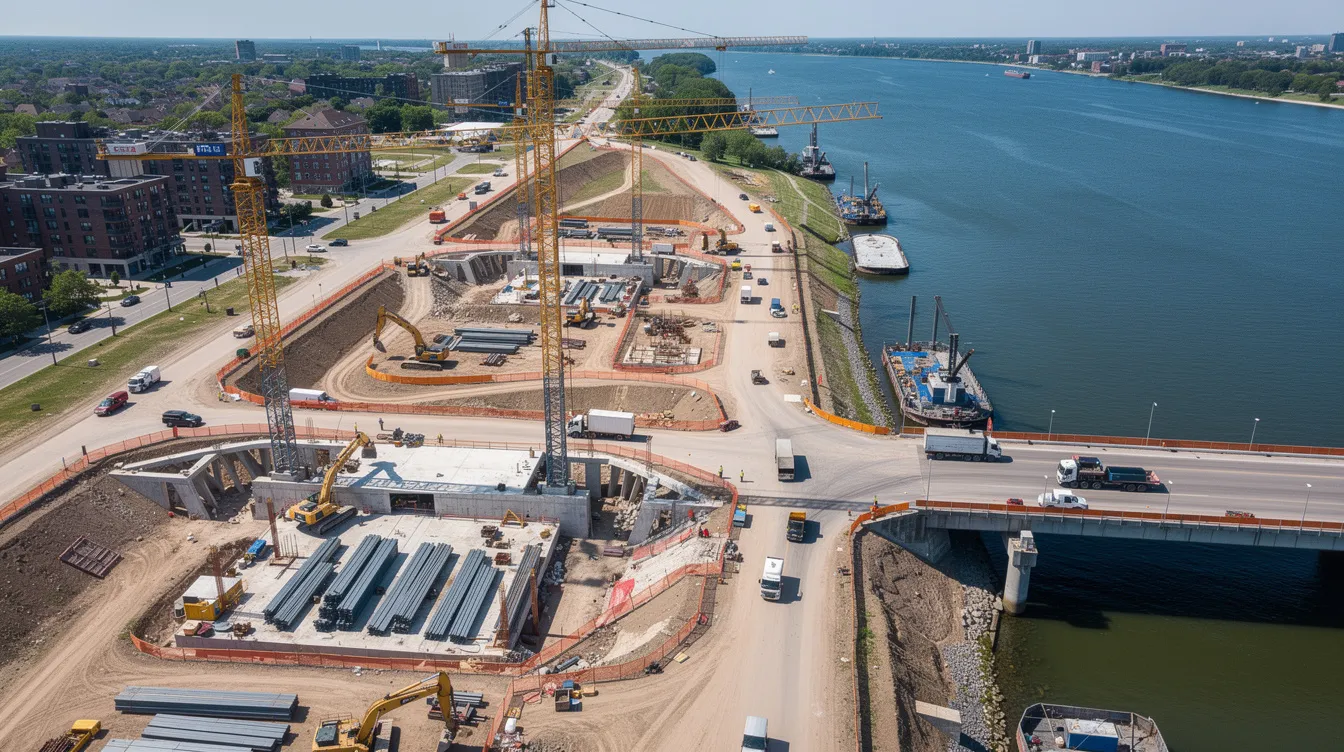
The practical effect of the 2023 rule is not limited to one regulation or one court case. It is a broader tightening of the compliance environment around federally funded construction. For merit shop firms, that can affect labor planning, bidding, and administrative costs in several ways.
Merit shop contractors often compete through workforce flexibility, performance-based advancement, and efficient crew deployment. Tighter classification expectations and more detailed payroll and recordkeeping demands can narrow some of that flexibility on covered jobs. The result is not that merit shop firms cannot compete. They must price and manage federal work with more discipline than before.
Smaller contractors can feel this pressure most sharply because they may not have dedicated compliance staff. Even when a company has the craft capacity to perform the work, the paperwork burden can influence whether it pursues a federally funded job at all.
That also has broader implications for owner value. If compliance complexity discourages bidders, agencies and taxpayers can face thinner competition and potentially higher costs. For a fast-growth region like the Carolinas, where infrastructure, airport, water, military, and public building work all matter, contractor participation levels are not a small issue.
For additional context on how merit shop business realities intersect with labor policy, see Merit Shop Careers and Challenges.
Regardless of the policy debate, firms that miss the operational basics face real exposure. Wage underpayments, payroll errors, missing records, or sloppy subcontractor oversight can turn a profitable public job into a payment dispute or enforcement problem.
Certified Payroll
Covered contractors generally must submit weekly certified payroll records for laborers and mechanics on the project. Those submissions should accurately show worker identification, classification, hours worked, rates paid, fringe treatment, deductions, and the required statement of compliance.
Overtime
On covered contracts subject to the Contract Work Hours and Safety Standards Act, overtime rules may apply in addition to Davis-Bacon prevailing wage requirements. Contractors should make sure payroll and field coding systems capture those hours correctly.
Recordkeeping
Contractors should maintain supporting payroll and classification records for the required retention period, including time records by classification, fringe documentation, apprenticeship registrations where applicable, and subcontractor payroll verification. Site postings also matter. Display required wage information and worker-rights notices where employees can easily see them.
The practical point is simple: clean records are a compliance control, not just an audit response. If your documentation cannot explain who worked, what they did, how they were classified, and how they were paid, the problem is already bigger than payroll administration.

Prime contractors cannot treat Davis-Bacon as someone else’s problem. On covered work, subcontractor compliance is part of project risk management. That means written contract flow-downs, regular payroll collection, follow-up on discrepancies, and a clear process for escalating problems before they become owner or DOL issues.
Useful controls include:
Mixed-funding projects are especially risky. In the Carolinas, local governments, utilities, and development entities often blend state, local, and federal funding. Contractors should avoid assumptions about partial coverage, exempt scopes, or supplier treatment unless the contract structure clearly supports them.
The safest executive mindset is to ask early: Where is the money coming from, which contract clauses control, and who inside our company owns the answer?
Use this quick review before pursuing or mobilizing a federally funded job in North or South Carolina.
| Question | Why It Matters | Action |
|---|---|---|
| Does the project include direct federal funding or federally assisted dollars? | Coverage may apply even when the owner is state or local. | Review funding language and contract clauses during pursuit. |
| Which wage determination applies? | The wrong county or construction type can create immediate underpayment risk. | Confirm locality and building/heavy/highway/residential category before finalizing the bid. |
| Are worker classifications mapped to actual tasks? | Multi-skilled crews can create misclassification issues. | Train field leaders and payroll staff to track time by real work performed. |
| Can your systems handle weekly certified payroll? | Manual workarounds increase error risk. | Test payroll, timekeeping, and document flow before mobilization. |
| Are subcontractor controls in place? | Prime contractors can inherit project risk from lower tiers. | Build flow-down clauses, payroll review, and escalation steps into project startup. |
| Is this job still worth pursuing at the adjusted labor and admin cost? | Compliance affects margin, staffing, and backlog quality. | Price the real burden, not a private-work assumption. |
Davis-Bacon obligations feed directly into estimating and project strategy. On federally funded work in Charlotte, the Triangle, the Columbia market, Upstate South Carolina, and the region’s military and infrastructure corridors, labor assumptions cannot be copied from private work.
Firms that stay competitive usually do a few things well:
This is one reason Davis-Bacon should be part of broader executive planning. If your company expects more federally influenced work in the next several years, prevailing wage administration is not an occasional nuisance. It is an operating capability. For related long-range planning context, see Strategic planning for 2026.
In 2026, the most important message is that the 2023 Davis-Bacon rule has not simply disappeared. Three provisions were blocked and later vacated, but the broader rule and standard DBRA obligations remain relevant on covered projects.
Contractors should continue watching:
Neither North Carolina nor South Carolina has a broad statewide prevailing wage law, so federal requirements often define the prevailing wage framework on public projects in the region. That makes Washington decisions highly relevant in Raleigh, Columbia, and every Carolinas market where federal infrastructure dollars flow.
ABC Carolinas helps members track those shifts and understand what they mean in practical terms. For broader policy and market support, visit ABC Carolinas advocacy and membership.
Use these questions to pressure-test your company’s readiness.
Project Identification
Wage Determinations
Payroll and Field Systems
Subcontractor Oversight

ABC Carolinas serves merit shop commercial construction companies across North and South Carolina. For members pursuing public and federally funded work, the association’s value is practical: policy monitoring, advocacy, compliance education, and peer access.
ABC Carolinas helps translate shifting federal labor-policy developments into business questions contractors can act on. That may include updates on Davis-Bacon requirements, webinars, member briefings, and advocacy around policies that affect open competition and the ability of merit shop firms to compete fairly.
For firms building long-term capacity for public work, workforce development matters too. Registered apprenticeship and other training investments can support both performance and compliance, particularly where apprentice classifications and documentation are involved. For related workforce context, see North Carolina apprenticeship programs.
If your firm expects to bid more federally funded work in the Carolinas, the next step is straightforward: review your internal prevailing wage process now, identify ownership gaps, and stay connected to ABC Carolinas policy and compliance updates. Firms that treat Davis-Bacon compliance as a strategic operating discipline will be better positioned to compete for public work without giving away margin or taking avoidable enforcement risk.
Below are answers to common questions about this topic.
Usually no. Neither North Carolina nor South Carolina has a broad statewide prevailing wage law like the federal Davis-Bacon framework. Purely state-funded or locally funded projects without federal money generally are not subject to Davis-Bacon. The key question is whether the project has federal funding or a federal assistance condition.
Davis-Bacon prevailing wage rates include both a base hourly rate and a fringe benefit amount. Contractors can usually satisfy the fringe portion through bona fide benefit plans, cash in lieu of fringe, or a combination, as long as the treatment is compliant and properly documented.
Consequences can include payment withholding, back-wage liability, contract disruption, and possible debarment in more serious cases. That is why self-audits, quick error correction, and prompt responses to agency questions matter.
Yes. Electrical, mechanical, sitework, concrete, and other specialty trades are covered when they perform work on a Davis-Bacon-covered contract. The important issue is using the correct classification and rate for the actual work being performed.
Start with a disciplined process. Assign one internal owner for prevailing wage administration on each covered project, use standardized checklists, confirm wage determinations before mobilization, and make sure your payroll system can support certified payroll reporting. Smaller firms can also benefit from ABC Carolinas training and updates as they build their internal process.


