


Data center construction safety has moved from a line item on a safety plan to a defining factor in whether Carolinas contractors can win, execute, and profit from the largest commercial construction opportunity of the decade. Here is what executives need to know heading into the second half of 2026.
Multi-billion-dollar data center construction across North Carolina is not slowing down. Data center construction projects can exceed billions in investment in a single campus. From Catawba County to Richmond County, and from the Charlotte metro to the Research Triangle region, mission-critical projects are creating sustained demand through at least 2028, and strategic site selection near a major city can affect access to infrastructure and labor. North Carolina alone has roughly 509 MW of operating data center capacity and approximately 3,975 MW planned, with many 2026 and 2027 campuses designed in the 200 MW to 400 MW range. Data center construction creates thousands of construction jobs across the region, and South Carolina is seeing growing activity as well.
Artificial intelligence providers and cloud operators are behind much of this expansion. Artificial intelligence workloads, 24/7 digital services, and enterprise cloud growth are driving new data centers and expansions at a pace that was unimaginable five years ago. Data centers could push Duke Energy’s load from 3 GW to 6 GW in the coming years, requiring coordination with Duke Energy and the regional grid for large-scale power delivery and underscoring the scale of the infrastructure involved. The North Carolina Competes Act provides tax exemptions for qualifying data centers, and North Carolina offers tax exemptions for data center investments over $75 million, along with a sales tax exemption on electricity for data centers. These tax incentives are pulling developers to the state and accelerating timelines.
This surge means more contractors are entering or expanding in data center construction, often under compressed schedules and with complex power and cooling scopes that can magnify jobsite hazards if not managed well, while specialized expertise is increasingly required. Data center construction safety, simply put, is the discipline of controlling the unique risks these projects present so crews, schedules, and margins stay intact. For executives, the stakes are concrete: EMR, workers’ compensation costs, OSHA scrutiny, and long-term client relationships all hinge on how well safety is managed. ABC Carolinas has already explored the broader impact on North Carolina’s data center workforce, and this article builds on that context by zooming in on safety and field execution for 2026 projects.
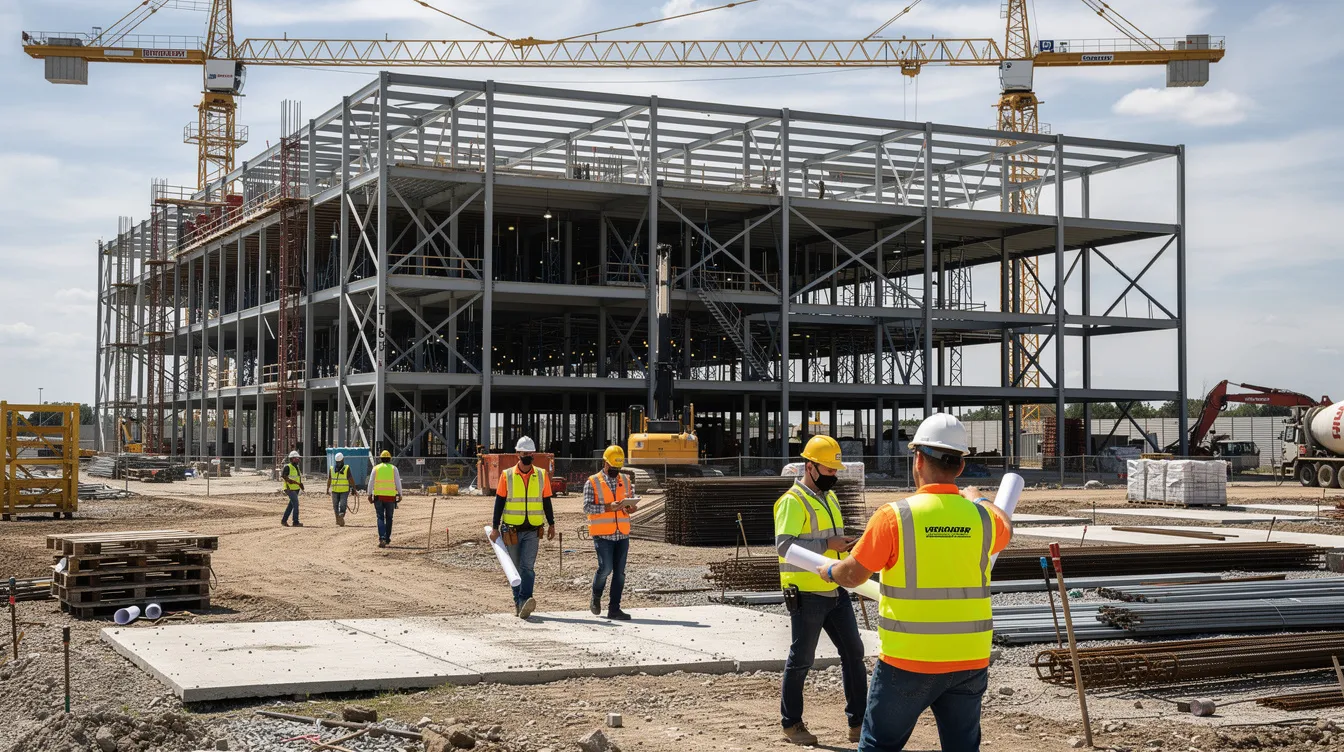
A standard office building or warehouse operates on predictable schedules with conventional MEP systems. A hyperscale or colocation data center is fundamentally different. Data centers must meet Tier 3 uptime standards, meaning redundancy and reliability expectations are more comparable to hospitals or power plants than to typical commercial facilities because they operate around the clock. Contractors need training on redundancy requirements for uptime to understand why every system has a backup and why rework is not tolerated.
Core construction scopes that drive unique safety and operational complexity include high-capacity electrical distribution, redundant UPS and generator systems, dense MEP racks, advanced cooling (air, liquid, or hybrid), fire suppression, and security systems. Seismic and wind load ratings are vital for data centers in risk-prone areas, adding another layer of structural and engineering coordination that standard commercial work rarely demands.
In the Carolinas, data center projects often involve large electrical rooms, battery energy storage systems (battery storage installations are becoming standard), rooftop or yard-mounted chillers, and multi-phase buildouts that can stretch the full build-out of large campuses over several phases while requiring crews to work around energized or nearly complete systems. The biggest differences for general contractors and subcontractors are faster schedules, higher coordination demands among trades, zero tolerance for rework or downtime, and more intensive commissioning and integrated testing. This environment raises specific safety exposures: falls around large equipment and racks, electrical contact, congested work areas, crane and rigging operations, and material-handling injuries that executives must anticipate from day one of preconstruction.
Data center construction safety is shaped by a predictable set of high-frequency, high-severity hazards that can be controlled with disciplined planning and training, not simply more PPE. Data center projects require compliance with multiple safety codes, and OSHA compliance is essential for workplace safety in construction at every phase.
Key hazard categories contractors should prioritize on data center projects in North Carolina and South Carolina include:
Fast-track data center projects tend to drive trade stacking and congestion around critical paths such as main electrical rooms, data halls, and roof equipment yards. Access control measures enhance security during data center construction and help prevent unauthorized personnel from entering high-hazard zones. Fire suppression systems in data centers must protect sensitive electronics, and clean-agent suppression systems are common in data center fire protection. Safety training must address advanced fire detection systems alongside conventional fire safety protocols.
Consider a scenario where crews are installing busway above live gear while another team stages battery racks below, or where parallel work in battery rooms occurs before ventilation systems are operational. These situations are routine on compressed data center schedules, and they demand disciplined planning, clear supervision, and enforced access control to prevent incidents.
Many of these hazards are amplified in counties experiencing intense data center activity, where crews work long hours or travel from other regions, increasing fatigue and the mental health strains that show up as unsafe decisions in the field.
Electrical safety is the defining risk category for data center construction. Power systems usually account for the largest portion of project cost and work hours, and the consequences of electrical incidents range from catastrophic injury to weeks of schedule delay.
Typical electrical features on a large data center in the Carolinas include high-voltage utility tie-ins, medium-voltage distribution, switchgear lineups, UPS rooms, battery strings or BESS units, bus duct or busway, and extensive branch wiring to dense server racks. The power infrastructure on a single campus can rival a small utility substation in complexity, and some owners also explore behind-the-meter systems that generate supplemental energy. On large campuses, available land can also shape substation, yard, and on-site energy-system layouts.
Core electrical safety disciplines that executives must enforce:
Human error during testing, energization, or late-stage troubleshooting is a major risk. Supervisors must ensure crews are qualified for the voltage and systems they are working on. Regular safety audits and training are critical for compliance in construction, and facility management requires ongoing hazard assessments and training even after initial construction phases conclude. Building a safety-first culture in construction is the foundation that makes all of these protocols stick.
Even before servers arrive, data centers under construction in the Carolinas can present serious environmental exposures. North Carolina’s climate allows various cooling approaches with regulatory scrutiny, but during buildout, cooling systems may be only partially operational. Training programs should cover cooling infrastructure safety measures so crews understand both the equipment and the environmental risks it creates when not yet functional.
Inside large, mostly enclosed buildings, temporary or partial operation of cooling systems combined with dense equipment and poor airflow can push temperatures in electrical rooms, mechanical areas, and data halls to dangerous levels. In North Carolina and South Carolina summers, high humidity compounds heat exposure and accelerates dehydration. These conditions are worsened by longer workdays common on fast-tracked mission-critical projects along the I-85 corridor. North Carolina’s OPN-141 enforcement guidance (issued June 2026) clarifies how heat-related illness inspections and citations will be handled, but it does not include a dedicated state heat illness standard. Contractors must build voluntary prevention programs.
Mechanical equipment, temporary generators, fans, and construction tools can create sustained noise levels requiring hearing conservation measures, especially during long shifts near operating mechanical yards or emergency generators.
Dust and air quality controls are necessary to protect sensitive equipment and workers. Fume exposure from welding and cutting in confined mechanical spaces, along with battery off-gassing hazards, requires job-specific ventilation and respiratory protection planning for every affected crew.
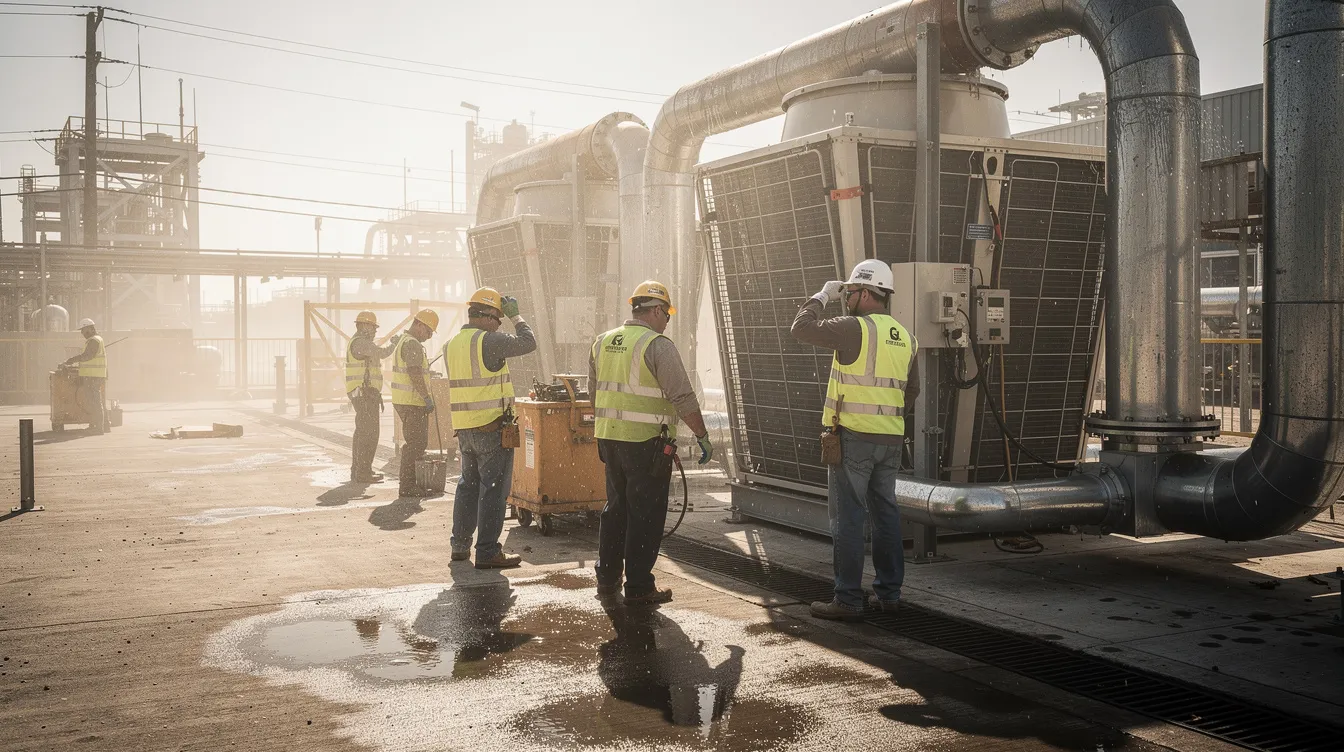
Data center construction safety is directly linked to workforce quality. Rushed hiring, constant crew turnover, and heavy reliance on travelers make it harder to enforce consistent safety expectations on complex sites. Training and competency development enrich safety culture in construction, and without stable crews, that culture erodes fast.
Labor remains tight across the Carolinas in 2026, as reflected in recent construction jobs reporting and mid-year construction economic forecasts. North Carolina’s data center boom intensifies competition for skilled labor, particularly for electricians, HVAC technicians, low-voltage trades, and experienced foremen. Contractors report difficulty retaining crews because competing data center projects offer higher wages. In Charlotte, the Research Triangle, and Upstate South Carolina, data center wages, per diem, and overtime can pull experienced workers away from other projects, leaving smaller contractors scrambling and at risk of putting less-trained people into high-risk data center environments.
Practical questions executives should ask when planning manpower for data center projects:
An emerging specialized workforce supports future data center projects, and ABC Carolinas’ apprenticeship and workforce development programs help build a pipeline of craft professionals familiar with mission-critical work. Investing in apprenticeships is one of the few long-term levers contractors control in this high-demand market.
Sequencing decisions made in preconstruction and at the executive level can either minimize or magnify safety risks during data center buildout. Comprehensive risk assessments are required before construction tasks start, and those assessments should inform how work is phased across the site.
Core sequencing principles that reduce risk:
Labor availability influences site selection and project phasing decisions at the macro level, and at the project level, it dictates how many fronts can safely be open at once. Regulatory timelines can directly affect data center project schedules, so sequencing must also account for permitting and inspection holds.
In data center projects, small delays or rework in one system can ripple through testing, commissioning, and owner go-live dates. Safer sequencing, even if it appears slower at the front end, typically results in fewer injuries, fewer punch-list items, and stronger client satisfaction. Open competition rewards contractors who can demonstrate both schedule performance and low incident rates, because hyperscale and colocation clients track both closely.
Not every contractor should chase every data center project. Sustainable growth comes from matching project pursuit to realistic staffing, safety, and financial capacity. Data center development in the Carolinas represents enormous investment, and the region’s growth is attracting attention from firms accustomed to major hubs such as Northern Virginia, but contractors who overextend their crews and compromise supervision will pay for it in incidents, rework, and damaged reputations.
Merit shop contractors across North Carolina and South Carolina can leverage distinct strengths: flexible staffing, performance-based pay, strong apprenticeship pipelines, and the ability to self-perform key scopes with well-trained crews. The merit shop philosophy rewards the company that can deliver safely and efficiently, not just the company that bids lowest.
Community engagement is crucial for securing project approvals, and permitting requires attention to state and local approvals and local codes, with timelines and milestones clearly defined and expected early in pursuit planning. Developers increasingly evaluate contractors not just on price but on safety performance, community standing, and workforce stability.
Executive-level decisions that protect both safety and profitability:
Data center construction requires specialized safety training programs, and contractors who invest in that training before pursuing work will outperform those who try to figure it out on the fly.
ABC Carolinas serves merit shop commercial construction firms across North Carolina and South Carolina as a practical partner for contractors active in data center projects. The organization provides resources that directly address the safety, workforce, and competitive challenges outlined in this article.
Relevant programs and services include:
Membership connects contractors to a regional network of peers already engaged in data center and mission-critical work across the supply chain.
Here is a concise playbook for executives who want to pursue or expand in data center construction while maintaining strong safety performance over the next 3 to 12 months:
The data center and artificial intelligence wave is likely to remain strong across the Carolinas for years. Data center operators and cloud providers will continue to expand, and the contractors who invest now in data center construction safety, workforce development, and disciplined project selection will be best positioned to compete profitably in the future.
Below are answers to common questions about this topic.
Prior mission-critical experience is helpful but not strictly mandatory, especially for subcontractors taking on well-defined scopes. Firms entering this space in North Carolina or South Carolina should invest in targeted safety training, partner with experienced general contractors, and follow owner safety standards rigorously. Starting with smaller or less complex scopes allows new entrants to standardize stronger safety procedures and build a credible track record before pursuing larger campus-scale work.
Electricians, low-voltage technicians, HVAC and mechanical crews, fire protection installers, and rigging or equipment-setting teams are the highest priority for job-specific data center safety training. Project managers, superintendents, and foremen in Charlotte, the Research Triangle, and the Upstate should receive additional leadership-level training focused on electrical safety coordination, trade sequencing, and managing congested sites where multiple high-risk activities operate simultaneously.
Smaller firms should focus on clearly bounded scopes such as structured cabling, drywall, or specific mechanical packages. Maintain tight control of crew size and supervision, and avoid overcommitting to overlapping data center projects in multiple counties at once. Use industry networking and preconstruction events to connect with experienced general contractors and large trade partners, clarify safety expectations early, and build a track record on a few well-executed mission-critical projects before scaling up.
Executives should align with owners and developers early on acceptable TRIR and EMR thresholds, expectations for site orientation and training, rules for energized work and lockout/tagout, and protocols for night work or multi-shift operations. In the Carolinas, hyperscale and artificial intelligence providers increasingly want to see documented safety programs, leading indicator tracking, and evidence of supervisor training before awarding major mission-critical packages.
Contractors planning to pursue data center projects should start targeted training and workforce planning at least 6 to 12 months before anticipated mobilization, especially for electrical and mechanical trades. Use that lead time to enroll apprentices in relevant programs, upskill existing foremen and superintendents, and run internal drills or tabletop exercises focused on energy-control and emergency response scenarios common to data center environments. The space between deciding to pursue this market and actually mobilizing is where the safety foundation gets built.


