


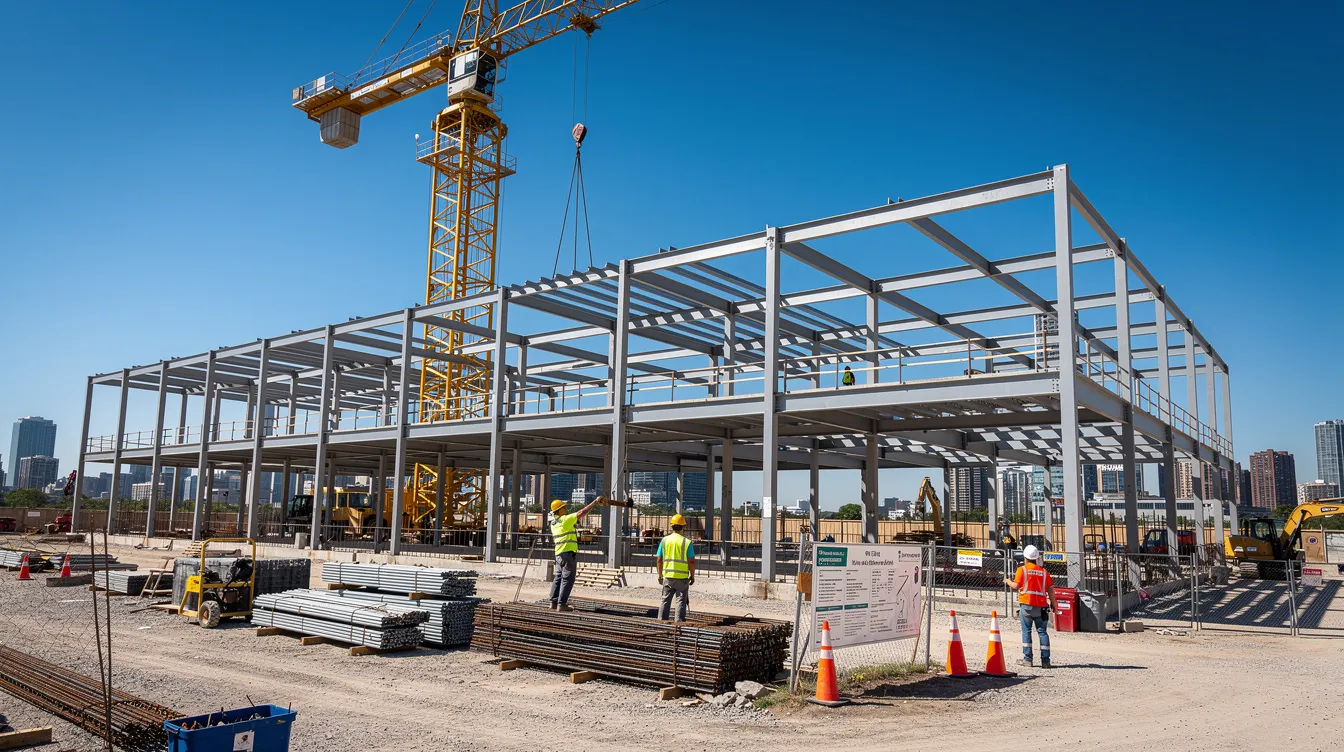
Contract risk management in commercial construction is the discipline of aligning contract terms, pricing, escalation clauses, and schedule provisions with actual construction costs and materials volatility. It safeguards an organization against financial loss, legal exposure, and operational disruptions by catching problems before they reach the balance sheet. Effective contract risk management involves identifying, assessing, and mitigating legal, financial, and operational liabilities across the project lifecycle. Proactive contract risk management helps identify potential issues before contracts are signed.
For ABC Carolinas members, this means more than reviewing boilerplate. Commercial construction costs vary by location and project type; per-square-foot costs range from $100 to $500 depending on scope, trade density, and market conditions. Margins in commercial construction projects often sit at 10-15% or less, which means a single pricing miscalculation for steel or electrical components can eliminate profit entirely.
Even when construction materials prices appear flat for a month, as ABC National reported for July 2026, contract risk remains high. Prior years’ inflation is still priced into bids, labor rates continue to climb, and the BLS Producer Price Index reflects an elevated baseline rather than a return to pre-2022 levels. The sections below break down what July 2026 data tells Carolinas contractors and what to do about it in construction contracts.
ABC National’s July 2026 construction materials price release reported month-over-month flat pricing for construction inputs, with year-over-year increases in the mid-single-digit range. Material costs have risen year over year in the construction sector for more than three consecutive years. Through April 2026, ABC Carolinas reported aggregate construction material input prices up about 7% year-over-year, with 6.2% inflation in the first four months alone. That four-month figure exceeds the cumulative 4.8% increase across all of 2023-2025.
The BLS Producer Price Index for construction inputs confirmed the pattern: July 2026 was essentially flat versus June 2026, but remained higher than July 2025 across most commercial categories. Risk identification at the contract level includes spotting vague scopes, hidden financial costs, liability gaps, and regulatory exposures before signing. A flat monthly reading does not remove those exposures; it means the construction industry paused at a high-water mark.
For Carolinas commercial construction projects, the materials that matter most are:
Each of these categories has experienced sharper price escalation than the aggregate index suggests. Contractors referencing ABC Carolinas’ Construction Material Prices 2026 margin guidance can compare how July’s flat reading fits the broader 2026 cost trend.
Flat July 2026 material prices can lead owners and some general contractors to believe the financial risk has eased. In practice, many 2026 construction contracts were priced off baselines that already reflect years of cost increases. A flat month does not lower those baselines; it holds them in place while other factors continue to push overall costs upward.
Labor rates impact overall construction costs at every stage. In May 2026, non-residential construction wages in the Carolinas rose 4.4% year-over-year to an average of $41.20 per hour. Complex designs require more skilled labor and specialty materials, compounding cost volatility for projects like healthcare facilities, data centers, and manufacturing facilities. Contract risk management can prevent revenue leakage from unmonitored pricing terms and missed milestones; when labor costs and material costs move in opposite directions from what was assumed at bid, the gap becomes a margin problem.
Bid-day versus buyout-day risk is where this pressure hits hardest. Bids submitted in Q1 or Q2 2026 in Charlotte, Raleigh-Durham, and Greenville-Spartanburg assumed certain construction costs. By the time procurement happens months later, supplier quotes may have expired, freight costs may have shifted, and tariff exposure may have changed. Contract disputes that result from these gaps can damage relationships with customers, suppliers, and business partners. The risk has moved from broad spikes in basic construction materials to more targeted exposures: specialty equipment, long-lead electrical gear, volatile freight, and the cost of skilled labor on tight project timelines.
The main tools available in construction contracts are clear scopes, escalation clauses, allowances, contingencies, quote validity terms, and schedule provisions. Each addresses a different slice of cost volatility.
Escalation clauses manage financial risks in construction contracts by allowing price adjustments for labor or materials when market conditions shift. These clauses protect contractors from unexpected cost increases and shift the risk of price fluctuations to the project owner through defined, index-based triggers. Common trigger events include material tariffs and inflation. Standardized playbooks help control exposure during contract negotiations by using pre-approved clause libraries and fallback positions, so parties involved can negotiate from a shared framework rather than from scratch.
Allowances and contingencies protect against uncertainty in construction material pricing, particularly in early-phase design-assist projects across the Carolinas, where the design phase is still evolving, and material suppliers have not yet locked in pricing.
Quote validity periods must be defined explicitly. In volatile categories, quotes have shrunk from 30-60 days to 7-15 days. Construction contracts need to specify what happens when a quote expires before purchase.
Effective contract lifecycle management relies on centralized repositories, obligation tracking, and performance monitoring. Centralized contract storage provides instant visibility into obligations, renewals, pricing, and supplier performance across multiple projects. A risk score or tiering system ensures high-risk agreements receive deeper scrutiny, and implementing tiered approval matrices based on risk thresholds enhances the overall contract management process. Risk assessment scores the probability and business impact of identified liabilities to prioritize team focus.
Automated workflows streamline contract intake, redlining approvals, and renewal alerts, while cross-functional collaboration aligns legal, finance, procurement, and operations teams around shared risk standards. Carolinas contractors reviewing tariff transition risks and actions can see how these levers apply to future volatility from the Section 122 expiration and Section 301 duty resumption.
Contract risk management must be localized. The Carolinas construction market is not one market; it is several, each with distinct demand drivers, supply chain constraints, and contract price pressures.
Charlotte is running strong backlogs in healthcare facilities, industrial projects, and light-industrial work along the I-85 and I-77 corridors. Data-center contractors report a backlog of over 10.6 months, compared with about 8.3 months for other firms. That demand narrows the margin for error in construction contracts, because subcontractor capacity is tight in electrical, mechanical, and concrete trades.
The Triangle and NC data center corridor use high-value electrical and mechanical construction materials, including switchgear, transformers, and specialty cables. Long lead times for this gear increase contract risk associated with escalation clauses and procurement timing. Projects bid in early 2026 with fixed-price assumptions on electrical components face buyout exposure if tariff reclassification or shipping delays push costs up 10% or more.
Upstate South Carolina (Greenville-Spartanburg and I-85/I-26 corridors) has sustained demand from manufacturing facilities and logistics projects. Structural steel and concrete are central to these builds, making construction costs and escalation clauses the core of contract negotiations. Freight from out-of-state steel mills adds another layer of cost fluctuations.
ABC Carolinas monitors regulatory developments in multiple states and advocates for construction firms in regulatory matters across both North and South Carolina. That advocacy helps members navigate complex regulatory changes that can affect contract terms, project planning, and overall costs. Contractors can review the mid-year construction forecast and backlog indicator context for detailed Carolinas planning data.
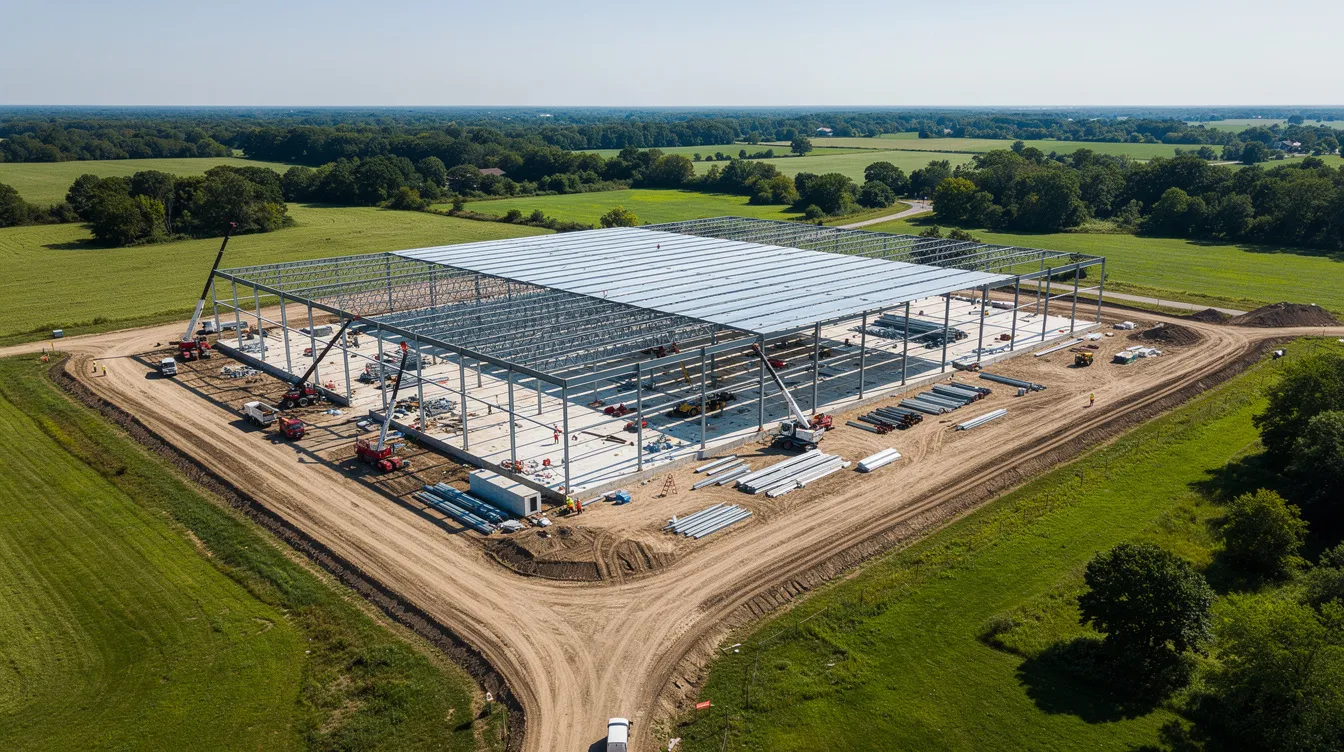
Contract risk management looks different at bid stage versus buyout stage in commercial construction projects.
At the bid stage, the focus is on scope clarity, assumptions about construction material price trends, escalation clause language, and alignment with the owner’s contract documents. Estimators must confirm material price assumptions against current supplier relationships and recent BLS Producer Price Index readings, not against quotes from 90 days earlier. The prime contract and any other contractual provisions should reflect realistic market conditions.
At the buyout stage, the focus shifts to subcontractor selection, confirmation of construction material pricing, securing material suppliers, and verifying lead times and escalation exposure. Post-signature tracking involves extracting service-level agreements, key performance indicators, and critical deadlines after execution to ensure that the contract price, based on bid-day assumptions, still holds. Where it does not, change-order documentation and escalation triggers must be followed.
Carolinas contractors can reduce this gap through internal preconstruction meetings that align estimators, project managers, and procurement teams before letters of intent are issued. Regular post-mortem reviews help update templates and strategies based on past disputes or contract failures, turning each successful project (and each margin miss) into better contract documents for the next bid.
Stable July 2026 construction materials prices do not eliminate the need for escalation clauses and project contingencies. Several conditions in the Carolinas construction market demand them:
Structuring escalation clause triggers requires external indices. BLS PPI sub-indices for steel mill products, concrete, and electrical machinery provide index-based, objective anchors. Triggers should specify thresholds (e.g., 5-10% variance from the contract price), caps, and documentation requirements so that force majeure clauses and other contractual provisions operate with greater certainty.
When owners resist formal escalation language, contractors can use owner-approved contingencies as an alternative on shorter commercial construction projects. Effective contract risk management also supports regulatory compliance by monitoring obligations related to regulatory requirements and evolving standards. Ongoing audits monitor vendor performance and regulatory changes to catch non-compliance early.
ABC Carolinas members can deepen their understanding by reviewing earlier resources on Construction Material Prices 2026 margin guidance and tariff transition risks and actions, both of which address these contractual provisions in detail.
Use this checklist as a weekly or bi-weekly reference for estimators and project executives:
ABC Carolinas provides resources for managing cost volatility and supports members with education on regulatory compliance. Use ABC Carolinas roundtables, peer groups, and education programs to benchmark how other contractors in North and South Carolina handle various aspects of contract risk in their construction contracts.
ABC Carolinas serves as a regional hub for construction contract risk education, advocacy, and knowledge sharing. The association is not a law firm, but it connects members to the tools, training, and peer networks that make contract risk management practical rather than theoretical.
Safety training is one foundation. Regular safety training reduces workplace accidents, and documented safety programs are increasingly required on commercial construction job sites. Safety training helps meet evolving regulatory expectations in construction and integrates into daily field operations. ABC Carolinas offers safety courses to help members stay compliant with regulatory requirements across the construction process.
Workforce development is another pillar. Labor shortages are the number one constraint on growth in 2026, and construction job openings remain difficult to fill across roles. ABC Carolinas offers apprenticeship programs to build workforce capacity, addressing the high labor demand that drives up labor costs and compresses project timelines. Contractors report spending more on recruitment and training initiatives, and building talent pipelines provides a sustainable advantage in 2026 and beyond.
Government affairs work in Raleigh and Columbia supports fair, competitive construction markets. This reduces contract risks tied to mandates and project labor agreements, supporting the merit shop philosophy that keeps the construction market open to free enterprise and fair competition. Networking events, peer groups, and professional development programs provide members with forums for strategic planning and knowledge sharing on financial stability, supplier relationships, and advanced technologies in contract management.
Commercial construction leaders in North and South Carolina should treat the next four months as a contract risk management sprint.
These FAQs address practical questions from Carolinas commercial construction professionals that go beyond what the sections above cover.
In the 2026 construction market, contractors should review standard construction contract language at least once per year, with an additional mid-year check whenever ABC National or BLS releases show changes in construction costs. For Carolinas contractors, a Q4 annual review paired with a mid-year validation (triggered by material price releases or tariff announcements) is a solid cadence. A “flat” monthly reading, like July 2026, is itself a cue to confirm that escalation clauses and contingencies still match the current risk. A mutual mistake in interpreting stable prices as low risk can lead to financial losses when other factors, such as labor costs, freight, or tariff transitions, move against assumptions.
Contractors should be cautious about cutting contingencies based on one month of flat pricing. Other risks, including skilled labor wage growth at 4.4% year-over-year, schedule compression, specialty equipment lead times, and force majeure events, still justify reasonable contingencies. For longer-duration projects like data centers or large industrial builds in the Carolinas corridor, stronger contingencies are warranted. Short-duration interior fit-outs may tolerate leaner cushions. Use internal historical data and multiple months of pricing reports, not a single release, to set contingency levels in construction contracts. Maintaining the financial viability of each project requires accounting for the full range of cost fluctuations, not just construction materials.
Small and mid-size firms should standardize their own construction contract templates, work with outside counsel and insurance brokers on an as-needed basis, and use ABC Carolinas education programs to understand key risk areas. Practical steps include maintaining checklists for escalation clauses, quote validity, and scope alignment, as well as participating in ABC Carolinas peer roundtables to compare contract approaches with firms of similar size. Additional compensation for legal review on high-value contracts is an investment, not an overhead expense. While ABC Carolinas does not provide legal advice, it connects members to trusted resources and training on construction contracts and risk allocation that support financial stability.
Frame escalation clauses as tools for fair risk-sharing between the parties involved. When a contractor does not have to bury large hidden contingencies in a contract price, the owner gets more competitive initial pricing and greater certainty about how significant price increases will be handled. Reference credible data: ABC materials price releases, BLS PPI trends, and regional construction costs. Specify triggers tied to published indices, define caps, and document requirements clearly so owners see escalation clauses as disciplined contractual provisions rather than open-ended exposure. Transparent, written explanations of how the clause works and when it activates build trust and reduce resistance during contract negotiations.
Members should regularly check ABC Carolinas’ news and insights pages for updates on construction material prices, economic forecasts, regulatory changes, and backlog indicators relevant to the Carolinas construction industry. Subscribe to chapter communications, attend regional meetings in Charlotte, the Triangle, and Upstate South Carolina, and participate in training tied to construction contracts and risk management. Combining these updates with ABC National’s materials-price releases and BLS data gives contractors a stronger foundation for contract risk management decisions throughout 2026 and 2027, helping each firm maintain a solid understanding of market conditions needed to protect margin and deliver a successful project.


