


Construction sites are high-risk environments containing valuable materials and hazardous conditions-and protecting them requires more than cameras and chain-link fencing. Effective construction site security protects people, equipment, and materials, but it also means maintaining the documentation that defends your company during inspections, claims disputes, and owner prequalification reviews. This article is a field-ready guide to osha recordkeeping for commercial contractors operating across North Carolina and South Carolina.
Construction site security today includes disciplined OSHA recordkeeping alongside physical protections like access control and perimeter monitoring. This guide walks Carolinas contractors through what to record, when to report, which forms to maintain, and how to build a repeatable workflow across every jobsite in both states.
A layered defense strategy is effective for protecting construction sites, and that defense now extends well beyond physical barriers. Construction site security includes both physical protections-gates, lighting, access control, strict ID checks that ensure only authorized workers and visitors enter construction sites-and documentation controls such as injury logs, incident reports, and electronic submission processes that protect the business during inspections, claims, and disputes.
For commercial contractors working across Charlotte, the Triangle, the Triad, the Charleston and Columbia metros, and the I-85/I-77/I-95 corridors, osha recordkeeping is no longer a back-office task. It is part of how owners and insurers evaluate jobsite risk and security. Security and safety protocols help control access to hazardous areas, while access procedures ensure workers have the appropriate training and authorization to be on site. Unauthorized trespassers face high risks of injury on construction sites, making documentation of who is present and what incidents occur a direct extension of site safety.
OSHA’s injury and illness recordkeeping requirements under 29 CFR Part 1904 apply on most non-residential jobsites in the Carolinas with more than 10 employees, including GCs and many specialty trades. Accurate osha records reveal patterns-repeated hand injuries on concrete pours, clusters of heat cases in July-that can be addressed with training, PPE, and site controls before they threaten safety or schedule.
This article narrows in on what to record, when to report, which osha recordkeeping forms to use, and how to keep everything aligned so superintendents, safety directors, and project executives can act immediately.
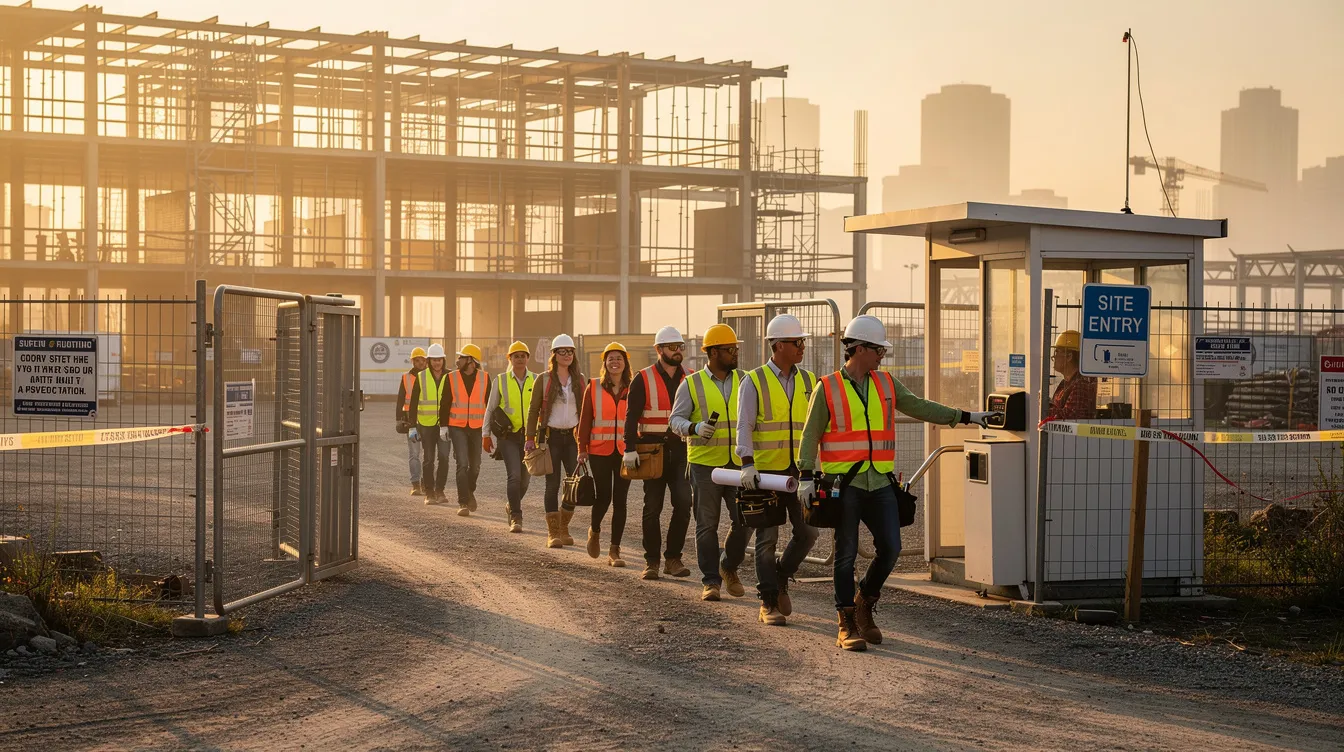
OSHA recordkeeping is about documenting work related injuries and illnesses that meet specific severity thresholds-not every minor first aid case. It is distinct from incident reporting to OSHA (which has separate deadlines) and from general construction site security measures like cameras or guards.
Companies with over 10 employees must record serious injuries and illnesses on the osha form 300. The types of recordable cases OSHA expects on the 300 log include:
“Work-related” in the construction industry typically includes incidents on the jobsite, in laydown or staging areas, and during company-provided transportation between job locations. For example, an injury while unloading rebar at an Upstate South Carolina project or exposure to silica dust during concrete cutting would qualify.
Very small employers-10 or fewer employees for the full previous calendar year, including temporary and seasonal workers-may be partially exempt from routine 300 log recordkeeping requirements. However, even these employers must still report fatalities or in patient hospitalization events to OSHA when they occur.
North Carolina and South Carolina employers operating under state OSHA plans should note that both states largely adopt federal recordkeeping standards. North Carolina automatically adopts all recordkeeping standards when published in the Federal Register, while South Carolina’s OSHA program enforces 29 CFR Part 1904 for private sector construction. Some procedural nuances exist-for instance, NC employers may use Workers’ Compensation Form 19 as an equivalent to OSHA Form 301 in many cases.
ABC Carolinas frames OSHA recordkeeping as part of a broader osha construction compliance strategy, reinforcing merit shop professionalism and giving contractors a competitive edge during owner prequalification.
Understanding the difference between a recordable injury and a reportable event is one of the most critical distinctions in osha recordkeeping for the construction industry. Recordable incidents go on the OSHA 300 log. Reportable incidents must also be communicated directly to OSHA within specific time limits.
Recordable examples contractors will recognize:
Reportable events and timelines under OSHA’s reporting requirements:
| Event | Deadline | Condition |
|---|---|---|
| Fatality | 8 hours | Death within 30 days of the work related incident |
| In patient hospitalization | 24 hours | Admission for treatment, not just ER observation or diagnostic testing |
| Amputation | 24 hours | After employer learns of the event |
| Loss of an eye | 24 hours | After employer learns of the event |
Employers must report fatalities within eight hours of learning a death was work-related. Severe injuries must be reported within 24 hours. In patient hospitalization means admission for treatment-not simply an ER visit for observation or diagnostic testing. For example, if a concrete crew member in the Charlotte metro suffers a crush injury requiring overnight surgical admission, that triggers the 24-hour OSHA notification window.
All reportable incidents are also recordable, but not all recordable incidents are reportable. Contractors need a quick triage process at the superintendent or safety-manager level to decide immediately whether OSHA’s reporting requirements apply.
Key exclusions to note: a motor vehicle accident on a public street or public transportation system that does not occur within a construction work zone may not be recordable under certain criteria. When in doubt, check current OSHA guidance or consult your safety advisor.
Most commercial construction employers will interact with three core osha recordkeeping forms: the 300 log, the 301 incident report, and the 300a summary. Supporting investigation files round out the documentation picture.
OSHA Form 300 (Log of Work-Related Injuries and Illnesses): This is the running list of all recordable cases for each fixed establishment or supervising office. Key fields include employee name (or “privacy case”), job title, date, location on site, a brief description of the injury or illness, and classification-days away, restricted work, or job transfer. OSHA form 300 logs must be completed within seven days of incidents.
OSHA Form 301 (Injury and Illness Incident Report): This is the detailed case-by-case record, often completed by the safety manager. It captures what the employee was doing, how the injury or illness occurred, the body part affected, and the initial medical treatment. Instructions for this form emphasize avoiding vague descriptions: “hurt hand” is not sufficient. Specify the task, the tool, and the mechanism. Include the contact person for follow-up questions and the business name of the establishment.
OSHA Form 300A (Summary of Work-Related Injuries and Illnesses): This annual summary aggregates total recordable cases, days away from work, restricted duty days, and categories of injuries and illnesses for the calendar year. A company executive must certify its accuracy before posting.
OSHA requires employers to retain records for five years. Specifically, 300, 300a, and 301 records must be maintained for at least five years following the end of the calendar year they cover. Records must be kept for five years at the worksite or a location where they can be produced quickly if an OSHA compliance officer or insurance auditor requests them.
Equivalent electronic systems-Excel, safety software, or dedicated platforms-are acceptable if they capture all required information and osha injury and illness data. Sound construction document control practices make it much easier to keep these records organized for multi-jobsite operations.
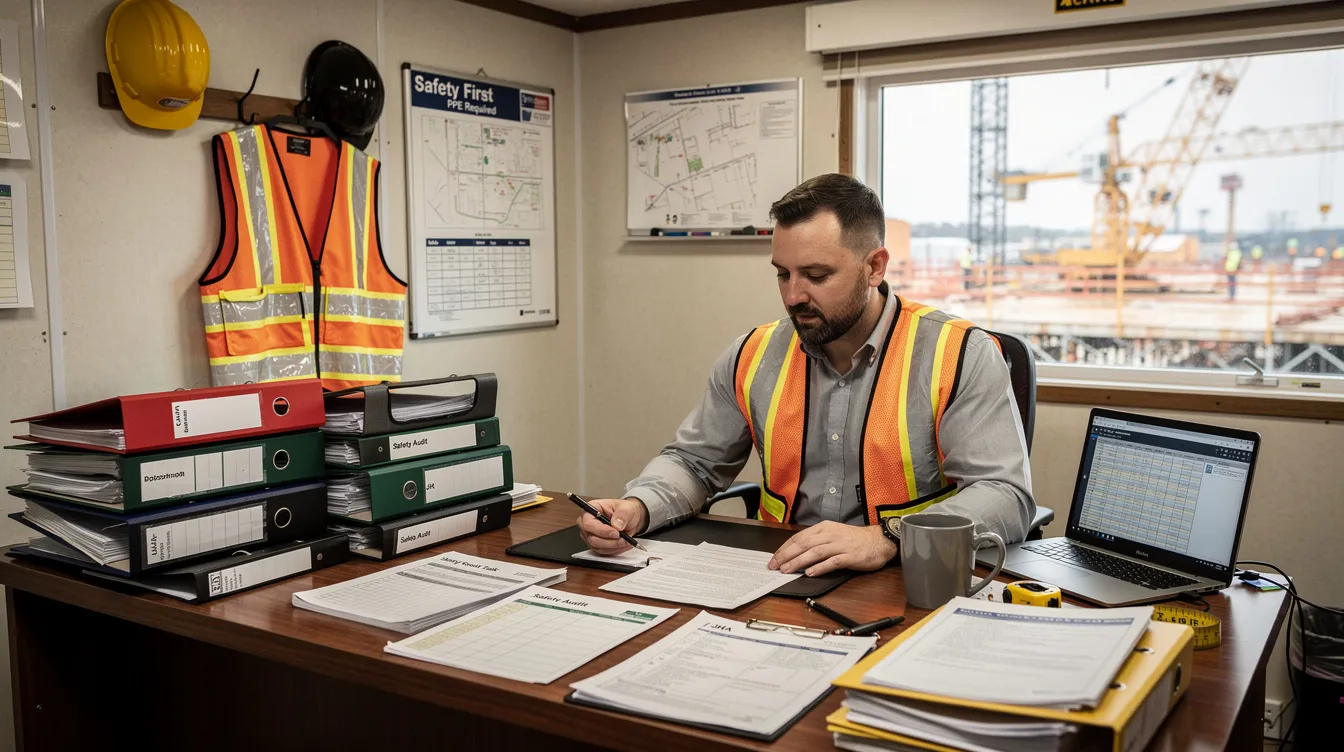
OSHA now expects many construction employers to electronically submit injury and illness data through its injury tracking application, and 2024 rule updates expanded who must submit which forms.
Employers with 20 or more employees in covered NAICS codes must submit data electronically by March 2 each year. Form 300a must be submitted by March 2 each year, covering the prior calendar year’s data-even if the employer had zero recordable injuries or illnesses.
As of January 1, 2024, certain high-hazard industries with 100 or more employees-including specific construction categories such as Foundation, Structure, and Building Exterior Contractors-must also submit osha form 300 log and osha 301 incident report data electronically, not just the 300a summary. This expanded electronic submission requirement applies to detailed case-level data.
In practice, the ITA works as follows: users create a secure account, identify each establishment by business name and address, and upload data via manual entry on a web form, csv file upload, or an API connection from their safety or injury tracking application. OSHA does not accept paper or emailed copies for this requirement. Electronic submission is separate from keeping physical copies of the 300, 300a, and 301 on file.
Carolinas contractors operating across multiple offices-for example, a Charlotte headquarters with field offices in Raleigh and Greenville, SC-should standardize their submission process annually. Ensure each establishment’s data is complete, consistent, and aligned with internal injury and illness data. Errors in NAICS coding, establishment size, or injury counts generate questions from OSHA and undermine the accuracy of your reporting.
Timing is one of the most common osha recordkeeping failure points. Late entries, missed March 2 submissions, or forgotten 300a postings can turn otherwise strong safety programs into compliance problems.
Key deadlines at a glance:
| Action | Deadline |
|---|---|
| Complete 300 log entry and 301 report | Within 7 calendar days of learning a case is recordable |
| Report fatality to OSHA | Within 8 hours |
| Report in patient hospitalization, amputation, or eye loss | Within 24 hours |
| Finalize and certify Form 300A | By February 1 |
| Post Form 300A at worksite | February 1 through April 30 |
| Submit electronic data via ITA | By March 2 |
| Retain all forms | At least five years |
Employers must post the OSHA 300A summary from February to April each year. Specifically, osha form 300a must be posted from February 1 to April 30 in a conspicuous location where employees report to work, including equivalent electronic access for traveling crews.
OSHA’s reporting for fatalities, reporting fatalities specifically, uses multiple channels: phone, the OSHA hotline, or online submission. The health administration expects prompt action once the employer or its agent learns of the event.
For multi-jobsite contractors in the Carolinas, consider this workflow: designate a monthly deadline for each project superintendent to send incident details to the safety department. Conduct a quarterly review to reconcile logs against HR and workers’ comp data. Perform an annual cross-check before 300a certification.
Robust security systems and protocols are vital for safeguarding assets-and accurate osha injury and illness data is a core component. Owners, insurers, and regulators all review injury records when assessing your jobsites and prequalification packages.
Complete, consistent OSHA 300 logs and 301s support workers’ compensation claims and Experience Modification Rate calculations by providing a clear narrative of what happened, how quickly hazards were corrected, and how return-to-work was managed. Insurance providers often require documented security protocols before issuing policies, and clean safety records strengthen your position in those conversations.
When OSHA visits a jobsite in the Carolinas, a well-maintained 300 log, recent 300a posting, and matching internal investigation files show that the company takes occupational safety and health seriously. This can reduce the likelihood of expanded inspections.
The competitive advantage is real. Construction buyers in Charlotte, Raleigh–Durham, Greenville–Spartanburg, and coastal markets increasingly ask for injury and illness data as part of prequalification. Clean records and a disciplined process help merit shop contractors demonstrate professionalism and secure more work. A strong compliance track record also strengthens the construction industry’s position when engaging with regulators and legislators in Raleigh and Columbia.
Most recordkeeping citations stem from avoidable process errors rather than complex legal questions. Tightening a few habits can significantly reduce risk for contractors in North and South Carolina.
Misclassifying first aid vs. medical treatment: Sutures, prescription medications, and physical therapy are medical treatment beyond first aid-not first aid. Under-recording these cases means missing entries that should be on the 300 log, and this is one of the most common errors OSHA cites.
Late or missing entries: Waiting more than 7 days to log a restricted-duty case or failing to update the entry when a case transitions from restricted duty to days away from work after follow-up visits. Osha requires timely updates as additional information becomes available.
Inconsistencies across systems: HR records showing a lost-time recordable injury while the OSHA 300 log shows only restricted duty, or workers’ comp claims that do not match incident descriptions. These gaps cause problems during audits, claims reviews, and inspections.
Subcontractor confusion on multi-employer sites: Even when a subcontractor employs the injured worker, the controlling employer must understand who is responsible for logging the case and how to coordinate documentation across establishments.
Electronic submission errors: Misidentifying establishment size, using wrong NAICS codes, or formatting a csv file incorrectly on the injury tracking application can generate OSHA inquiries and undermine the accuracy of your data.
ABC Carolinas recommends a simple, repeatable workflow any commercial construction firm can adopt, whether running a handful of projects in the Triangle or dozens across both states. Clear procedures and employee training enhance the effectiveness of technology in security-and the same principle applies to recordkeeping.
Step-by-step process:
Encourage the use of digital tools-a centralized injury tracking application, mobile forms, and integrated construction safety technology-to capture incidents in real time and sync data across offices.

OSHA recordkeeping works best when integrated with overall safety and health programs, construction site security plans, and technology platforms-not handled as isolated paperwork. Many Carolinas contractors already deploy construction safety technology such as wearables for heat stress monitoring, mobile inspection apps, and site access control systems. AI-powered security cameras can spot unusual after-hours movement, and these same technology platforms can feed accurate, time-stamped data into injury and illness documentation workflows.
Connect osha recordkeeping to specific hazard programs like your heat illness prevention plan or fall-protection initiatives. High-quality logs highlight trends-clusters of heat-related illnesses in July on coastal South Carolina projects, for example-that drive targeted controls and schedule adjustments.
Strong construction document control practices tie OSHA logs to other critical records: JSAs, toolbox talks, inspection checklists, equipment maintenance logs, and disciplinary actions. Together, these create a defensible story if OSHA, an owner, or an insurer reviews an incident. ABC Carolinas members can reinforce this integration through construction safety training programs that teach supervisors how to recognize recordable cases, complete forms correctly, and use injury and illness data to lead safer, more secure jobsites.
Leadership teams should treat OSHA injury and illness data as a regular agenda item at quarterly operations reviews, alongside schedule, cost, quality, and workforce metrics.
Treat OSHA recordkeeping as a strategic part of construction site security and competitive positioning for upcoming bids across the Carolinas.
Start with a quick internal audit:
Standardize forms and instructions across all North Carolina and South Carolina jobsites. Create templates for immediate incident reports, supervisor checklists for determining recordability, and a clear flowchart for when to escalate to OSHA reporting. Refresh superintendent and foreman training on osha recordkeeping-either during upcoming safety stand-downs or through ABC Carolinas construction safety training-so field leaders know exactly what to do when an osha injury occurs.
Leverage ABC Carolinas as a partner: take advantage of resources on osha construction compliance, construction document control, and regional peer networks where safety leaders share practical recordkeeping and construction site security practices.
Disciplined OSHA recordkeeping not only keeps inspectors and insurers confident-it proves that merit shop contractors in the Carolinas deliver projects safely, securely, and professionally across every market they serve.
OSHA records are kept by establishment, not by individual project alone. Many Carolinas contractors treat each main office or regional yard as the fixed establishment responsible for logging cases that occur on the jobs it oversees. Use a centralized injury tracking application and standardized incident forms so that, whether an event occurs on a Charlotte high-rise on Monday or a Columbia distribution center on Thursday, the safety team receives consistent required information and can enter it into the appropriate OSHA 300 log. Designate a single contact person in safety or risk management to reconcile incidents weekly, ensuring mobile crews’ related injuries and illnesses are not missed or double-counted.
OSHA’s recordkeeping requirements cover both injuries and illnesses. Many occupational illnesses relevant to the construction industry-work-related heat exhaustion, asthma aggravated by jobsite exposures, dermatitis from adhesives-can be recordable if they involve medical treatment beyond first aid, days away, or restricted work. Coordinate your OSHA logs with programs like your heat illness prevention plan so that patterns of recurring illnesses trigger additional training, engineering controls, or schedule adjustments for high-risk seasons.
OSHA has specific privacy case rules for certain types of serious work related injuries and illnesses-for example, cases involving intimate body parts or mental health conditions. In these situations, employers should omit the employee’s name from the 300 log and maintain a separate confidential list linking case numbers to names. Train safety and HR personnel on these requirements and restrict access to the confidential list. The 300a summary, which is the document posted publicly, does not include individual names.
OSHA’s partial exemption threshold is based on the peak number of employees during the previous calendar year, including part-time, temporary, and seasonal workers on the payroll. If a small but growing Carolinas contractor crossed the 10-employee threshold in the prior year, the requirement applies for maintaining full OSHA 300, 300a, and 301 records in the current year-even if the typical crew size is smaller. Review headcount at year-end and plan accordingly.
While OSHA logs and insurance claims serve different purposes, they must tell a consistent story about each recordable work related injuries case. Discrepancies between OSHA 300 entries and workers’ compensation claims can raise questions during audits or legal proceedings. Create a coordinated workflow where the same core incident summary and dates feed both osha forms and insurance reports. Involve your broker or carrier early so that your recordkeeping practices support EMR management and claim defense, and submit any additional information promptly as cases evolve.


