


Construction site security has evolved well past locks and cameras. In 2026, a secure commercial jobsite means controlling access, monitoring environmental hazards, and ensuring your team can respond to a medical emergency in minutes, not hours. For Carolinas contractors managing crews from Charlotte’s South End to the I-95 corridor, heat illness is now one of the most predictable and enforceable risks on the project schedule.
The numbers make the case. Construction workers are 13 times more likely to die from heat-related illness than workers in other industries, and 285 construction workers died from heat-related causes between 1992 and 2016. During heat waves, the risk of occupational injury increases by 17.4 percent. North Carolina’s own data shows the trend accelerating: by mid-July 2025, the state recorded over 3,300 emergency department visits for heat illness, more than double the five-year average for the same period.
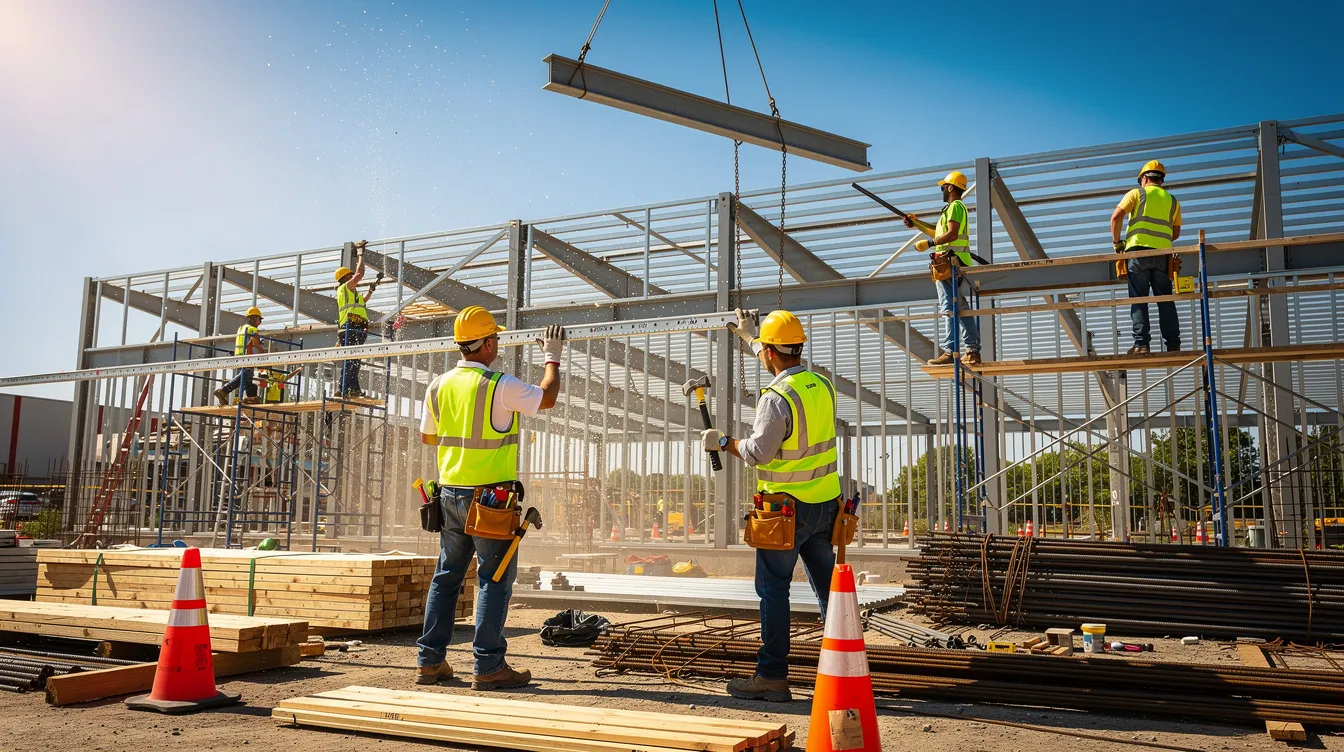
OSHA still expects employers to protect workers from heat illness under the General Duty Clause while a federal standard is under development, so security and safety programs must address heat as a predictable hazard. A secure construction site in the Carolinas now includes controlled entries, visitor sign-in, clear supervisor roles for monitoring heat risks, locked and accessible shaded rest areas, and coordinated emergency response when someone shows symptoms of heat-related illness. This is where construction site security and safety culture meet, and where both the written plan and the daily field execution determine whether your program holds up under inspection or in a courtroom.
As of mid-2026, the regulatory picture for Carolinas contractors is clear in practice even if it remains unsettled on paper. OSHA’s Heat National Emphasis Program expired on April 8, 2026, but federal OSHA reissued a revised NEP on April 10 that continues to direct inspection resources toward high-risk industries, including construction. Neither North Carolina nor South Carolina has enacted a construction-specific heat illness prevention standard.
That does not mean contractors operate in a vacuum. OSHA can cite contractors under the General Duty Clause for heat hazards, and North Carolina’s OPN-141 directs state inspectors to evaluate heat programs during field visits. NC OSH conducted 190 heat-related inspections in fiscal year 2024 alone. OSHA heat regulations are tied to specific heat index thresholds: protections should begin at 80°F, and the agency recommends increasing breaks when the heat index exceeds 90°F. For comparison, California’s indoor heat standard applies at temperatures above 82°F, signaling the direction federal rulemaking is headed.
What do inspectors look for on a hot day? They check access control at the gate, posted emergency numbers, a written heat illness prevention plan, evidence of a buddy system, and documentation of daily heat index monitoring. For construction site security, this means supervisors need clear procedures for escorting EMS onto the site, opening locked gates, and guiding responders to an affected worker during a heat emergency.
A heat illness prevention plan is a written, site-specific program that lives alongside the site security plan and covers all outdoor and non-climate-controlled work areas. Employers must maintain a written heat illness prevention plan that addresses the conditions their crews actually face. A structured heat illness prevention plan is essential for safety culture, not a filing exercise.
The core elements every plan must address:
Construction site safety requires a site-specific safety plan and inspections tailored to each project. An office build in Charlotte will manage heat differently from a highway widening project along I-95 in July. Plans should define who serves as Heat Safety Coordinator, who monitors forecasts, who has authority to stop or modify work, and who controls access to locked first-aid cabinets and cooling supplies.
Construction site security and heat illness prevention are both about predictable control: controlling who is on site, where they can go, and how fast the team can respond when something goes wrong in extreme heat. Construction site security requires a multi-layered defense strategy that combines physical barriers, technology, and trained personnel, and many of those same layers directly support heat safety.
Practical integration points include:
Best practices for construction site security include using modern surveillance technology alongside traditional controls. Secured shaded rest areas, hydration stations, and designated cooling zones should be clearly marked, well lit for early and late shifts, and protected from unauthorized use. Controlled access supports emergency response by providing a known address and gate location for 911, a posted site map showing cooling zones and first aid, and protocols for unlocking gates and clearing traffic lanes on short notice.
Treat hazard assessment as the first step in both construction site security and heat illness prevention. For summer 2026 projects, that work should start during pre-job planning in April and May.
Concrete assessment steps include:
PPE must be mandatory where construction hazards require it, but assessments should account for how protective clothing adds to metabolic heat and reduces sweat evaporation. Workers can sweat between 27 oz. and 47 oz. per hour in hot environments, and when airflow is restricted by heavy gear, core temperature rises faster. Environmental heat, air temperature, direct sunlight, and air movement all factor into the risk profile.
Document the assessment in a simple matrix or checklist so the company can show OSHA, insurers, or owners that they proactively evaluated and controlled heat and security risks together. Managing heat stress effectively means understanding where excess heat, personal risk factors, and security constraints overlap on each unique site.
Field execution is the make-or-break test. A strong written program means nothing if supervisors do not know what to do every hot day and if no buddy system exists to catch heat illness early.
Buddy system expectations:
Supervisor duties for heat illness prevention:
Employers must provide training on heat-related illness symptoms, and training programs should reinforce OSHA heat guidelines regularly. Foremen and superintendents should have clear stop-work authority when heat index passes company thresholds or when workers show heat illness signs, even if this affects production. When normal duration schedules push crews into peak afternoon heat for more than two hours without a break, something needs to change.
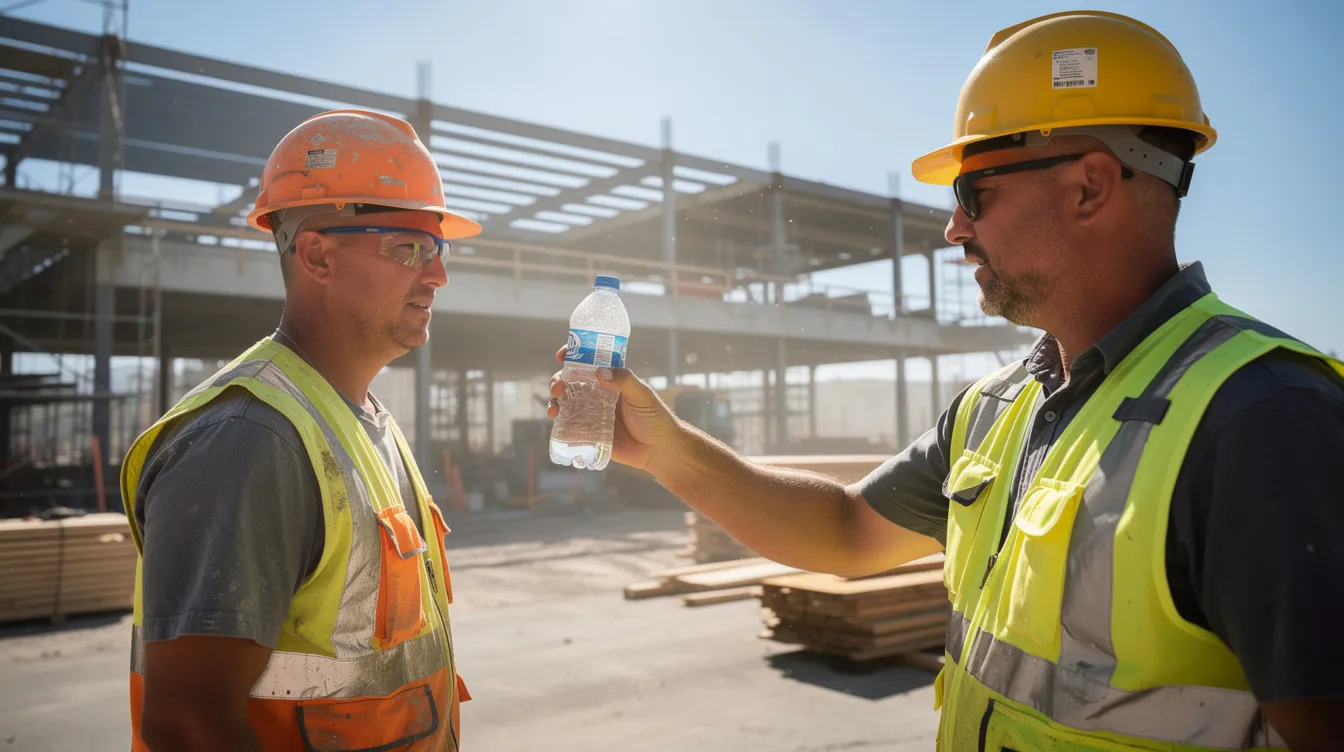
Acclimatization is a core element of any heat illness prevention program. New workers need 7 to 14 days to acclimatize to heat, during which their body gradually adapts to hot conditions through improved heat tolerance and more efficient cooling. New and returning workers who have been away for a week or more are at highest risk. Training should include acclimatization protocols for new workers as a non-negotiable part of onboarding.
A structured acclimatization plan should include:
Workers build heat tolerance over this period as their bodies learn to regulate body temperature and core temperature more effectively. Construction site security procedures like badging, controlled access, and sign-in logs can help track who is in their acclimatization period and ensure they are assigned to appropriate tasks. Documentation should include simple rosters or forms showing each worker’s acclimatization schedule, kept with other safety records so the company can demonstrate active management of this known risk.
Every construction site security plan must be aligned with the emergency plan, so heat-related emergencies can be handled quickly, even when the site is gated or locked. Construction sites should have clear evacuation routes as part of safety management systems, and those routes must also accommodate incoming emergency medical services.
A heat-focused emergency plan should include:
Basic first aid for heat illness on site:
On a midsummer concrete pour in Raleigh or a steel erection job in Greenville, SC, the difference between a close call and a fatality often comes down to how many minutes pass between symptom onset and active cooling. Pre-planning these protocols during calm conditions makes execution possible during a serious physical harm scenario in extreme heat.
For Carolinas contractors, the difference between a defensible illness prevention program and a citation often comes down to documentation. Inspectors evaluate whether the heat illness prevention plan and site security procedures are actually used.
Key records a 2026 inspection-ready contractor should maintain:
| Record Type | Purpose | Format Options |
|---|---|---|
| Written heat illness prevention plan | Demonstrates program existence and scope | Digital or printed, site-specific |
| Daily heat index logs | Proves environmental monitoring occurred | App screenshots, handwritten logs |
| Training rosters | Shows workers and supervisors were trained | Sign-in sheets with dates and topics |
| Acclimatization records | Documents management of new and returning workers | Simple roster with start dates and ramp schedule |
| Buddy system assignments | Proves mutual monitoring was in place | Daily crew sheets |
| Incident and near-miss reports | Shows response, investigation, and corrective actions | Standardized forms |
| Access logs and visitor sign-ins | Proves who was on site and when | Gate logs, digital badge records |
Construction site security records support the heat program by proving who was on site, when they were trained, and how the emergency plan was communicated. Practical formats work best: laminated daily heat checklists for foremen, digital forms in the company safety app, or paper logs stored in the jobsite office. Organize them so they can be produced quickly during an OSHA, NCDOL, or insurer visit.
This checklist is for owners, project executives, and safety leaders to act on before the next period of hot weather hits your projects across North and South Carolina.
ABC Carolinas serves merit shop commercial construction companies across North and South Carolina, helping members build programs that prevent heat illness, manage risk, and hold up under enforcement scrutiny. The chapter’s safety staff, peer groups, and events help members design and refine heat illness prevention plans, integrate them with site security procedures, and stay aligned with evolving OSHA and state guidance.
Members can access safety roundtables, toolbox talk resources, apprenticeship and craft training with integrated heat and emergency response content, and templates for building a site-specific heat illness prevention plan and emergency plan. These resources help contractors at every scale, from small specialty firms to large general contractors, to protect workers and protect their businesses.
Protecting construction workers from heat is not optional, and it is not seasonal paperwork. Contact ABC Carolinas to schedule supervisor training, audit your current programs, and align your construction site security, heat illness prevention, and overall risk management strategy for the rest of the 2026 heat season. The next extreme heat event is a matter of when, not if.
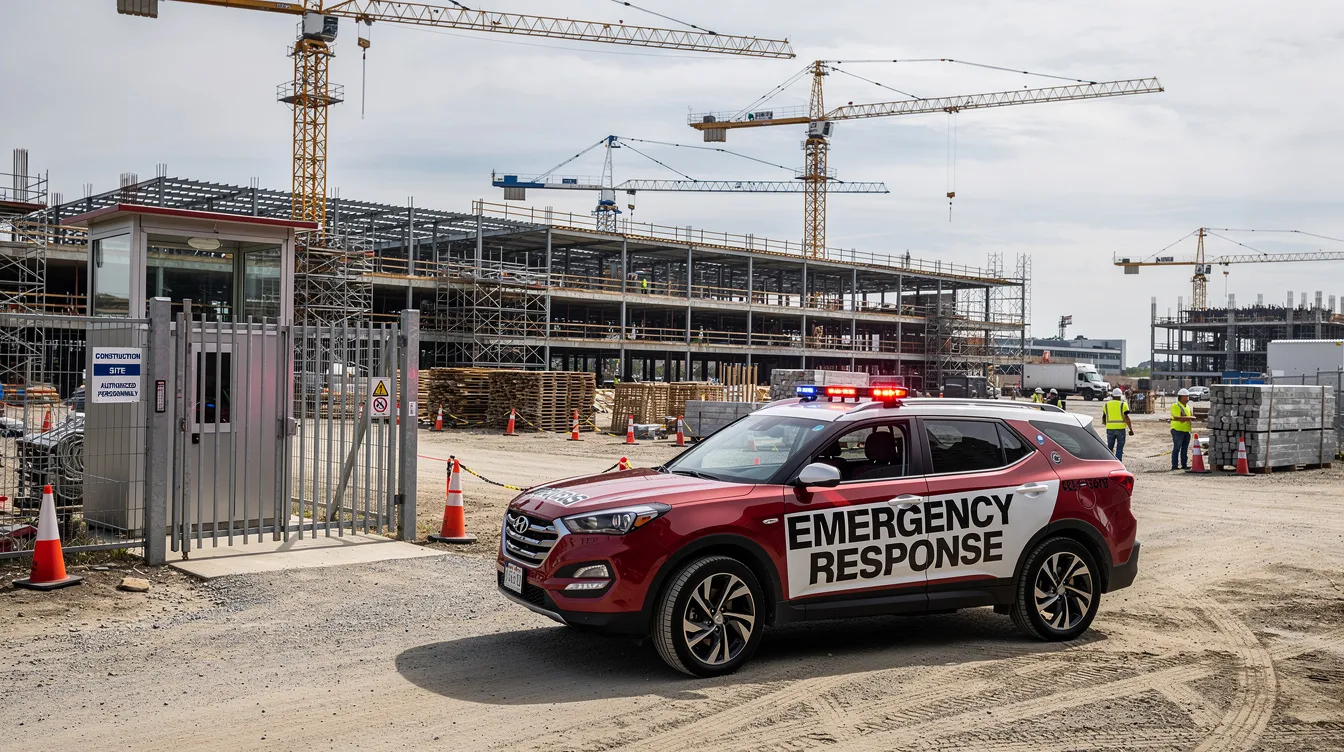
Tight site security can either speed up or slow down emergency response. If gates are locked, addresses are unclear, or access roads are blocked, emergency medical services may be delayed when a worker has heat stroke, which is a true medical emergency where minutes matter. Contractors should ensure their security plan includes posted directions and contact points for 911, designated staff who can quickly unlock and guide EMS to the affected area, and clear routes to shaded or cooled treatment areas. Documenting these procedures in the emergency plan and practicing them during drills strengthens both security and heat illness prevention readiness.
Even small contractors with a handful of construction workers need a written plan covering water, rest, shade, acclimatization, training, and emergency response whenever crews work in extreme heat or hot conditions. Start with a simple one- to two-page plan tailored to your most common jobs, then add site-specific notes for larger projects. Smaller firms without a full-time safety director can use OSHA and NIOSH guidance, ABC Carolinas templates, and local training options to build a credible, scalable program that can prevent heat related illnesses and satisfy an inspector.
Prime contractors should require all subcontractors to follow the host site’s heat illness prevention plan, including hydration rules, rest schedules, cooling gear provisions, and emergency response procedures. Cover these expectations during pre-construction meetings and daily huddles, and document each subcontractor’s acknowledgment. Consistent, documented expectations across all tiers reduce confusion during extreme heat events, help prevent heat illness across every crew on site, and strengthen the legal defensibility of the project’s overall safety program under OSHA’s general duty clause.
Shifting work to cooler hours helps manage risk but does not eliminate heat exposure, especially during prolonged heat waves or in indoor environments that retain heat overnight. High humidity reduces sweat evaporation and limits the body’s ability to cool itself even when air temperature drops. Contractors should continue monitoring heat index, provide drinking water and shade, and train outdoor workers and indoor crews on symptoms of heat-related illness even for night work. Security procedures after dark, including lighting at controlled access points and escorts, should be aligned with the emergency plan so EMS can reach the site quickly if a worker becomes ill.
Owners and insurers increasingly look for documented, data-driven safety programs that reduce lost-time incidents, workers’ comp claims, and schedule disruptions from extreme heat. Present your written heat illness prevention plan, training records, and incident trend data during prequalification or renewal reviews to demonstrate a proactive stance toward osha heat illness prevention compliance. Integrating heat controls with construction site security, emergency planning, and broader occupational safety initiatives supports lower EMR, better bid qualification, and stronger relationships with repeat clients who value contractors that actively manage heat risk on every project.


