


A construction security plan built for a remote Carolinas jobsite has one job: protect assets without slowing production. On isolated commercial projects with thin oversight and longer response times, the plan often serves as the first line of defense. Here is how to build one that works in the field.
A practical construction security plan for remote and isolated projects in North and South Carolina should balance protection with operational speed. The following principles frame the approach:
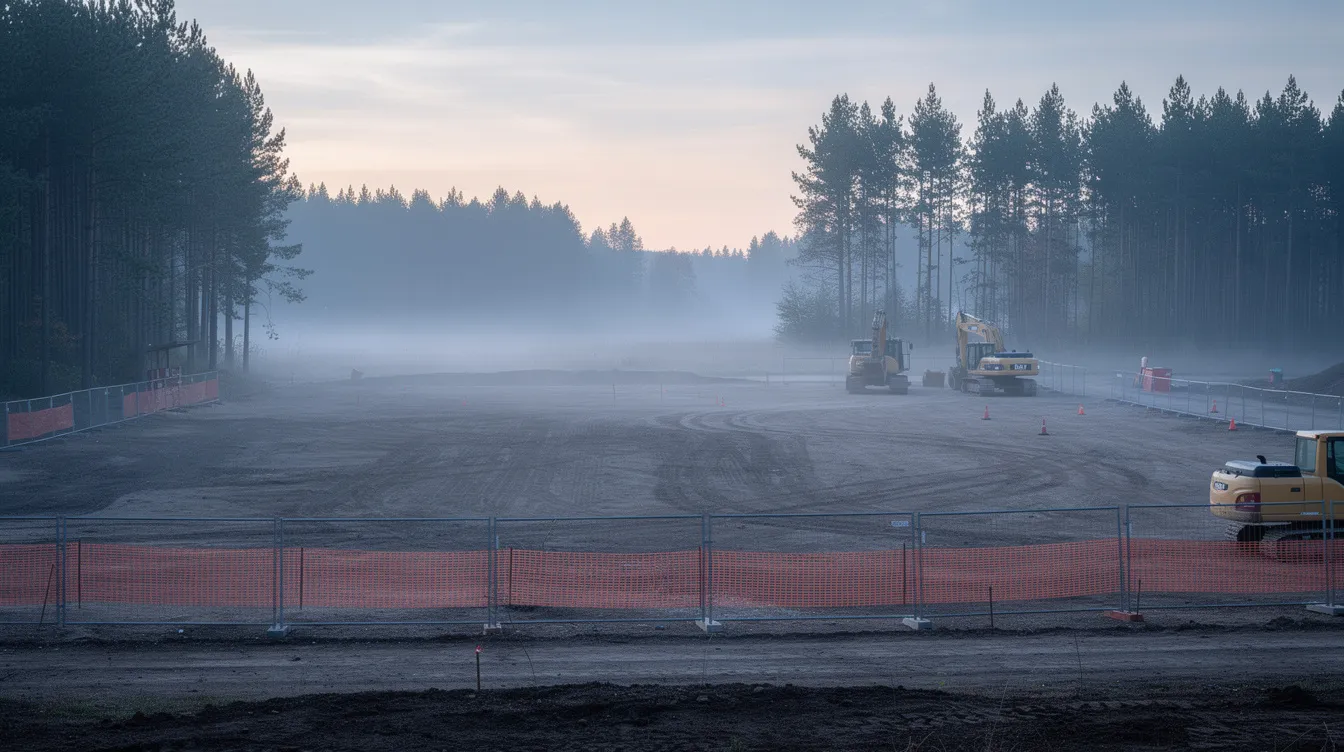
A construction security plan is a written, project-specific document that explains how the team will protect people, equipment, and materials on a construction site. For remote and hard-to-monitor job sites in the Carolinas, that plan should account for extended unattended hours, scattered laydown yards, limited lighting, and weak cell coverage.
This document is separate from the broader safety program, environmental plan, or emergency response plan, but it should align with each. For example, access-control procedures should not conflict with emergency access routes, evacuation paths, or equipment shutdown procedures.
On some projects, especially those with strict owner, lender, or insurer expectations, documented security procedures may be part of broader risk-management requirements. Even when not contractually mandated, a well-documented plan supports internal accountability, incident review, and stronger communication among project leadership, trade partners, and field supervisors. For ABC Carolinas members, the plan should also connect to the chapter’s broader safety culture resources so it remains a living management tool rather than a forgotten contract attachment.
Construction sites face theft, vandalism, and unauthorized-access risks everywhere, but those risks become harder to manage on projects outside dense urban cores: greenfield tilt-wall work off I-77, spread-out utility projects, rural industrial builds, or data center support work north of Charlotte. These job sites typically have fewer witnesses, more acreage to cover, and longer periods when no one is present.
That matters because a single overnight loss can become a schedule problem by morning. Missing tools, copper, rental equipment, or a damaged gate can delay crews, disrupt deliveries, trigger claim activity, and force management attention onto recovery instead of production. Construction Executive has recently noted rising jobsite-security pressure and the need for layered protection as theft and vandalism continue to disrupt work on construction projects.
At the same time, national FBI data showed reported property crime declined 12.4% from 2024 to 2025. That broader trend does not eliminate the practical risk to remote jobsites. For Carolinas contractors, the lesson is simple: do not build your plan around national averages. Build it around your site’s actual operating conditions.
“Remote” is not only about distance from Charlotte, Raleigh, Columbia, or Greenville. A project can function as remote when it has limited natural surveillance, weak connectivity, long walks between work zones and laydown areas, or extended periods without workers on site.
Common Carolinas examples include:
These sites often share the same risk profile: multiple unstaffed access points, temporary power, open acreage, unlit fence-line sections, and high-value materials staged far from the trailer or main gate.
That profile is different from a downtown infill site in Charlotte or Raleigh, where traffic, existing lighting, and nearby occupied buildings can change both the threat level and the control strategy. Deciding whether a project truly operates like a remote site is the first step in building the right construction security plan.
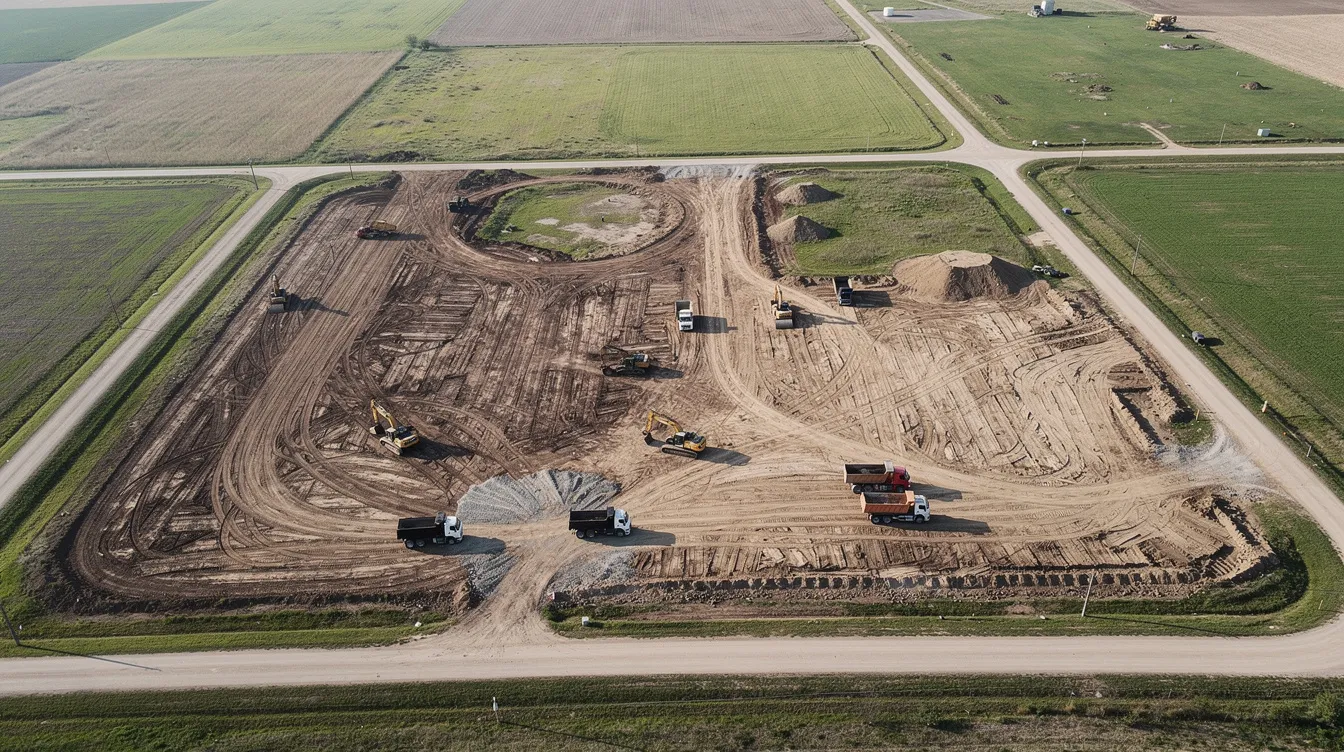
A remote-site construction security plan should do four things well: create layers, stay simple enough for daily use, assign clear accountability, and adapt as the project changes.
Layered security matters because remote job sites cannot rely on one control point. A forced gate, dead camera, or missed lock-up should not expose the entire project. The point is overlap: perimeter controls, access limits, asset protection, and verification checks working together.
Simplicity matters just as much. If the system slows morning entry, confuses delivery drivers, or requires daily workarounds, crews will stop following it. A strong plan is not necessarily the most advanced one. It is the one the field can actually execute.
Dynamic review is the other remote-only requirement. Site clearing, vertical construction, dry-in, major equipment delivery, and commissioning all change what is exposed and where the weak points sit. Remote construction security planning should therefore include planned reassessment points, not just a startup checklist.
One way to keep a construction security plan usable is to organize it around four control layers that field leadership can explain quickly: perimeter, access control, asset protection, and verification.
1. Perimeter. Start with the outer boundary. That may include chain-link fencing, controlled gates, barricades at vulnerable vehicle approaches, warning signage, and lighting focused on entry points and blind spots. The exact setup will vary by terrain and budget, but the perimeter should make casual access harder and more visible.
2. Access control. Limit who can enter, where they can enter, and how you document entry. On many remote sites, one or two controlled entry points are easier to manage than multiple open gates. Depending on the project, this may be as simple as gate logs and coded locks or as structured as badge access and delivery check-in procedures.
3. Asset protection. Protect what would hurt the job most if it disappeared. That usually means high-value tools, fuel, rental equipment, copper, packaged mechanical or electrical equipment, and long-lead materials. Locked containers, clustered equipment parking, removed keys, lowered attachments, and selective GPS or telematics use all fit in this layer.
4. Verification. This layer confirms the other three are actually working. Cameras, motion lighting, end-of-day walks, sign-off sheets, timestamped photos, and escalation procedures all belong here. Verification is especially important on remote sites because no one may notice a problem until the next shift unless a process is built to catch it.
If the budget will not support every measure at once, prioritize spending by replacing-the-asset difficulty, not by gadget appeal.
| If the site risk looks like this | Prioritize this first | Why it comes first |
|---|---|---|
| Multiple open approaches and no clear boundary | Perimeter controls | You need to define the site before you can control movement or verify breaches. |
| Many subs and frequent deliveries | Access control | People traffic becomes the main vulnerability when crews and vendors change daily. |
| High-value tools, copper, rentals, or long-lead equipment on site overnight | Asset protection | The highest operational cost usually comes from assets that are hard to replace quickly. |
| Large acreage, weak oversight, or long unattended periods | Verification | Without a reliable check layer, problems may sit undetected until production is already affected. |
This decision tool also helps differentiate a remote-jobsite plan from a generic site-security checklist. The question is not “Which device should we buy first?” It is “Which control layer is currently weakest on this project?”
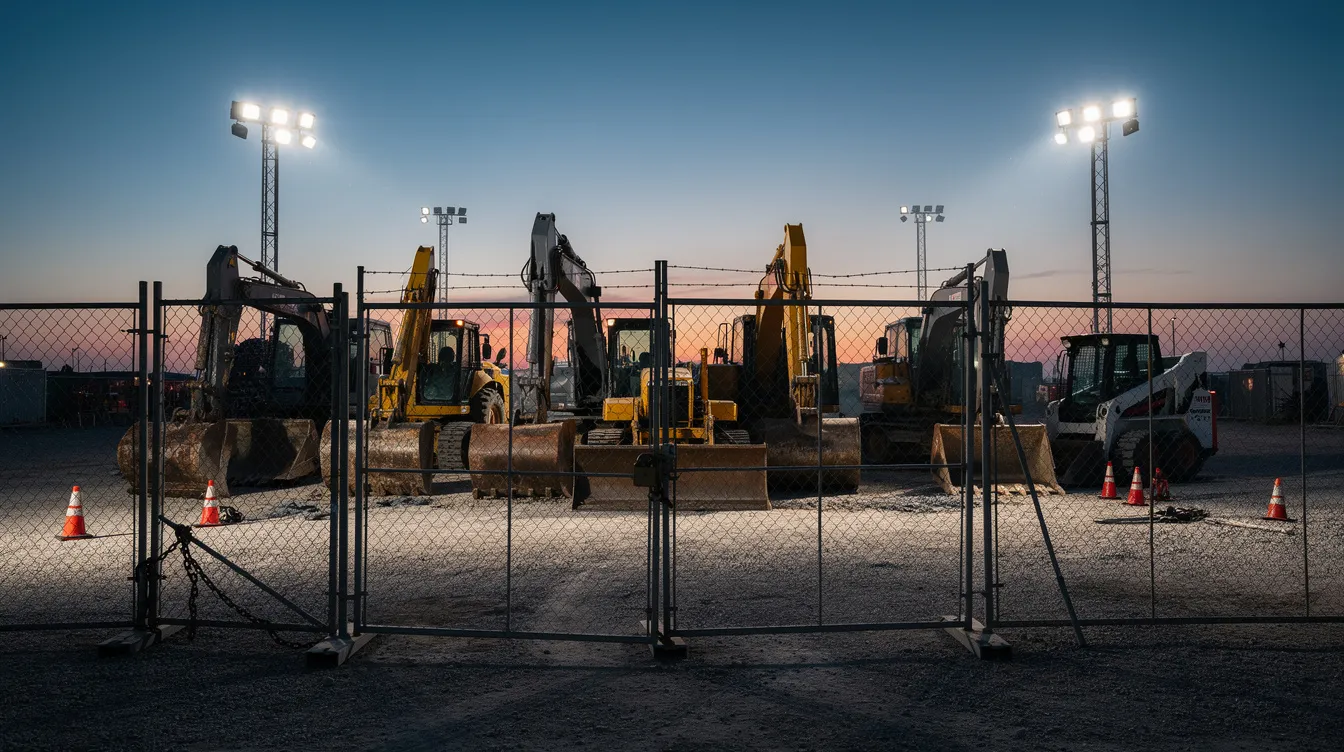
OSHA explains that hazardous energy can include electrical, mechanical, hydraulic, pneumatic, chemical, thermal, and other sources. While lockout/tagout requirements are designed to prevent worker injury during servicing and maintenance, the same discipline can strengthen security when equipment and temporary systems sit idle overnight.
For example, a repeatable shutdown routine may include powering down equipment, setting parking brakes, lowering attachments, removing keys, and following company energy-isolation procedures where appropriate. On Carolinas jobsites, project leaders should coordinate these steps with safety managers so security-driven shutdown habits support, rather than conflict with, established OSHA procedures and training.
ABC Carolinas members looking to tie shutdown discipline to broader safety systems can also review related guidance on construction site security and OSHA recordkeeping as part of a more complete documentation process.
The main mistake on remote projects is overcomplicating the plan. A construction security plan should protect the highest-risk assets while preserving daily flow for crews, foremen, and deliveries.
Low-friction controls often work best:
Technology should support operations, not complicate them. Existing GPS or telematics on heavy equipment can provide after-hours movement alerts. A few well-placed solar-powered cameras may cover the main laydown yard more effectively than wiring every corner of a rural site. If connectivity is limited, design the plan around what you can verify reliably rather than assuming full real-time visibility.
Because labor remains tight, workflow friction matters. BLS reported 326,000 construction job openings in July 2026, reminding us that many contractors still operate with stretched supervision and compressed schedules. A good remote-site security setup protects production capacity instead of quietly draining it.
The final hour of the day is the highest-leverage period in a remote-site construction security plan. One missed step on Friday evening can become Monday morning’s delay.
A practical shutdown routine can include:
Ownership matters here. The superintendent, night foreman, or a designated security lead should own the walk, with named backups for weekends, weather events, and holiday shutdowns. On remote sites, routines fail when everyone assumes someone else handled the last check.
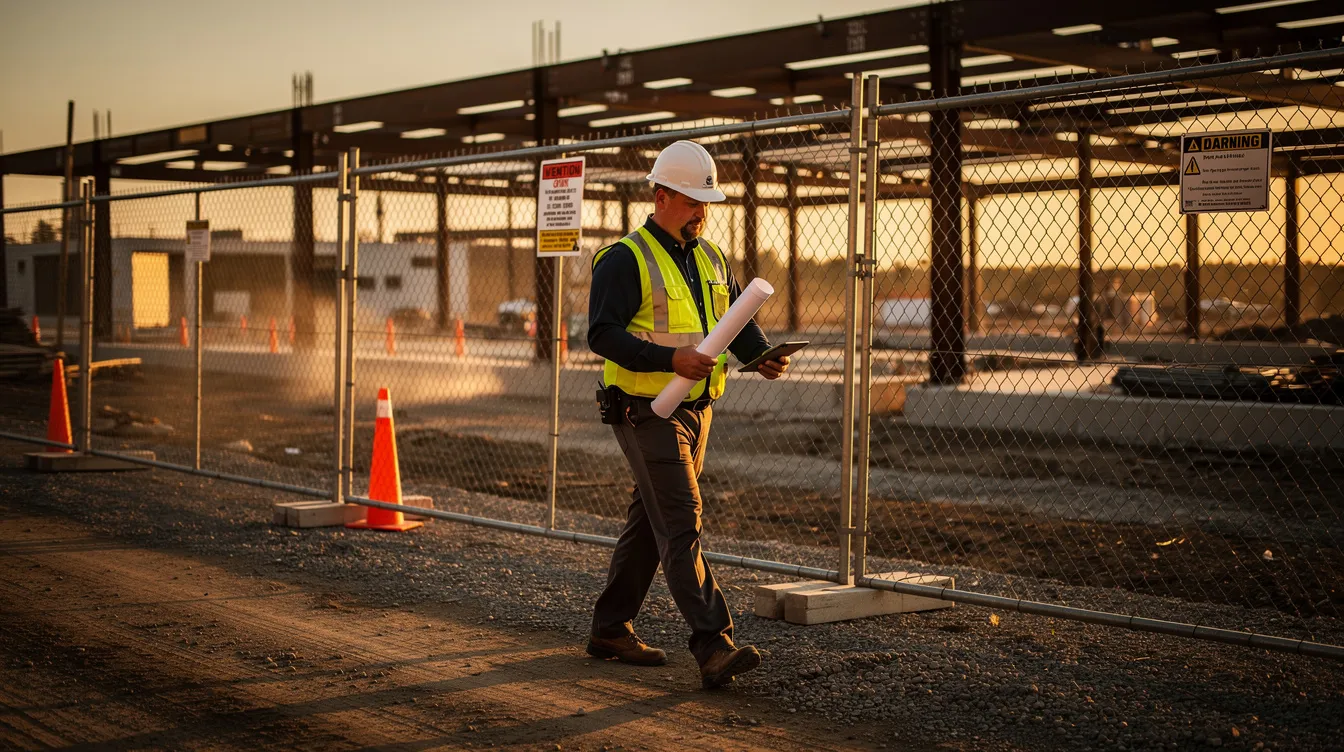
Even the best construction security plan depends on role clarity. Remote sites expose accountability gaps quickly because incidental oversight is lower.
At minimum, assign:
Build security expectations into subcontractor onboarding, daily communication, and pre-task planning. That keeps the plan from becoming “the GC’s issue” instead of a sitewide operating requirement.
Remote job sites need a documented response flow because discovery and outside response may both be slower than on urban projects. The plan should state how suspicious activity is identified, who verifies it, who gets called, and what documentation is preserved.
A basic incident-response sequence looks like this:
Keep documentation simple but consistent: incident logs, visitor and delivery records, gate or badge records, photo documentation, and notes from post-incident review. The goal is not paperwork for its own sake. It is preserving enough information to manage recovery, internal review, and any downstream claim or owner conversation.
Review remote-site security whenever the site’s exposure changes, not only on a calendar schedule. That makes phase-change review more useful than a generic monthly reminder.
| Phase Change | What to Reassess |
|---|---|
| After mass grading | Expanded perimeter, added approaches, fence gaps, temporary gates |
| Building goes vertical | New climbing access, scaffold exposure, material staging shifts |
| Sensitive systems or long-lead equipment arrive | Locked staging needs, delivery timing, overnight asset exposure |
| Punch list or partial occupancy begins | Badge control, overlapping users, occupied-versus-construction boundaries |
At each checkpoint, ask three questions:
Those questions keep the review practical and help distinguish a remote-jobsite plan from a static all-purpose checklist.
ABC Carolinas serves commercial contractors, specialty trades, and suppliers across North Carolina and South Carolina. The chapter’s Safety Resources Center offers tools, guides, and best practices that members can adapt into site-specific checklists, superintendent briefings, and training conversations.
For broader context, readers can also review ABC Carolinas’ published construction site security playbook, then use this article to narrow that guidance for remote and isolated projects specifically.
Your next step: Review one upcoming remote or semi-remote project before mobilization. Identify the site’s weakest control layer: perimeter, access control, asset protection, or verification. Then use ABC Carolinas resources to close that gap before the next phase begins.
Below are answers to common questions about this topic.
Draft it during preconstruction, before mobilization if possible. That allows fencing, gate locations, laydown areas, lighting, and shutdown procedures to be built into site logistics instead of added after a loss or near miss.
Not the same volume of equipment or technology, but the same core framework. Even a small remote site benefits from basic perimeter definition, simple access rules, secure storage for critical tools or materials, and a documented shutdown routine.
Use one controlled entry point where practical, assign foremen responsibility for crew compliance, and document who enters the site each day. On larger sites or high-traffic phases, temporary gate staffing during peak hours may be worth the cost.
Usually when the site holds high-value assets overnight, remains active for an extended period, or has long unattended windows. Start by covering the assets and entry points whose loss or breach would create the biggest schedule impact.
Prioritize safety and avoid disturbing the scene. If forced entry, missing assets, or active trespass appears likely, contact law enforcement and follow the site’s notification plan. Preserve footage, logs, and photos before beginning a detailed inventory check.


