


When construction companies in the Carolinas scale fast, they face a question that directly affects every crew on every jobsite: who leads? Construction safety leadership improves when contractors promote from within because internal leaders bring trust, company memory, and field credibility that outside hires simply cannot replicate on day one. As reported by GroundBreak Carolinas in their feature “Built From Within, Growing Through Leadership,” the contractors who invest in developing their own people realize stronger safety outcomes and more stable teams during growth.
This article is a practical briefing for Carolinas contractors ready to turn internal promotion into a safety and retention strategy.
The construction industry has a 21.4% turnover rate. Turnover rates can exceed 20% annually in construction, and every departure costs money in recruiting costs, lost productivity, and retraining. For contractors operating across Charlotte, the Triangle, and the Upstate, this churn threatens schedule, margin, and safety execution simultaneously.
Here is why leadership continuity matters financially:
The point is straightforward: when you promote leaders who already know your company’s mission, your safety processes, and your crews, you protect margins. You avoid the onboarding delays and culture misalignment that come with outside hires. Leadership continuity is not an HR preference – it is a financial and safety decision that affects every project in your backlog.
The Carolinas construction market is expanding across multiple fronts. Data center spending nationally reached roughly $50.7 billion, rising about 28% year over year, and North Carolina’s data center corridor – stretching from Charlotte through Concord, Kannapolis, and into the Research Triangle – is a primary regional engine. Major interstate corridor work continues on I-85, I-77, and I-95, with both NCDOT and SCDOT investing in widening and managed-lane projects across the region.
This growth creates pressure. In North Carolina in 2023, the construction industry incurred 43 fatal work injuries, with falls accounting for roughly 20 of those deaths. South Carolina recorded 31 construction fatalities the same year, 10 from falls. OSHA emphasizes hazard identification, prevention, training, and communication as the foundation of jobsite safety – and scaling teams without strong leadership makes every one of those pillars harder to maintain.
Safety considerations should be integrated into planning and resource allocation from day one. Contractor coordination is essential on sites with multiple employers, especially on corridor and data center projects where dozens of trade partners share the same footprint.
Construction safety requires management responsibility and daily priority – not a quarterly review. Leadership must create a strong safety culture in construction through observable, repeatable behaviors that crews see every shift.
What does that look like in practice?
Effective safety leaders foster a culture of safety as a shared value. Construction safety is improved by engaging a culture of continuous improvement – not by treating compliance as a checkbox.
Internal leaders build crew trust quickly because they have already earned it. They know the team, the company culture, the history of past incidents, and the informal networks that drive real communication on a jobsite. That credibility translates directly into faster compliance, stronger accountability, and better safety outcomes.
Consider the difference between an internally promoted superintendent and an outside hire:
| Factor | Internal Promotion | Outside Hire |
|---|---|---|
| Crew trust | Immediate – earned through shared work | Requires months to establish |
| Safety process knowledge | Deep – knows company standards | Must learn from scratch |
| Near-miss reporting | Higher – crews trust the leader | Lower during ramp-up period |
| Onboarding time | Minimal | 90+ days to full productivity |
| Culture alignment | Strong | Variable |
Workers should be encouraged to report near-misses without fear of retaliation, and they are far more likely to do so when they trust the person receiving the report. Effective safety training enhances employee retention and performance because employees see that the organization values their growth and safety.
Stable teams complete projects up to 20% faster. Stable teams complete projects up to 20% faster because they communicate better, anticipate hazards, and waste less time on rework. Employee retention is not just a workforce metric – it is a productivity and safety multiplier.
Merit shop philosophy rewards employee performance and loyalty, and it helps construction firms compete without external workforce structures. Merit shop principles enhance workforce retention and business performance by creating clear paths from the field to leadership. Merit shop contractors differentiate themselves from wage-only competitors by developing talent in-house and rewarding proven capability. When workers see a credible path from apprentice to foreman to superintendent, they stay. That is the foundation of succession planning that actually works.
Promoting from within only works if you develop candidates before you promote them. Formal apprenticeship programs typically last 2–4 years, and that structured development window is the ideal time to identify future leaders and begin building their skills beyond the craft.
Key elements of a foreman development pipeline:
Job-related training boosts retention by over 10%. Ongoing training investments keep skilled employees challenged and promotable, which is how you keep your best people from leaving for competitors. Education resources help member firms build effective workforce strategies that connect the next generation of craft workers to leadership roles.
Across the industry, ABC chapters like the ABC Rocky Mountain Chapter offer craft training and leadership academies designed specifically for this purpose – proof that the model works in multiple markets.
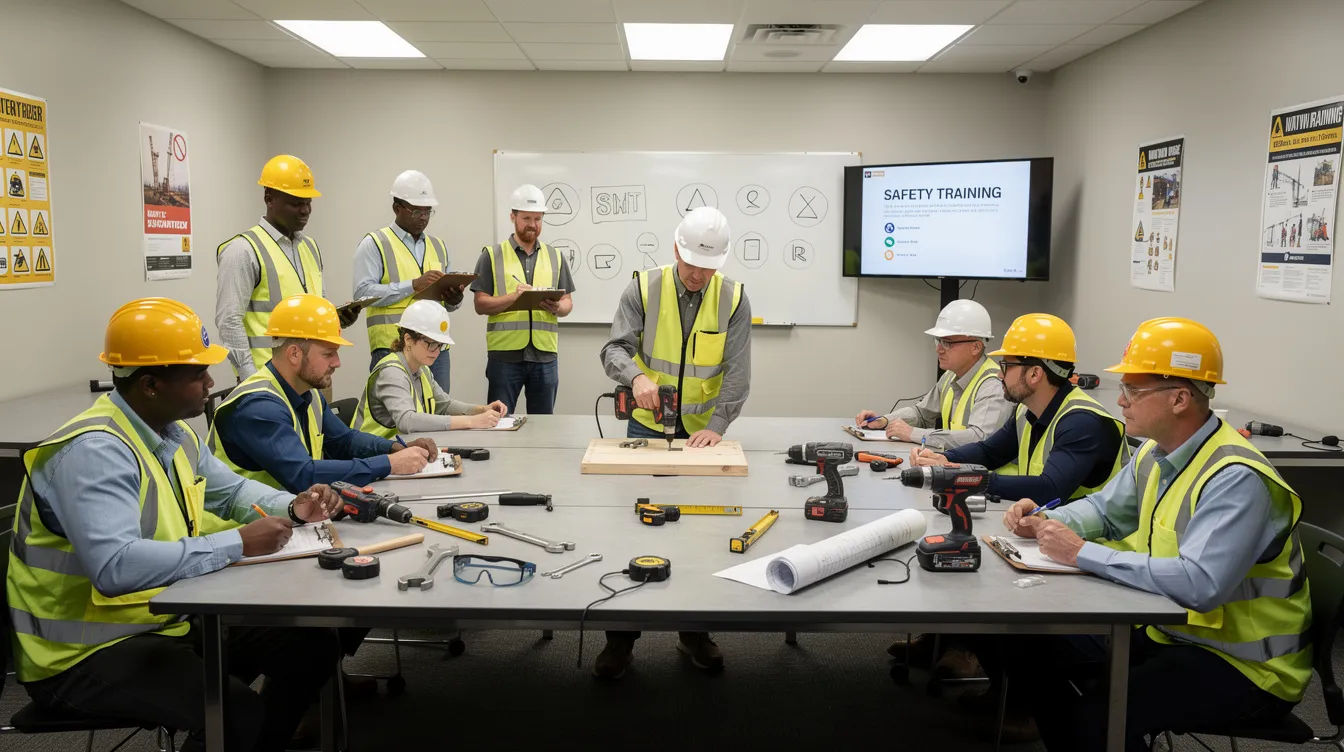
Project managers benefit from internal promotion because they already understand trade partners, local regulatory requirements, permitting timelines, and the pace of work across Charlotte, Triangle, and Upstate projects. That institutional knowledge speeds decision-making and reduces risk.
Before promoting candidates to superintendent:
Safety technology can enhance hazard identification in construction, but technology only works when the leader using it has the credibility and training to act on what it reveals. Assess candidates on both technical knowledge and people skills before advancing them to any leadership position.
Promoting a top performer without leadership training is the most common failure. Someone excellent as a craftsman may lack hazard observation skills, communication range, or the ability to hold difficult conversations about unsafe behavior. Do not assume craft expertise equals leadership readiness.
Common failure points:
A hybrid model works when internal candidates need supplemental expertise. Bring in external talent selectively – for specialized processes or new project types – while continuing to develop your internal bench. The goal is to realize that outside hires fill gaps, not replace your pipeline.
You cannot improve what you do not measure. Track these metrics and disaggregate them by region and project type:
| Metric | What It Tells You |
|---|---|
| EMR (Experience Modification Rate) | Insurance cost trajectory |
| TRIR (Total Recordable Incident Rate) | Overall safety performance |
| Near-miss reporting rate | Leading indicator of safety culture |
| 90-day onboarding productivity | How fast promoted leaders reach full effectiveness |
| Turnover rate by position | Where your pipeline is leaking |
Regular evaluation of safety programs enhances their effectiveness. Tracking leading indicators prevents accidents before they occur – which is the whole point of proactive safety leadership.
Comprehensive benefits, including health insurance, competitive compensation, wages, and mental health support in construction, are crucial for retaining skilled workers in 2025 and beyond. Compare your metrics across Charlotte, Triangle, and Upstate projects to identify where leadership development is working and where it needs more focus and resources.
Leadership messages lose impact when they stay in the office. Use digital jobsite displays to push daily safety messaging, hazard alerts, and recognition directly to the field. These tools help internally promoted leaders communicate expectations consistently across multiple crews and shifts.
Standardize toolbox talk templates across sites so that every foreman delivers the same level of relevant, task-specific content. Consistency in communication builds consistency in execution – and that is where safety culture lives.
| Quarter | Action |
|---|---|
| Q1 | Audit your organization: identify three supervisor candidates ready for development. Assess their skills against a defined competency framework. |
| Q2 | Enroll candidates in targeted leadership and safety courses. Assign hours for both classroom and field-based learning. |
| Q3 | Assign field mentors for each promoted leader. Pair them with experienced superintendents on active projects. |
| Q4 | Evaluate safety and retention KPI changes. Compare EMR, TRIR, near-miss rates, and turnover against your baseline. |
This plan does not require massive investment. It requires discipline, follow-through, and a commitment to building your leadership pipeline before you need it.
ABC Carolinas provides the training programs, peer networks, and advocacy that Carolinas contractors need to build leadership from within:
Your concrete next step: Audit the next three supervisors in your organization ready for development and assign a training plan this quarter. Contact ABC Carolinas to discuss a leadership development program tailored to your firm’s growth and safety goals.
The contractors who build their next generation of leaders from within – who develop skills, measure results, and invest in their people – will be the ones who win repeat work, protect margins, and keep crews safe across the Carolinas. Do not hope for leadership continuity. Build it.


