


Autonomous construction equipment and construction robots are no longer pilot projects. They are operating on active construction sites across the country, and Carolinas contractors need a plan for managing construction robotics safety before these machines arrive on their jobs. NIOSH’s October 2026 “Safety in Construction Robotics” bulletin confirmed what field leaders already suspect: robots can reduce exposure to hazardous tasks, but they create new risks when people and machines share the same workspace. Construction is historically the most dangerous profession, and construction sites face high rates of workplace accidents. Construction sites are dynamic with unpredictable environmental conditions, which makes robotics integration a safety planning priority, not just a technology conversation. This article is for commercial and industrial contractors, specialty trades, project managers, and safety professionals working across Charlotte, the Triangle, Upstate South Carolina, and the I‑85/I‑77/I‑95 corridors who need to know what to update in their safety programs now.
Construction remains one of the most injury-prone industries in the United States. Struck-by incidents, equipment interactions, and traffic-control failures account for a large share of recordable injuries on active construction projects. Overlapping trades, changing ground conditions, and heavy lifting with conventional equipment create persistent hazards that safety programs must address daily.
Contractors who reduce recordables and improve their EMR gain measurable advantages: lower insurance costs, fewer project delays, and stronger positioning with owners on data center, infrastructure, and industrial campuses across the Carolinas. Robotic systems can enhance precision in safety-critical tasks and improve construction precision by 55%. As the industry continues to adopt advanced technologies, 81% of construction businesses plan to increase robotics use by 2030. Many ABC Carolinas members already invest in construction safety training and well-structured safety programs. Robotics should be treated as a new layer inside that existing framework, not a separate initiative.
Construction robotics safety is the set of practices, controls, and responsibilities that keep workers safe when autonomous or semi-autonomous equipment operates on active sites. It covers every scenario where human workers and robotic systems share the same workspace.
Three categories matter most for Carolinas contractors:
This article is about safety in mixed environments where people, traditional machines, and construction robots work together on changing construction sites. Artificial intelligence, onboard sensors, GPS, and integrated software enable autonomy; connectivity between these systems also helps equipment respond to changing site conditions, but it does not remove the need for clear human oversight and a site-specific safety plan. The sections below detail how job hazard analyses, worker-robot interaction rules, and leading indicators should be updated when robotics arrive on site.
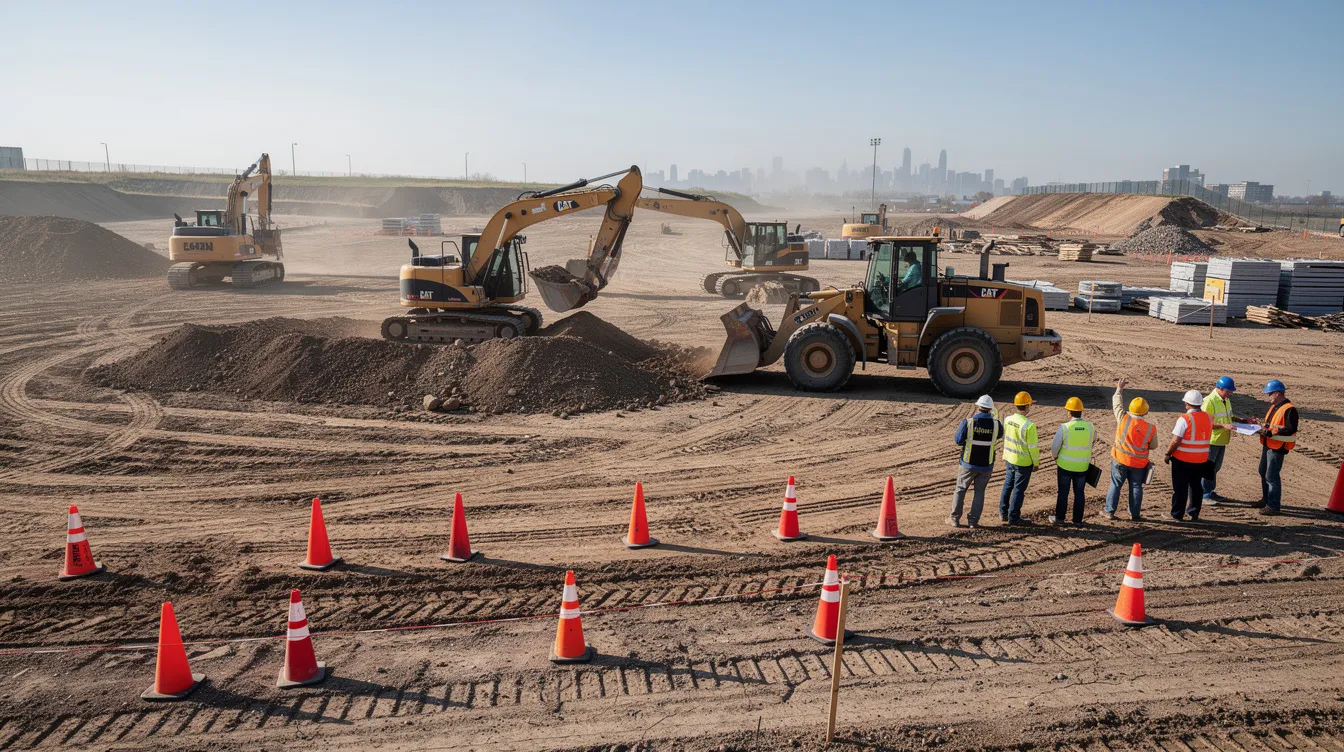
Removing an operator from the cab does not remove risk from the jobsite. It changes where and how hazards show up.
NIOSH has identified several hazard shifts that construction workers, supervisors, and operators need to understand:
Construction differs from manufacturing because work layouts change daily. Multiple employers share space. Temporary traffic patterns shift. Visibility varies by weather and time of day. Fixed barriers that work in a factory are insufficient on evolving construction sites. Robots can enter toxic or chemically volatile spaces to perform tasks safely, but those same machines can create hazards when they move through active work zones.
Consider a greenfield earthmoving operation where autonomous haul trucks run clean loops on separated routes. Once the project transitions to a crowded building pad with electrical, plumbing, concrete, and steel trades working simultaneously, those same routes now intersect with foot traffic, material staging, and crane operations. Re-evaluate risk zones at every phase. Supervisors and competent persons need to adjust site logistics, traffic control, and worker briefings in real time to prevent accidents.
NIOSH’s Center for Occupational Robotics Research tracks the core hazard types associated with construction robots and autonomous systems on active sites. These include:
AI-powered robotic systems monitor job site activity and flag safety compliance issues, and sensor-equipped robots can improve hazard detection and accident prevention on sites. Robots can inspect hard-to-reach areas and dangerous structures without exposing humans to those hazards. But cybersecurity is vital for connected robotic systems to prevent unauthorized access, which could compromise machine behavior or site safety data.
Contractors should track safety leading indicators specific to robotics and build them into regular safety meetings and job hazard analyses:
These are not “IT issues.” They are safety incidents that belong in your JHA process and incident review workflow. NIOSH robotics guidance and ABC National’s AI Resource Guide for contractors offer useful framing for how emerging technologies intersect with field-level risk.
NIOSH recommends Prevention through Design (PtD) and task-specific risk assessment for every operation involving human-robot collaboration. The goal is to reduce risk at the source, before relying on worker behavior alone.
Robots can reduce hazardous task exposure by 72%, and construction robots can reduce repetitive site work by 90%. Automated machinery handles repetitive tasks to reduce worker fatigue, leading to fewer injuries from repetitive motion and construction activities. Robots can reduce time spent on hazardous tasks by 72%, freeing skilled trades for higher-value construction work. Training workers in robot operation reduces risks associated with human-robot interaction at every project scale.
Practical controls for worker-robot interaction include:
These controls must be dynamic. Work phases, staging areas, and access routes change weekly or daily on active construction projects, so zones and rules must be recalculated during pre-task planning.
Five questions to answer before starting an autonomous shift:
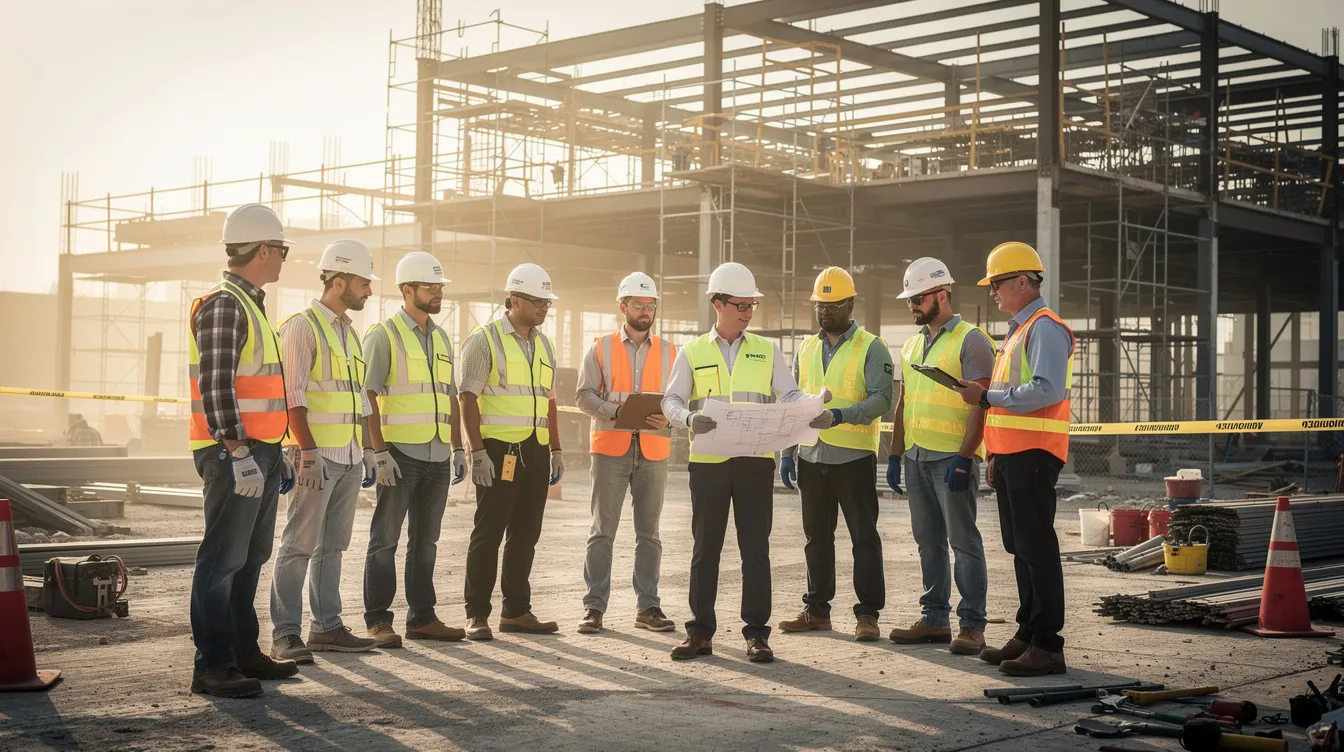
Autonomous and semi-autonomous equipment require more deliberate traffic planning than traditional fleets. On congested urban or campus-style construction projects in the Carolinas, separating robotic haul routes from pedestrian paths is a baseline requirement.
Specific updates contractors should make:
Drones conduct inspections without exposing workers to hazards, and drones reduce the need for workers to access dangerous areas. Looking ahead, drones will conduct site inspections without endangering workers across an even broader range of construction applications. Robotic cranes reduce accidents caused by human error during heavy lifting and material placement. Digital twins can support traffic planning by modeling equipment paths and identifying conflicts before they happen on site.
For example: autonomous trucks on a quarry-adjacent civil job require separated haul routes with clear buffer zones. Remote-operated demolition robots inside a retrofit project need controlled access corridors and communication protocols between the operator station and the demolition zone. Each scenario demands a different traffic and access plan, which you should discuss and document before the operation begins.
Align these procedures with OSHA requirements and your state plan. North Carolina DOL construction safety resources provide hazard-recognition and training models that contractors can adapt for robotics content.
Robotics safety is not just about the specialist who configures the equipment. It affects every employee who could enter the robot’s workspace. Worker training on emergency procedures is essential for operating robotic systems safely.
Training needs break into three audiences:
Wearable technology will monitor workers’ vital signs and fatigue levels on future jobsites, adding another layer of health and safety data; additionally, it can help crews spot early signs of overexertion before an incident occurs. Wearable exoskeletons reduce musculoskeletal injury risk from physically demanding tasks, and robotic exoskeletons minimize strain for workers doing heavy lifting or overhead construction work.
Scenario-based training, drills, and refresher sessions help prevent complacency. Mock emergency-stop exercises and walkthroughs of changed haul routes keep crews sharp. Contractors should integrate robotics content into existing construction safety training programs rather than creating entirely separate silos. NC DOL offers English and Spanish safe-work-practices resources that model inclusive communication with mixed crews.
Before autonomous equipment or construction robots arrive on a project, safety directors and project executives should review and update several written-program elements:
Robotic systems must comply with OSHA regulations and construction safety standards, including the updated ANSI/A3 R15.06-2025 standard. Robotic systems can improve construction accuracy by 55% when properly integrated, but that integration requires formal processes and compliance documentation.
Formalize responsibilities clearly:
Pilot robotics on lower-complexity sites first, with clear success criteria around safety performance, before expanding to more congested hazardous environments. Automation and inspection solutions should scale only after validating the processes.
Construction robotics safety has particular implications in the Carolinas. Busy interstate corridors, data center and industrial campuses, and dense urban cores in Charlotte, Raleigh-Durham, and the Upstate create project environments where autonomous equipment must share space with large, multi-trade workforces.
North Carolina operates under NCDOL’s state OSHA plan, which requires employers to include site analysis, engineering controls, hazard-recognition training, and emergency response procedures in their construction safety programs. South Carolina follows the federal OSHA state plan with adopted standards. Contractors operating in both states need unified, company-wide robotics safety standards that meet each jurisdiction’s requirements.
NC DOL provides example construction industry safety and health program documents, including bilingual materials for hazard-recognition training. These can be adapted to incorporate robotics content. Mixed crews and subcontractor teams that move between states benefit from consistent policies that do not leave site safety to interpretation at the project level.
Autonomous construction equipment is not a distant concept. It is an emerging tool already in use on construction sites nationwide. Robots can work tirelessly, boost productivity, and reduce hazardous task exposure by 72%. Contractors that plan early for safety, training, and clear accountability will lead the implementation of these solutions across the Carolinas.
Construction robotics safety connects directly to broader safety culture principles: leadership expectations, daily communication, near-miss reporting, and continuous improvement create the conditions where new technologies operate safely alongside human workers.
Key takeaways from this guide:
The concrete next step: identify an upcoming project where autonomous equipment or construction robots may be considered, and run a focused pre-planning session to assess what your current safety program covers and what it does not. Connect with ABC Carolinas safety training resources and peer groups to benchmark your robotics readiness against other merit shop contractors preparing for the same development. The future of construction work belongs to contractors who build safety into the plan before the machine arrives on site.


