


For commercial contractors across North and South Carolina, the pressure to deliver more work with fewer available workers is not easing. Multiskilled construction crews offer one of the most practical, field-tested strategies to close that gap. Here is what the latest national research says, why it matters for Carolinas contractors right now, and how to get started.
Multiskilled construction crews represent one of the fastest, most practical levers to improve construction productivity for commercial contractors operating across North and South Carolina. Rather than relying on hiring alone or burning out existing teams with overtime, multiskilling gives firms a disciplined way to get more direct work from every crew, every shift.
The construction industry in the United States has struggled with productivity growth for many decades. A Richmond Federal Reserve brief noted that US construction productivity in 2023 was essentially the same as in 1948, a stagnation across the entire construction industry that stands in stark contrast to manufacturing and other sectors of the economy. While some subsectors have improved in recent years, overall construction productivity has not kept pace with capital inputs, technology investment, or demand.
In North and South Carolina, these national pressures are compounded by rapid regional growth. Charlotte, Raleigh, Durham, Charleston, and the Upstate are all absorbing population growth, industrial investment, and infrastructure demand at scale. Data center construction along the North Carolina corridor, EV and battery manufacturing facilities in South Carolina, and healthcare campuses across both states are driving enormous project pipelines.
Inadequate planning increases wait times and reduces productivity on job sites, and weather can halt outdoor work and disrupt schedules in the Carolinas’ humid climate. Project management and preconstruction planning are critical for minimizing delays, yet traditional approaches to boosting output are running into hard limits:
These challenges are pushing owners and contractors to look beyond headcount and toward crew utilization, task sequencing, and multiskilled construction crews.
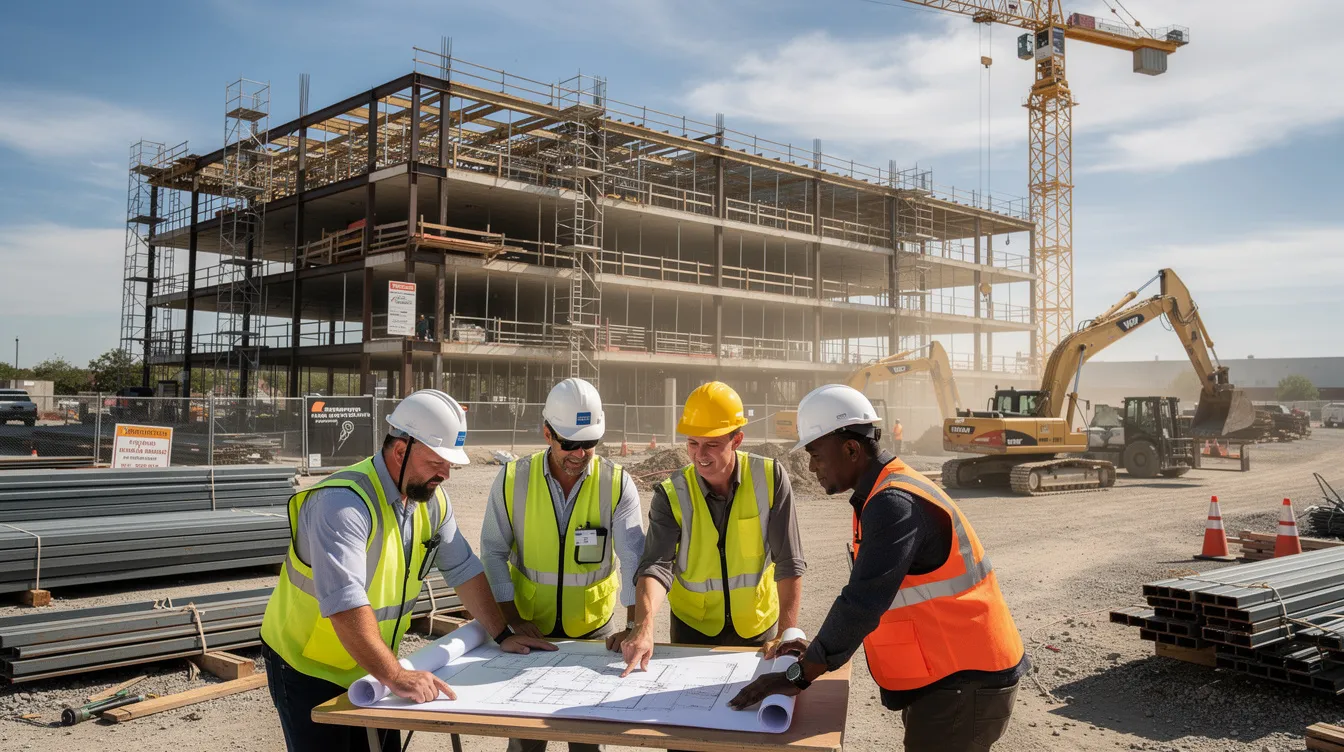
Multiskilled construction means a worker retains full competency in a primary craft while also gaining verified, credentialed capability to perform specific adjacent tasks from related construction trades. Standardizing processes improves efficiency and reduces training time for construction crews, and multiskilling applies that principle at the individual worker level.
This is not about asking a carpenter to suddenly perform licensed electrical work. It is about planned, supervised skill expansion within safety and licensing boundaries:
Multiskilled workers typically use two to three different skill classifications in a single day, sometimes as many as six. Collaboration and communication among teams reduce errors and improve project outcomes, and multiskilling formalizes that collaboration at the task level. Continuous workforce training enhances safety and reduces downtime on construction sites, which is why this model insists on documented competency rather than improvised “odd jobbing” on a busy site.
The distinction matters: in a disciplined model, responsibilities are planned, documented, and supported by training. In an informal model, they are improvised, creating quality drift and safety risk.
ABC National released a landmark field study on multiskilled construction, with results reported by Construction Executive. The study represents the largest dataset to date documenting how multiskilling relates to construction productivity, schedule performance, staffing needs, and safety across real job sites.
The headline findings are significant:
Safety programs help maintain productivity by preventing disruptions, and the study confirmed this: over roughly 33.2 million work hours, multiskilled participants posted a Total Recordable Incident Rate of 0.74, 57% below the industry benchmark. The observed cohort had no fatalities.
Effective site supervision directly influences construction productivity by improving coordination, and the study reinforced that multiskilling works best under strong field leadership. Implementing a culture of continuous improvement can elevate overall project performance, and multiskilled crews embody that principle by continuously expanding what each worker can safely contribute.
The research also found benefits for individual construction workers: higher earnings potential, broader career paths, more consistent hours, and more chances to lead small teams, a powerful combination for recruitment and retention.
The national data is compelling. But what makes multiskilled construction especially relevant for the Carolinas right now is the intersection of growth, complexity, and workforce pressure that defines the region’s commercial construction sector.
Charlotte is absorbing massive commercial, industrial, and infrastructure investment. The Research Triangle continues to see healthcare, life sciences, and technology development at scale. Upstate South Carolina is a hub for advanced manufacturing. Along I-85, I-77, and I-95, contractors compete for the same shrinking pool of craft labor to staff projects ranging from distribution centers to hospital expansions.
Merit shop philosophy emphasizes competition based on merit, and multiskilling aligns directly with that principle: it rewards workers who invest in their own development and gives firms the flexibility to assign the best available person to the task at hand. The philosophy supports open shop labor agreements, which allow contractors to design their own training programs and crew structures without restrictive work rules. Merit shop advocates for skilled labor training and development, and multiskilling is one of the most effective ways to act on that commitment.
It promotes fair bidding practices in construction projects because firms with multiskilled crews can bid more accurately, knowing their labor utilization will be higher and their exposure to idle time will be lower. Merit shop principles help reduce project costs and improve quality by eliminating the overhead and delays that come from rigid single-trade staffing.
Technology like digital tracking and field reporting can optimize workflows on construction sites, and when paired with multiskilled crews, these tools make it easier to plan task assignments, monitor crew utilization, and track productivity gains in real time.
Consider two Carolinas scenarios:
Not every project or phase benefits equally from multiskilling. The greatest construction productivity gains come on projects where trades overlap frequently, schedules are tight, and small critical-path tasks often create bottlenecks.

In practice, multiskilled construction changes the daily rhythm of the jobsite. Fewer stoppages, faster responses to minor issues, and fewer small delays that compound into lost days, while a safer, better-planned site helps workers maintain focus on assigned tasks.
Daily meetings increase communication and help avoid delays in construction projects, and when combined with multiskilled crew planning, they become even more effective. Teamwork and communication are essential for ethical construction practices, and the multiskilled model puts those values into action every shift. Research shows that 43% of employees value a strong work ethic for success, and multiskilled workers tend to embody that ethic because they take pride in broader capability.
Here is what contractors can expect from a well-implemented multiskilled strategy:
Ethical practices improve project delivery in construction, and construction ethics promote safety and quality. When workers understand their roles, boundaries, and growth paths, the entire team performs at a higher level. The productivity gains come from good planning, realistic scope definitions, and intentional task assignment, not from asking people to do “whatever is needed.”
Safety and quality are nonnegotiable in construction. Multiskilled strategies must align with OSHA regulations, state licensing rules in North Carolina and South Carolina, and company safety programs.
Safety training reduces workplace accidents by 30%, and that investment matters even more when workers expand their task range. Proper safety training can prevent falls, trips, and slips, which remain among the leading causes of injury on commercial job sites. Following safety protocols creates a healthier work environment, and completing workforce safety training before any new task assignment can reduce accidents.
Key guardrails include:
For example, a multiskilled worker in Columbia might be trained to assist with pretask planning, basic rigging, and rough-in support work, but never to modify engineered systems or perform any task that requires a specific state license.
Sustainable multiskilled construction depends on long-term workforce development, not quick, informal cross-training. This is where ABC Carolinas’ apprenticeship and craft training programs are central.
ABC Carolinas offers nationally recognized apprenticeship programs that form the foundation of a multiskilled workforce. Apprenticeship programs can last up to four years, and in four years, apprentices can become highly skilled professionals ready to contribute across multiple phases of construction work. Apprentices earn a paycheck from day one, and construction workers can earn a paycheck from day one of training, which removes a major barrier to entry. Apprenticeships don’t add student debt, and construction education programs reduce it for trainees, making the skilled trades an accessible career path.
Apprenticeships provide hands-on skills employers need, and apprentices can become skilled professionals in high-demand fields across the construction sector. Education programs help connect trainees with hiring contractors, creating direct pipelines from training into productive employment. Workforce development creates pathways for construction industry growth and strengthens businesses and communities across both Carolinas.
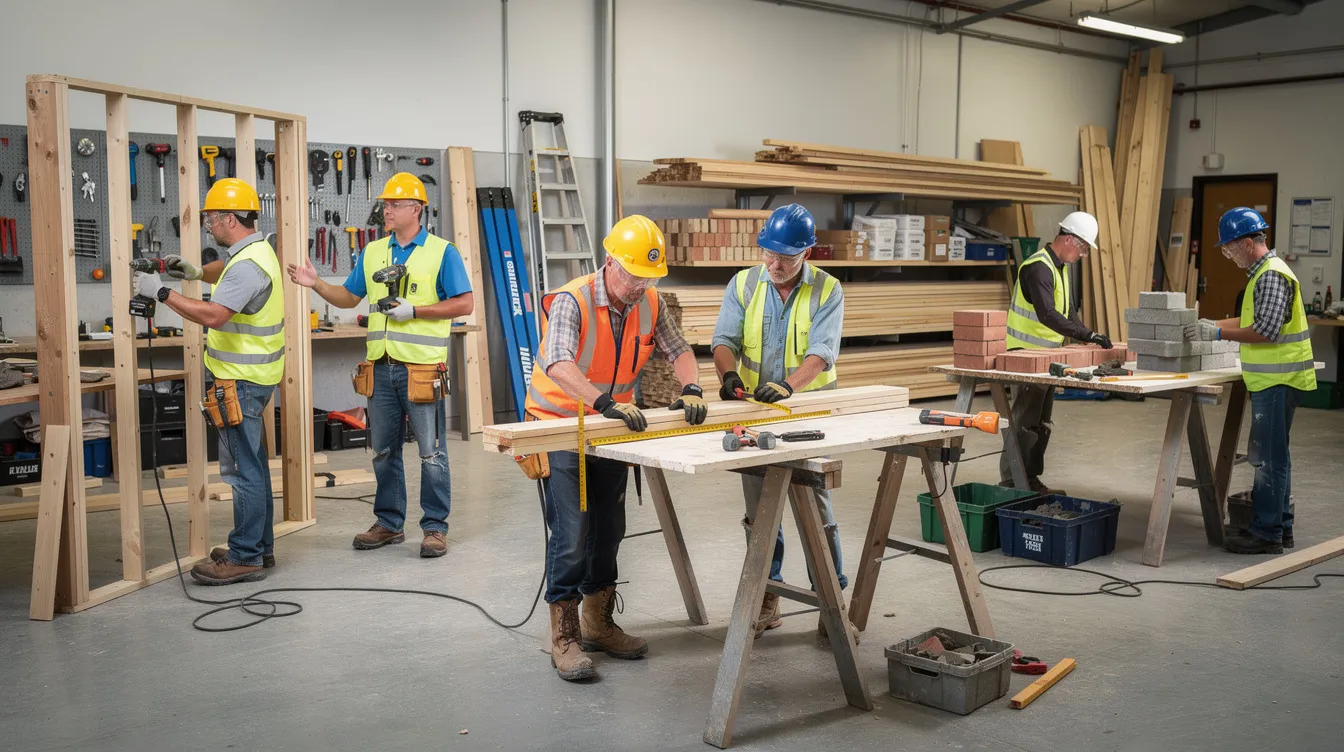
How contractors can build this capability:
The region projects 15,000 to 20,000 annual openings for craft professionals through 2032. Building a multiskilled pipeline is not optional; it is a competitive necessity.
Here is a step-by-step approach for Carolinas construction firms ready to pilot multiskilled crews:
While improving construction productivity is the primary driver, multiskilled construction delivers additional value for firms operating in North and South Carolina.
Worker retention is a major advantage. Multiskilled workers often report higher job satisfaction, broader career paths, and more leadership opportunities. In a tight labor market, this translates directly to lower turnover and reduced recruiting costs. A successful career in the construction trades increasingly depends on versatility and the ability to grow, and multiskilling supports both.
Resilience matters, too. Firms with multiskilled crews are better prepared for supply chain delays, design changes, or inspector-driven rework because their crews can adapt without bringing in multiple additional subcontractors. Smaller firms especially benefit from this flexibility, since they often lack the bench depth to absorb unexpected schedule disruptions.
Member services include access to training programs that directly support multiskilled development. Members can participate in regulatory advocacy initiatives that shape the policies affecting the construction sector. Members can also connect through networking events that bring construction professionals in the Carolinas together. ABC Carolinas offers members networking opportunities, and networking events can support business growth in the construction industry. Members receive support to grow their businesses, and member services help deliver projects ethically and profitably.
Multiskilled strategies can also support diversity and inclusion goals in the construction industry by providing more entry points into the skilled trades and clearer progression from helper roles into fully qualified craft and leadership positions, building a stronger, more representative occupation pipeline.
ABC Carolinas is the regional partner for construction firms that want to translate multiskilled research into practice. The association’s mission is to support merit shop contractors across North and South Carolina through safety training, apprenticeship and craft education, leadership development, and peer networking.
ABC Carolinas can convene member roundtables in Charlotte, the Triangle, and the Upstate to share lessons learned, field-tested practices, and policy updates that affect multiskilled construction workers and construction companies.
Your next step: Contact the ABC Carolinas workforce development team to explore apprenticeship options, enroll field leaders in supervision or safety courses, or join a peer group focused on field productivity and crew utilization. Multiskilled construction is built on the same values ABC Carolinas champions every day: free enterprise, safety, ethics, and helping members win work and deliver it profitably.
These questions address practical concerns Carolinas construction executives and field leaders often raise when considering multiskilled crew strategies.
Expect three to six months to pilot multiskilled roles on a single crew using existing workers who have adjacent experience. Fully integrating multiskilling into apprenticeship and training plans across a firm of any scale typically takes 12 to 24 months, depending on the number of trades and the complexity of your project mix.
No. Multiskilled workers must not perform tasks that legally require a specific license unless they personally hold that license. Contractors should work closely with their licensing boards and safety staff to confirm which adjacent tasks are permissible. This protects both the worker and the firm.
Many contractors create defined pay bands or premium rates for multiskilled workers, reflecting their broader capability. They recover these costs through higher construction productivity, fewer delays, reduced turnover, and lower re-mobilization expenses. Higher worker income also supports retention, reducing the long-term cost of recruiting and onboarding.
When implemented with proper training and supervision, multiskilling can support safety performance by reducing rushed work, trade stacking, and last-minute call-ins. ABC National’s research showed a TRIR of 0.74 for multiskilled crews, 57% below the industry benchmark. The key is to monitor safety data carefully and invest in training and equipment for every task a worker is authorized to perform.
Identify one upcoming project where a small, well-defined multiskilled pilot makes sense. Choose a crew with strong field leadership, map the adjacent tasks, and set clear boundaries. Then contact ABC Carolinas to align the pilot with available apprenticeship, safety, and leadership training resources. Start with knowledge you already have, measure the results, and build from there.


