


ABC National is now the first building and construction association in the United States to earn national certification as a recovery-friendly workplace. That is not a symbolic gesture. It signals to every contractor in the Carolinas that your construction mental health policy should account for substance use disorders, recovery support, and the mental well-being of your workforce.
In September 2026, the White House Office of National Drug Control Policy hosted a National Recovery Month event that recognized recovery-friendly workplace policies as a national priority tied to the administration’s National Drug Control Strategy. When the White House elevates workplace mental health safety from an HR initiative to an economic and safety imperative, executives should pay attention.
This article is a practical briefing for North Carolina and South Carolina construction leaders on what this certification signals, what it requires of your policies and supervisors, and how to act without overcomplicating your operations. It is not generic wellness advice.
ABC Carolinas views this milestone as part of a broader commitment to safety, workforce stability, and merit shop excellence. Mental health policies correlate with improved worker retention and morale, and the rest of this article will focus on policy, leadership, and implementation steps that make a measurable difference for your company and your team.
The White House event in September 2026 was not a passive ceremony. The Office of National Drug Control Policy used it to call for more recovery-friendly workplaces across the country, framing the effort as a priority within the National Drug Control Strategy. The message was direct: over 23 million Americans are in treatment or recovery, and employers who support them gain an operational edge.
For a construction association like ABC to be recognized in that context means the industry is expected to lead, not follow. The White House stated that adopting recovery-friendly workplace policies strengthens the economy and benefits employers by increasing productivity, reducing turnover, and lowering health care costs. Those are not soft benefits. In an industry where bid margins are tight and skilled workers are hard to find, those levers directly affect your bottom line.
The construction industry already faces a well-documented mental health crisis. This recognition connects national policy attention to the daily reality of construction work, where stress, substance use disorders, and mental health struggles can compromise safety and performance on every project.
For Carolinas contractors running large-scale projects along the I-85 and I-77 corridors, workforce reliability is not optional. Every worker who leaves a project due to untreated mental health issues or substance abuse represents a cost in schedule, quality, and safety. Recovery-friendly policies address that risk at the source.
A recovery-friendly workplace is an employer that actively supports current and prospective employees in recovery from substance use disorders through documented policies, culture, and practice. In construction terms, it means your company has a plan to help workers get and stay well without pretending the problem doesn’t exist or sacrificing physical safety or performance standards.
Certification by the National Recovery Friendly Workplace Institute verifies that an employer or association has formal commitments across culture, hiring and retention, benefits, and education. It is not a checklist you post on a wall. It signals that leadership has reduced stigma around addiction and recovery, created referral pathways, and trained supervisors to respond appropriately.
This is fundamentally different from a minimal approach where you offer an Employee Assistance Program number on a bulletin board and consider the box checked. A recovery-friendly workplace involves leadership commitment to openly discuss mental health, peer support networks, non-punitive early reporting, and accessible treatment resources. It treats substance use disorders as medical conditions, not moral failures.
For contractors, a recovery-friendly workplace directly shapes your construction mental health policy. It touches HR policies around hiring and return to work, safety manual language on fitness for duty, supervisor training on recognizing warning signs, and site orientation materials that communicate available support services.
The distinction matters because a recovery-friendly approach integrates mental health support into how you already run your business, rather than bolting on a separate program nobody uses.
The numbers make this a safety conversation, not a wellness conversation.
Construction has one of the highest rates of suicide among all industries. According to CDC data, males in construction and extraction occupations had a suicide rate of 65.6 per 100,000 in 2021, roughly double the rate across all male workers. The suicide rate in construction is 56.0 per 100,000 males, and the construction suicide rate is four times the national average. Construction fatalities from suicide exceed all other causes combined, and workers are five times more likely to die by suicide than from workplace injuries in construction.
Construction workers often experience high rates of substance misuse, and chronic physical pain in construction work is linked to mental exhaustion and depression. These are not isolated issues. They compound each other: a worker managing chronic pain may turn to substances, which increases impaired judgment on the jobsite, which raises incident risk for the entire crew.
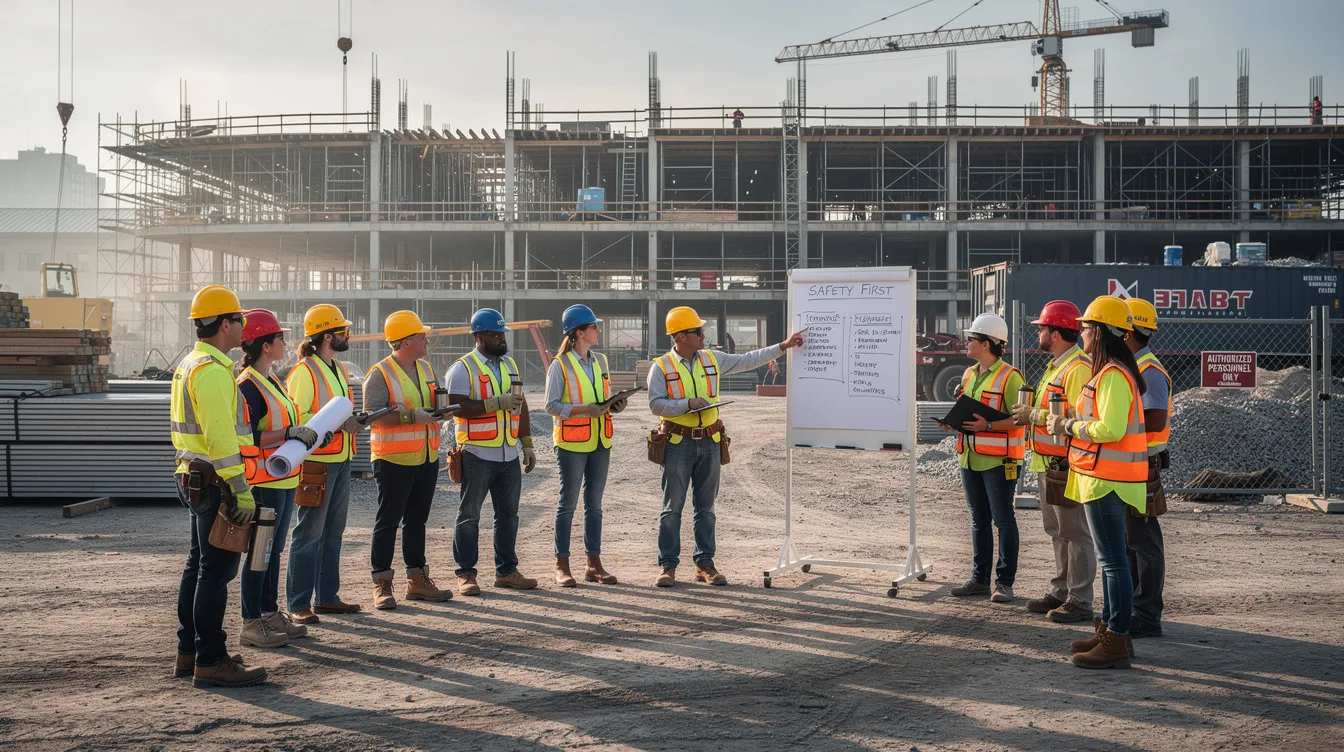
OSHA identifies workplace stress and psychosocial hazards as real safety concerns because they directly affect workplace safety. In construction, long hours, tight deadlines, remote or isolated work, job insecurity, and low control over daily tasks can increase fatigue, communication breakdowns, distraction, and incident risk. Addressing job insecurity and fatigue is crucial for improving mental health in construction, and these alarming statistics make it clear that mental health challenges in the industry demand a systemic response.
For executives and safety leaders, these numbers mean that recovery-friendly workplaces are a proactive, evidence-based response to a measurable risk. This is not about optics. It is about protecting your workforce and reducing preventable incidents.
ABC National’s certification sets an expectation that member companies will treat mental health and substance abuse recovery as integrated parts of safety and HR strategy, not afterthoughts. Well-structured mental health policies can reduce preventable workplace risks, and this certification shows that every contractor should examine its own approach.
For Carolinas contractors, this milestone is a signal. Clients, insurers, and regulators may increasingly expect documented approaches to mental health safety and recovery support that sit alongside your fall protection program and your drug testing protocol. Effective mental health policies address extreme rates of chronic stress in construction workers, and the expectation is shifting from “do you have a policy?” to “does your policy actually work?”
Here are four policy areas executives should review now:
Fitness-for-duty language. Review how your policies define impairment and fitness for duty. Make sure language allows workers to seek help for substance use disorders or mental health issues without automatic termination.
Post-incident testing and response. Evaluate whether your post-incident procedures include pathways to treatment and recovery, not just punitive consequences.
Leave and return-to-work procedures. Establish clear, documented return-to-work agreements for employees who complete treatment. The goal is to retain skilled workers while maintaining safety standards.
Anti-retaliation provisions. Workers must be able to report mental health struggles or substance misuse without fear of discipline. Non-punitive early reporting is foundational to a recovery-friendly workplace.
A recovery-friendly policy is fully consistent with merit shop principles. It focuses on performance, accountability, and opportunity while giving qualified workers in recovery a fair path to succeed.
Recovery support does not need its own department. It fits inside the safety systems you already operate.
Integration of mental health discussions into daily safety routines can normalize help-seeking behavior. Add stress and substance misuse warning signs to your weekly toolbox talks. Safety meetings should include mental health topics like stress management, anxiety, and depression alongside traditional hazard discussions as part of addressing mental health through everyday jobsite routines. When you treat mental health safety the same way you treat fall protection, your team starts to take it seriously.
Include mental health and recovery resources in jobsite postings. Pair visible mental health reminders with traditional safety signs. Post support service numbers, crisis hotlines, and EAP contact information next to your OSHA posters and emergency plans.
Incorporate substance misuse and recovery scenarios into supervisor training. Mental health first aid can be built into existing safety programs, equipping field leaders to recognize and respond to mental health concerns the same way they respond to a near miss.
Reducing excessive workloads can cut avoidable sources of stress, and you can address that through scheduling and resource planning. OSHA recognizes that workplaces can be a primary venue for resources and activities that improve mental health and well-being. Constructing peer support networks can help reduce stigma around mental health issues, and even a small group of trained peer advocates on a project can change the tone of an entire crew.
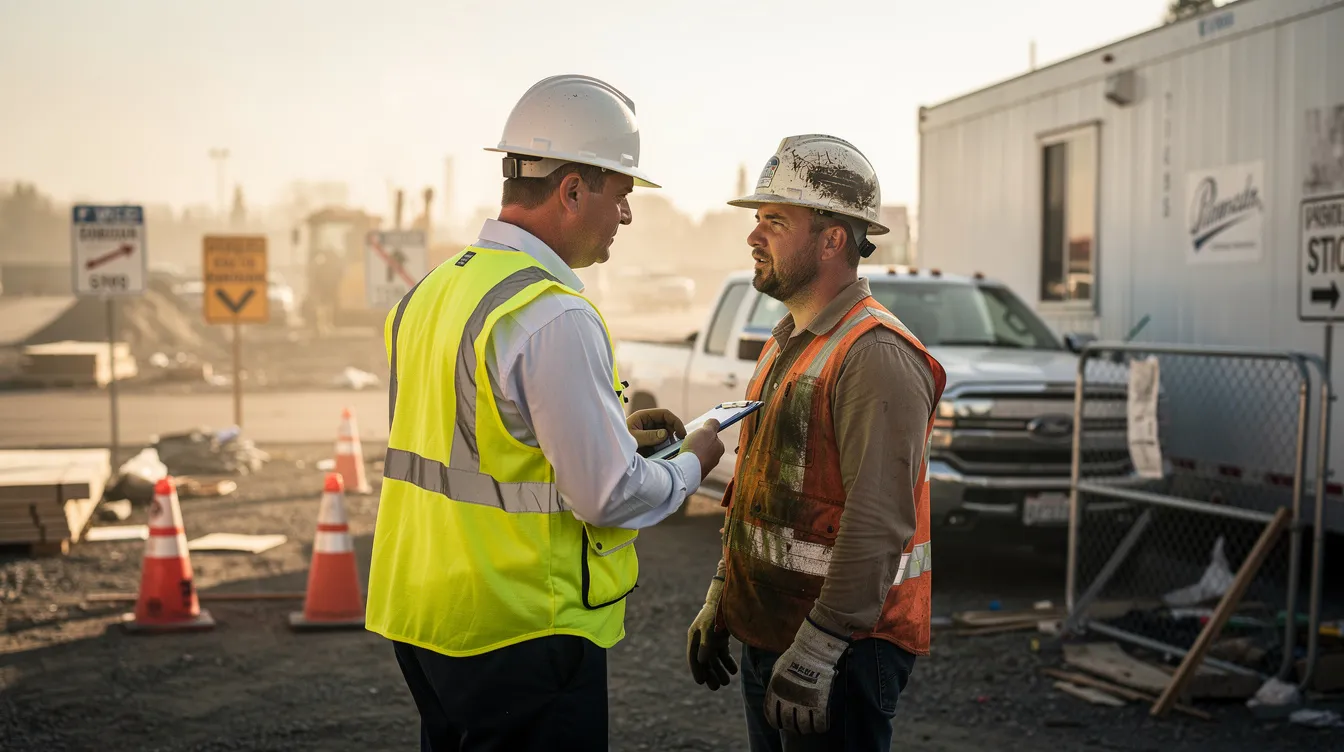
Policy means nothing if leaders do not model it.
Construction often operates under a culture that discourages vulnerability and emotional expression. That culture does not change because of a memo. It changes when owners, executives, and field leaders visibly support workers who seek help. Leaders must be willing to openly discuss mental health, acknowledge that substance abuse and mental health challenges affect people at every level, and reinforce that seeking support is a sign of strength.
Training supervisors to recognize behavioral changes can improve mental health outcomes. Foremen, superintendents, and project managers in the Carolinas should know how to respond when they see warning signs: social withdrawal, increased errors, absenteeism, or behavioral changes. The response should be a private conversation, a connection to available resources, and appropriate documentation. It should never be gossip or public confrontation.
Consistency matters. HR, safety, and operations must deliver the same message. If a worker hears from a superintendent that it is safe to ask for help, but hears from HR that a positive test means termination with no path back, the policy collapses. Open conversations about recovery and mental well-being must be backed by aligned action across every function.
Leaders who model appropriate use of support resources, whether that means mentioning that they have used an EAP or simply normalizing check-ins about stress, create an environment where struggling workers are more likely to come forward before a crisis occurs.
Mental health policies are vital to protect workers’ psychological well-being in construction. Here is a simple framework for drafting or updating your construction mental health policy with recovery-friendly principles built in:
Purpose and scope. State clearly that your company treats substance use disorders and mental health conditions as medical concerns, not grounds for automatic discipline. Define who the policy covers: employees, applicants, and, where applicable, subcontractor personnel.
Expectations and supports. Define fitness-for-duty expectations alongside the support services available. Mental health policies should include clear pathways to access mental health support, such as EAP referrals, peer recovery coaches, treatment programs, and crisis resources. Include contact information in the policy document itself.
Reporting and confidentiality. Establish how employees can report concerns about themselves or colleagues. Protect medical information. Make sure the process is simple enough that a worker on a jobsite can use it without navigating a bureaucratic maze.
Connection to safety processes. Link the mental health policy to your safety manual, incident investigation procedures, and training calendar. This keeps mental health from becoming a standalone document that nobody references after orientation.
Coordinate between HR, safety, and legal counsel. North Carolina and South Carolina each have specific requirements around substance abuse prevention programs, drug-free workplace policies, and employee privacy. Ensure your policy complies with federal law (ADA, Drug-Free Workplace Act) and applicable state statutes. ABC resources, including the ABC Total Human Health toolkit and ABC Carolinas safety training opportunities, can help fill in the practical details once the framework is in place.
A policy document that stays in a binder protects no one.
Incorporate mental health and recovery expectations into new-hire orientation, subcontractor agreements, and daily pre-task huddles. When every worker hears the same message on day one, you set a tone that lasts the length of the project.
Consider piloting recovery-friendly practices on one project or region before rolling them out company-wide. A Charlotte commercial build or an Upstate South Carolina industrial project can serve as a proving ground for supervisor training, resource visibility, and return-to-work procedures.
Coordinate with subcontractors and staffing partners. Include mental health safety and recovery-friendly language in your prequalification criteria and site rules. If your subcontractors are not aligned with your approach, the message breaks down at the crew level.
Track a small set of practical indicators: EAP utilization trends, near-miss reporting frequency, retention among workers who engage with support services, and whether suicidal thoughts or mental health concerns are being reported more openly over time. These are not guarantees of outcomes, but they tell you whether your culture is actually shifting. Do not overpromise specific numerical results; focus on directional progress.
ABC National’s recovery-friendly workplace certification provides a vetted framework and language member contractors can use to develop their own construction mental health policy. You do not need to start from scratch.
ABC Carolinas offers practical resources, including the ABC Total Human Health toolkit, guidance on mental health safety integrations for jobsites, and safety training opportunities that equip supervisors and leaders to act on these principles. These are not abstract benefits. They are tools you can put to work this quarter.
Engage with ABC Carolinas events, peer groups, and roundtables to compare approaches with other Carolinas contractors. Companies taking steps now to build a resilient construction industry are the ones sharing what works and where they are struggling. That kind of open exchange makes every member stronger.
Here is your next step: within the next quarter, review your company’s mental health and substance abuse policies, identify one gap relative to a recovery-friendly workplace standard, and use ABC resources to close it. The certification milestone is not just ABC National’s achievement. It is a challenge to every merit shop contractor in North and South Carolina to raise the bar on how you protect, support, and retain your workforce.


