


September 2026 delivered encouraging unemployment numbers for North Carolina and South Carolina. The U.S. Bureau of Labor Statistics reported a national unemployment rate of 4.2 percent, while North Carolina came in at 3.4 percent and South Carolina at 4.0 percent. On paper, both states look healthy. But for commercial construction leaders across the region, construction hiring challenges in the Carolinas have not softened with those numbers. The construction industry faces a significant shortage of skilled tradespeople, and construction companies in North Carolina and South Carolina continue to operate in a hyper-competitive labor market where construction workforce shortages cause project delays across both states.
This article is an executive briefing for contractors, subcontractors, and construction business leaders making staffing and bid decisions for Q4 2026 and early 2027. ABC National’s most recent state construction unemployment analysis confirmed that all 50 states had construction unemployment below 10 percent, reinforcing that no region in America has meaningful excess construction labor sitting idle. For firms operating in Charlotte, the Triangle, Upstate South Carolina, and the I-85, I-77, and I-95 corridors, the question is not whether labor is tight. The question is what to do about it.
The September 2026 BLS state employment release offers a useful snapshot, but it requires interpretation beyond the headline figures to be actionable.
North Carolina’s seasonally adjusted unemployment rate stood at 3.4 percent in September 2026, down from 3.6 percent a year earlier. South Carolina registered 4.0 percent, down from 4.2 percent in September 2025. Both states were below the national rate of 4.2 percent, which itself changed little from the prior month or year. These are broad economy numbers that include every sector, not just construction.
What matters on the ground is this: South Carolina’s construction employment reached approximately 130,200 workers in September 2026, reflecting a 4.4 percent year-over-year increase. South Carolina also added roughly 12,500 nonfarm jobs from August to September, one of the largest month-over-month gains among all states. North Carolina’s total nonfarm employment hit 5,128,000. Regional economic growth and infrastructure investments drive competition for skilled labor across both states.
“Below national average” unemployment means fewer idle workers, tighter recruiting, and continued wage pressure in metros and along major corridors. Contractors cannot expect a wave of new applicants to appear because unemployment has been stable across most states for months.
ABC National tracks construction unemployment separately from overall state unemployment, giving contractors a sharper view of labor conditions in their own industry.
In the most recent September ABC National state construction unemployment release, every state reported construction unemployment below 10 percent. This means no state has a significant pool of idle construction workers ready to be deployed. The construction industry has faced a significant labor shortage that extends well beyond 2025, and this national data point confirms that the shortage remains structural, not cyclical.
Construction unemployment behaves differently from the overall state rate. Project seasonality, weather patterns, backlog cycles, and certification requirements all create volatility that general employment data does not capture. A state can show modest overall unemployment while its construction workforce is fully absorbed.
For the Carolinas specifically, low construction unemployment nationally combined with below-average total unemployment in both North Carolina and South Carolina reinforces a clear conclusion: construction workforce shortages will not resolve on their own. ABC National’s state construction unemployment series is a key indicator contractors should monitor, and ABC Carolinas tracks this data for members across the region.
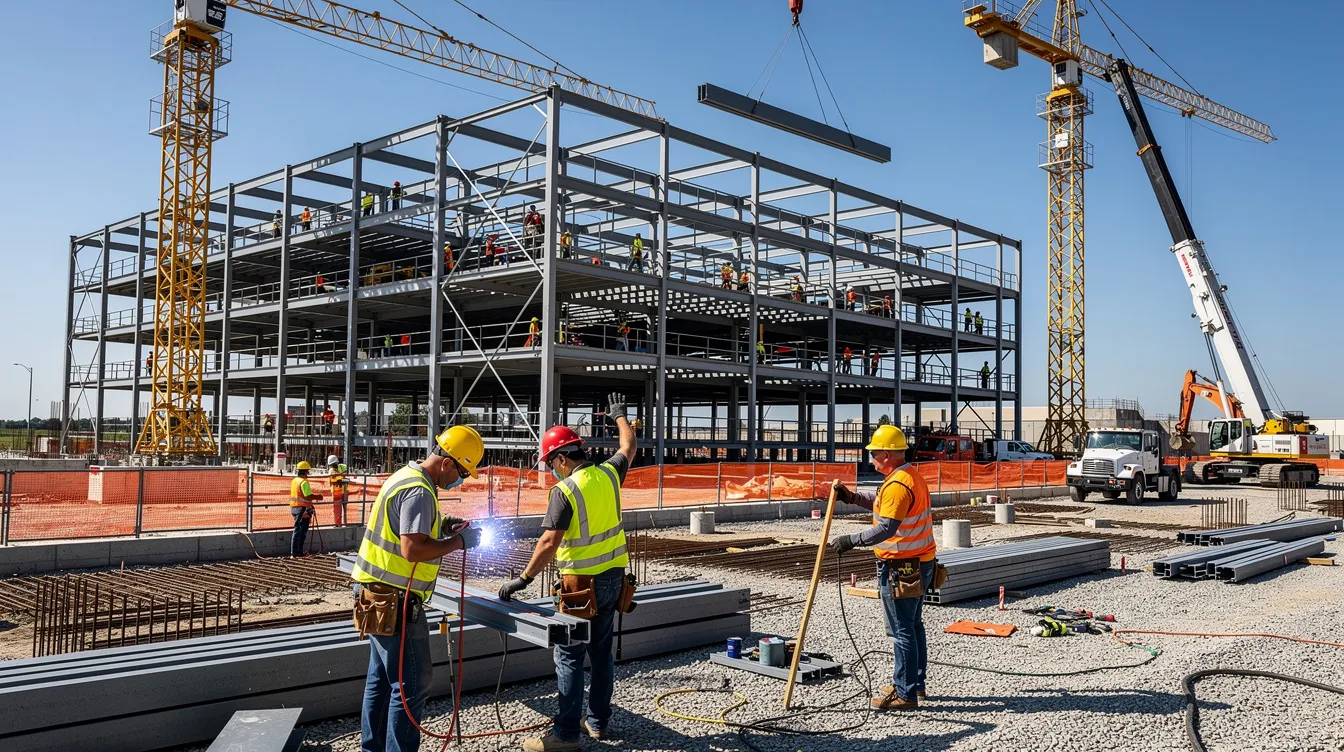
Low state unemployment is a double-edged sword for contractors. It signals strong demand across the economy but also means fewer candidates are available for specialized construction roles.
The construction workforce includes positions that do not easily transfer from other industries, even when the overall job market softens. Electricians, HVAC technicians, concrete finishers, equipment operators, and field supervisors require years of training, certifications, and jobsite experience. Consider these national data points that reflect what Carolinas firms report locally:
Educational and vocational programs, including career and technical education and technical education programs, struggle to sufficiently provide skilled graduates for the construction industry at a pace that matches demand. An aging workforce is driving significant retirements in the construction sector, and a large portion of the workforce will be nearing retirement age over the next decade. These demographic shifts, combined with housing affordability issues in growing metros, reduce labor supply.
Additional workforce pressures compound the challenge:
In both Carolinas, continued economic growth, infrastructure work, and private commercial development keep skilled construction roles tight. Executives should view low unemployment as a signal to begin investing in training, apprenticeship, and technical education rather than expecting the market to deliver fully qualified workers on short notice.
Hiring pressure is not uniform across the region. It varies by market corridor and sector, and understanding where competition is fiercest helps firms allocate recruiting efforts and price risk more accurately.
Charlotte and the I-77 Corridor. Commercial, industrial, and data center activity keep demand high for electrical, mechanical, and concrete crews. Intense competition for labor is fueled by demand for commercial data centers and advanced manufacturing, and 58 percent of contractors in data center construction reported heightened competition for skilled workers. Surging industrial projects compete for construction workers in this corridor, driving wage inflation and extending search timelines for general contractors and subcontractors alike.
The Triangle (Raleigh-Durham-Cary). Technology, life sciences, and institutional construction continue to drive the need for experienced project managers, BIM-capable coordinators, and MEP trades. These roles require both certifications and specialized performance, making qualified workers harder to find. In this market, 72 percent of firms have difficulty filling salaried positions, a number that mirrors conditions across South Carolina.
Upstate South Carolina and the I-85 Corridor. Manufacturing, logistics, and infrastructure projects here compete directly with private commercial work for civil-trade labor: operators, steelworkers, and heavy-equipment crews.
I-95 Corridor and rural areas. Labor may be more available in raw numbers but often lacks the density of specialized skills needed for complex commercial and industrial projects. Construction workforce shortages cause project delays even in less urbanized areas when firms cannot find people with the right combination of certifications, safety record, and experience for high-consequence work.

Executives should treat the September 2026 labor data as confirmation that hiring will remain competitive into 2027, not as a sign to relax workforce planning. Currently, 42 percent of firms experience project delays due to staffing deficits, and tighter labor availability has led to increased challenges in project scheduling across both states.
Here is what the numbers mean for your next moves:
In a tight market, retention matters as much as external recruiting efforts. Pay practices, benefits, culture, safety, and career paths all influence whether your best employees stay or field calls from competitors.
Sustained low unemployment tends to support upward pressure on wages and benefits, especially for in-demand trades. Construction employers face higher recruiting and labor costs due to high turnover, and firms that do not adjust their compensation assumptions risk losing people to competitors or failing to attract the candidates they need.
Wage dynamics vary by market:
| Market | Wage Pressure | Primary Drivers |
|---|---|---|
| Charlotte / I-77 | High | Data centers, commercial, industrial |
| Triangle | High | Life sciences, institutional, tech |
| Upstate SC / I-85 | Moderate to High | Manufacturing, logistics, infrastructure |
| I-95 / Rural | Moderate | Lower density, fewer specialized openings |
Employers consider workplace culture and safety essential for attracting talent. Non-wage investments such as professional development opportunities, predictable scheduling, and strong safety programs can improve retention without constantly escalating direct pay. Firms should update 2027 labor budgets and project cost assumptions using realistic wage expectations rather than last year’s rates, because underestimating wages can erode margins on work already in backlog.
Monitoring local compensation benchmarks through peer conversations and industry events helps contractors stay calibrated. Sharing information within the industry about what the market is actually paying keeps firms from underbidding or losing bids because they failed to account for labor costs.
Low unemployment and construction workforce shortages should directly influence how aggressively firms bid and schedule projects. The days of assuming perfect staffing in every estimate need to end.
Limited crew availability increases reliance on overtime, which affects both direct costs and safety risks. Increasing reliance on subcontractors complicates project delivery for contractors, particularly when subcontractor workers face the same labor constraints as your own crews. Estimators should account for realistic crew sizes, potential overtime premiums, and the possibility that a subcontractor may not be able to staff at the level their bid assumed.
Practical adjustments include:
Schedule risk rises in a tight labor market, and contractors who ignore that reality expose themselves to margin erosion, liquidated damages, and reputational harm. Aligning bid volume with staffing capacity through backlog and planning discipline is a competitive advantage, not a conservative limitation.
The September 2026 release is one data point. Strong contractors use recurring labor market information as part of a broader, ongoing planning process.
Firms should track BLS releases, ABC National construction unemployment updates, and regional indicators together to create a simple internal dashboard for leadership discussions. Incorporating labor availability, wage expectations, and training pipeline status into annual budgeting and strategic planning in construction keeps workforce realities from surprising the organization midyear.
In the Carolinas, long-term trends reinforce the urgency. Apprenticeship programs improve skilled labor availability in construction, and over 80 percent of apprentices remain in the construction industry after training. Apprenticeship programs can also reduce hiring costs by 50 percent compared to external recruiting alone. These numbers show that investing in pipeline development is not charity; it is a business strategy with measurable returns.
Leaders should scenario-plan around three cases for 2027:
Each scenario calls for different levels of hiring urgency, wage budgeting, and training investment, but none suggests labor planning can be deferred.

ABC Carolinas supports workforce development for construction professionals across North Carolina and South Carolina, providing a practical foundation for members addressing persistent shortages. The chapter’s apprenticeship and craft education programs, safety training for construction workers, and leadership development opportunities, including the Future Leaders Exchange (FLEX) program that develops leadership in construction, give firms tools to build internal talent pipelines rather than relying solely on a market that cannot deliver enough qualified workers.
Members who want to move from reactive hiring to long-term pipeline building can explore apprenticeship, craft training, and leadership development opportunities through ABC Carolinas, verifying current program details and eligibility on the chapter’s website before enrolling.
Here is the concrete next step: share September 2026 labor data with your internal teams. Review your staffing exposure for 2027 projects. Update your bid assumptions to reflect the ongoing labor tightness documented in this report. Then contact ABC Carolinas if you want to discuss workforce and apprenticeship options that fit your upcoming backlog. The number of open positions will not shrink on its own. Firms that grow their own people, read the data honestly, and adjust their plans accordingly will continue to win work and deliver it profitably in 2027.


