


For contractors working across North Carolina and South Carolina, connected rental technology is becoming a more practical jobsite question: when you rent equipment, should telematics access be part of the deal? The answer depends on how much downtime, idle equipment, and dispatch confusion your current projects can absorb.
Construction equipment telematics uses onboard sensors and wireless connectivity to report data such as location, engine hours, utilization, fault codes, and fuel status to a digital platform. When that capability comes with rental equipment, it gives contractors visibility into machines they do not own but still depend on to keep work moving.
That matters in the Carolinas. Contractors supporting data center work in the Charlotte region and the Triangle, industrial and manufacturing projects in Upstate South Carolina, and corridor work along I-85, I-77, and I-95 often manage equipment across multiple active sites under tight schedules. In those conditions, a rented machine that sits idle, disappears into the wrong laydown area, or goes down without warning can create schedule pressure well beyond its daily rate.
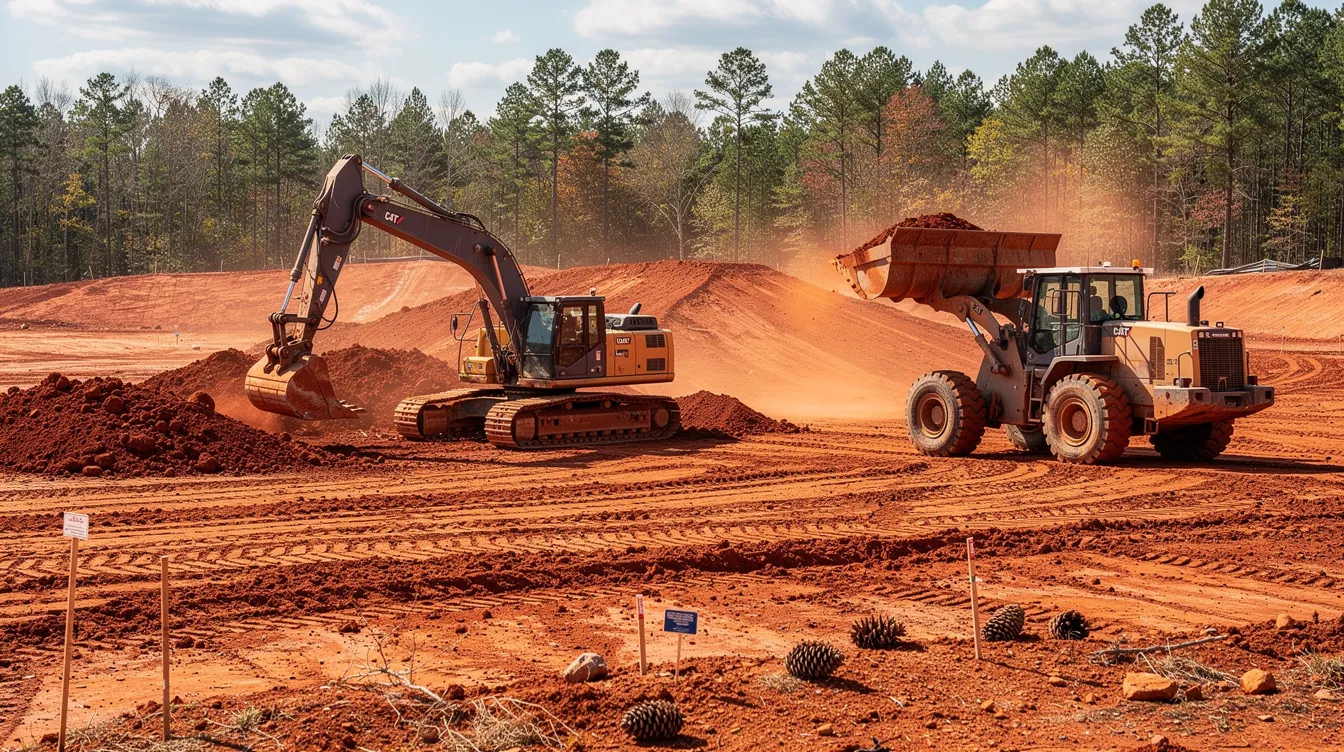
Connected rental technology turns rented equipment from a black-box line item into a visible operational asset. In practical terms, contractors may be able to see:
The main value isn’t the technology itself. It is the ability to make faster decisions about dispatch, return timing, maintenance coordination, and accountability while the equipment is still on rent.
Connected rental data is most useful when it changes field or office decisions on a live project.
In a typical week, dispatchers can use location and utilization data to identify the closest machine for the next need instead of making multiple calls to locate equipment. Superintendents can review whether a rented unit is actually being used enough to justify keeping it on site. Equipment managers can respond faster when a machine begins reporting a fault rather than waiting for the problem to become visible only after work stops.
For contractors operating across several jobs at once, that visibility can matter more than any single dashboard feature. A machine that is underused on one site may be urgently needed on another. Catching a service issue early may let the rental provider intervene before a schedule-critical task slips.
Quick one-week test for a foreman or equipment manager:
Those are internal operating checks, not industry benchmarks. The goal is simply to confirm whether connected data changes decisions your team already has to make.
Carolinas contractors are managing increasingly complex work across growing commercial, industrial, and infrastructure corridors. On fast-moving projects, equipment must be available immediately, move between sites without delay, and stay productive under compressed schedules.
That is where connected rental technology becomes more than a convenience. It can help contractors tighten redeployment decisions, shorten the time between a machine issue and a service response, and create better visibility into what rented assets are actually doing in the field.
ABC has also emphasized the broader shift toward digital field tools. Its Field Tech Report noted that more than 80% of contractors rely on cloud-based solutions to manage progress, productivity, safety, and equipment data. That does not prove every rental fleet is fully connected, but it does show why contractors increasingly expect operational data to be available, not hidden behind manual updates.
For readers who want a broader owned-versus-rented fleet strategy, ABC Carolinas has already covered data-driven construction fleet management in the Carolinas. This article narrows the question to connected rental equipment specifically: what visibility you should ask for, and how to use it.
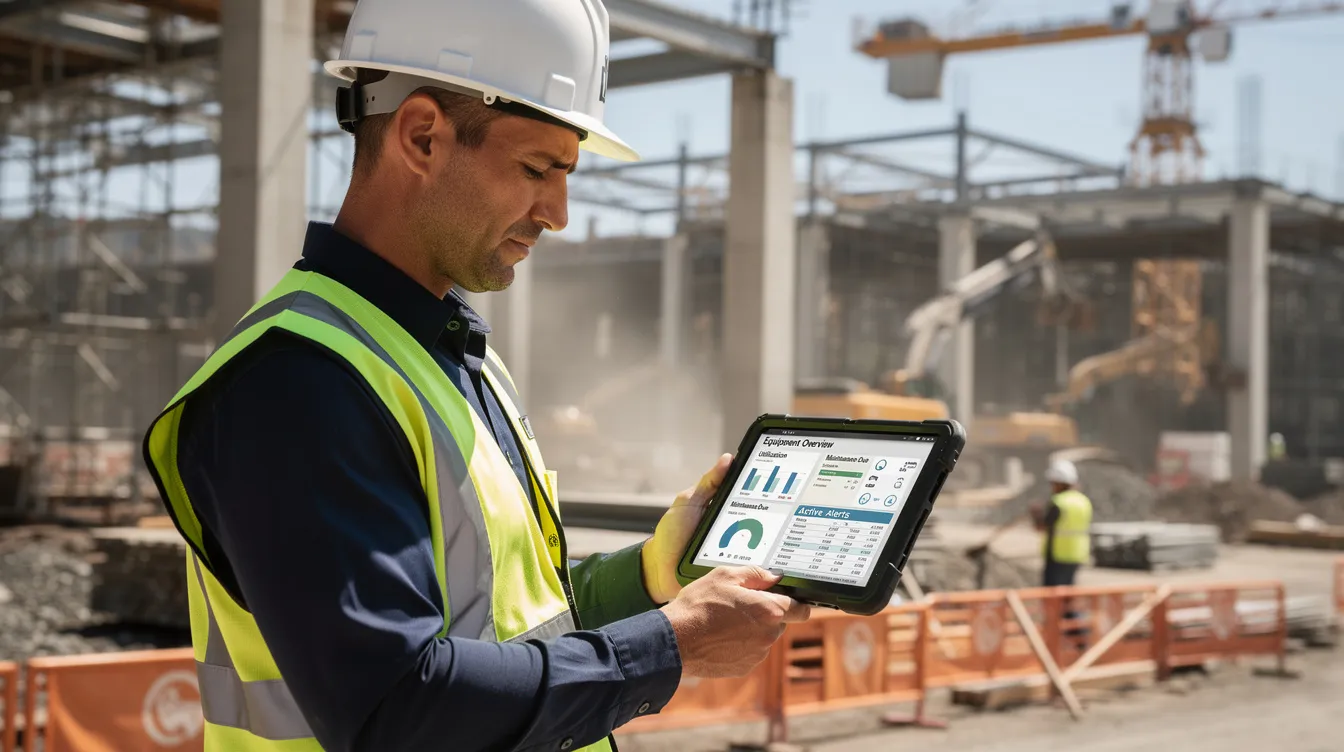
One of the strongest uses of construction equipment telematics is improving future equipment decisions. If your company rents the same machine category repeatedly, connected data can help you compare actual usage patterns against the cost and burden of ownership.
That does not mean telematics gives you a universal formula. It does mean you can replace guesswork with clearer evidence about how often a unit runs, how long it sits between jobs, how often it triggers service attention, and whether it is used consistently enough to belong in your core fleet.
Example decision framework for executives:
| Factor | What Connected Data Can Show | How to Use It |
|---|---|---|
| Actual usage | Run hours and idle patterns during the rental period | Compare repeated real-world use with ownership carrying costs |
| Mobility between jobs | How often equipment is transferred or relocated | Decide whether frequent redeployment supports a dedicated owned unit |
| Downtime exposure | Fault activity and service interruptions | Assess whether rental support offsets maintenance burden |
| Gap time between projects | Periods when equipment is on hand but lightly used | Identify categories better suited to rental than ownership |
| Peak demand | Usage spikes by project phase or season | Own the baseline need and rent for temporary surges |
Construction Executive has separately reported that telematics can help contractors evaluate which assets to buy, how often to use them, and how to maintain them. That principle applies just as clearly to repeated rental decisions: if the data is good enough, it should shape capital planning instead of sitting unused in a portal.
Before signing the next rental agreement, ask what connected access is actually available. A useful checklist includes:
If a provider offers connected equipment but keeps most of the data behind the counter, the practical value to the contractor is limited.
Maintenance. Connected rental data can support a more proactive response to service issues by surfacing fault codes, engine-hour milestones, or unusual operating patterns earlier. It may also help rental providers and contractors coordinate faster when a machine needs inspection or service.
Fuel and idling. Usage and idle-time visibility can help teams spot machines that are burning fuel without producing enough work to justify staying on rent. For projects with several machines spread across multiple sites, that visibility can improve planning even if it does not produce an immediate savings figure.
Safety and accountability. Telematics may also support safer operations indirectly by improving visibility into machine movement, location, and use patterns. Some systems can help with geofencing, unauthorized movement awareness, or after-hours accountability. That said, connected data is not a substitute for operator training, pre-task planning, or an OSHA-compliant safety program.
Connected rental data can reinforce site oversight, but it should support your safety culture, not replace field leadership, training, or formal safety procedures.
The biggest implementation mistake is treating connected rentals as a separate experiment that never connects to how the company already manages equipment.
If owned equipment data lives in one system and rental visibility lives in a different portal that no one checks consistently, the benefit drops quickly. Even without full software integration, contractors should define a repeatable process for who reviews rental data, how often, and what actions should follow.
For some companies, that may eventually mean API integration or a shared dashboard. For others, it may simply mean a disciplined weekly review that combines owned and rented asset decisions in the same meeting. The right starting point depends on company size and workflow maturity, but the operating principle is the same: connected data should support decisions, not create one more login nobody uses.
Contractors already thinking about broader operating controls may also find useful context in ABC Carolinas coverage on construction risk management for growing firms and construction site security and OSHA recordkeeping, especially where asset visibility and accountability overlap.
Most contractors do not need a companywide rollout on day one. A focused pilot is usually a better starting point.
Step 1: Pick one rental category. Start with a category that creates meaningful cost or schedule exposure, such as excavators, generators, or aerial lifts.
Step 2: Define what success looks like. Useful pilot measures may include utilization visibility, response time to machine issues, redeployment decisions, reduced idle rentals, or better return timing. These are internal KPIs, not promised industry outcomes.
Step 3: Assign ownership. Name the superintendent, equipment manager, or operations leader responsible for reviewing the data and acting on it.
Step 4: Clarify alert workflows. Decide in advance who receives machine alerts, who contacts the rental provider, and who decides whether to return, swap, or redeploy a unit.
Step 5: Review the pilot honestly. If the data changed at least one equipment decision, the pilot produced value. If it did not, the problem may be workflow design rather than the telematics itself.
Before your next project mobilization, choose one high-cost rental category and ask a simple question: what data will we actually receive if that unit is connected?
Then put the answer in writing. If your team needs location, utilization, fault visibility, or rental-period reporting to manage the equipment well, those expectations should appear in the rental conversation before the machine arrives on site.
Connected rental technology is not valuable because it sounds advanced. It is valuable when it helps a Carolinas contractor return an underused machine sooner, find the right unit faster, respond to a service issue earlier, or make a better rent-vs.-buy decision on the next project.
ABC Carolinas members looking to compare notes on equipment visibility, operations, and field technology decisions can also use chapter training, peer groups, and member events to see how other contractors are approaching the same issue.


