


Construction delay claims in 2026 are increasingly driven by supply chain disruptions on Carolina commercial projects, from data centers in the Triangle to healthcare campuses in the Upstate. This article walks Carolinas contractors through how to tighten contracts, procurement controls, and documentation before delays become disputes.
Even in late 2026, lead times for switchgear, transformers, HVAC equipment, and specialized medical or data center components remain volatile. A Spring 2025 Skanska report found lead times of 40 to 60 weeks for certain high-demand electrical and mechanical gear. Gilbane’s Q3 2025 survey measured chillers above 500 tons at 23 to 38 weeks and custom air-handling units at 21 to 35 weeks. Supply chain issues continue to disrupt project schedules due to late deliveries, and those disruptions convert directly into construction delay claims across North and South Carolina.
As Construction Executive’s 2024 analysis by Owen Newman of Duane Morris warned, modern supply chain risk is not limited to force majeure. Mid-project substitutions, sanctions compliance failures, tariff regime changes, and specification non-compliance at two or three tiers down can shift delays from excusable to non-excusable without warning. A contractor who believed a transformer order was on track may discover that the oil inside contains Russian-origin base product, triggering regulatory and warranty exposure that no one anticipated at contract signing.
Common Carolinas market segments face this pressure head-on. Data centers along the North Carolina technology corridor, industrial projects around Charlotte and the I-85 corridor, and healthcare campuses in the Triangle and the Upstate all depend on long-lead imported equipment. Labor shortages can reduce productivity on these projects while materials arrive late, compounding schedule risk.
When those materials arrive late, the outcome depends almost entirely on how the contract defines excusable, compensable, and non-compensable delays. A time extension only, time and money, or contractor-only risk allocation is not a matter of fairness in the abstract; it depends on what the contract says and whether the contractor followed its procedures.
ABC Carolinas members can connect this topic to existing guidance on material costs and tariff actions and on how to protect bids and margins. This article builds on those resources by focusing on claims mechanics and contract controls, not pricing alone.
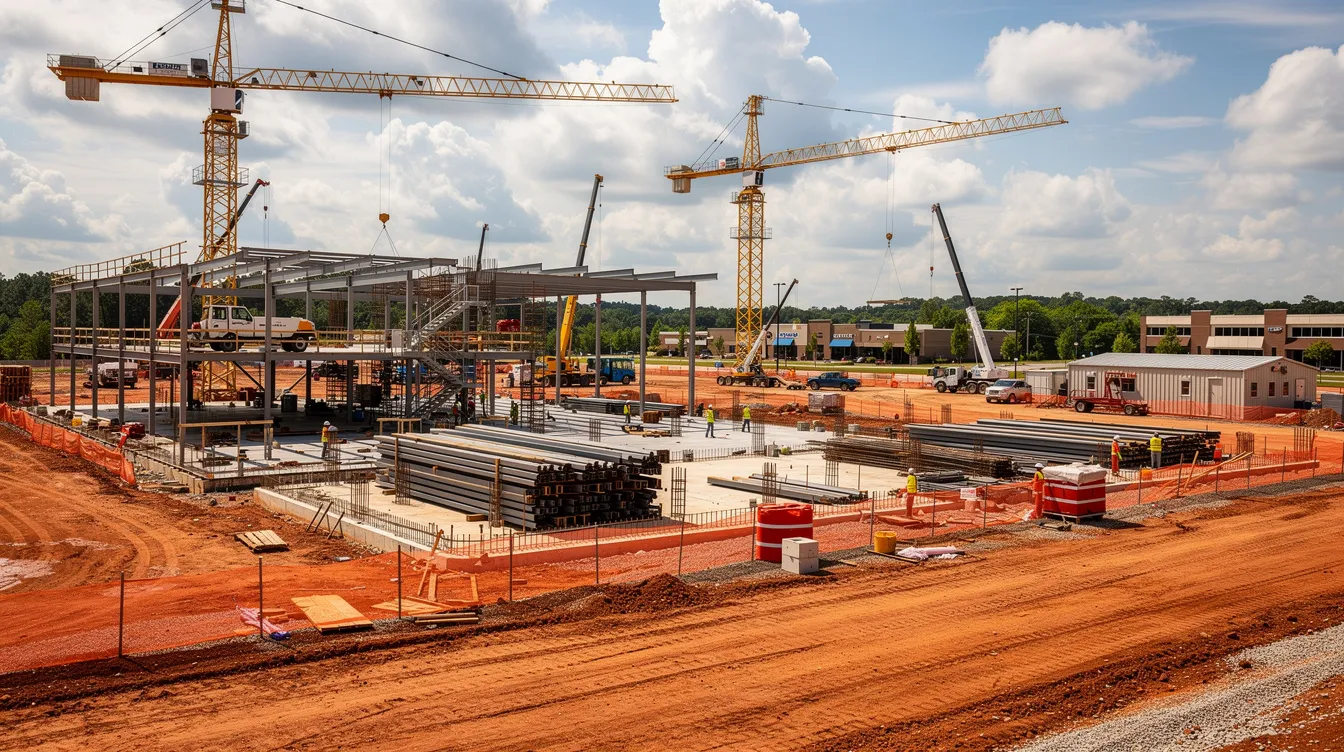
Before evaluating construction delay claims, classify the delay using the contract’s definitions, not generic textbook labels. Misclassifying excusable delays as non-excusable delays, or the reverse, is one of the most common dispute triggers on Carolina projects. Unforeseen site conditions can stall excavation and foundation work; design errors often cause rework and construction delays; delays in securing permits can stall critical project transitions. Each of these events falls into a different classification depending on what the parties agreed to in writing.
Three dimensions control the analysis: (1) excusable delays versus non-excusable delays, (2) compensable delays versus non-compensable delays, and (3) critical versus non-critical delays that affect the overall completion date. A critical delay impacts the project’s critical path in a CPM schedule, pushing the project’s completion date forward. Only critical, excusable delays typically support time extensions or monetary recovery. Identifying critical-path impacts is necessary to demonstrate entitlements.
Excusable delays are beyond the contractor’s control and are recognized by the contract as events that protect the contractor from default and liquidated damages. Examples of excusable delays include natural disasters and strikes. In the Carolinas, hurricanes or tropical storms disrupting ports on the Atlantic coast, freight embargoes affecting I-95 or regional rail, floods closing construction access roads, quarantine restrictions during public health events, and actions by a public enemy all qualify if the contract lists them. Inclement weather can prevent outdoor work and hinder site conditions, and unusually severe weather events often fall into this category. Excusable delays may allow for time extensions and compensation, depending on additional contract terms.
Non-excusable delays are foreseeable and within the contractor’s control. If a contractor failed to lock in a long-lead transformer order at award, submitted shop drawings late, or missed permit applications for a Greenville, SC industrial site, the resulting delay is the contractor’s fault. Non-excusable delays result in contractor liability for costs, including potential liquidated damages. To receive compensation, contractors must prove delays were beyond their control; if they cannot, neither the contractor nor its subcontractor can claim extra time or additional costs.
Contracts sometimes narrow what counts as excusable. Contractors must align their internal risk view with the agreement’s exact language, not industry custom.
Compensable delays entitle contractors to time extensions and compensation, covering extended general conditions, idle labor, and sometimes margin. All excusable delays are compensable when the delay results from owner actions, government changes, or third-party obligations the contract assigns to someone other than the contractor. Compensable delays often stem from government actions or changes, such as a contracting officer ordering a scope revision or a regulatory agency issuing new requirements mid-project. Owner-initiated variations can disrupt workflow and trade sequencing, creating additional costs that a properly drafted contract allows the contractor to recover.
A compensable delay might arise on a Carolinas project when an owner’s late approval of emergency design changes for a Columbia hospital’s imaging suite delays switchgear procurement and pushes the end date. If the contract grants both time and cost recovery for owner-caused delays, the contractor has a compensable claim.
Noncompensable delays do not provide additional monetary compensation. This category includes excusable delays where the contract allows a time extension, but bars cost recovery. Unusually severe weather qualifies as a noncompensable delay under most contracts; the contractor gets extra time but no money. Many EPC and CM-at-Risk contracts in the Carolinas treat broad categories of supply-chain-driven disruption as excusable but noncompensable, unless the contractor has negotiated specific cost-relief language. No-damages-for-delay clauses limit compensation for delays in precisely this way.
Concurrent delays can affect project completion dates and complicate recovery. When both the owner and contractor contribute to a schedule slip, courts examine whether the contractor’s delay truly coincides with an owner-caused or force majeure delay. Concurrency can reduce or eliminate cost recovery, a subject returned to in the defenses section below.
Most delay disputes in the Carolinas trace back to contract language signed 12 to 24 months before a project breaks ground. Contract provisions regarding delays should be reviewed carefully at bid stage; that review is the most cost-effective “claims prevention” a contractor can purchase.
Several provisions control the outcome: force majeure clauses, notice and claims procedures, no-damage-for-delay clauses, liquidated damages, schedule milestones, change order mechanics, and subcontract flow-down language. A narrowly written force majeure clause might exclude supply chain issues caused by tariffs, sanctions, or upstream vendor decisions. Construction Executive’s analysis warned that mid-project substitutions and two-tier suppliers can introduce unanticipated legal and schedule exposure that a standard clause never contemplated.
Subcontract flow-down matters. General contractors in Charlotte, Raleigh, and the Upstate should ensure delay, force majeure, and change order language in subcontracts mirrors or supports the prime contract. If the prime allows a time extension for a force majeure event but the subcontract does not flow that relief down, the GC may absorb noncompensable exposure it cannot pass through.
Force majeure events can excuse performance delays in contracts, but only if the clause covers the specific event. Standard force majeure language often lists acts of God, fires, floods, strikes, and actions of a public enemy. Modern risk demands broader language: freight embargoes, global sanctions compliance, tariff actions, long-lead equipment shortages, and upstream vendor failures.
A hurricane closing the Port of Charleston or a rail disruption affecting structural steel deliveries into Charlotte should be clearly listed or referenced. Contractors should push for language that treats certain supply-chain-related events as excusable delays and, where leverage allows, as compensable delays with cost recovery. Insurance and builders-risk policies interact with these clauses; mapping contract terms to coverage conditions can prevent gaps that surface only after a delay event occurs.
On larger projects, such as $20M-plus industrial jobs or mission-critical data centers, have in-house or external counsel review force majeure language before final signature. The cost of that review is a fraction of the exposure it prevents.
No-damage-for-delay clauses can turn otherwise compensable, excusable delays into time-only, non-compensable delays. In South Carolina, Williams Electric Co. v. Metric Constructors (1997) confirmed that these clauses are generally enforceable if unambiguous, but recognized exceptions for fraud, bad faith, gross negligence, active interference, and delays of unreasonable duration. In North Carolina, the Southern Seeding case showed that an equitable adjustment provision can limit the reach of no-damage-for-delay language.
Liquidated damages tied to substantial completion dates multiply the financial stakes. On public work along the I-85 and I-95 corridors, daily LD rates can run into the thousands of dollars. Contractors must model LD impact during bid review and factor those numbers into procurement planning for every critical delivery schedule item.
Improper notice can invalidate delay claims in construction contracts. In Austin-Griffith, Inc. v. Goldberg (SC, 1953), the court enforced a written-demand requirement as a condition precedent; the contractor’s failure to comply waived the delay claim entirely. Timely notice of delay may impact the right to claim compensation later, so serving written notice promptly after a delay event is essential. Notification of delays should be given within specified timeframes, typically 7, 14, or 21 days after discovery, depending on the contract.
Project teams should create a simple internal “claims clock” at project kickoff, assigning responsibility to a PM, PE, or project executive for sending formal notices whenever procurement or field issues endanger performance on critical milestones.
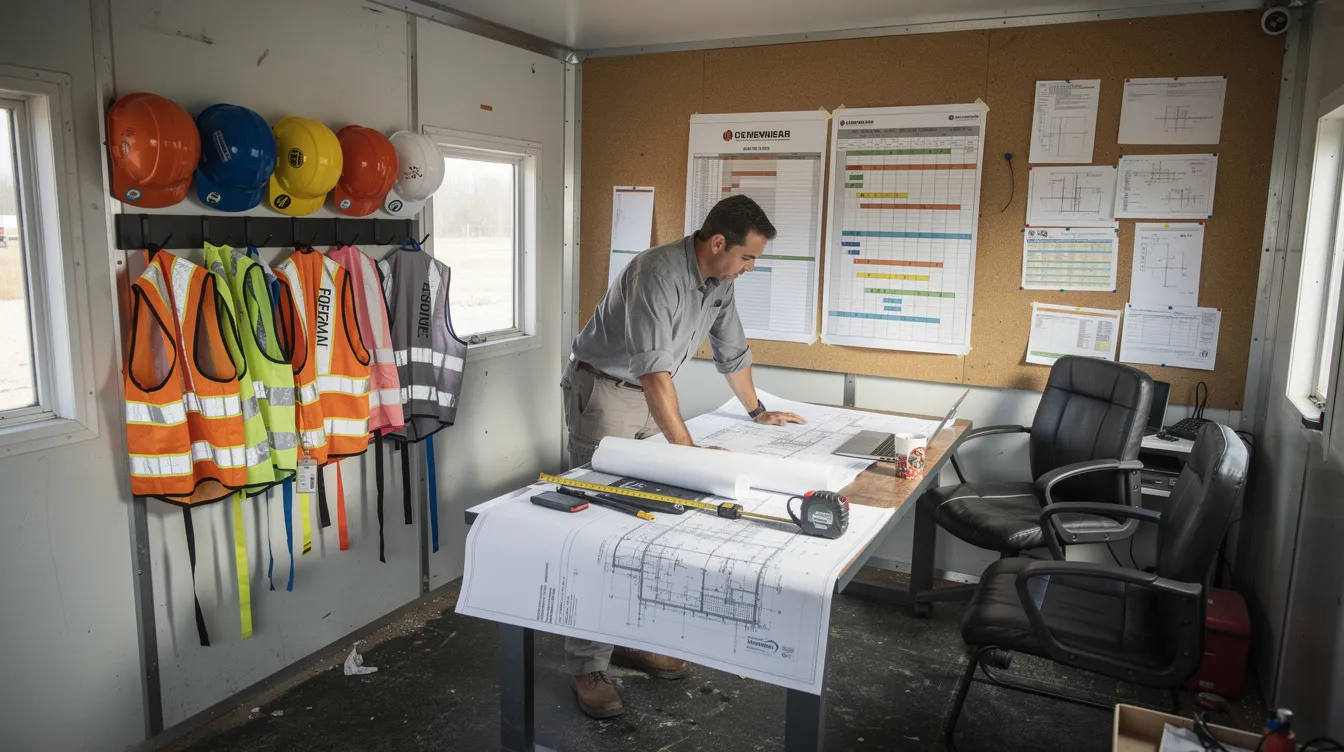
Avoiding construction delay claims in the Carolinas is often less about courtroom strategy and more about disciplined procurement planning and early risk escalation on long-lead items. With supply chains still stretched, securing subcontracted supplies of generators, chillers, MRI suites, switchgear, curtainwall systems, and specialty structural components can take more than 40 weeks.
Project teams should maintain a long-lead item register from day one. This register lists each key piece of equipment with its required order date, fabrication duration, shipping window, and installation milestone. It should be tied to the CPM schedule, submittal log, and supplier commitments, and updated at least monthly. On fast-track projects in Charlotte or the Triangle, biweekly updates are appropriate.
Contractors should require written acknowledgment from suppliers on critical dates, along with clauses obligating prompt notice of any anticipated slips. Build options for substitution or re-sequencing into the purchase agreement so the contractor is not locked into a single vendor with no other source. Good procurement planning supports both cost control and delay-claim defense, connecting directly to broader efforts to protect bids and margins and manage material costs and tariff actions.
Disjointed handoffs from preconstruction to field operations cause preventable non-excusable delays when long-lead items are not ordered on time. A formal “procurement summit” at award for larger Carolinas projects, where estimators, PMs, superintendents, and key subs review major risks, confirm lead times from each vendor, and align on who owns each procurement action and notice trigger, can close this gap.
The summit should produce a clear assignment: who tracks vendor dates, who issues formal notice, who updates schedules, and who escalates to executives or counsel. On a Greenville-area industrial project, for example, early collaboration might avoid delay by approving an alternate, domestically sourced component when overseas shipping tightens. ABC Carolinas’ emphasis on merit shop discipline, workforce training, and project leadership development supports this kind of cross-functional coordination and accountability.
In any dispute over excusable delays or compensable delays, contemporaneous documentation is usually more persuasive than after-the-fact narratives. Maintaining contemporaneous records can strengthen a construction claim, while gaps in the record give opposing parties room to recharacterize events. Precise documentation is essential for valid construction delay claims. Effective delay claims involve a chronological documentary trail of evidence.
Key records Carolinas contractors should maintain include:
This documentation demonstrates three core elements: entitlement (why the delay is excusable or compensable), causation (how the event affected the critical path), and quantum. Quantifying financial impacts is key in construction delay claims, covering extended general conditions, idle labor, equipment costs, and escalation. Strong documentation also protects against allegations of construction defects and non-conforming work later in the project life cycle, connecting to broader claims exposure and quality risk.
Analysis of the project schedule is crucial to identify critical path delays. Schedule evidence includes as-planned baseline schedules, periodic updates, fragnets for impacted activities, and time-impact analyses that show how a late transformer shipment or delayed design approval pushed the project’s completion date. Without this schedule analysis, a contractor cannot demonstrate that a supply chain delay was a critical delay rather than float consumption on a non-critical activity.
Daily construction logs are important for detailing project disruptions. Daily reports for projects in Charlotte, the Triangle, and the Upstate should consistently capture weather conditions, crew counts, key equipment usage, material deliveries, access restrictions, and any owner-caused or supply-chain-related disruptions observed that day. Consistency is more important than perfection; a modest but reliable daily log produced over months is more helpful in negotiation than sporadic, overly detailed reports filed only when problems surface.
Well-kept schedules and daily reports also support safety, workforce management, and productivity initiatives that ABC Carolinas promotes across the region.
Even strong-looking delay claims can fail. Owners and CMs invoke concurrent delay, improper notice, lack of critical-path impact, and contractual waivers like broad release language in change orders as standard defenses.
Concurrent delay arises when both the owner and contractor contribute to a schedule slip. On a Columbia medical office building, for example, the owner’s late equipment release and the contractor’s understaffing might both contribute to the same schedule slippage. Concurrency can limit or eliminate compensation even when part of the delay is excusable. Mitigation efforts are necessary to minimize delay impacts on the project, and contractors who cannot show they took reasonable steps to recover lost time face weaker claims.
Failure to meet contract notice deadlines is one of the easiest defenses for owners. Missing a 7- or 14-day written notice requirement can transform a potentially compensable delay into a non-compensable or even non-excusable situation. Contractors should also watch for change orders or progress payment releases that waive “all claims through this date” without carving out pending or potential delay claims tied to known procurement problems.
These pitfalls are reasons to build disciplined internal processes, not reasons to accept delay risk quietly.
Practical thresholds drive escalation. When a long-lead item slip threatens the critical path by more than a defined number of days, or when potential liquidated damages exceed a set percentage of contract value, contractors should engage senior leadership and outside counsel. Notify surety and relevant insurers early if a pattern of owner-caused or force majeure delays could trigger performance-bond questions or coverage issues.
ABC Carolinas members can use peer groups, roundtables, and member education events to compare escalation approaches and avoid learning these lessons only in litigation. Formal dispute-resolution steps (mediation, arbitration, litigation) are usually outlined in the contract; following those procedures in order preserves rights while leaving room for business-focused solutions.
Regional growth in data centers, advanced manufacturing, logistics facilities, and healthcare expansions increases both schedule pressure and exposure to supply chain delays, as the Carolinas forecasting outlook confirms. In the ENR/ABC July 2025 survey, contractors in the South reported an average backlog of 9.79 months, the highest nationally, with infrastructure and data center work as primary contributors.
North Carolina’s data center corridor around the Triangle and central NC faces long-lead risk for IT, electrical, and cooling equipment. Healthcare projects in Charlotte, the Triad, and Charleston face strict regulatory deadlines and complex specialty gear. Industrial projects along I-85 and in the Upstate rely on heavy electrical and mechanical components vulnerable to global disruptions. Owners in these segments often insist on aggressive completion dates and liquidated damages, making precise delay classification critical.
Tariffs and sanctions can suddenly change where components are sourced, and contractors should guard against mid-project substitutions that create both schedule delays and compliance problems. ABC Carolinas continues to monitor policy developments in Raleigh and Columbia that affect material sourcing, tariffs, and infrastructure funding.

Contractors and project leaders should take several concrete steps before the next construction project reaches the field. Review standard contract templates for force majeure, excusable delays, and no-damage-for-delay clauses, and request modifications where the language does not cover supply chain, tariff, or sanctions risk. Build a standard long-lead procurement matrix for all projects over a defined size threshold, and assign ownership of vendor tracking and escalation at award.
Train PMs and superintendents on notice deadlines and documentation habits. Integrate schedule updates, procurement logs, and cost reports into a single monthly risk review meeting so that the contracting officer or owner receives timely, supported requests for any schedule extension or change order. Define internal triggers for escalation to executives, counsel, surety, and insurers when contractual capacity to absorb further delay cost is exhausted.
These practices align with broader business goals: preserving margin, protecting workforce stability, and supporting safe, ethical, on-time delivery consistent with merit shop principles. Delay-risk discipline is a competitive advantage in a tightening Carolinas market and can differentiate ABC Carolinas members in owner and GC selection processes.
While each delay claim is fact-specific, ABC Carolinas provides regional contractors and suppliers with tools, education, and advocacy to help them manage delay risk before disputes arise. Member education and networking, including legal roundtables, project-management workshops, and peer-group discussions, allow contractors to share practical approaches to force majeure clauses, notice workflows, and claims documentation.
ABC Carolinas’ advocacy in Raleigh and Columbia promotes open competition, balanced risk allocation, and merit shop principles in public-works procurement, which can influence how delay and change order provisions are structured on government and local projects. Association resources on material costs and tariff actions, protecting bids and margins, and broader claims exposure and quality risk give members a connected toolkit for managing schedule and cost volatility together rather than in silos.
Explore upcoming ABC Carolinas events and programs related to contract risk, finance, and operations through the chapter’s member education and networking updates. The next roundtable, workshop, or peer-group session may be the most practical claims-prevention step you take this quarter.
Review the interaction among the force majeure clause, excusable delays language, and any no-damage-for-delay provision. Together, these determine whether supply-chain disruptions become excusable but non-compensable delays, or potentially compensable delays with cost recovery. If the clause fails to list tariffs, upstream vendor failure, or sanctions compliance as covered events, the contractor bears risk it may not have priced.
Identify long-lead items during preconstruction, secure vendor quotes and preliminary schedules before GMP or final bid, and target formal purchase orders within the first 30 to 60 days after notice-to-proceed for mission-critical components. With some equipment running 40 to 60 weeks, waiting until submittals are approved can push deliveries well past the anticipated installation window.
Even smaller firms can implement streamlined daily reports, email summaries, and simple procurement logs using basic project-management tools. Consistency matters more than sophistication. A reliable daily log and a simple notice calendar can protect a subcontractor against non-excusable or non-compensable delay allegations that a contractor might otherwise shift downstream.
Rushed work to “catch up” after delays can increase defect risk. Thorough documentation of schedule changes, manpower loading, and quality inspections helps separate legitimate delay recovery from later workmanship claims. If contract performance is compressed because of a failure that arises from owner-caused delays, the record should show how the revised plan addressed quality as well as progress.
Bring in an expert when potential liquidated damages, extended general conditions, or disputed compensable delays reach several hundred thousand dollars or more, or when concurrent delay or complex CPM issues make in-house analysis insufficient. Before that threshold, early expert involvement often reduces total dispute costs and strengthens the contractor’s position, whether the claim is pursued, defended, or deemed a candidate for negotiated resolution.


