The August 2026 employment data is in, and it reinforces a message that Carolinas commercial contractors, trade suppliers, and service providers cannot afford to ignore: building and retaining skilled crews requires more than reactive recruiting. Construction career pathways are structured, visible routes inside commercial construction firms that move workers from entry-level roles through apprenticeships to journeyperson and foreman positions, giving employers a practical framework for workforce development and retention.
In North and South Carolina, where labor shortages and skills gaps continue to pressure hiring, safety, and project delivery, firms that build these pathways gain a competitive advantage by developing talent earlier and keeping experienced people longer. Here is what the latest numbers mean for your workforce strategy, from construction employment trends and apprenticeship programs to safety training, merit shop workforce development, advocacy, regulatory affairs, ethics, education, networking, and other member services that support profitable growth.
Key Takeaways
The August 2026 construction employment data sets the stage for a second-half workforce conversation every Carolinas contractor needs to have. Before diving into the details, here are the headlines:
- Nonresidential specialty trade hiring continues to drive national construction employment growth, and that demand directly affects the Carolinas construction workforce in Charlotte, the Triangle, and Upstate South Carolina.
- Construction firms in North and South Carolina cannot rely on traditional hiring alone. They must build structured apprenticeship and craft training pipelines to counter ongoing labor shortages across the construction industry.
- Clear, visible construction career pathways from high school to journeyperson and foreman roles are now a competitive advantage for construction companies, not something to get to eventually.
- The construction industry faces a significant labor shortage, and retirements are causing a skills gap that compounds the challenge of filling field leadership positions.
- ABC Carolinas members can respond immediately by reviewing staffing plans against current backlog, expanding apprenticeship intake, and connecting with ABC Carolinas workforce development and safety training programs.
August 2026 Construction Hiring Trends: Why They Matter for the Carolinas
The Bureau of Labor Statistics reported that total construction employment rose by approximately 22,000 jobs in August 2026, a modest but telling gain. Within that figure, nonresidential specialty trade contractors added roughly 7,800 positions, continuing a pattern of monthly gains averaging around 6,000 over the past year. Heavy and civil engineering contributed about 4,400 jobs, while nonresidential building construction actually dipped slightly. The demand for skilled construction trades is driven by both growth and replacement needs, and these numbers show where the momentum sits.
What stands out for Carolinas contractors:
- Nonresidential specialty contractors are still adding jobs faster than most other construction sector segments, signaling sustained demand for electricians, plumbers, HVAC technicians, and concrete and steel trades.
- Residential segments remain flat or slightly negative, confirming that commercial and industrial projects are the primary workforce draw.
- Wage growth for production and nonsupervisory roles ran at about 3.1% year over year nationally, with higher labor costs driven by competition for skilled workers in tight specialty markets.
- The data confirms that demand for skilled labor is outpacing supply in construction, creating broader hiring and scheduling challenges for contractors with no near-term relief in sight.
Commercial growth in Charlotte, Raleigh and Durham, and Greenville and Spartanburg is keeping the regional construction workforce under sustained pressure. The core question for ABC Carolinas member firms: what do these August hiring trends mean for construction career pathways, apprenticeship strategy, and retention decisions you need to make now?
What the Latest Labor Data Signals About Construction Employment
The Bureau of Labor Statistics tracks construction employment, wages, and labor force participation through monthly releases that give executives a real time read on market conditions. For August 2026, the key signals go beyond the headline job count. Seasonally adjusted data shows that while hiring continues, the pace is not matching the volume of open positions or the pipeline of awarded work across the country.
- The construction industry labor shortage persists: job openings in construction remain elevated relative to actual hires, and many firms report critical gaps in core craft positions.
- Average hourly earnings for construction employees have been rising steadily, reflecting the competitive pressure firms face when trying to attract and hold qualified workers.
- Overtime reliance remains high in specialty trades, a pattern that signals insufficient crew depth rather than temporary project surges.
- Wage growth, overtime patterns, and persistent difficulty filling field positions all reinforce the need for firms to build long-term construction career pathways instead of relying on short-term recruiting fixes. The construction industry offers diverse and expanding career pathways, including engineering and technical roles supported by college degrees, certifications, early exposure, and technical education, but only firms that invest in those routes will see sustained results.
How August Trends Translate to Carolinas Construction Markets
ABC Carolinas tracks what each national employment report means for North Carolina and South Carolina contractors specifically. The August data aligns with what member firms have been reporting on the ground: demand is strong, labor is scarce, and the gap is widening in several key markets.
- Strong commercial demand along the I-85 and I-77 corridors, including Charlotte and Upstate South Carolina, is keeping specialty trade labor tight and directly affecting bid capacity. Carolinas contractors report an average backlog of 9.4 months in nonresidential work, with data center and advanced manufacturing projects driving much of that depth.
- In the Triangle and coastal metros, healthcare facility expansions, university construction, and infrastructure investment in Raleigh and Durham and along I-95 create sustained demand for mechanical, electrical, and civil crafts.
- Data center, manufacturing, and logistics projects compound local hiring pressure for high-skill trades. Employer demand for data center construction roles in North Carolina has more than doubled over the past two years, with wages for installation workers running roughly 42% higher than comparable roles in other segments. This dynamic in North Carolina’s data center construction workforce affects the entire regional labor pool.
- Project delays are a direct result of labor shortages, and contractors who fail to plan for current crew capacity alongside near-term awarded work will feel the impact on schedules and margins. Firms should pair August employment data with their own construction backlog analysis so staffing plans reflect both current crews and upcoming obligations.
North Carolina construction employment stood at approximately 294,800 jobs in July 2026, while South Carolina carried about 129,300. Both states show stable but constrained growth, with the tightest conditions in nonresidential specialty trades.
Construction Career Pathways: From High School to Journeyperson and Beyond
Construction career pathways are structured, visible routes from entry-level roles into skilled trades, supervision, and construction management positions within commercial construction firms. When these pathways are well documented and communicated, they transform recruiting from a scramble into a strategy.
- A typical pathway in the Carolinas might look like this: high school CTE exposure or pre-apprenticeship, entry into a registered apprenticeship or employer-led craft training, progression to journeyperson status, then advancement into foreman or superintendent roles. Most entry-level construction roles require a high school diploma or GED, making early exposure through construction education critical.
- Core construction job roles include skilled trades, management, and engineering. Construction management entails overseeing project budgets, schedules, and client communication, while many technical construction careers require a college degree in a relevant field. Professional construction roles often require industry certifications in addition to formal education.
- Entry-level support roles in construction can provide valuable experience and networking opportunities. Construction laborers assist with materials, tools, site preparation, and cleanup, building foundational skills that feed directly into apprenticeship programs.
- Many young people still have limited exposure to construction education, which contributes to low interest in construction careers, and they often hold misconceptions about construction employment, wages, and long-term stability. Retirements are causing a skills gap in construction, making it even more urgent to reach new entrants early.
- North Carolina apprenticeship programs supported by ABC Carolinas give merit shop firms a powerful tool for building a resilient regional construction workforce. Member construction firms should map their own internal ladders for core trades and field leadership roles, then communicate these clearly in recruitment materials, interviews, and onboarding packets. Those pathways can include repairs and maintenance as well as new commercial construction.
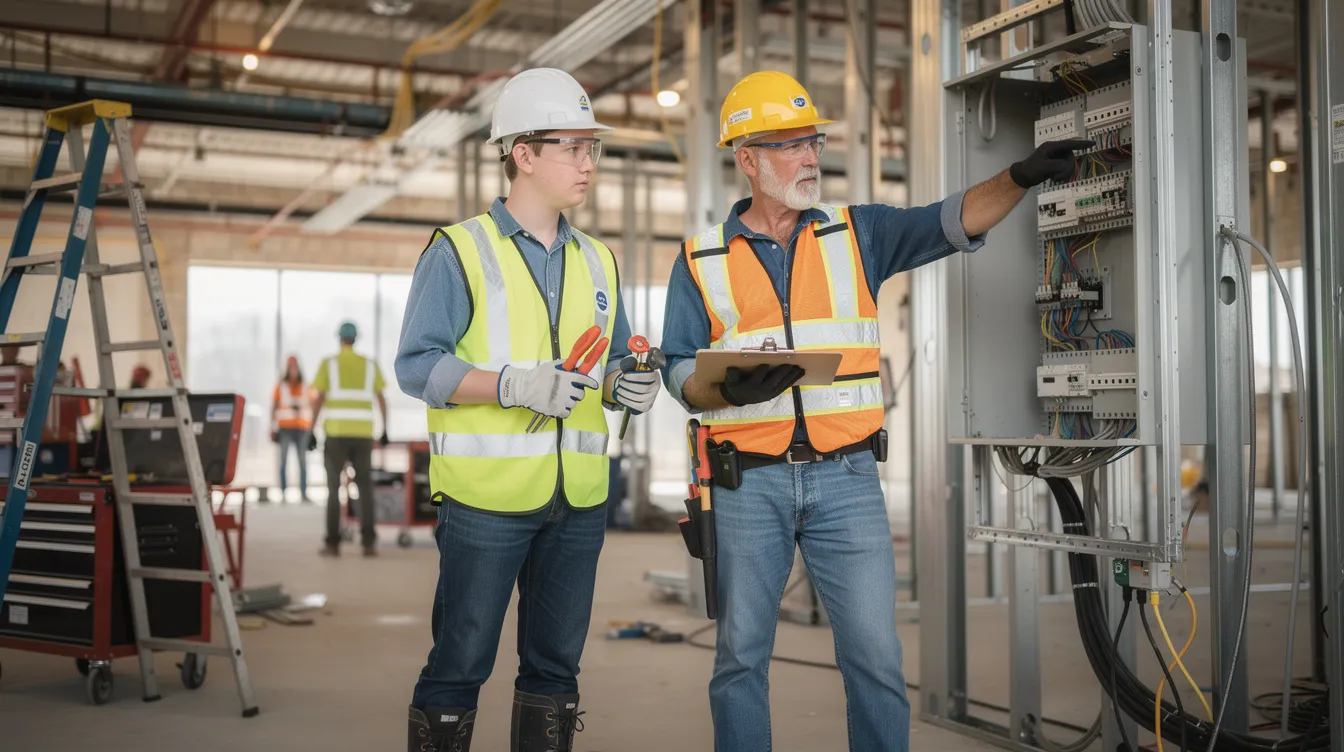
Apprenticeship and Construction Education as the Core Workforce Engine
Apprenticeship and craft education represent the most reliable way for commercial contractors to grow their own talent and reduce dependence on a tightening external labor market. In a region where existing workers are stretched thin, and the pipeline of additional workers is limited, employer-led training is not optional.
- Apprenticeship programs combine hands-on learning with classroom education, producing workers who are safer, more productive, and more loyal to the firms that invest in them. Registered apprenticeships are available for many skilled trade occupations, from electrical and plumbing to HVAC and concrete.
- Aligning apprenticeship intake with project timelines is essential. For example, recruiting electrical apprentices several months ahead of known data center or healthcare facility work in the Carolinas allows firms to have trained crews ready when projects ramp up, rather than scrambling at mobilization.
- Government initiatives support apprenticeships to address skilled labor shortages. In North Carolina, the NC Career Launch Youth Apprenticeship Grant was updated in August 2026 to remove prior eligibility constraints, broadening access for high school students entering construction trades through WIOA-funded programs. Government initiatives also create new career pathways in construction at the federal level by expanding registered apprenticeships.
- Trade programs build local labor markets and offer youth opportunities that feed directly into commercial construction careers. Apprenticeships create new construction career pathways that benefit both workers and employers.
- ABC Carolinas coordinates workforce development in construction, including safety training and merit shop craft education, helping members deliver projects ethically and profitably. Firms should integrate apprentices into clear performance and pay progression plans so participants can see how their skills and earnings grow over time, strengthening retention and reducing turnover.
Recruiting the Next Generation into the Carolinas Construction Workforce
August hiring pressure reinforces a long-standing reality: the region cannot meet commercial demand without bringing more young people into skilled construction careers. Apprenticeships help train young people for construction trades, but firms must be proactive about outreach and messaging.
- Partner with high school CTE and community college programs, support construction education events, and host students on active job sites in Charlotte and the Triangle. High schools can provide construction education to promote workforce development when contractors show up as engaged partners.
- Address common misconceptions among students and parents about construction firms, including outdated views on pay, safety, and technology. Share real wage data, advancement examples from your own crews, and the fact that data center electricians in North Carolina earn roughly 42% more than their peers in other segments. Emerging fields in construction include renewable energy and smart building technologies, offering new entrants career options that did not exist a decade ago.
- The construction industry is rapidly evolving as it integrates advanced technologies. The construction industry increasingly relies on digital planning and management tools such as BIM. Leverage technology demonstrations (drones, tablets, project management software) to show that modern construction companies rely on advanced tools and offer tech-forward roles. Technology improves recruitment and operations in the construction sector, and showcasing that fact changes the conversation with the next generation.
- ABC Carolinas members should coordinate outreach through association events and regional partnerships so the industry delivers a consistent, positive message about construction career pathways across the community.

Retention, Compensation, and Crew Stability During Labor Shortages
With continued labor shortages and active project pipelines, holding onto trained workers is often more impactful than any single hiring initiative. When a significant portion of your workforce turns over, you lose institutional knowledge, safety culture, and project continuity.
- Key retention levers include structured pay progression tied to skills and credentials, predictable scheduling where possible, and investing in field leadership training for foremen and superintendents. Wages and benefits must reflect the growing demand for qualified workers across the construction sector.
- Clear, documented pathways into lead roles reduce turnover because workers can see a future in the company rather than feeling stuck at one level of construction employment. This visibility is a critical challenge for many firms, but it pays dividends in crew stability and client satisfaction.
- Burnout and chronic overtime contribute to safety incidents and project delays. Safety professionals in construction enforce regulations and develop injury prevention procedures that protect crews. Safety training reduces workplace injuries by 30%, and OSHA mandates safety training for construction workers at every level. Effective safety training programs can save companies $4 to $6 for every $1 spent, making them both a moral and financial imperative.
- Firms should recalibrate crew sizes and staffing plans using insights from the mid-year construction forecast and August employment data, rather than running lean and hoping for the best.
- ABC Carolinas offers leadership development, safety training, and peer groups that help member firms design practical retention and crew development strategies tailored to the Carolinas market.
Aligning Staffing Plans with Backlog, Markets, and Project Risk
August employment data should directly inform day-to-day decisions about how many apprentices, journeypersons, and foremen a firm should carry relative to current and forecasted workload through project completion. Staffing is not just an HR function; it is a business and operations decision.
- Implement a simple annual and quarterly process where construction firms compare their current workforce to awarded work, near-term pursuits, and their own construction backlog analysis. This discipline keeps hiring proactive rather than reactive.
- Data center, healthcare, and infrastructure projects in the Carolinas often require higher ratios of specialized trades and safety-focused supervision, which should be reflected in staffing models and budgets.
- When labor markets are tight, contractors may need to sequence construction projects differently, prefabricate where feasible, or cross-train crews to maintain productivity and avoid project delays and crew burnout.
- Involve HR, operations, and field leadership in workforce planning discussions to ensure staffing decisions support both safety and profitability across the construction sector. Owners who treat workforce planning as a strategic priority will outperform those who treat it as a back office task.
How ABC Carolinas Supports Merit Shop Construction Career Pathways
ABC Carolinas serves as a regional hub for workforce development in construction, safety training, advocacy, and member networking across North Carolina and South Carolina. The association helps merit shop construction companies compete and grow by investing in people.
- ABC Carolinas helps members build durable construction career pathways by coordinating apprenticeship and craft training options, hosting safety programs, and connecting firms with local educators and community partners.
- The association provides intelligence on the construction industry labor shortage, job openings in construction, and regional market trends so general contractors and specialty firms can plan recruiting and retention strategies with better data and access to tools that matter; for most firms, these workforce planning decisions shape both recruiting and retention strategy.
- Networking events, peer groups, and recognition programs allow construction companies to share best practices on recruiting, training, and retaining craft professionals. These partnerships amplify the impact of individual firm efforts.
- If your firm has not reviewed its career ladders, apprenticeship intake, or retention practices in the last year, now is the time. Engage with ABC Carolinas workforce programs, review your current construction career pathways, and align your staffing strategies with the realities of the August 2026 labor market.
Next Steps for Carolinas Contractors: Turning Data into Action
The August construction hiring trends confirm what Carolinas contractors already feel on every jobsite: building strong construction career pathways is a strategic necessity, not an aspirational goal. The decline in available labor will not reverse on its own. Here is what to do now:
- Conduct a workforce planning review against current backlog and near-term pursuits. Know where your gap is before it shows up on a project schedule.
- Formalize or update apprenticeship intake plans. Hire and train ahead of the demand curve, especially for electrical, mechanical, and civil trades tied to new work in data centers, healthcare, and infrastructure.
- Document and publish internal career ladders. Make sure every employee can see the bridge from their current role to the next level, with clear milestones, skills, and pay expectations.
- Benchmark your retention practices against industry peers. Use ABC Carolinas resources, peer groups, and workforce intelligence to identify where your business can improve crew stability and productivity.
- Schedule a leadership discussion or retreat segment focused specifically on the construction workforce, using August employment and mid-year forecast data as the starting point. This focus should be annual at minimum.
Disciplined investment in people, training, and safety remains the surest way for merit shop contractors to compete and grow in the Carolinas through the next construction cycle. The firms that build their crews today will be the ones winning and delivering tomorrow’s projects.

Frequently Asked Questions
Below are answers to common questions about this topic.
How often should Carolinas contractors revisit their construction career pathways?
Leadership teams should review formal career pathways at least once per year, and also after major changes in the construction workforce or market conditions. A notable shift in the August employment data, a surge in regional infrastructure awards, or a significant change in your firm’s backlog are all triggers for a fresh review. Annual reviews keep pathways aligned with current wages, credential requirements, and the skills your projects actually demand.
What roles are usually hardest to fill in the Carolinas construction workforce?
Nonresidential specialty trades, including electricians, HVAC technicians, plumbers, and experienced foremen or superintendents, are typically among the most difficult to hire in both North Carolina and South Carolina. The shortage of senior field leadership is particularly acute as retirements outpace the pipeline of promoted workers. Structured apprenticeship programs and intentional foreman development tracks are the most effective responses to this gap.
Can smaller construction firms realistically run apprenticeship programs?
Yes. Even small and mid-size construction firms can participate in registered apprenticeships by partnering with associations like ABC Carolinas, leveraging shared training resources, and coordinating classroom instruction through community colleges or CTE programs while providing on-the-job learning on their own projects. The key is to start with one or two trades and grow from there, rather than waiting until you can build a full program internally.
How do construction career pathways relate to safety performance?
Well-defined pathways usually include progressive safety training at each stage, from new hire orientation through journeyperson certification and into field leadership. This staged approach builds a stronger safety culture, reduces incidents, and lowers costs. Since effective safety programs return $4 to $6 for every $1 invested, career pathways that embed safety at every step also improve the bottom line, help firms maintain their reputation, and avoid project delays tied to incidents.
Where should executives start if they have never documented career pathways before?
Begin with one or two critical trades where your hiring need is greatest. Map the steps from entry-level helper to journeyperson and foreman, including skill milestones, required training, and pay progression at each stage. Engage HR and field leaders to refine requirements, then test the pathway with current employees before rolling it out in recruiting materials. ABC Carolinas resources and peer group discussions can accelerate the process and help you benchmark against what other Carolinas contractors are doing successfully.


