Key Takeaways
- Disciplined construction and management systems outperform last-minute heroics for commercial contractors in North and South Carolina, delivering more predictable margins, schedules, and safety outcomes across complex project portfolios.
- Relying on a few “hero” superintendents or project managers leads to burnout, safety exposure, and margin loss, especially on schedule-sensitive work in Charlotte, the Triangle, and the Upstate.
- Repeatable systems such as structured preconstruction alignment, production planning, daily huddles, and consistent RFI and submittal routines create predictable schedule performance, quality control, and cash flow.
- Merit shop values, including accountability, open competition, and performance-based advancement, are strengthened by clear, repeatable project delivery systems that reward organizational discipline over individual improvisation.
- ABC Carolinas offers construction leadership training, safety management education, and apprenticeship and craft education resources to help members build these systems and develop the field leaders who make them stick.
From Heroics To Systems: What Construction Management Really Means Today
Construction management involves planning, coordinating, and controlling a construction project from conception through completion. The key principles of construction management include clear project objectives, thorough planning, and effective communication. For Carolinas commercial contractors working across Charlotte, the Triangle, and the Upstate, these principles aren’t abstract. They separate a firm that scales from one that stalls.
Yet many firms still operate on what the construction industry calls “heroics.” Think of the all-hands weekend push to open a hospital wing in Charlotte on time, or the late-night change-order marathon on a data center in the North Carolina corridor. These rescues feel productive because they avoid liquidated damages and keep owners satisfied. But they mask structural problems: weak planning, inconsistent handoffs, and project controls that live in one superintendent’s head rather than in a documented system.
The central argument is straightforward. Construction management spans the entire lifecycle, from feasibility and design through construction and closeout. Durable competitive advantage now comes from repeatable construction and management systems that cover all key elements across that full lifecycle, not from one-off rescues by a few experienced leaders. A Construction Executive discussion of “heroic” operating models put it plainly: many contractors still cannot answer basic operational questions in real time because their data is fragmented and their processes are reinvented on every job. For Carolinas firms facing corridor-driven growth and a tight labor market, that fragmentation is a business risk seen across the broader construction world.
What Heroics Look Like On A Carolinas Job And What They Really Cost
Heroic operating patterns are easy to recognize once you know what to look for. Here is what they cost in practice:
- Superintendents working 70-plus-hour weeks to pull subcontractors back on schedule in Raleigh or Columbia, manually tracking constraints that a look-ahead planning process would have surfaced weeks earlier.
- Project managers juggling cost exposures across multiple Upstate jobs in personal spreadsheets because the company lacks a standardized reporting framework.
- Field leaders making scope decisions without formal RFIs, creating undocumented changes that surface as disputes during closeout.
These recurring issues create operational challenges, not isolated emergencies.
The business consequences compound quickly:
- Rework averages roughly 0.38% of contract value before completion and climbs to approximately 0.76% when warranty corrections are included. Across a portfolio of projects, that margin erosion is significant.
- Research across 98 projects with a combined value of approximately $8.5 billion found that estimated margin loss averaged around 23% annually among the firms studied.
- Rushed work and trade stacking from compressed schedules drive recordable incidents, raising a firm’s EMR and insurance costs.
The hidden costs matter just as much. Burnout of top performers leads to turnover, and when those individuals leave, their undocumented knowledge walks out the door, so teams spend time solving the same problems again on the next project. Clients experience wildly different quality and communication depending on which superintendent is assigned, making it nearly impossible to build a consistent reputation across the I-85 and I-77 corridors.
Individual heroics will always be needed occasionally. Running an entire portfolio on crisis management is not a growth strategy.
Core Construction And Management Systems That Replace Firefighting
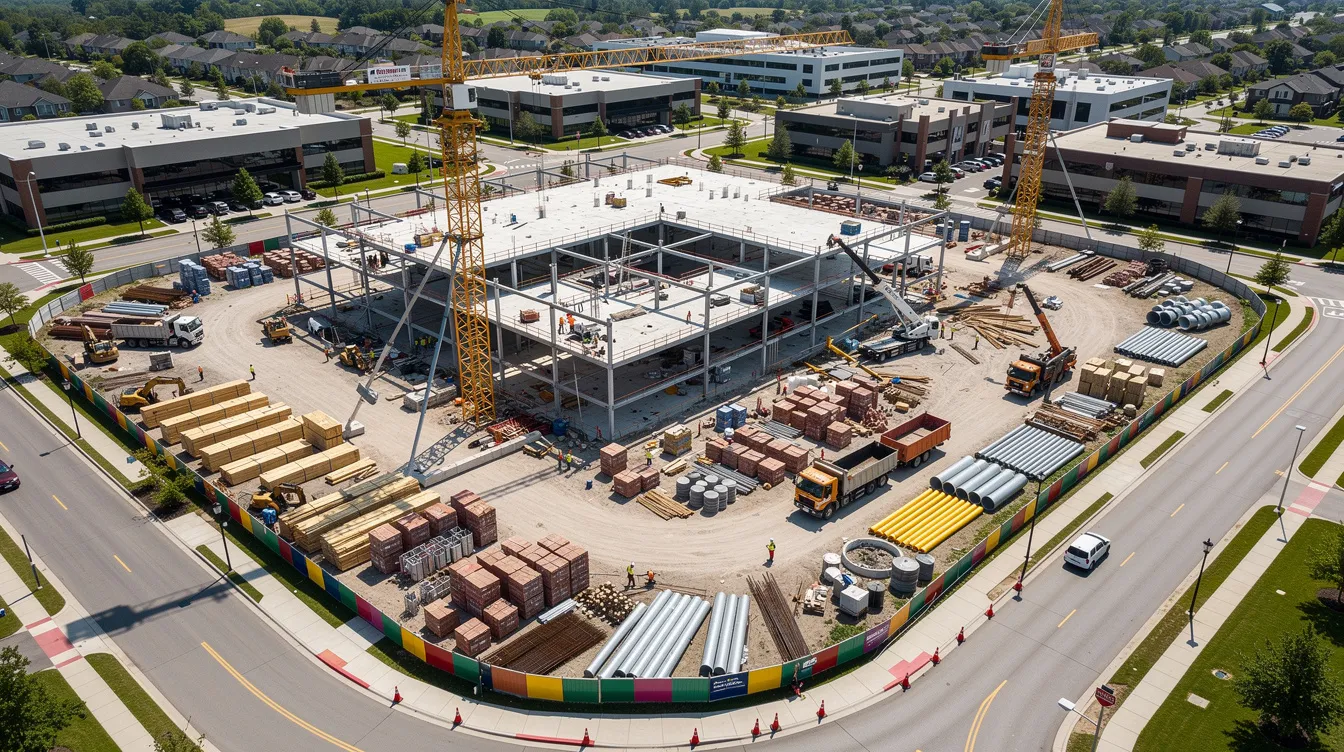
Management provides tools such as scheduling, budgeting, risk assessment, and communication systems to keep projects balanced. The following core systems form the operational framework that replaces firefighting with repeatable execution.
Construction uses six main project delivery methods, ranging from Design-Bid-Build (also known as traditional project delivery) to integrated project delivery and beyond. Within any of those methods, these systems apply:
- Standardized preconstruction alignment. Setting shared expectations among owners, general contractors, trades, and suppliers on scope, constraints, schedule, and procurement lead times before mobilization.
- Structured project delivery systems. Defined phases and stage gates with clear decision rights, roles, and accountability at each step. Construction Manager at Risk accepts project cost risk, improving communication between owners and contractors. Integrated project delivery shares risk equally among all stakeholders, improving collaboration across the project team members.
- Look-ahead and production planning routines. Weekly or biweekly sessions where field leadership identifies work-ready tasks, manages constraints, and coordinates deliveries.
- Formal RFI and submittal discipline. Consistent tracking, review deadlines, and consolidated packages that prevent the ad hoc decisions that create rework.
- Change-order management. Documented processes for capturing, pricing, and approving changes with clear cost and schedule impact assessments.
- Closeout and lessons-learned reviews. Post-project debriefs that feed back into estimating models, risk registers, and scheduling templates.
Effective documentation improves process efficiency by reducing errors when these systems work together as connected parts rather than stand-alone routines. Communication and coordination among stakeholders prevent misunderstandings in construction projects. Design-Build projects typically have shorter timelines than traditional methods, and Public-Private Partnerships often involve affordable housing projects, with the same systems also applying on infrastructure work, but regardless of delivery method, the systems above remain the operational backbone.
Document, train, and consistently apply these systems across Charlotte, Triangle, and Upstate project teams. Don’t reinvent them for every job.
Examples Of Repeatable Practices That Work In The Field
- Preconstruction kickoff. A standard agenda that aligns owner, general contractor, key trades, and suppliers on scope, milestones, constraints, and site logistics for a healthcare or higher-ed project. Teams walk away with a shared document, not assumptions.
- Weekly look-ahead planning. Foremen and superintendents commit to specific work-ready tasks, identify constraints, and coordinate deliveries to congested urban sites in downtown Charlotte or Raleigh. Collaborative planning helps ensure those commitments are specific, work-ready, and complete before crews execute them.
- Daily huddle structure. Ten to fifteen minutes each morning: safety topic first, yesterday versus today plan, constraint check. Applied consistently across multiple crews and trades, this practice reduces surprises and builds accountability.
- Closeout and lessons-learned review. A structured debrief that captures what went right, what failed, and what production plans need adjustment. Findings feed directly into estimating, risk assessment, and scheduling templates for the next round of bids.
Why The Carolinas Market Rewards Discipline Over Improvisation
In July 2026, ABC Carolinas reported a construction backlog indicator of 8.1 months in North Carolina and South Carolina, down from 8.8 months in April 2026. That softening, paired with tight margins and labor shortages affecting over 90% of firms, means the room for error is shrinking. Well-documented processes help organizations pivot effectively during change, and the current environment demands exactly that.
- Charlotte, the Triangle, and Upstate South Carolina are absorbing a mix of data centers, advanced manufacturing, logistics warehouses, and healthcare projects. Duke Energy has secured 7.6 gigawatts in energy service agreements tied to data center clients, with 5 gigawatts already under construction. These projects carry aggressive schedules and tight commissioning dates.
- Corridor-driven development along I-85, I-77, and I-95 is pressuring labor availability and supply chains. When multiple projects compete for the same subcontractors and materials, last-minute schedule acceleration becomes especially expensive.
- Effective collaboration can significantly improve project outcomes. Firms that consistently deliver on time and on budget earn repeat work and negotiated opportunities, giving merit shop contractors a measurable edge over competitors who rely on low bids backed by improvised execution.
- Standardized systems let leaders shift people and equipment between jobs quickly without sacrificing safety or quality. That scalability is crucial when a company is running multiple large projects in different Carolinas metros simultaneously.
Field Leadership: Where Systems Succeed Or Fail
Construction managers, superintendents, and foremen are the “last planners” who either bring the company’s systems to life or fall back on personal habits and heroics. Process ownership ensures accountability for maintaining workflows, and that ownership lives in the field.
- Effective field leadership looks like consistent daily huddles, clear work-ready criteria before tasks are scheduled, proactive RFIs filed before problems escalate, and respectful but firm coordination with trade partners; when done well, these routines improve productivity and accountability.
- Leadership buy-in is crucial for process implementation success. When leaders at every level visibly follow the system, crews follow, and that consistent follow-through helps them handle day-to-day challenges without reverting to heroics. When leaders skip steps, the system erodes within weeks.
- Accountability must be paired with coaching and support. Field leaders should not be punished for raising problems early. They should be expected to use the agreed systems to resolve them, with clear escalation paths to project executives.
- Governance structures help maintain effective processes over time. Regular check-ins between project managers and superintendents keep routines from drifting back toward improvisation.
Building Leaders Through Training, Apprenticeship, And Peer Learning
- Formal construction leadership training gives field leaders practical tools for planning, communication, and crew management. Superintendent and foreman development programs address the gap between technical skills and the leadership skills needed to run a system-driven operation.
- Apprenticeship and craft education pipelines develop crews that understand standard work practices, safety expectations, and quality benchmarks from day one, reducing the ramp-up time on every project.
- Membership and peer learning through ABC Carolinas roundtables, peer groups, and events give project executives a board of peers to benchmark practices, borrow templates, and share insights from real Carolinas projects.
- Employees often resist new processes due to time constraints. Investing in people and systems together addresses that resistance, allowing firms to move from personality-driven performance to organization-wide excellence.
How Systems Protect Safety, Quality, And Profitability At The Same Time
The primary objective of construction management is to deliver the required scope and quality safely. Too often, firms treat safety, quality, and profitability as separate programs. In practice, the same operational discipline drives all three.
- Consistent planning and sequencing reduce rushed tasks, trade stacking, and improvisation that lead to OSHA recordables and near misses. In North Carolina, construction fatalities have represented between 20% and 40% of all workplace deaths in recent years. Safety management makes worker and public safety a core project priority, not a standalone initiative bolted onto an otherwise chaotic operation.
- Defined quality checkpoints, RFI workflows, and submittal reviews cut down on rework, warranty calls, and punch list delays that quietly erode profits. Cost management includes budgeting, managing expenditures, and performing value engineering to optimize costs across the project lifecycle.
- Risk management involves identifying potential technical, financial, contractual, environmental, and schedule risks. Disciplined change-order processes and cost tracking support better subcontractor risk management, with clearer expectations and faster downstream issue resolution.
- North Carolina’s total recordable case rate for construction dropped to 1.0 per 100 full-time employees in 2024, down from 1.3 in 2023. That improvement suggests that when the construction industry commits to routine-based safety culture, the numbers move. Strong safety culture is reinforced when daily work follows stable, predictable routines.
Lean Construction And Continuous Improvement For Carolinas Contractors
Lean construction reduces waste and enhances value creation for owners. In practical terms, it means identifying where time, materials, and labor are being spent on activities that do not add value, then adjusting production plans and workflows to eliminate those losses. That thinking was popularized in part by The Machine That Changed the World and its manufacturing influence on lean methods. Lean construction emphasizes continuous improvement and respect for people, aligning naturally with merit shop principles and performance-based competition.
- The Last Planner® System improves workflow reliability in construction by engaging the people closest to the work in planning commitments, then measuring plan reliability week over week.
- Value stream mapping identifies non-value-added activities in projects. For example, mapping the RFI process often reveals that days or weeks are lost to unclear routing, missing information, or redundant reviews.
- Target Value Design aims to reduce costs without compromising quality, making it especially relevant for data center and healthcare projects where owners demand both performance and budget discipline.
- Lean construction emphasizes collaboration to reduce waste and improve efficiency. The goal is not a one-time “lean project” but a culture of continuous improvement where teams routinely adjust and refine their construction and management systems based on data and field feedback, which can raise productivity over time.
Using Data And Technology To Support, Not Replace, Good Systems
Construction management increasingly relies on technologies like Building Information Modeling to streamline processes and improve coordination across trades. But technology enables good systems, not a substitute for them.
- Project management software, mobile field tools, and dashboards can improve real-time visibility into schedule performance, cost trends, and safety observations across multiple projects in the Carolinas. That data helps construction managers spot outliers before they become crises.
- Adding too many disconnected tools creates data silos and drives more heroic “spreadsheet wrangling” by project managers. The environment should simplify decision-making, not complicate it.
- AI and analytics deliver the most value when they standardize processes, highlight more variance than expected, and scale best practices across jobs rather than simply generating more reports.
- Start by digitizing one or two core workflows, such as daily reports or RFIs, then build a consistent technology stack around those standardized processes. Integrated project delivery improves collaboration among all project stakeholders, and the right choice of tools should support that collaboration rather than fragment it.
Practical Steps To Shift From Heroics To Repeatable Systems
Moving from heroics to repeatable operations does not require a company-wide overhaul on day one. Change management is essential for successful process adoption, and the most effective approach is incremental, measured, and top-down.
- Start small by standardizing one high-impact routine. Standardize the structure and timing of weekly coordination meetings or the process for owner change requests. Measure results over several projects before expanding.
- Map your current project lifecycle from pursuit through closeout. Documentation helps teams understand current workflows before designing improvements. Identify where work depends on individual heroics instead of defined processes.
- Form a cross-functional working group of project executives, superintendents, and key trade partners to design and pilot improved construction management routines on a flagship Carolinas project.
- Establish simple metrics: schedule reliability, rework rate, overtime hours. Track progress against those metrics over time. Lack of documentation creates process inefficiencies, so even basic measurement builds accountability.
- Engage with ABC Carolinas membership and peer learning networks to benchmark practices, borrow templates, and manage the implementation effectively. Peer groups and roundtables offer a free exchange of proven methods from contractors who have already navigated this transition.
How ABC Carolinas Supports Better Construction And Management Systems
ABC Carolinas helps commercial contractors in North and South Carolina build organizations that win work and deliver it safely, profitably, and with excellence. Several resources directly support the shift from heroic operations to system-driven performance.
- Construction leadership training helps project managers, superintendents, and foremen develop the planning, communication, and accountability skills that make repeatable systems function in the field.
- Safety management education programs connect operational routines with practical safety outcomes, reinforcing the link between planning discipline and fewer incidents on active job sites.
- Apprenticeship and craft education offerings strengthen the frontline workforce, making it easier to implement standardized work practices and lean construction methods.
- Membership and peer learning opportunities, including regional meetings, roundtables, and recognition programs such as excellence in construction awards, showcase system-driven project success and give leaders access to the knowledge and resources of experienced Carolinas contractors.
FAQ: Construction And Management Systems For Carolinas Contractors
Below are answers to common questions about this topic.
How quickly can a mid-sized Carolinas contractor see results from improving construction and management systems?
Visible improvements in schedule reliability and overtime reduction can often appear within one or two projects, typically six to eighteen months, even when starting with just a few standardized routines like daily huddles or weekly look-ahead planning. Bigger cultural change, including reduced reliance on heroics and more consistent project performance across offices, typically takes several years of sustained leadership attention. Choosing a single pilot project in Charlotte, the Triangle, or the Upstate is a realistic starting point that keeps risk low while building internal champions for the broader program.
Do smaller firms with only a few active projects really need formal systems?
Even firms running only two or three commercial jobs at a time benefit from consistent preconstruction checklists, daily huddles, and basic cost controls. These routines help smaller contractors grow without losing quality or burning out their most experienced leaders when they land a larger job along the I-85 or I-77 corridor. Lightweight documentation and simple routines are enough at first, as long as they are followed consistently and improved over time. The design process for these routines does not need to be complex to deliver greater efficiency and stakeholder satisfaction.
How do we get trade partners and subcontractors on board with new processes?
Invite key trade partners into planning conversations early, clearly explain expectations, and show how reliable schedules and information flow benefit their crews. Incorporating standard requirements, such as participation in pull-planning sessions or daily huddles, into contracts and preconstruction meetings for North and South Carolina projects sets clear expectations from the start. Sharing simple metrics and celebrating wins, such as reduced rework or safer job sites, helps build buy-in among customers and partners over time. The major benefits of this collaboration extend to every firm involved.
What if our most experienced superintendents resist standardized systems?
Resistance from high performers is common because they built their reputations on heroic problem-solving and personal judgment, drawing on extensive field experience. The right approach is involving those leaders in designing new routines so their knowledge is embedded in the standards. Frame systems as a way to extend their impact across more projects, not to limit their authority. Pairing peer coaching with clear executive expectations is usually more effective than mandates alone. When responsible leaders see their expertise scaled across the organization, resistance often transforms into advocacy.
How can ABC Carolinas specifically help our company move away from “hero” culture?
ABC Carolinas offers leadership development programs, safety management education, and apprenticeship and craft education as building blocks for system-driven operations. Member events and peer groups give executives a chance to see how other Carolinas contractors have implemented repeatable systems and to learn from their future-focused strategies. Connecting with ABC Carolinas staff or visiting chapter resources is the best next step for identifying the right entry point based on your firm’s size, markets, and current operations.


