


Construction accounting services go well beyond entering invoices and reconciling bank statements. They give construction companies job-level visibility into costs, billing positions, and cash, so owners and executives can act before problems compound. Construction accounting involves specialized financial management tailored to project-based needs, and it covers territory that a general bookkeeper or small-business CPA rarely touches.
The stakes for contractors in the Carolinas are concrete. The average payment cycle in construction is 83 days. Over 80% of construction businesses face cash flow challenges. With tight margins, retained funds, and multi-project workloads across Charlotte, the Triangle, Upstate South Carolina, and beyond, construction businesses need effective cash flow management to cover upfront expenses before receiving client payments. This article is a decision guide for construction firm owners and executives, not a pitch for a specific provider. It covers WIP reporting, job costing, retainage, billing, cash flow forecasting, payroll, and surety readiness. ABC Carolinas’ mission is to help merit shop contractors across North Carolina and South Carolina build safe, profitable, well-managed operations, and sound financial management is part of that foundation.
True construction accounting support is a bundled set of services, not a single task. The core services include bookkeeping and data entry (vendor invoices, bank reconciliations, cost codes); project billing and collections (pay applications, change order reconciliation, receivables tracking); payroll administration (wage calculations, labor allocation by job and cost code, payroll tax coordination); financial statements and controller-level oversight (monthly closes, variance analysis, balance sheet review); cash flow forecasting (rolling projections of collections, payroll, subcontractor payments, and equipment outlays); and tax planning and coordination with outside CPAs.
As Construction Executive reported in November 2026, specialized construction accounting services can include bookkeeping, project billing, payroll, financial reporting, cash-flow forecasting, tax planning, and controller support. Specialized construction accountants prepare financial statements that inform strategic business decisions and provide actionable insights for owners and executives rather than just satisfying annual filing requirements. Tax planning is essential in construction accounting to navigate complex tax regulations and compliance issues, especially when a contractor operates across state lines or takes on federally funded work.
Some are day-to-day tasks: processing invoices, coding costs to the right job, and entering time. Others are higher-level review and analysis: monthly closes, commentary on swings in margin or billing positions, and cash forecasts. Contractors may get these services from an internal team, an outsourced construction accounting firm, or a hybrid. A mid-sized construction business in the Carolinas should receive a monthly financial package, not just an annual tax return file.
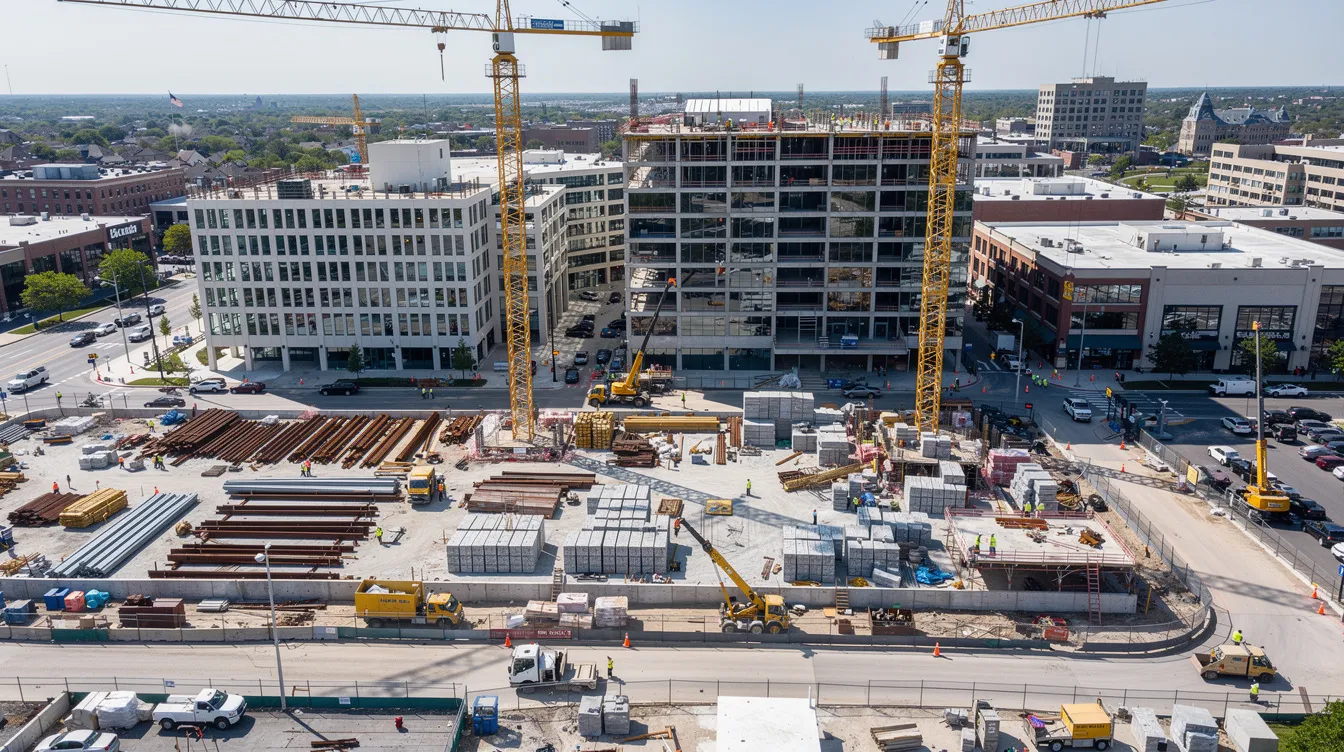
Construction accounting revolves around projects and contracts, not a single storefront or product line. Construction accounting differs from standard corporate accounting due to long project lifecycles and subcontractor complexity. Contractors face unique billing and revenue-recognition challenges because transactions are project-based.
The core differences include job costing at a detailed cost-code level, retainage and step-down retainage, change orders and claims, overbilling and underbilling, and mobile crews working across counties and states. Construction accounting enhances financial visibility by tracking expenses tied to specific jobs, so a contractor can see whether a particular school renovation in Wake County is eating margin before the loss shows up in a quarterly company total.
Consider a hypothetical: a specialty contractor running simultaneous school projects in the Triangle and Upstate South Carolina. Each project has different pay application deadlines, retainage terms, and labor rates. One is state-funded with no prevailing wage requirement; the other has a federal funding nexus triggering Davis-Bacon certified payroll. A capable general CPA may still lack experience with WIP schedules, AIA-style billing, or construction-specific revenue recognition. Construction accounting services answer project questions first, then company-wide questions.
Job costing and WIP schedules are the backbone of construction accounting. They determine whether a contractor can track progress, catch problems, and report reliably to sureties and lenders.
Job costing tracks all costs associated with specific projects, including the direct, project-specific job costs. It captures every labor hour, material purchase, equipment charge, and subcontractor invoice by job and cost code. Job costing includes direct costs like materials and labor, plus allocated indirect costs. Labor costs typically account for 20% to 40% of total project costs, which makes accurate time capture and allocation critical. Construction job costing helps identify cost overruns early, before they erode the project budget beyond recovery.
A good monthly WIP report should show:
WIP accounting tracks costs and revenues throughout project lifecycles. The Percentage-of-Completion method recognizes revenue incrementally as projects progress, matching earned revenue to the work performed. When a contractor is underbilled, cash is tied up in work performed but not yet invoiced, which also affects compliance with contractual billing obligations. When overbilled, the numbers can mask looming cost overruns if no one reviews the estimate to complete, which can undermine financial accuracy as billings drift from earned revenue. Construction accounting improves project profitability by tracking costs and revenues in real time, catching misalignment before it becomes a surprise at closeout.
A construction-focused accounting partner should prepare reconciled WIP schedules and explain major month-to-month swings as a best practice. Disciplined WIP reporting also supports backlog understanding, giving project managers and executives an accurate picture of committed work versus capacity.

Even profitable construction companies can run short on cash if billings and collections lag behind project costs, and payment delays can further strain cash. The billing workflow on a construction contract involves preparing pay applications (often on AIA-type forms), incorporating approved change orders, calculating retainage, submitting on tight monthly deadlines, and following up on past-due invoices.
According to a November 2026 Construction Executive article, construction accounting services can include preparing payment applications, maintaining retainage schedules, reconciling approved change orders, tracking receivables aging, and following up on overdue accounts. Each task requires familiarity with construction contracts and industry norms that a general bookkeeper is unlikely to have.
Retainage is typically 5% to 10% of progress payments, withheld by owners or general contractors. Retainage ensures contractors complete all project tasks satisfactorily, but it can create cash flow challenges and directly affect working capital, especially when multiple jobs withhold funds at the same time and increase financial risk. A contractor with $5 million in open contracts and 10% retainage has $500,000 in working capital locked up. Most states regulate retainage percentages and release timelines; North Carolina, for example, caps retainage on public projects at 5% and requires release within 60 days after substantial completion. Retainage is often released after project completion and final inspections, meaning months can pass before those funds reach the contractor’s account.
Carolinas contractors should ask prospective accounting partners to show sample billing calendars, retainage reports, and receivables aging reports. Consistent collections reporting is also valuable when discussing terms with suppliers, subs, and lenders along the I-85, I-77, and I-95 corridors, and clear billing processes help define billing around approved changes in project scope.
Payroll in construction is more complex than in most industries. Multiple different trades carry different pay rates. Jobs span different tax jurisdictions, which can affect payroll taxes. Certified payroll manages regulatory requirements for labor compliance and reporting on projects with a federal funding nexus, even though neither North Carolina nor South Carolina has a state-level prevailing wage law.
Construction Executive noted that construction payroll services may cover processing approved time records, calculating wages, allocating labor costs by job and cost code, and coordinating payroll tax reporting, along with support for prevailing wage records, fringe benefits, and certified payroll documentation. Accurate labor allocation is not just a compliance matter; it is central to managing payroll and job-cost accuracy across projects, and it drives accurate job costing and WIP. If labor hours are coded to the wrong job or cost code, every downstream report is unreliable.
Integration with construction accounting software, time-tracking tools, and field apps reduces manual data entry and errors. Carolinas contractors should ask prospective providers about their experience with multi-state payroll across NC and SC, their approach to certified payroll on public work, their process for approving and locking time each week, and how labor costs feed automatically into job cost reports. Contractors remain responsible for approving time, setting pay policies, and hiring decisions, even when using outsourced payroll.
The difference between raw data and decision-ready reporting is the difference between a filing cabinet and a briefing. Executives running a growing construction business need the latter, because strong reporting gives leadership better control over financial decisions.
A monthly controller-level package from a construction-ready provider should include an income statement, balance sheet, cash-flow snapshot, receivables aging, WIP schedules, and commentary on major changes. As the Construction Executive described, this kind of controller-level financial reporting is standard in specialized construction accounting services.
Accurate financial reporting helps secure financing and bonding for construction projects. Effective project budgeting and forecasting are crucial for monitoring actual spending against projected expenses. Cash flow forecasting includes incoming and outgoing money: expected collections, payroll obligations, subcontractor payments, equipment purchases, material costs, and future project commitments. Construction Executive noted that an adviser may prepare a rolling cash forecast that incorporates all these elements.
Updating cash flow forecasts weekly is a proactive approach that helps manage financial risks. Contractors using predictive forecasting report 68% fewer cost overruns than those relying on backward-looking reports alone. A three-to-six-month forecast helps a contractor in Charlotte or the Upstate decide when to add crews, buy equipment, or plan around operating expenses before bidding another large job. Stronger, consistent reporting supports surety and lender conversations by providing WIP, backlog, retainage tracking, and billing position detail. Accurate internal financials with real-time visibility let a contractor act on broader market forecasts rather than just read about them.
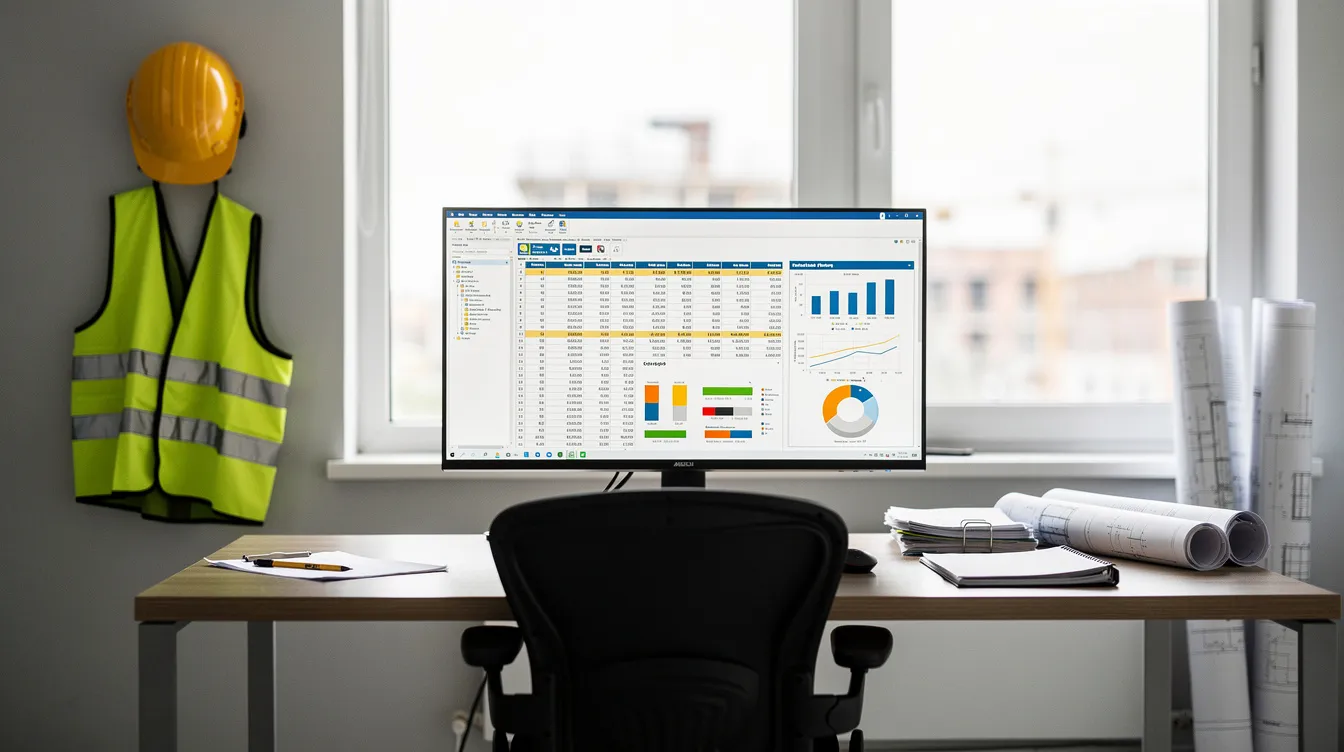
Better accounting ties directly to field realities: fewer surprises on job margins, more predictable payroll cycles, and smarter use of crews and equipment. Timely job cost and WIP data help project managers catch productivity issues, material overruns, or scope creep early enough to issue change orders or adjust the plan.
Specialized accounting mitigates financial risks caused by project delays, unexpected delays, and unexpected costs. Clean data makes several financial ratios actionable. Liquidity ratios measure a company’s ability to pay short-term debts. Profitability ratios show how effectively revenue turns into profit. Leverage ratios assess debt relative to equity and earnings. Efficiency ratios highlight how well resources generate revenue. Contractors aim for a Days Sales Outstanding (DSO) under 50 days, which requires disciplined billing and collections reporting.
Accurate billing, retainage tracking, and receivables management improve cash flow and let contractors weather slow payments while meeting obligations to subs and vendors. Risk management benefits include early visibility into loss-making jobs, cleaner documentation for disputes, and a stronger position with sureties when seeking larger bonding capacity. For merit shop contractors in the Carolinas, disciplined financial reporting supports fair and open competition by allowing bids that reflect actual costs and risks instead of guesswork. Construction accounting services are not just a cost; they protect profit margins and free leaders to focus on safety, workforce development, and growth.
Many construction firms outgrow a general CPA or basic in-house bookkeeper without realizing it until problems appear. Here is what to look for.
Green flags that a provider understands construction: regular WIP schedules delivered within days of month-end; job cost reports broken down by cost code; retainage and over/underbilling reporting on every active job; familiarity with construction-specific software (Sage, Viewpoint, Foundation, Procore); and proactive cash flow forecasts tied to project commitments.
Red flags that signal a gap: financial statements prepared only at tax time; no job-level reporting or project expense detail; confusion about AIA billing or retainage release; delays of 30 or more days in closing the books each month; and surprise tax bills stemming from inaccurate estimates or missed planning opportunities.
Ask your current CPA or outsourced firm: How many of your clients are construction companies? How do you handle multi-project WIP? What does your standard monthly reporting package include? Can you show me a sample retainage aging or overbilling report? Compare what you receive today with the service areas described above, and identify the single largest reporting gap affecting your company.
Choosing a construction accounting partner is a strategic finance decision, similar to selecting a surety or a project-management platform. Ask about experience and focus: what percentage of their clients are in the construction industry, and what types of construction companies they serve (general contractors, specialty contractors, home builders). Ask about scope: do they handle job costing, WIP, payroll, cash flow forecasting, and tax coordination? Ask about software capabilities: what construction accounting software do they support, and do they integrate with field tools?
Ask about responsiveness: what is the cadence of deliverables (weekly payroll, monthly financials, quarterly reviews)? Ask about surety and lender support: can they produce WIP packages with explanations of cost-to-complete assumptions, retainage, and billing positions? Construction Executive noted this as a core expectation of specialized construction firms. Look for specific construction examples in their answers, not generic small-business references. Carolinas contractors working across multiple metros should ask explicitly about multi-entity and multi-jurisdiction experience.
Ask prospective providers for a sample anonymous monthly financial package to see how clearly they present project and company performance. Treat the first 90 days with a new provider as a trial period, tracking improvements in close time, billing timeliness, and cash-flow visibility. If those metrics don’t improve, the fit may not be right.
ABC Carolinas does not provide third-party construction accounting services. The chapter focuses on helping members build strong, well-governed construction businesses. Peer groups, leadership programs, and events give executives a forum to compare approaches to WIP reporting, cash flow management, and working with construction accounting firms.
ABC Carolinas’ advocacy work in Raleigh and Columbia can influence the regulatory environment that shapes tax, payroll, and contracting practices; strong accounting data helps contractors understand those impacts and provide clients with informed perspectives. Contractors should view construction accounting as one pillar in a broader framework that also includes safety, workforce development, strategic planning, and succession planning, all supported by the ABC Carolinas community.
Construction accounting services turn project data into timely, reliable information for informed decisions on bids, staffing, equipment, and growth. Contractors should expect accurate job costing and WIP, disciplined billing and retainage management, reliable cash flow forecasting, compliant job-linked payroll, and lender- and surety-ready reporting.
The immediate action: compare your current accounting support against the capabilities listed here and identify the gaps affecting cash flow or profitability. Visit ABC Carolinas to explore membership and upcoming finance and risk-management programming built for construction firms in North Carolina and South Carolina.


