


Completion method revenue recognition is the practice of recording construction revenue over the life of a project based on measured progress, rather than waiting until the work is finished. For commercial contractors in Charlotte, Raleigh, or Greenville, this means your financial statements reflect revenue earned as your crews and subcontractors advance the job, not just when the owner signs off on final completion.
The percentage-of-completion method allows firms to recognize revenue over time as they satisfy performance obligations under ASC 606. Under this approach, your accounting team calculates how far along each project stands (typically using the cost-to-cost method) and records the proportional share of the total contract price as earned revenue for each reporting period. ASC 606 is the main standard for recognizing construction revenue and governs revenue recognition for the percentage-of-completion method, setting the rules most commercial firms follow. Revenue is recognized evenly over time in the over-time method, which is how the completion method operates in practice, rather than at a single point. By contrast, the point-in-time recognition method recognizes revenue entirely at a single point in time, which applies to simpler transactions outside long-duration construction work.
On your balance sheet, this shows up in familiar line items: Construction in Progress, Costs in Excess of Billings (underbilling), and Billings in Excess of Costs and Estimated Earnings (overbilling). These flow through to the income statement and cash flow statement, giving lenders and sureties a view into your financial health.
Related methods include the cost-to-cost method (the most common for complex commercial work in the Carolinas construction industry), the efforts expended method (based on labor hours or crew days), and the units of delivery approach. Each measures project progress differently, but all fall under the completion method umbrella.
Quick example: A $5 million office build in the Triangle with $4 million in total project costs. If your firm has incurred $1.8 million in costs to date, your percentage complete is 45%, and your earned revenue is $2.25 million. That figure, not your billings, is what drives your income statement.
The 2026 market in North Carolina and South Carolina demands tighter completion method revenue recognition from every commercial contractor chasing growth. High interest rates, cautious lenders, and elevated material and labor costs have narrowed the margin for error. The AIA’s Consensus Construction Forecast projects nonresidential building spending growing only about 0.7% in commercial segments this year, with strong demand limited to sectors like data centers, healthcare, and institutional work. For Carolinas firms, that means sureties and owners are scrutinizing financial performance more closely than in recent boom years.
The percentage of completion method provides a consistent financial view, which is exactly what banks and bonding companies want to see when they compare your 2024, 2025, and 2026 financial statements. The percentage of completion method is favored for long-term contracts where costs and progress can be reliably estimated, and that reliability is what separates contractors who earn larger bonds from those who plateau.
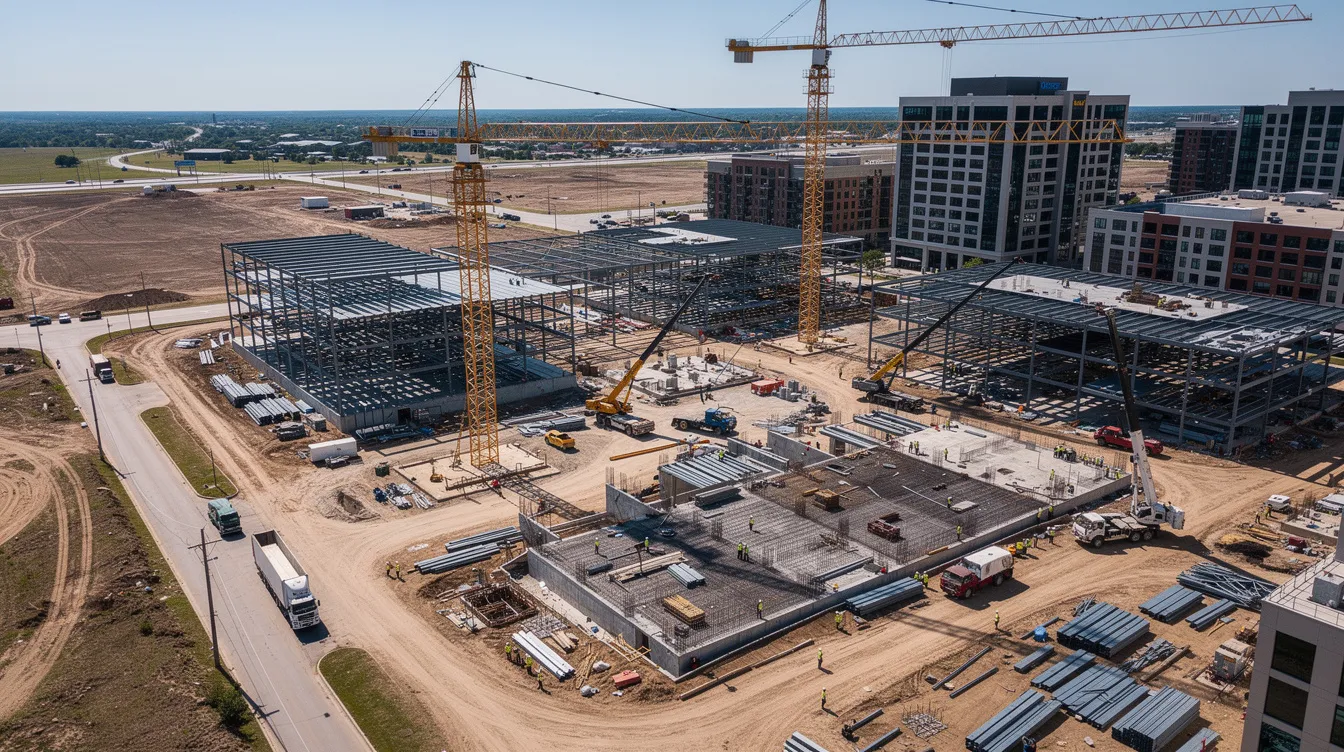
The relationship between estimated total cost, percent complete, earned revenue, and estimated gross profit is the backbone of completion method accounting. On a typical commercial project, your team sets an initial budget (estimated total cost), then compares costs incurred to date to that budget to determine how far along the job is, with percent complete measured against total project costs. The percentage-of-completion method matches revenue with the actual efforts and expenses incurred, so your income statement reflects work performed rather than cash collected or invoices sent.
The cost-to-cost method is commonly used to calculate completion percentage:
Consider a $3 million contract in Greenville with $2.2 million in total estimated contract costs. If your firm has spent $1.46 million, you are roughly 66.7% complete, and you have recognized about $2 million in revenue to date. Your estimated gross profit at completion is $800,000, and you have earned approximately $534,000 of that profit so far.
The WIP schedule drives this entire process, feeding the amounts on both your income statement and balance sheet. Advantages of the percentage-of-completion method include timely financial reporting and better matching of revenue and expenses, which gives leadership an accurate financial picture of every active job.
When cost-to-complete estimates grow stale (because subcontractor pricing, direct labor rates, or material costs have shifted), the percent complete number drifts from actual project progress. This is often where cost overruns first appear in WIP reporting. For fast-moving work in Charlotte and the Triangle, estimates can become outdated within weeks. Misaligned WIP and general ledger balances signal problems to anyone reviewing your financials: large swings in overbilling and underbilling from quarter to quarter, or unexplained changes in projected gross profit, are the kind of red flags that make sureties and lenders ask hard questions.
A strong WIP report is the single most important document in construction accounting for communicating your company’s financial health to outside stakeholders. WIP reports track costs and revenues throughout construction projects and provide a snapshot of project financial performance at any given point.
Every WIP schedule built on the completion method should include these columns:
| WIP Column | What It Shows |
|---|---|
| Contract value (including approved change orders) | Total contract price the owner has committed to pay |
| Estimated total cost | Your current, updated projection of all job costs |
| Costs incurred to date | Actual cost data recorded against the project |
| Percent complete (cost to cost) | Dividing costs incurred by estimated total cost |
| Earned revenue to date | Revenue earned based on percentage complete |
| Billed to date (progress billings) | What you have invoiced the owner |
| Overbilling / Underbilling | The gap between earned revenue and billings |
| Estimated profit at completion | Projected margin when the project is done |
WIP reports include contract value, costs to date, and earned revenue, and they help identify overbilling and underbilling situations. Overbilling occurs when contractors invoice before completing work, creating a liability on the balance sheet (Billings in Excess of Costs and Estimated Earnings). Underbilling occurs when earned revenue exceeds billed amounts, creating an asset (Costs in Excess of Billings).
Numeric example: On a $3 million job where you have earned $2 million based on cost-to-cost but only billed $1.5 million, you carry $500,000 in underbilling. That amount shows as a contract asset on your balance sheet. If the pattern reverses (you bill $2.3 million but have only earned $2 million), you carry $300,000 in overbilling as a liability.
For Carolinas contractors, lenders and sureties often request detailed WIP schedules at least quarterly, making these columns central to external credibility. Many ABC Carolinas members have moved from spreadsheets to construction accounting software that can produce WIP reports tied directly to job cost data, improving accuracy and consistency in every reporting period.
Most commercial construction firms in the Carolinas use some form of cost-to-cost method under the broader completion method umbrella, but alternatives exist for specific project types. Companies use either the input method or the output method to measure progress, and the right choice depends on what best reflects work completed.
The key difference between percentage-of-completion and completed-contract methods is the timing of revenue recognition. For multi-year institutional, infrastructure, or industrial work in the Carolinas, sureties and banks strongly prefer the completion method because it provides visibility into financial performance throughout the contract period.
Fast growth corridors in Charlotte, the Triangle, and the Upstate are creating operational strain for commercial construction companies: more jobs, more subcontractors, and more financial data flowing through project management and accounting systems simultaneously. That volume increases the risk of sloppy completion method revenue recognition.
These issues often show up as chronic underbilling, sudden margin write-downs late in a job, or surprise losses that erode trust with lenders, sureties, and owners. Growth without discipline can weaken a balance sheet instead of strengthening it.
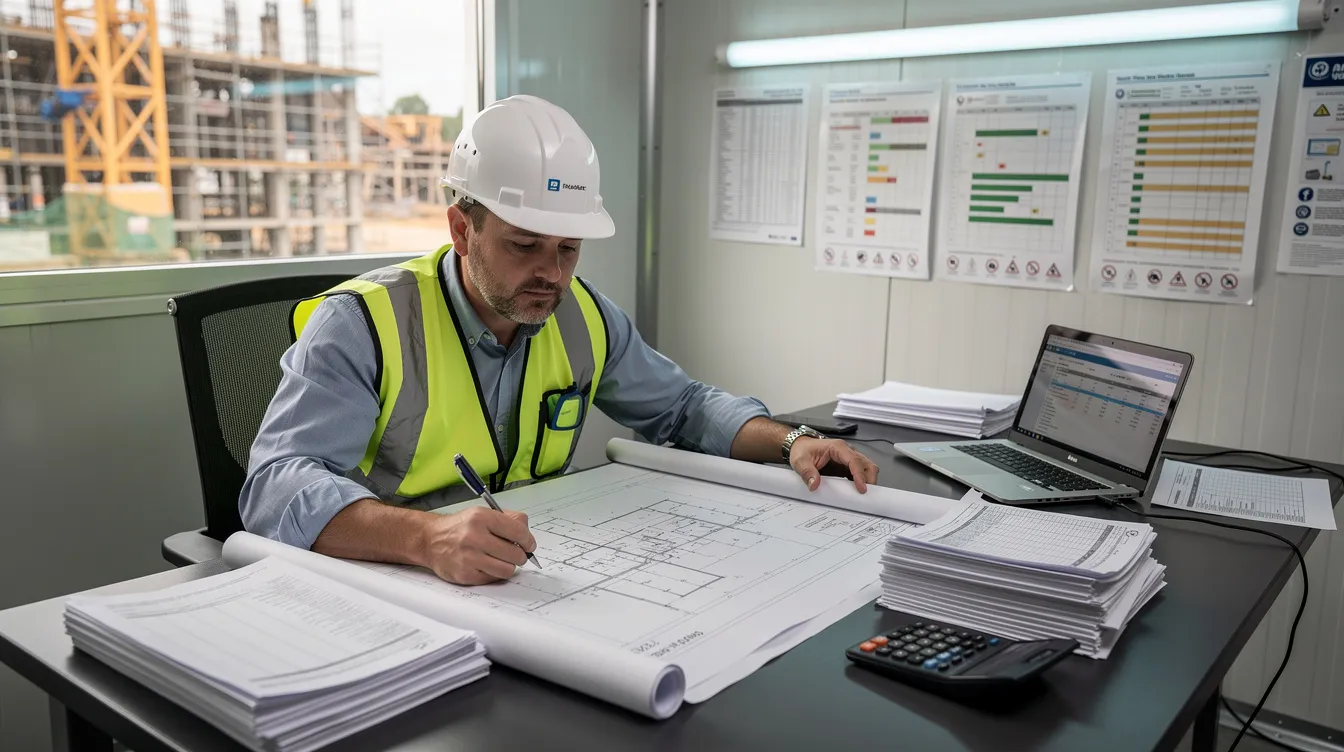
Banks and sureties don’t just check boxes when they review your financials. They are reading your WIP and completion method reporting as indicators of management discipline, not just historical financial performance. WIP reports increase transparency for stakeholders in construction projects, and that transparency earns trust.
Use this checklist now, not at year-end.
The percentage-of-completion method provides a clearer financial picture, and that clarity translates directly into competitive advantage. Disciplined completion method revenue recognition reflects the same values that define strong merit shop contractors: transparency, fair competition, and winning work based on performance rather than opaque numbers.
ABC Carolinas is a hub where members learn from peers, share WIP and revenue recognition best practices, and strengthen financial management alongside safety and workforce development.
ABC Carolinas is not an accounting firm, but the chapter helps members improve business practices that directly support stronger revenue recognition and financial control discipline.
Your next step: Review your WIP schedule this month. If the numbers surprise you, that is the signal to tighten controls before year-end. Connect with ABC Carolinas to join a peer group focused on financial performance, attend an upcoming event, or explore membership if your firm is not yet part of the chapter.

These FAQs address common questions Carolinas contractors have about completion method revenue recognition that go beyond the main article.
For most commercial contractors in North Carolina and South Carolina, update cost-to-complete at least monthly during the WIP review, and more frequently on large, high-risk long-term contracts or when material and labor markets shift quickly. Updates should reflect new subcontractor pricing, approved and pending change orders, productivity trends, and any schedule changes that affect general conditions and indirect costs. Stale cost estimates are the single most common source of misleading financial statements in the construction industry.
Some smaller or short-term contractors may be allowed to use the completed contract method for tax purposes under IRS rules. However, lenders and sureties may still prefer completion-method-based WIP information for credit and bonding decisions because it provides visibility into financial performance during the contract period, not only at the end. Consult with a construction-focused CPA about current IRS rules and weigh the management benefits of the percentage of completion approach even if completed contract remains permissible for taxes.
Modern construction accounting software can integrate job costing, billing, and WIP schedules so it automatically calculates cost-to-cost percentages, earned revenue, and overbilling or underbilling from current cost data. This reduces manual spreadsheet risk, speeds up month-end close, and makes it easier to provide accurate, real-time reports to leadership, banks, and sureties. Software development in this space has advanced significantly, and tools built for construction (rather than generic accounting software) handle the nuances of long-term projects, retention, and progress billings that general platforms miss.
Completion method revenue recognition tracks when revenue is “earned” based on work performed, which is what appears on the income statement. Cash flow reflects when the contractor actually collects money from owners and pays vendors. Overbilling can temporarily improve cash flow without changing revenue earned, while underbilling can create tight cash positions even when jobs are profitable on a WIP basis. That mismatch makes separate cash flow forecasting essential for every Carolinas contractor managing multiple active construction projects.
Start with a focused checklist: review all active WIP jobs for realistic cost to complete, scrub underbilling balances for billing opportunities, document disputed change orders, and meet with a CPA and surety advisor to align on assumptions. Contractors in the Carolinas should use this review to set improvement goals for 2027, such as standardizing monthly WIP meetings, upgrading to construction-specific accounting software, or training project managers on the basics of completion method revenue recognition so they can provide accurate cost estimates and field data that accurately reflect project progress.


