


The commercial construction economy in the Carolinas is central to the decisions this guide explores. Construction Executive reported in mid-August 2026 that July construction input prices were essentially flat month over month, yet still roughly 7.4% higher than July 2025. For contractors across North and South Carolina, that single data point carries real operational weight. Here is what the numbers mean for your bids, your contracts, and your bottom line.
The commercial construction economy in the Carolinas remains resilient, but a flat month does not mean risk has retreated. Contractors need to understand the full picture before adjusting any estimate or contract term.
According to Construction Executive, ABC’s national analysis of Bureau of Labor Statistics Producer Price Index data showed overall construction input prices essentially flat in July at +0.1% month over month, but approximately 7.4% higher year over year. Nonresidential construction inputs followed a nearly identical pattern, up +0.1% month over month and roughly 7.2% year over year. Construction material prices are rising 7.0% year over year in 2026 across the broader trend, confirming that the elevated cost base is not a temporary anomaly.
The headline “flat” masks significant divergence among specific materials. Crude petroleum declined roughly 11.9% in July, and unprocessed energy materials fell about 7.4%. Meanwhile, natural gas rose approximately 10.4%, and categories like lumber, certain iron and steel products, and electrical commodities posted increases. For Carolinas contractors, this means material costs for steel, concrete, copper, asphalt, and MEP equipment remain significantly higher than in mid-2025-even if the monthly trajectory has cooled.
Total commercial construction spending in the Carolinas is strong, and ABC Carolinas’ midyear construction forecast paints a picture of robust pipelines alongside persistent cost pressure. The core question for regional executives is straightforward: how does this mixed picture shape the commercial construction economy dynamics, bids, and margins in North and South Carolina through late 2026?
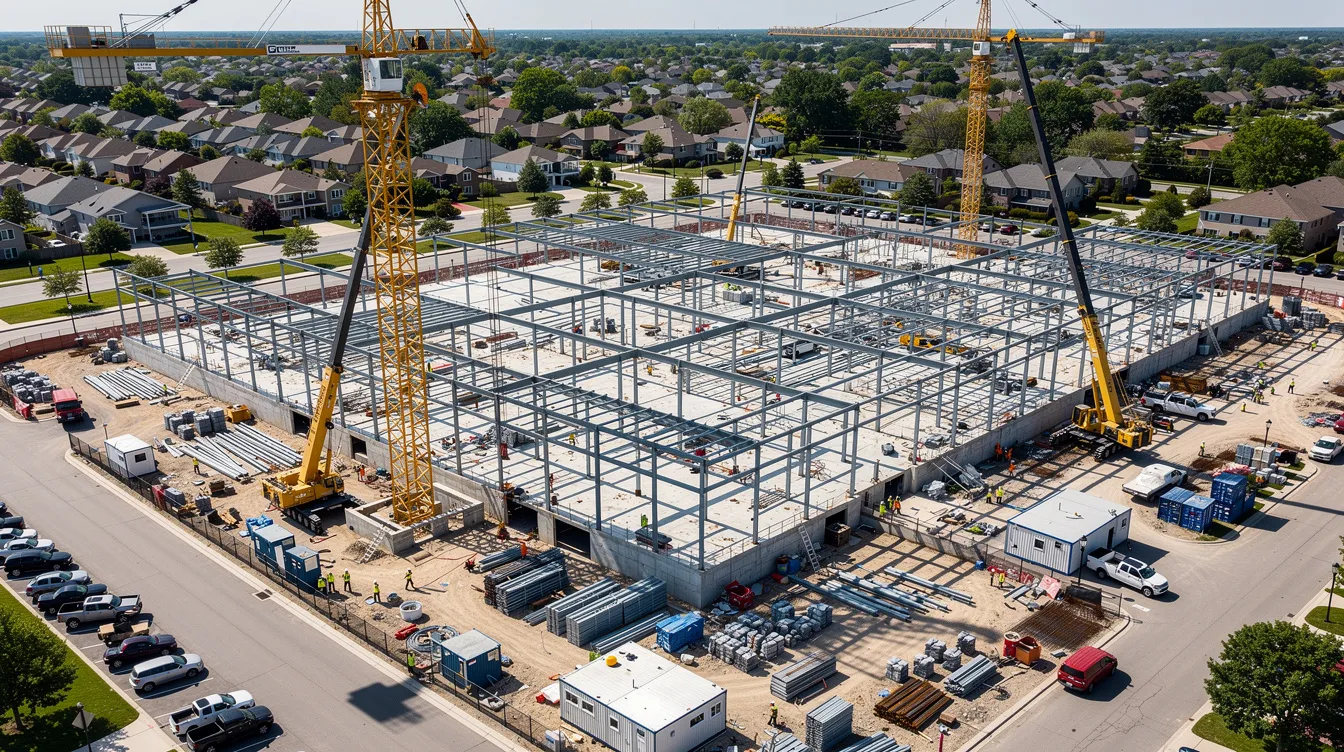
The commercial construction economy in the Carolinas is defined by a paradox right now: a cooling but still elevated input-price environment colliding with strong commercial pipelines in Charlotte, Raleigh-Durham, Greenville-Spartanburg, and along the I-85, I-77, and I-95 corridors. Reshoring trends are driving industrial pipeline activities in the Carolinas, and the data center boom is increasing demand for electrical and mechanical contractors. The region is experiencing a concentrated investment boom rather than a broad construction boom, with commercial construction characterized by uneven growth across sectors.
Healthcare and educational facility construction are high-confidence growth sectors. North Carolina contractors report strong confidence in the healthcare sector specifically. Construction employment in North Carolina stands at 4.9% of the workforce, yet labor constraints are a primary challenge in the Carolina construction market, limiting how quickly firms can scale to meet demand.
Estimators should resist the urge to slash contingencies based on a single flat month. At the same time, owners will increasingly push back on “emergency” pricing assumptions inherited from the 2021-2023 spike era. Practical bid-strategy moves include:
Underbidding in today’s market is often driven by competitive pressure, not by real reductions in material costs. ABC Carolinas encourages data-driven pricing discipline to sustain fair competition.
Many commercial contracts in the Carolinas assume 2-3% annual inflation in raw materials and labor. Over the last 12 months, construction material costs rose closer to 7%, creating silent margin compression that shows up only when job cost reports close out. Material costs have contributed to overall construction cost increases across every major trade category, and 84% of construction firms experienced delays in starts due to various factors, including pricing uncertainty.
Typical commercial gross margin targets in the region often fall between 10-15%. A few percentage points of unplanned cost increases on a structural or MEP package can erase profit entirely on fixed-price and GMP contracts. Consider a Charlotte warehouse project bid in late 2025 using steel pricing from that period. By mid-2026, the structural package faces a 5-8% overrun. Or a Greenville healthcare project where MEP equipment inflation surfaces at buyout after supplier prices shifted between bid day and procurement.
Copper prices are expected to increase by 25-50% due to demand, making electrical scopes a particular concern. Contractors must track both headline construction costs and category-level construction materials trends-steel, copper wire, cement, glass, roofing-rather than assuming uniform behavior across all critical materials.
Construction contracts are now the main shock absorber between volatile material costs and contractor margins. Escalation clauses and contingencies are critical tools in 2026-not luxuries reserved for mega-projects.
Escalation clauses allow price adjustments for labor or materials when documented costs move beyond agreed thresholds. These clauses protect contractors from unexpected cost increases and, importantly, escalation clauses can lower initial bids by reducing risk-contractors who can share volatility with owners can price more competitively upfront.
Key elements every escalation clause should address:
| Element | Guidance |
|---|---|
| Covered materials | Tie to specific key materials: structural steel, asphalt, fuel, copper |
| Trigger mechanism | Escalation clauses can include specific thresholds for price adjustments (e.g., 5% above bid-date index) |
| Documentation | Contractors must document cost increases to support escalation claims via supplier quotes and recognized indices |
| Caps | Define maximum exposure for both parties |
| Flow-down | Align subcontractor terms so risk is not pushed unsustainably down the chain |
Steel prices are projected to rise by 15-35% in 2026, which means steel prices can trigger escalation clauses when they rise significantly. In fixed price environments, escalation protections are essential. GMP contracts benefit from material-specific allowances paired with escalation. Cost-plus arrangements offer more flexibility but require disciplined documentation. For institutional owners-universities, hospital systems, industrial developers-narrow, index-based escalation tied to current 7.4% annual inflation data often finds acceptance more readily than open-ended pass-through language.
Many North and South Carolina contractors carried broad 10-15% contingencies during peak volatility. In a market where material costs are elevated but not surging monthly, a more targeted approach makes sense. Lumber prices soared by 74% from January 2019 to March 2022, reminding contractors that dramatic price hikes can return quickly.
Separate general project contingency from specific material allowances using clear line items for high-risk categories: rebar, fabricated steel, roofing membranes, and electrical gear. Calibrate by project profile-leaner allowances may work for short-duration tenant improvements in Charlotte, while 18-24 month campus projects in the Triangle or coastal South Carolina need more robust buffers.
Construction material costs for certain imports remain exposed to tariff transition and freight volatility from new tariffs and geopolitical tensions. Avoid assuming a full reversion to 2019 pricing when setting allowances for late-buy items. Transparent contingency rationales in proposals help owners understand that risk sharing-rather than hidden padding-supports housing affordability, industrial expansion, and infrastructure delivery across the region.
In the current construction industry environment, smart procurement decisions are as important as the original bid in controlling total construction costs on Carolinas projects. Supply chain disruptions remain a tail risk, and supply chain management requires daily attention, not quarterly reviews.
Early buyout strategies matter: locking in prices for steel, roofing, switchgear, and generators once contracts are signed hedges against increased prices, though contractors must weigh storage, financing, and schedule risks. Supplier quote validity windows now commonly range from 7-30 days. Build those windows into bid clarifications and contract documents so that expired quotes do not become financial losses on the contractor’s balance sheet.
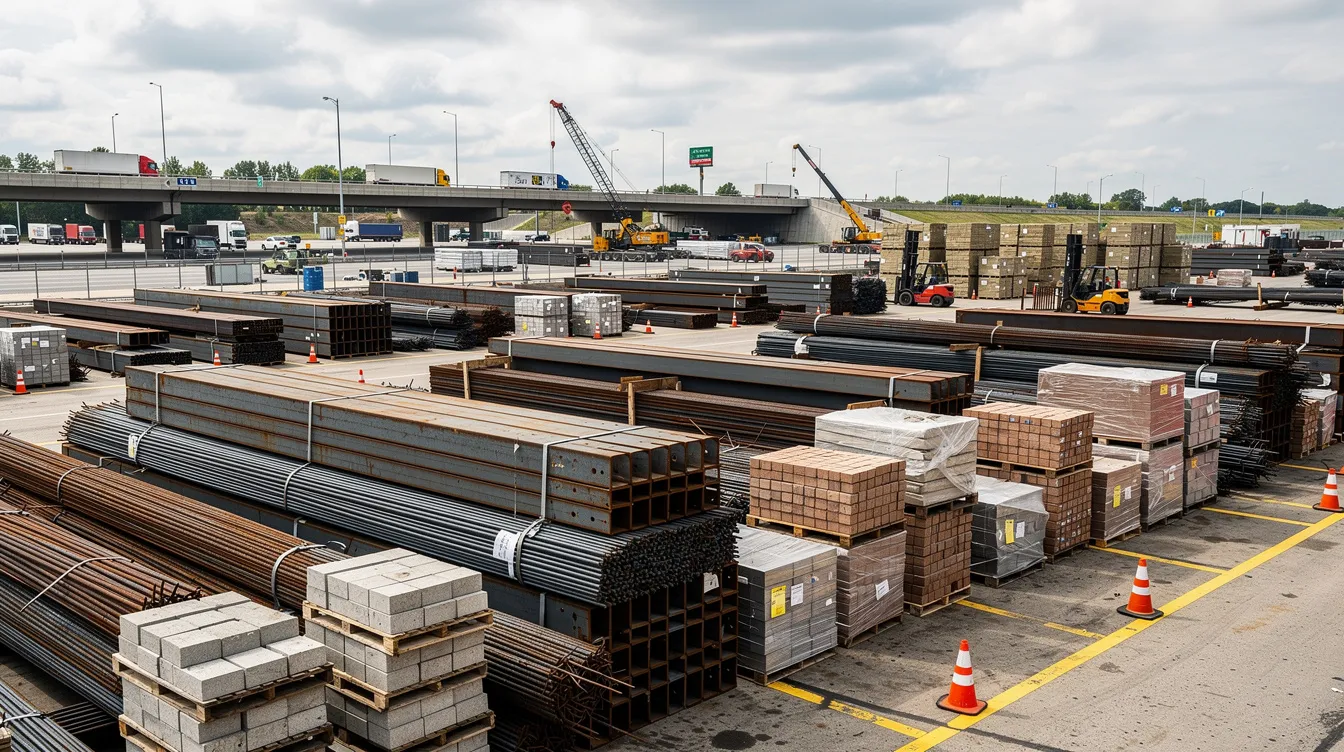
Along high demand corridors-I-85, I-77, and I-95-competition for materials is intense. The I-85, I-77, and I-95 corridors are experiencing significant data center development, and Charleston’s industrial market saw a significant absorption of space and reduced vacancy, further straining regional supply. General contractors and construction managers working logistics, healthcare, and data center construction projects in these corridors can expect competition for key materials to reaccelerate cost increases even in months when national price indices look flat.
ABC Carolinas peer roundtables and networking events help members compare real-time supplier practices, negotiate better terms, and coordinate group purchasing where appropriate.
Rising construction material costs affect both commercial work and housing affordability in the Carolinas. Construction costs for new multi-family housing units increased 33% since 2019, and higher overall construction costs and delays in critical materials push agencies like the NC Housing Finance Agency to allocate more funds per unit just to maintain affordable housing production.
Disciplined construction contracts, realistic allowances, and fair escalation clauses can help preserve project feasibility for mixed-use and residential components without forcing contractors to absorb unsustainable financial losses. ABC Carolinas’ advocacy role in Raleigh and Columbia supports policies that keep the construction industry competitive while recognizing downstream effects of price increases on housing and public projects. Commercial construction executives remain focused on estimating, procurement, and risk allocation decisions that keep affordable project delivery possible amid uncertainty.
Even if construction material costs plateau temporarily, lenders and sureties scrutinize how contractors manage cost increases, backlog quality, and contract risk. Average contractor backlogs in the Carolinas are solid at 8 to 10 months, but strong pipelines do not guarantee profitability if bids ignore persistent 7%+ input inflation.
Repeated under-recovery of material cost increases weakens working capital ratios, strains lines of credit, and triggers surety questions about job costing discipline, threatening financial stability. High financing costs are suppressing less economically compelling projects, concentrating risk among the construction projects that remain. The construction industry needs approximately 499,000 new workers nationally, and labor shortages compound the financial risk by driving up wages alongside materials. Only 4% of construction firms reported staffing shortages in December 2023, but the labor market has tightened considerably since then, with contractors in North Carolina expecting to increase employment in 2026.
Practical steps for financial health:
Merit shop contractors who pair competitive pricing with sound risk management will be better positioned with banks, owners, and sureties through late 2026.
Review all pending bids and adjust contingencies or quote-validity language where supplier pricing is older than 30 days. Audit your standard escalation clauses and allowances against current PPI data for steel, copper, lumber, and electrical gear. Stress-test margins on your top five material-intensive construction projects in backlog-if a 5% rise in any single scope erases your profit, you have a contract problem, not just a market problem.
Schedule a brief internal alignment meeting between estimators, project managers, and procurement leads in each office-Charlotte, Triangle, Upstate SC, and coastal markets-to synchronize assumptions about construction materials and key materials risk. Share supplier intelligence across offices; what suppliers in one subregion are quoting may differ substantially from another.
Engage with ABC Carolinas contract risk management resources, attend upcoming economy and market-outlook roundtables, and connect your preconstruction teams with member services focused on risk, finance, and insurance. Disciplined, merit-shop pricing and sound contract strategy are competitive advantages in the current commercial construction economy, and the contractors who treat this month’s data as a signal-not an all-clear-will protect their margins through whatever comes next.
ABC Carolinas is the regional hub for construction industry intelligence, training, and advocacy related to construction material costs, construction contracts, and risk management. ABC Carolinas supports members through education and advocacy and helps contractors manage market conditions through collaboration.
Relevant offerings include contract-risk education, peer groups for CFOs and estimators, market-update webinars, and resources on materials prices and bid protection. ABC Carolinas provides networking events for member collaboration and offers member-led committees for regulatory advocacy on tariffs, regulatory changes, and procurement rules that affect construction materials and construction costs in North Carolina and South Carolina.
ABC Carolinas promotes merit shop principles among its members, supporting free-enterprise pricing discipline, ethical competition, and safer, more profitable projects even when material prices show volatility. ABC Carolinas supports workforce development through education and networking, recognizing that labor-force growth is inseparable from margin growth.
Non-members are invited to explore membership. Current members should plug their estimating, preconstruction, and executive teams into ABC Carolinas events and resources in the coming quarter.
These questions address practical issues Carolinas contractors are asking about trends, data, and factors not fully covered in the main body above.
Even in a flat July, contractors should refresh quotes for volatile key materials-steel, copper, asphalt, roofing, electrical gear-at least every two to four weeks during active bidding. More stable items like standard finishes and drywall can be refreshed monthly. Supplier price lists often change faster than national indices reflect, so relying solely on a monthly BLS report to calibrate your estimate introduces unnecessary financial risk.
Many public and institutional owners in the Carolinas accept narrow, index-based escalation clauses tied to steel, fuel, or asphalt. Some private developers prefer caps or shared-savings models where both parties benefit if prices decline. Clear, data-backed language tied to recognized indices like the BLS PPI improves acceptance. The key is presenting escalation as a tool that protects both sides-not as a blank check.
Subcontractors and suppliers often face the tightest quote-validity windows and may be pressured to hold prices longer than their own vendors will. General contractors should align flow-down construction contract terms, escalation clauses, and payment timing to avoid pushing unsustainable risk down the chain. When subcontractors absorb volatility they cannot control, it damages the entire supply chain and increases delays and quality risk on construction projects.
Contractors should compare expected future cost increases against financing, storage, and obsolescence risks before committing to aggressive pre-buy strategies. Reserve pre-purchasing for well-secured projects with clear schedules and high-risk key materials-structural steel, switchgear, generators-rather than broadly stockpiling everything. The rise in material prices over recent years makes the math tempting, but carrying inventory ties up working capital and introduces other factors like theft, damage, and spec changes.
Members should look to ABC Carolinas’ markets, economy, and sustainability content, contract risk management guidance, and upcoming market-briefing events. Subscribe to chapter news for regular regional updates covering trends in material prices, labor statistics, and regulatory changes affecting the Carolinas construction market.


