


In 2024, the U.S. Bureau of Labor Statistics reported 1,032 fatal work injuries in construction and extraction occupations, a rate of 12.6 fatalities per 100,000 full-time equivalent workers. For contractors running projects across North Carolina and South Carolina, that is a reminder that waiting for a recordable incident or claim before acting leaves too much risk on the table.
AI safety tools in construction are best understood as decision-support systems. They combine artificial intelligence, machine learning, connected devices, computer vision, and structured field data to help safety leaders spot patterns earlier. Instead of relying only on lagging indicators such as OSHA logs, TRIR, or workers’ compensation claims, contractors can use leading indicators to identify where risk may be building before an incident occurs.
This article gives Carolinas safety professionals a practical framework for choosing, piloting, and governing predictive safety technology without surrendering human judgment. ABC Carolinas supports this shift through safety management programming and safety training. For related background, contractors can also review this broader construction safety technology resource.
Consider a Charlotte mid-rise project where a laborer falls from scaffolding on a Tuesday afternoon. A traditional post-incident process reviews records, assigns corrective actions, and updates the safety file afterward. Now imagine a different path: during the previous week, the team logged repeated near misses in that scaffold zone, Monday’s inspection noted a PPE lapse, and the pre-task plan identified an unprotected edge. A predictive system can help aggregate those signals for review before Tuesday’s shift so the superintendent can inspect the area, verify conditions, and correct the exposure earlier.
That is the practical difference between lagging and leading indicators. Lagging metrics tell you what already happened. Leading indicators, such as near misses, unsafe conditions found during inspections, overdue safety training, and incomplete pre-task plans, can help reveal where controls may be weakening. OSHA promotes leading indicators as a best practice because they are proactive and preventive measures that can reveal potential problems in a safety and health program.
Construction site safety examples that predictive tools may help surface on Carolina’s projects include:
Predictive safety is not one product. It is a group of tools and workflows that blend observations, digital records, and connected jobsite information to help contractors focus attention where risk appears to be concentrating.
Wearable sensors and connected PPE. Some wearable tools help crews and supervisors monitor conditions such as heat strain, fatigue risk, location awareness, or fall events, depending on the system. Their value is not that they replace supervision. Their value is that they may provide another signal for a trained supervisor to review during higher-risk work or severe conditions.
Computer vision and camera-based review. Some computer-vision systems flag possible PPE lapses, access issues, or other visible jobsite conditions for human review. Used carefully, they can help safety teams monitor more areas than a single person can observe at once.
Drones. Drones can support site inspections, document changing conditions, and help teams review hard-to-access areas without exposing workers to the same level of physical risk during the inspection itself.
Incident-pattern dashboards. These platforms can combine incident reports, inspection records, equipment information, and near-miss logs from multiple sources, then highlight patterns by trade, shift, location, or task so safety leaders know where to look first.
Mobile reporting tools. Field-ready apps can make it easier for crews to submit near misses, observations, and hazards in a more structured format, which improves the quality of the information feeding any predictive system.
These tools can strengthen safety professionals’ work; they do not replace them. Human oversight remains central. ABC National’s health and safety technology reporting highlights wearables, AI-powered risk detection, environmental monitoring, fatigue management, and connected jobsite solutions as part of the industry’s broader move toward proactive worker protection.
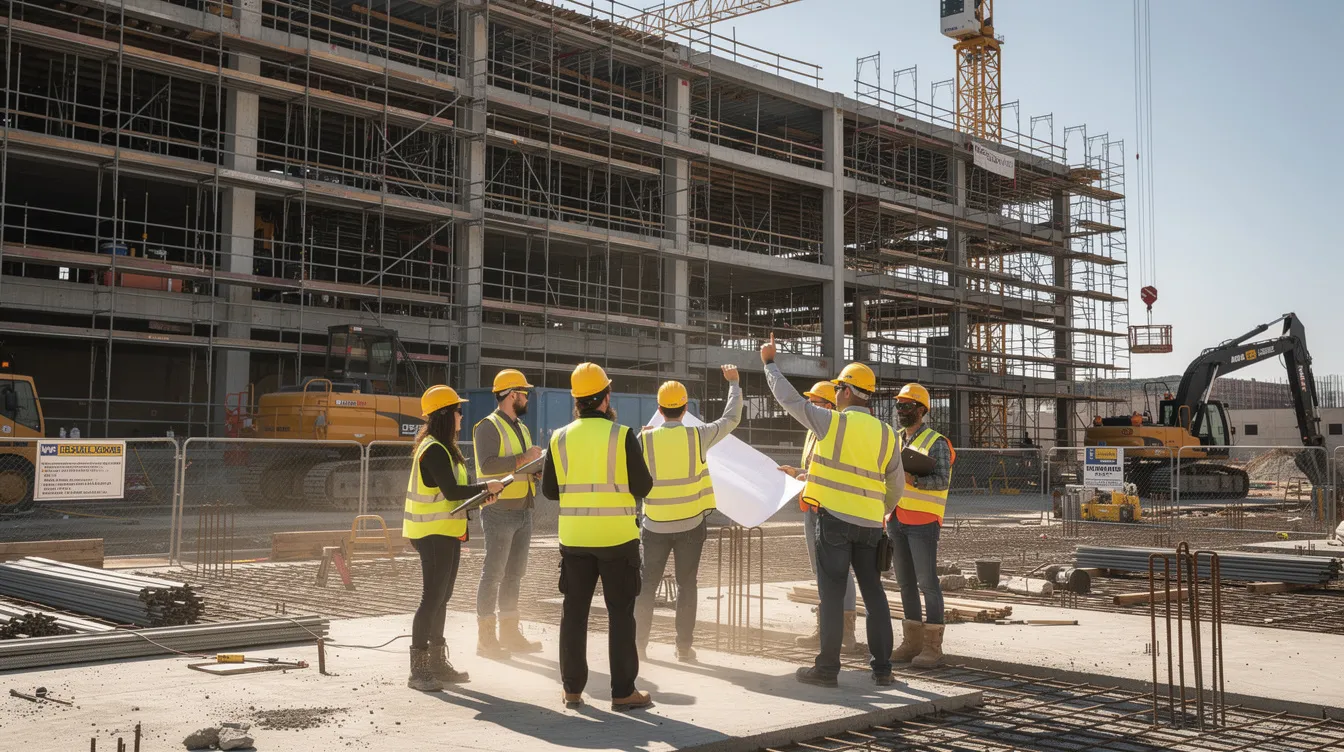
Predictive models are only as useful as the underlying safety data. Consistency and structure matter more than volume. A contractor does not need perfect data to begin improving; it does need enough disciplined, repeatable input for patterns to mean something.
Most Carolina contractors already have the raw materials:
The problem is often the format. Free-text-only incident descriptions with no structured root-cause field give software very little to learn from. Inconsistent location names fragment the data. Missing trade identification hides patterns. Before shopping for AI tools, safety professionals should ask:
Not every possible metric belongs in an early pilot. A shorter, more actionable list is usually better. OSHA’s guidance encourages employers to tailor leading indicators to their own operations and choose measures that supervisors and field teams can actually influence.
For commercial construction sites in the Carolinas, these indicators are practical starting points:
The value of AI-generated alerts is prioritization. A dashboard can help a safety director or superintendent decide where to focus the next walkthrough, talk, or corrective action instead of treating every area as equally urgent.
In plain language, a predictive model reviews historical information such as past incidents, near misses, inspections, and equipment logs, then looks for combinations that have preceded higher-risk events. As new information arrives, the system flags similar patterns for human review.
Consider a Raleigh tilt-up concrete project where near misses begin clustering around crane-pick sequences during wet conditions. A predictive system might highlight that pattern before the next similar lift so project leadership can slow down, inspect the setup, and confirm controls. On an Upstate South Carolina warehouse build, recurring housekeeping hazards in forklift lanes might trigger targeted inspections before traffic peaks. The point is not that software knows the future. The point is that it can help surface combinations of signals that busy teams might otherwise miss.
Many predictive tools generate daily or shift-based risk views by zone, trade, or task. Safety leaders can review those before crews start work, then decide where extra inspections, additional supervision, or temporary controls are warranted.
Predictive models support field judgment; they do not replace it. A superintendent who walks the site and understands conditions still makes the final call.
Every alert needs a designated human owner, a response expectation, and a documentation path. Without that, technology simply creates noise.
A practical response chain for construction site safety looks like this:
Alert fatigue is real. On busy multi-employer jobsites, vague or excessive alerts with no owner are easy to ignore. Companies should update written safety procedures to fit predictive tools into existing safety meetings, reporting routines, and leadership roles instead of building a separate process no one follows.
Most firms should start with one risk theme, one tool category, and one live project rather than a company-wide rollout. A focused pilot is easier to govern, explain to crews, and evaluate honestly.
Pilot steps:
Worker trust is essential. Communicate clearly that the purpose is hazard prevention, not blanket surveillance. Include written data-use expectations in the pilot from the start. For a more specific example of a narrower safety-tech rollout, ABC Carolinas also offers a related playbook on heat-stress wearables.
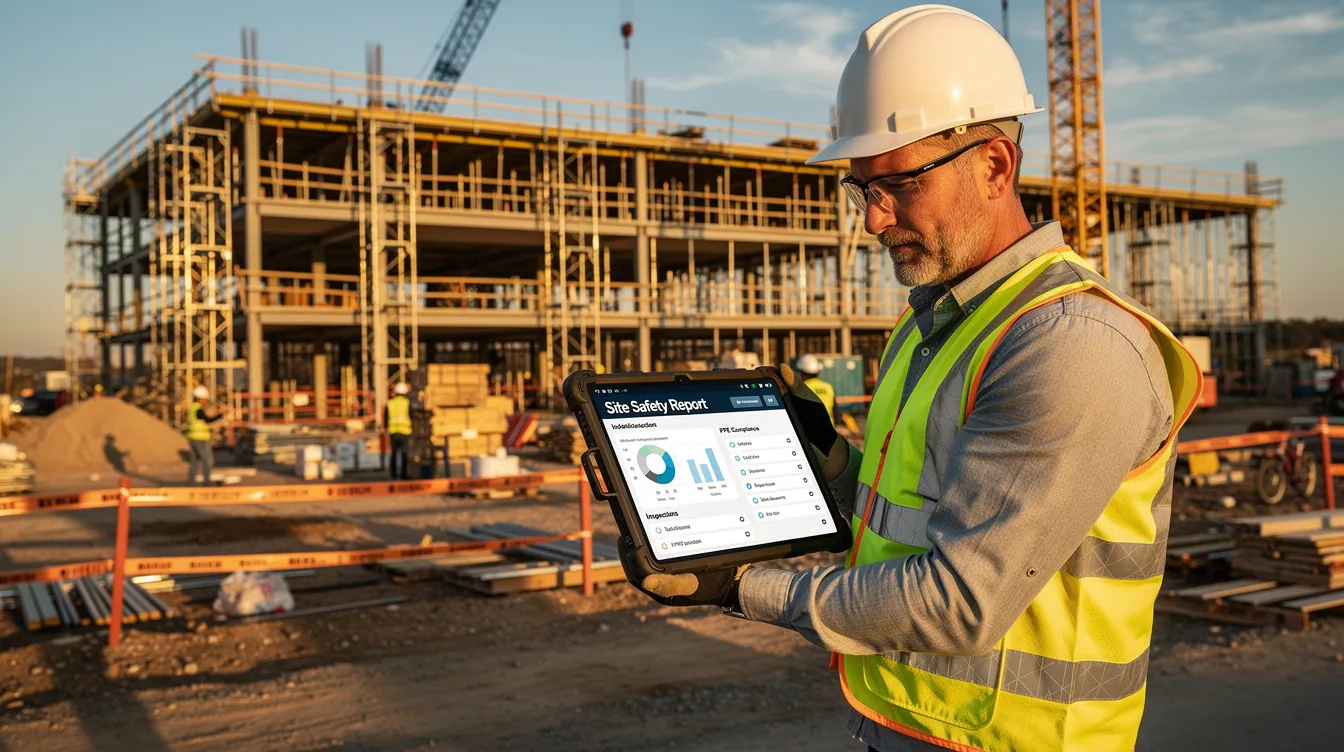
AI safety tools matter only if the insight changes behavior. A dashboard no one checks does not improve a jobsite.
If predictive analytics flags a spike in PPE noncompliance in one trade, that should shape the next toolbox talk, walkthrough, or supervisor conversation. If a model highlights elevated fall-risk conditions in a scaffold area, the written process should trigger a documented review of controls before work continues. The technology can help teams focus attention, but field leaders still execute the response.
The same principle applies to training. Some contractors may choose to use recurring near-miss patterns or verified field scenarios as examples in future training so crews can rehearse stronger responses before the next similar condition develops.
AI cameras, wearable devices, and connected telemetry can raise legitimate concerns, especially on multi-employer sites. Safety leaders should address those concerns directly with practical ground rules:
The guiding idea should be simple: focus on catching hazards, not policing people. When workers trust the process, reporting usually improves, and better reporting gives supervisors better information.
Evaluate predictive safety tools on whether they improve field response, not on the number of alerts produced. A high-volume dashboard can still be a weak safety program if no one acts on it.
Useful measures before, during, and after a pilot include:
For ABC Carolinas members, these metrics can also support better peer discussion about what is actually working in the field and what still needs adjustment.
AI safety tools in construction can help move a safety program from pure reaction toward earlier intervention, but only if the company has the basics in place: usable data, clear ownership, disciplined supervisor response, and worker trust.
Your next three moves should be straightforward:
ABC Carolinas members who want to go deeper can review the broader construction safety technology resource, explore the more specialized heat-stress wearables guide, or discuss practical adoption questions through ABC Carolinas safety training and peer programming. The goal is not to buy more software. It is to help field leaders make better safety decisions sooner.


