Every hurricane season tests whether Carolinas contractors have a real plan or just good intentions. Here is a field-ready playbook for commercial construction teams operating across North and South Carolina in 2026.
Key Takeaways
Hurricane preparedness for construction sites in North and South Carolina is both a safety obligation and a business continuity priority in 2026. Regardless of the seasonal outlook, a single storm can cause extensive damage to active job sites, disrupt schedules, and threaten crews. Construction sites should have a site-specific emergency action plan, and hurricane preparedness should focus on protecting people and securing equipment. Here are the most urgent actions Carolinas contractors should take before the next storm watch:
- Maintain a written hurricane plan for every commercial job site, updated annually with site-specific annexes covering shutdown triggers, roles, and evacuation orders.
- Establish clear shutdown triggers tied to National Weather Service watches and warnings so superintendents and foremen know exactly when to act.
- Secure heavy equipment, cranes, and construction materials using manufacturer guidance and phased checklists before windy conditions arrive.
- Protect documentation with time-stamped photos, cloud backups, and waterproof copies of permits and contact lists to support insurance claims and inspections.
- Use ABC Carolinas safety training and resources to test and update your hurricane plan with peer benchmarking and tabletop drills.
Inland projects along the I-85, I-77, and I-95 corridors serving Charlotte, the Triangle, Upstate South Carolina, Florence, Fayetteville, and Columbia face serious wind, heavy rain, and flood risks, not just coastal sites in Wilmington, Myrtle Beach, or Charleston. The rest of this article provides a practical, step-by-step playbook for the 2026 hurricane season based on guidance from NOAA, FEMA, OSHA, and North Carolina and South Carolina state agencies, tailored for Carolinas commercial contractors.
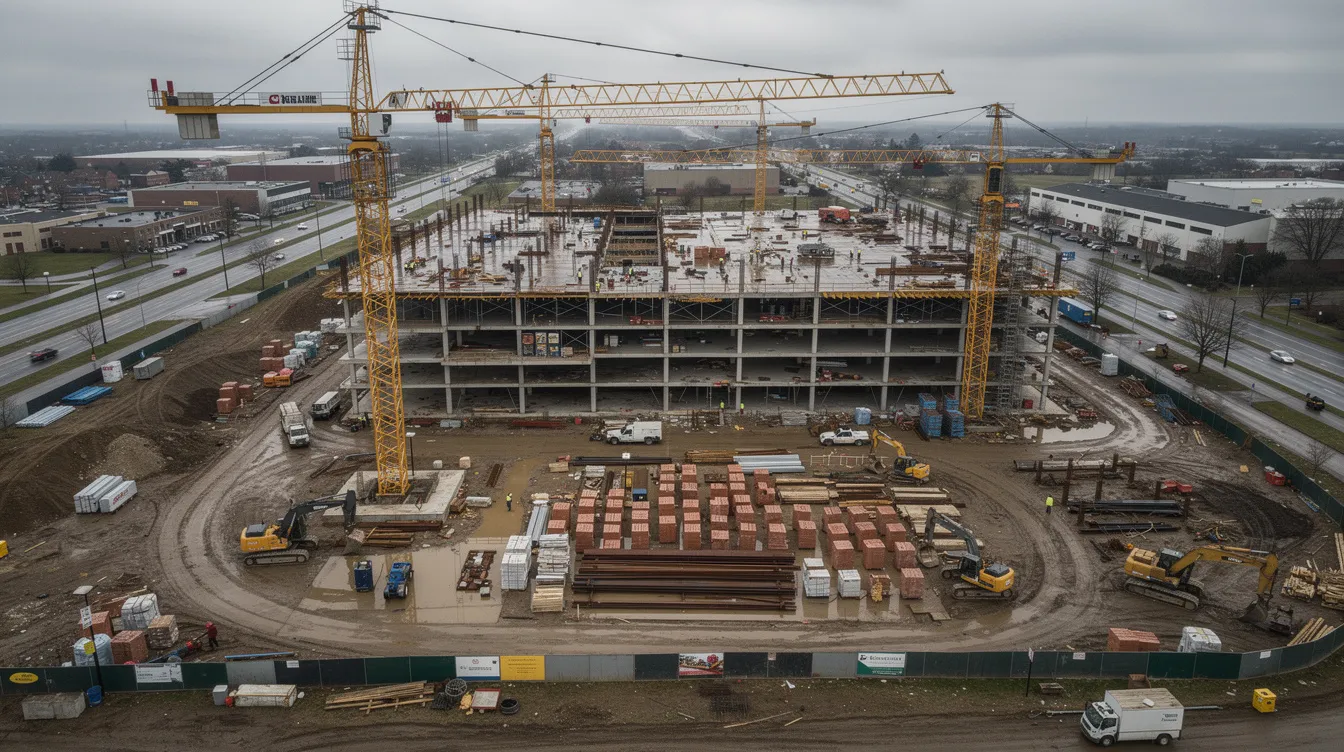
Why Hurricane Preparedness Is a 2026 Business Continuity Issue for Carolinas Contractors
NOAA’s May 2026 outlook projects 8 to 14 named storms, 3 to 6 hurricanes, and 1 to 3 major hurricanes this Atlantic hurricane season. El Niño conditions are expected to suppress activity, but NOAA officials emphasize that “it only takes one storm to make a very bad season.” For commercial construction across North and South Carolina, that one storm can mean schedule disruption, workforce safety incidents, equipment loss, property damage, and strained client relationships.
Hurricanes and tropical storm systems impact far more than the immediate coastline. Hurricanes can produce destructive inland flooding, and flash flooding can occur rapidly along river basins and low-lying corridors. The Saffir-Simpson Scale rates hurricanes from 1 to 5 based on wind speed, and Category 3 hurricanes and higher can cause catastrophic damage. But even a Category 1 system or a strong tropical storm can dump heavy rainfall on data center projects near the North Carolina Piedmont, warehouse builds along the I-85 corridor in Charlotte, or campus construction in Upstate South Carolina.
Flooding is the leading cause of hurricane-related deaths. Hurricanes can cause significant wind damage to construction sites. Together, these facts make hurricane preparedness a risk to revenue, margins, insurance costs, and owner commitments for hospitals, campuses, infrastructure, and industrial facilities. A merit shop culture that keeps crews safe and projects competitive treats storm planning as a core part of construction safety management, not an afterthought.
Know Your Carolina Hurricane, Wind, and Flood Exposures
Each construction site has a unique risk profile. Project teams should complete a pre-season exposure review for every active and upcoming job in both states, whether coastal or inland.
- Coastal surge and wind exposure: Projects in Wilmington, Morehead City, Myrtle Beach, and Charleston face storm surges, wave action, salt-air corrosion, and the highest sustained wind loads. Evaluate site-specific risks to enhance job site security in these zones.
- Inland heavy rain and flood risk: Heavy rains can flood construction sites without completed drainage systems. River and flash-flood risk is elevated along the Cape Fear, Neuse, Catawba, and Pee Dee river basins, and near low-lying areas in the Triangle, Fayetteville, and Columbia. Hurricane Florence in 2018 dropped over 20 inches of rain in parts of the Piedmont, causing flood damage to job sites far from the coast.
- Structural vulnerabilities: Partially erected steel, masonry walls, scaffolding, cranes, deep excavations, and temporary structures are all susceptible to high winds and water intrusion. Rooftop HVAC units, unsecured formwork, and exposed windows on tall commercial projects can become sources of flying debris.
- Flood zone assessment: Use FEMA flood maps, North Carolina’s Flood Risk Information System, and local county GIS tools to check whether your site falls within flood zones, Special Flood Hazard Areas, or areas with Base Flood Elevations. Do not rely solely on hurricane category to gauge risk.
- Logistics disruptions: Understand likely road closures along I-95, I-26, and I-40, port and bridge closure patterns, and local building department policies that affect job site access and material delivery before and after storms.
Core Elements of a Carolinas Construction Hurricane Plan
Every contractor should maintain a written, annually updated hurricane plan that applies across North Carolina and South Carolina projects, with site-specific annexes. Preparing a construction site for a hurricane requires a phased, proactive approach, and a contingency plan exists to prevent job site losses.
Key plan components include:
- Defined roles and responsibilities for executives, safety directors, project managers, superintendents, foremen, and subcontractor leads.
- Triggers tied to official watches and warnings, forecast wind speeds, and flood projections for starting staged shutdowns. Monitor weather forecasts to prepare effectively for hurricanes.
- A jobsite emergency response and communication protocol that clarifies who decides to stop work, who confirms evacuation status, and how subcontractors and suppliers are notified. Communication plans should account for potential infrastructure failures during emergencies, including power outages and cell tower disruptions.
- OSHA-required elements: OSHA mandates an Emergency Action Plan under 29 CFR 1926.35, covering evacuation procedures, shutdown operations, roles, and worker training. Beyond these requirements, recommended best practices include company-specific wind and rain thresholds, redundant communication channels, and annual drills.
Workers should know evacuation procedures and emergency contacts before hurricane season starts. Keep a concise hurricane jobsite shutdown checklist in jobsite binders and loaded into project-management or safety software. ABC Carolinas safety roundtables and peer groups offer channels to benchmark your plan against regional best practices.
Emergency Communication and Staying Informed During Severe Weather
Timely, accurate information flow prevents injuries and confusion during rapidly changing storm conditions. Clear communication across all levels of the project team is essential when severe weather events threaten Carolinas job sites.
- Redundant weather sources: Use NOAA, the National Weather Service local offices, state emergency management alerts, and trusted weather apps to stay informed of watches, warnings, and forecast changes.
- Jobsite communication tree: Build a simple chain spanning executives, safety leads, superintendents, foremen, subcontractors, suppliers, and temporary staffing partners. Use push notifications, text groups, and mass-alert tools. Keep current phone and email lists for all workers and trade partners on active sites.
- Alignment with local authorities: Follow official evacuation orders and local emergency management guidance, especially in coastal counties like Brunswick, Horry, and Charleston, and in flood-prone inland areas. Workers should be familiar with local emergency plans and shelters.
- Owner and client communication: Proactively update owners, construction managers, and design teams about shutdown timing, anticipated impacts, and tentative restart plans. Transparency protects trust and reduces dispute risk.
Pre-Storm Site Shutdown Planning and Sequencing
Shutdown planning is a phased process that begins several days before projected landfall, not a last-minute scramble. All new material deliveries and non-essential site work should cease 48 to 72 hours before landfall.
- 72 hours out: Reduce work at height, finish or protect critical pours, and begin stabilizing partially erected temporary structures and deep excavations.
- 48 hours out (hurricane watch): Reinforce scaffolding and cover exposed materials with temporary coverings before storms intensify. Begin lowering crane booms, weather-vanning tower cranes, and locking out mobile cranes per manufacturer instructions and OSHA expectations.
- 36 hours out (hurricane warning): Hurricane warnings are generally issued about 36 hours before the anticipated onset of tropical-storm-force winds. Shut down and tag out temporary power, secure fuel supplies, and confirm all electrical equipment is de-energized or protected. Complete final site walkdowns.
- Priority sequencing: Stop high-risk activities first: roofing, exterior glazing, elevated platform work, and deep excavation. Lower-risk interior work can continue longer but should wrap well before severe weather arrives.
Adapt sequencing to each project’s stage and complexity. This is a practical checklist, not a legal standard.
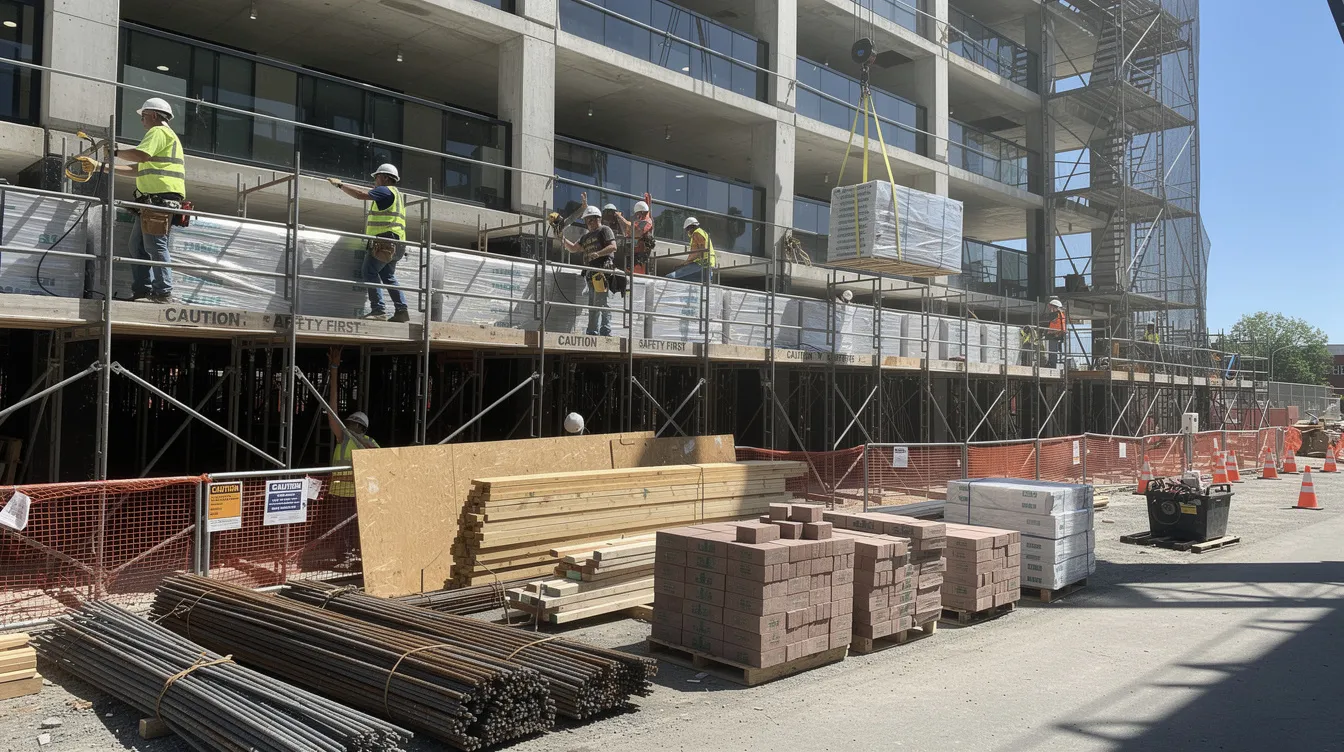
Securing Cranes, Heavy Equipment, and Materials Before Landfall
Cranes, heavy equipment, and loose materials on construction sites can become major hazards and financial losses in high winds and heavy rain. Securing them protects workers, neighboring buildings, and property.
- Cranes: Cranes and heavy equipment should be lowered, secured, and anchored according to manufacturer specifications. Coordinate with crane owners and engineers on safe wind-speed thresholds, slewing, and weather-vanning procedures. Tower cranes require advance planning; mobile cranes should be parked away from roadways and flood zones.
- Heavy equipment: Move vehicles and equipment to higher ground to avoid flooding. Excavators, loaders, telehandlers, and generators should be relocated from low-lying and flood-prone areas. Use tie-downs or anchoring where relocation is not feasible.
- Materials: Secure job sites by removing loose materials before hurricanes. Bundle and band lumber, rebar, and metal studs flat. Remove or strap down formwork, temporary fencing, and signage. Cover moisture-sensitive construction materials like gypsum board, insulation, and finishes, and move them indoors or to higher elevations when possible to prevent water damage.
- Hazardous materials: Move hazardous materials to secure, elevated enclosures during hurricanes to prevent spills and contamination.
- Site security: Empty or partially evacuated job sites are vulnerable to theft. Consider adding lighting, cameras, or patrols where practical and safe before shutdown. Secure doors, door openings, windows, and roof access points to protect against both wind damage and unauthorized entry.
Protecting Documentation, Data, and Insurance/Inspection Readiness
Storm-resilient documentation supports worker safety, faster post-storm recovery, and smoother insurance and regulatory interactions.
- Cloud backups: Back up critical project data, including drawings, RFIs, change orders, schedules, and safety logs, to cloud-based systems or secure offsite servers before storms threaten.
- Pre-storm photography: Capture time-stamped photos and videos of jobsite conditions, stored materials, and key assemblies prior to shutdown. Documenting and inventorying site conditions helps streamline insurance claims.
- OSHA recordkeeping: Accurate records support OSHA reporting decisions and regulatory interactions during recovery.
- Insurance review: Review insurance coverage for potential hurricane damages with brokers ahead of hurricane season. Understand documentation expectations, deductibles, and notice requirements for builders risk, equipment, general liability, and business interruption policies.
- Hard-copy backups: Field teams should maintain hard copies of critical contact lists, permits, and emergency procedures in waterproof containers as part of the jobsite emergency kit.
Emergency Response, Evacuation, and Worker Support
Protecting people is the non-negotiable first priority for all Carolinas construction sites. Emergency response planning must reflect OSHA requirements and guidance from local authorities.
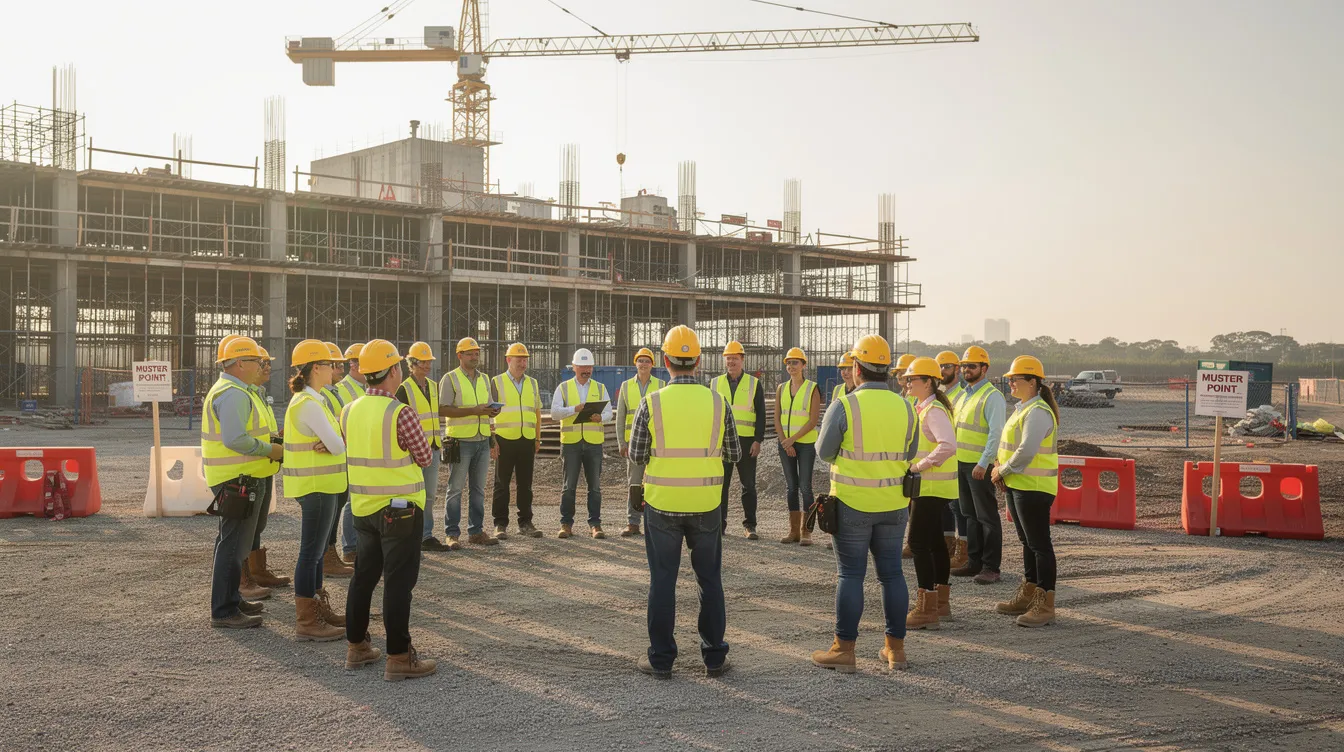
- Evacuation routes and muster points: Establish clear, practiced evacuation routes and muster points for large sites, including multi-building campuses and high-rise projects. A thorough evacuation plan ensures worker safety during hurricanes.
- Compliance: Follow the OSHA emergency action plan standard applicable to the worksite, including 29 CFR 1926.35 for construction. Evacuation orders must be communicated to all team members. Personnel should not remain on-site during evacuation; they should leave before conditions become dangerous.
- Accountability: All workers, subcontractors, and visitors should be accounted for during evacuation. No exceptions.
- Emergency kit contents: Stock essential supplies like water and first aid kits. Flashlights and batteries are crucial during hurricanes. Include non-perishable food in emergency kits, along with backup radios and basic tools. Most crews will evacuate rather than shelter onsite.
- Workforce support: Account for multilingual communication needs, check in on subcontractor crews, and monitor employee well-being during prolonged disruptions. Hurricanes create stress that extends beyond the jobsite, and mental health in construction safety matters during these high-pressure periods.
ABC Carolinas safety training, toolbox talks, and executive briefings offer avenues to rehearse emergency response scenarios before peak hurricane season.
Post-Storm Access, Assessment, and the First 72 Hours
Return-to-work starts only after local authorities declare areas safe to enter and company leadership confirms that conditions allow for controlled site access. After the storm passes, do not rush back.
- Road and utility verification: Verify road access, bridge status, and utility conditions before sending crews to job sites. After a hurricane, check for environmental hazards such as gas leaks and downed power lines. Power lines that appear intact may still be energized, and standing water can conceal electrical and structural hazards.
- First-entry team: Assign a qualified team, including a superintendent, safety professional, and possibly an engineer, for the first entry, equipped with appropriate PPE and communication tools.
- Priority inspections: Assess damage to structural frames, masonry, cranes, scaffolding, excavation walls, trench stability, erosion, debris accumulation, and water intrusion in incomplete buildings. Look for compromised roof systems, shattered windows, and shifted temporary structures. Inspect structures, equipment, and hazardous materials before allowing workers back on-site post-storm.
- Documentation: Document all findings with photos, notes, and incident reports. Coordinate with owners, insurers, and building officials before commencing repair work.
- Business continuity decisions: Triage which projects restart first, reallocate crews and equipment, and revise schedules and procurement plans in partnership with clients and key suppliers. Nearly half of post-hurricane construction delays stem from supply chain and logistics disruptions rather than direct site damage, making early supplier contact essential.
Safe Restart Checklist for Carolinas Construction Sites
Before full production resumes on hurricane-affected sites, complete these essential checks:
- Life-safety systems: Verify that temporary stairs, guardrails, fall protection, and egress paths are intact and functional.
- Electrical systems: Confirm that temporary power, generators, and electrical equipment have been inspected by qualified personnel and re-energized safely. Watch for fire risk from damaged wiring or fuel systems.
- Equipment re-inspection: Re-inspect and re-tag cranes, lifts, scaffolds, and hoists as needed per manufacturer and OSHA requirements.
- Site cleanup: Remove debris, standing water, and compromised materials that may create mold, structural damage, or slip hazards. Clear drainage systems to prevent further flooding from subsequent heavy rainfall.
- Toolbox talks and stand-downs: Brief crews on new site conditions, hazards, and modified workflows. Cover topics like major damage areas, changed evacuation routes, and any new protection requirements.
Integrate safe restart steps into existing company safety programs. Restarting too quickly without checks can create more risk and cost than a measured, safety-first return. After significant damage occurs, a structured assessment protects your workforce and your schedule.
Integrating Hurricane Planning into Company Strategy and ABC Carolinas Resources
Hurricane preparedness is a recurring strategic discipline, not a one-off task. It aligns with merit shop competitiveness and responsible workforce stewardship. Create a hurricane contingency plan to protect job sites, and treat it as a living document.
- Annual risk reviews: Incorporate hurricane scenarios into annual risk reviews and business continuity planning alongside strategic planning in construction for 2026 and beyond.
- ABC Carolinas resources: Members can leverage safety training and certifications focused on emergency response, peer groups and regional councils in Charlotte, the Triangle, Coastal, and Upstate to share storm lessons learned, and government affairs updates tracking North Carolina and South Carolina regulatory changes.
- Cross-program integration: Link hurricane plans with site security initiatives, workforce and apprenticeship programs, and technology adoption such as cloud documentation and drones for post-storm inspection where permitted and safe.
Your next step: Schedule a hurricane-plan review within your leadership team and prepare for the next severe weather events before a named storm threatens. Connect with ABC Carolinas for safety resources, training, and peer benchmarking to make your plan as strong as the buildings you construct.
Frequently Asked Questions
These FAQs address practical questions Carolinas contractors may have about hurricane preparedness for construction sites that were not fully covered above.
How far inland should Carolinas contractors worry about hurricane impacts on construction sites?
Plan for wind, heavy rain, and flooding across both coastal and inland counties. Prior storms have caused significant damage well away from the immediate shoreline, including along the I-85 and I-95 corridors. River flooding and flash floods can occur days after a hurricane or tropical storm makes landfall, reaching areas that rarely prepare for such severe weather.
When should a construction site in the Carolinas begin hurricane shutdown activities?
Companies typically begin staged preparations when a hurricane watch is issued, roughly 48 hours before expected tropical-force winds. South Carolina’s emergency management framework activates “Condition Yellow” at five days out and “Condition Red” at approximately 48 hours. Final decisions should follow company policy, manufacturer guidance for equipment, and local emergency instructions. Do not wait for a warning to start.
How can contractors coordinate hurricane preparedness with multiple subcontractors on large projects?
Include hurricane procedures in subcontracts and preconstruction meetings. Assign clear responsibilities for each trade, use shared shutdown checklists, and confirm that every subcontractor has designated contact information in the jobsite communication plan so no critical task is missed when conditions deteriorate.
What role can technology play in construction hurricane preparedness and recovery?
Cloud-based project management protects document backups. Mass-notification tools deliver workforce alerts during power outages. Where safe and permitted, drones or high-resolution cameras accelerate post-storm damage documentation. GIS and flood-mapping tools help assess site-specific risk before the season starts.
How often should Carolinas contractors update or drill their hurricane preparedness plans?
Review and update plans at least annually before hurricane season and after any major storm event. Conduct tabletop exercises or brief drills with leadership, superintendents, and key subcontractors. The best plans are ones your team has actually practiced, not ones filed in a binder they have never opened.


